
Tea Packaging Materials: Brew Bags and Storage Pouches
A brew-through bag fails as the storage wall for dry tea. The aroma and moisture job sits with a closed barrier pouch, or with a carton liner that is actually closed.
A brew-through bag fails as the storage wall for dry tea. The aroma and moisture job sits with a closed barrier pouch, or with a carton liner that is actually closed, and the filter is a different part.
Tea packaging materials split by job. A bag that is meant to be steeped has to let water through. A pouch that is meant to store dry leaf has to slow oxygen, moisture and aroma movement, and a carton or outer envelope is the carrier around one of those. An ICPE beverages chapter, read 11 October 2026, ties green-tea deterioration to a drop in ascorbic acid, a shift from bright green toward olive, and an odour change, and it ties general tea deterioration to lost volatiles and to taints from fatty-acid oxidation. A 1970 inert-gas study found that, among the flexible films it tested, a construction with an aluminum-foil layer held the flushed headspace, and the plastic films without foil did not. Thicknesses, oxygen percentages and storage periods from that study are not copied here. Use the table to write leaf form, atmosphere, light, moisture, aroma, the seal and how the pack is opened. Leave a cell blank until the sample is in hand.
This page sits with the other product notes under flexible packaging applications. It covers dry leaf that is packed to keep its current aroma: black, oolong and green tea as the ICPE chapter separates them. It does not cover ready-to-drink tea, milk tea, or a buying guide for nylon tea bags. Aged tea that is meant to change in storage is not treated here as a pack that must shut oxygen out.
Scroll horizontally to view all columns if needed. ↔
| Input | What to write down | Why the pack changes |
|---|---|---|
| Leaf form | Whole leaf, cut leaf, fines or powder, as you see it | A mesh that holds leaf will not hold fine powder, on a filter-roll supplier page fetched 8 October 2026 |
| Job of this piece | Brew bag, storage pouch, or outer carton or envelope | A brew web and a storage wall are different materials |
| Storage atmosphere | Air, or an inert flush, and whether a later headspace check is planned | Curled leaf held unreplaced gas in the 1970 study, and that gas later moved into the headspace |
| Light, moisture, aroma | Which of the three this tea has to keep | Green-tea colour and odour are the ICPE deterioration notes; moisture and temperature changed the oxygen effect in the 1970 study |
| Seal | Heat seal or ultrasonic, and whether the sample seal is continuous | The filter-roll page treats those seal methods as different, and asks you to name the one the machine uses |
| How it is opened | Steep the bag, tear a storage pouch, or open a carton | The opening decides whether the material has to pass water |
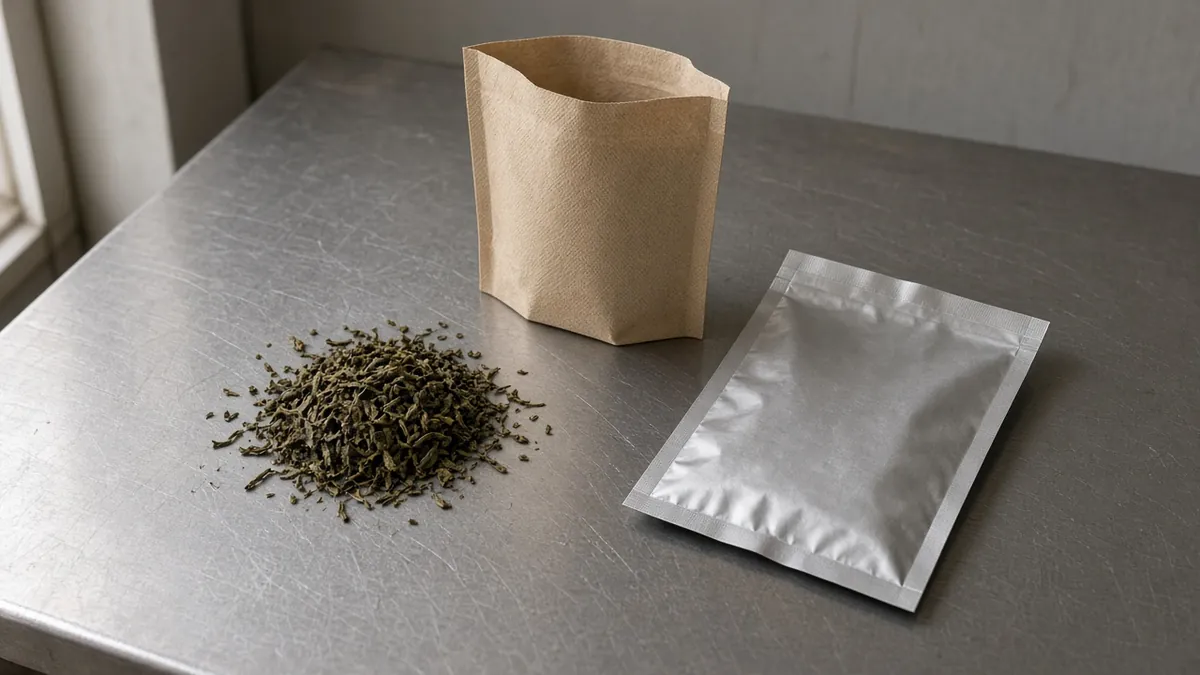
What each piece of the pack does
Three pieces show up in the sources. They do not do the same job.
Brew bag. This is the part that goes into hot water, or the inner web a machine forms into that part. A filter-roll page fetched 8 October 2026 sells inner rolls for pyramid tea machines and names nylon mesh, PLA mesh, PET mesh and a PLA non-woven as the web families. It says those rolls are not the outer envelope film, and that a pyramid web and a hanging-ear drip web are different. A second page from the same supplier, fetched the same day, describes a flat filter tea bag plus an individual envelope as a different route from pyramid mesh. Heat-sealable filter paper, tag stock, thread, and the envelope film or paper are different materials on that page. This guide does not pick a nylon bag. It only records that those names are brew webs.
Storage pouch. This is the closed flexible pack around dry leaf that is not meant to be steeped as the pouch itself. Barrier film is the layer that slows oxygen, water vapor, light or aroma. In the 1970 study, gas impermeability was the material condition for inert-gas tea packing, and the flexible construction that held the flush included aluminum foil laminated with plastics. Foil used alone was described as having a considerable number of pinholes, so the barrier in that account came from the laminate. The study also said a usable film still needs heat sealability, printability, moisture behaviour and physical strength. The layer stack on a pouch you buy now is a blank until the supplier sheet is attached. Do not copy the 1970 thicknesses onto it.
Outer carton or envelope. The ICPE chapter calls a paperboard carton with a liner or an overwrap of polypropylene or regenerated cellulose film the most common tea pack in that text, and it also lists plastic jars, bottles, pouches, strips and envelopes. The carton board is the carrier. The liner or overwrap is the extra wall, and only where that wall is present and closed. The filter-bag machine page lists the outer envelope as paper, foil or a laminate, in a pillow shape or a three-side seal, with the exact geometry taken from the drawing rather than from the name.
Takeaway: put the brew bag and the storage pouch on two lines. A mesh family name does not fill the barrier line.
What the leaf form changes
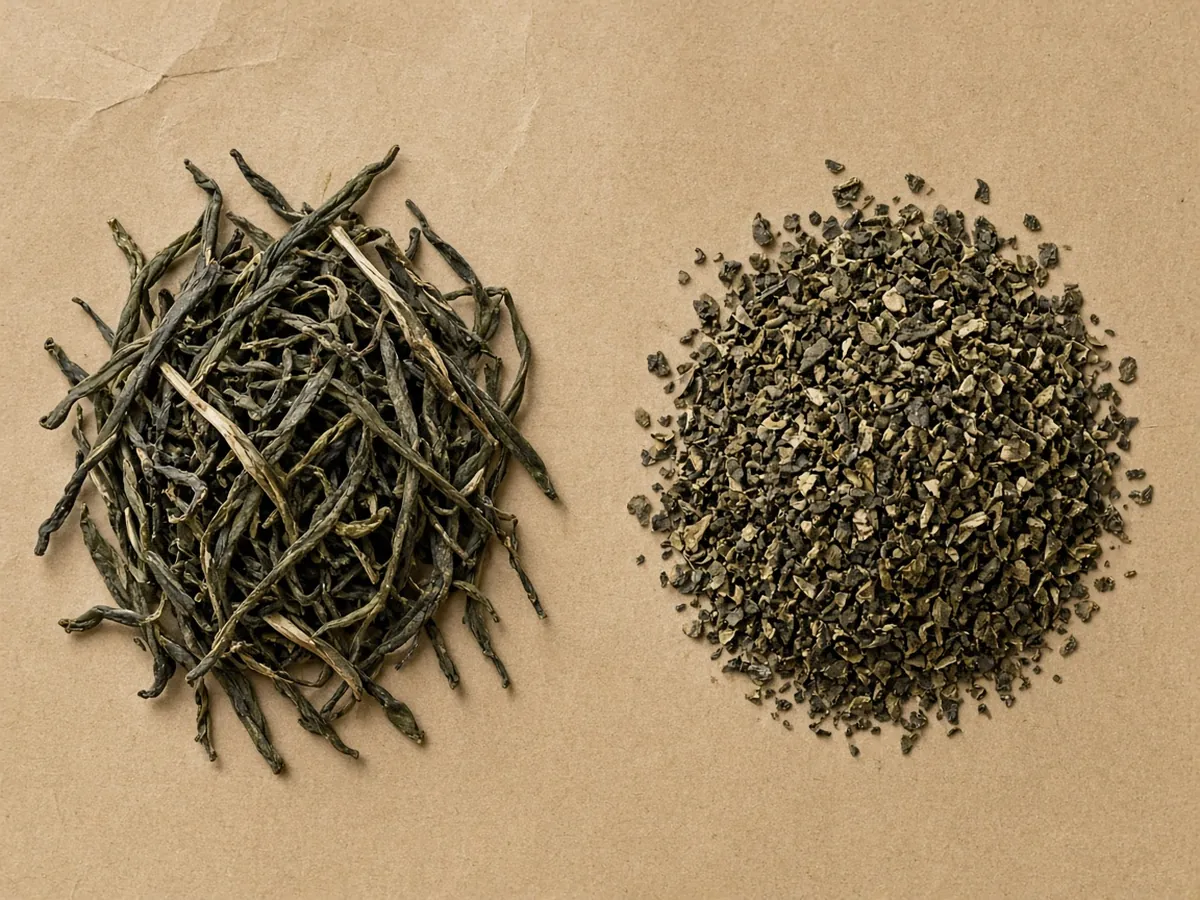
Write what the leaf looks like before you name a web.
The ICPE chapter locates tea taste and colour in polyphenols, including catechins, and in amino acids. It locates flavour in essential oils from the fresh leaf and in volatiles formed during manufacture. It then separates black tea, oolong and green tea. Deterioration, in that chapter, is loss of those volatiles and an increase in taints from fatty-acid oxidation. For green tea it adds a fall in ascorbic acid, a colour change from bright green toward olive green, and an odour change. Those are quality notes, not a barrier number.
Leaf shape also changes the pack in two practical ways.
The 1970 study says some of the space inside curled tea leaves can miss a gas flush. Oxygen then shows up in the headspace days later, as that trapped gas diffuses. A single flush is not the end of the record. Write whether someone will check the headspace again after the leaf has sat.
The filter-roll page says a mesh that holds leaf will not hold fine powder, and it asks whether the product is whole-leaf tea, cut tea, herb or a fine grind. The envelope-machine page says classic envelope tea is often a cut grade, and that the production blend, including fines, has to be named. A tea name on the ticket is not that description. A green-tea machine page fetched 8 October 2026 says whole leaves, broken leaves and blends can need different filling settings. It gives no leaf dimension and no fill weight that this page can reuse.
Why a brew bag is a poor storage wall
A brew bag is built to pass water. A storage pouch is built to slow the traffic the ICPE chapter and the 1970 study are worried about: oxygen, moisture and aroma.
In the 1970 experiment, plastic films without aluminum foil did not hold a nitrogen headspace over the storage weeks they measured. The laminate that included foil did. The same paper says moisture content and storage temperature changed how residual oxygen affected colour, aroma, liquor, taste and ascorbic acid, and that their sensory notes still recorded an aroma change at the lowest residual oxygen they included. Those interactions are the reason to write atmosphere, moisture and temperature on the same sheet. They are not a modern oxygen limit, and they are not a shelf-life date.
Oxygen barrier is the film check for the storage pouch, with the test temperature and humidity written beside any number the supplier supplies. Moisture barrier packaging is the same kind of check for water vapor. This page has no OTR or WVTR for a tea pouch. If the supplier sheet has a number, copy it onto the record with its unit and its test condition. If it does not, leave the cell blank.
Light is the third column. The ICPE green-tea note is a colour change you can see. A clear brew mesh does not block light. Foil in the 1970 laminate does, because the foil layer is opaque. A metallized or clear barrier film is a different question, and this page does not rank it against foil.
PLA, on the filter-roll page, is a plant-based family. That page does not print an EN 13432 or OK Compost claim, and it says a compost number waits for a certificate. Do not treat the letters PLA as a composting result or as an aroma barrier.
What to write down before a seal trial
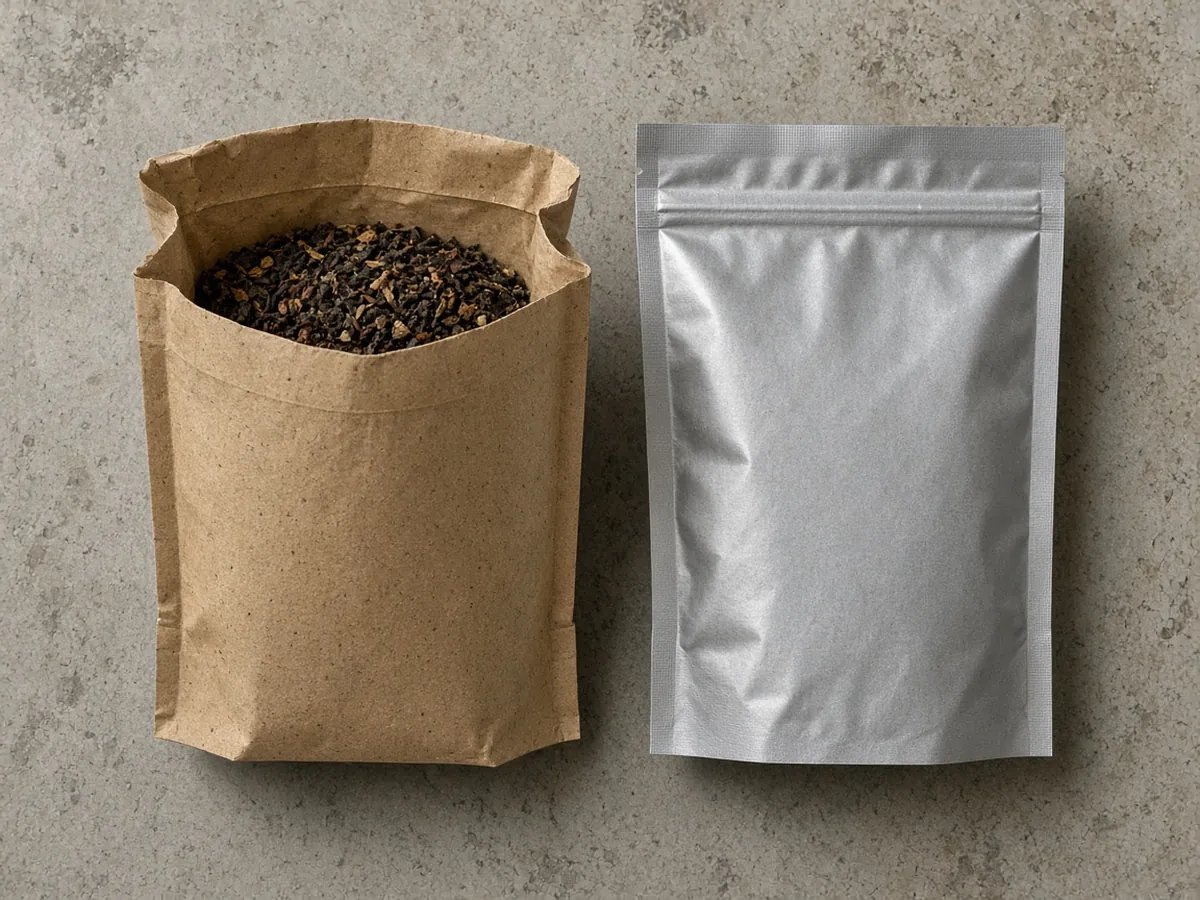
The seal is part of the wall. A barrier film with an open mouth is a tray.
The filter-roll page asks whether the host machine seals with heat or with ultrasonics, and it says those methods are not a reason to treat two webs as interchangeable. The envelope-machine page says filter-paper structure, width and sealing behaviour need a material sample, and that the outer envelope is specified from its own drawing. Seal strength is the measurement page for the force on a finished seal. This guide does not set a pass value.
A green-tea machine page treats seal temperature, pressure and a continuous close as the step after filling. It does not publish a temperature, a pressure or a dwell that belongs on a tea film. Write the settings the trial actually used, next to the web name, or leave them blank.
Tag, thread and the outer envelope are extra lines. The filter-roll page ships machine rolls without labels and treats tag and thread as a separate item. The envelope page treats the outer pack as paper, foil or a laminate. A string through a barrier pouch is a hole unless the drawing shows how that hole is closed. Write what you see.
Copy this record
Copy one sheet per sample. A blank line means you have not looked yet.
Tea packaging record
Sample ID:
Date and person:

Leaf
  Black, oolong, green, or other, as named on the lot:
  Whole leaf, cut leaf, fines or powder, as seen:
  Meant to keep current aroma, or meant to age:

Piece in hand
  Brew bag, storage pouch, or outer carton or envelope:
  Web family written on the roll or spec (or blank):
  Outer envelope or liner present (yes or no):
  Outer material, if present (paper, foil, laminate, or blank):

Atmosphere and storage
  Air, or an inert flush:
  Later headspace check planned (yes or no):
  Storage temperature and humidity, if measured:
  Light: clear web, or an opaque layer:

Seal and opening
  Heat seal or ultrasonic:
  Seal continuous, channeled, or not yet sealed:
  How the pack is opened (steep, tear, carton):
  Tag, thread or valve, and whether it pierces the wall:

Supplier numbers, only if printed on the sheet you have
  OTR, with unit, temperature and humidity:
  WVTR, with unit, temperature and humidity:
  Decision: hold, use as a brew bag only, or retest the storage wall:
When this page stops
The notes above are for dry leaf packed to keep the aroma it has now. Ready-to-drink tea and milk tea are different products. A nylon mesh can be a brew web, and this page does not tell you which mesh to buy. Aged tea that is supposed to change in the pack needs its own storage aim. Do not paste a green-tea oxygen note onto it.
A storage-life date is a filled-pack result at your humidity and temperature. The 1970 paper and the ICPE chapter do not supply that date. Food-contact status is a document for the finished web, from its supplier. The food contact packaging regulations page lists what to ask for. Nothing on this page clears a pouch.
Sources and method
Written 13 October 2026 from sources read before drafting. No tea was packed or measured for this page. The record sheet compares a sample. It is not a test method and it sets no pass limit.
- ICPE, “Packaging of Beverages,” PDF, tea section on the printed pages 167 to 168. Read 11 October 2026 from a local text of that PDF. The file prints no publication date on those pages. Used here: polyphenols and amino acids, volatile flavour, the black, oolong and green split, deterioration by lost volatiles and fatty-acid oxidation, and the green-tea notes on ascorbic acid, colour and odour. Also the paperboard carton with a polypropylene or regenerated-cellulose liner or overwrap, and the list of jars, bottles, pouches, strips and envelopes. A market-share sentence and the coffee laminate earlier in the same chapter were left out. They are not tea specifications.
- Kozo Furuya, “Inert Gas Packaging of Tea,” JARQ, 1970, PDF, materials discussion on pages 45 to 46 and the storage-condition discussion that follows. Read 11 October 2026. Used here as a mechanism: inert-gas packing for high-quality green tea in that account, foil laminates versus plastic films in that test, pinholes in foil used alone, the need for heat sealability and strength, and gas left inside curled leaves. Thicknesses, permeability figures, oxygen percentages, moisture levels, temperatures and storage months from the tables were left out.
- Filter rolls for pyramid tea and drip coffee, Spack Machine, library document dca54a73ea6b483bf35c91b29c347e33d6011fb83f6b4944c82ac49a2d7a984f, version c28ff9aee0497166a8d6ce792aece94ad184bb0fbef8b412b2e558f432b79902, published date on the record 21 August 2026, fetched 8 October 2026. Used for the split between an inner brew web and an outer envelope, the web families named for pyramid rolls, heat seal versus ultrasonic, leaf versus fine powder, and the statement that PLA on that page is not an EN 13432 claim. Roll widths, model codes and prices were left out.
- Filter tea bag with envelope packing machine, Spack Machine, library document bb8d7c70e701bdb6edebffe63140e180b7599febd20b07881fb23fc77f5f9686, version c9b5a71bea070f054ae96652bc84e3b69662420b1d41997efa32cf1a04d0e8e8, fetched 8 October 2026, no publication date on the record. Used for the split between flat filter paper and a pyramid mesh, and for paper, foil or laminate as outer-envelope materials. Speeds, bag sizes and certificates on that page were left out.
- Green tea packaging machines, MDPACKER, library document 466d824dc9a829fa9be49f41d7df88724f26ae924d791df5f349b3addf4500a0, version 851cbfeb796132583f77a7740c6b5eb7481dae6824777f04af5cdd9047f1e7cc, published date on the record 27 August 2026, fetched 8 October 2026. Used only as a compatibility note: leaf form can change filling, and seal temperature and pressure are settings. Machine names, speeds and freshness wording were left out.
Continue reading
Related articles
Fresh Produce Packaging Film: Respiration, Moisture and Trial Inputs
Match fresh produce film to crop, cut state, pack geometry and cold-chain conditions. Use a blank trial record for gas exchange, moisture and supplier data.
Nut Packaging Materials: Whole, Shelled, Raw and Roasted Products
Nut packaging materials follow shell, piece size and roast. Record moisture loss and gain, and leave barrier cells blank until a supplier sheet arrives.
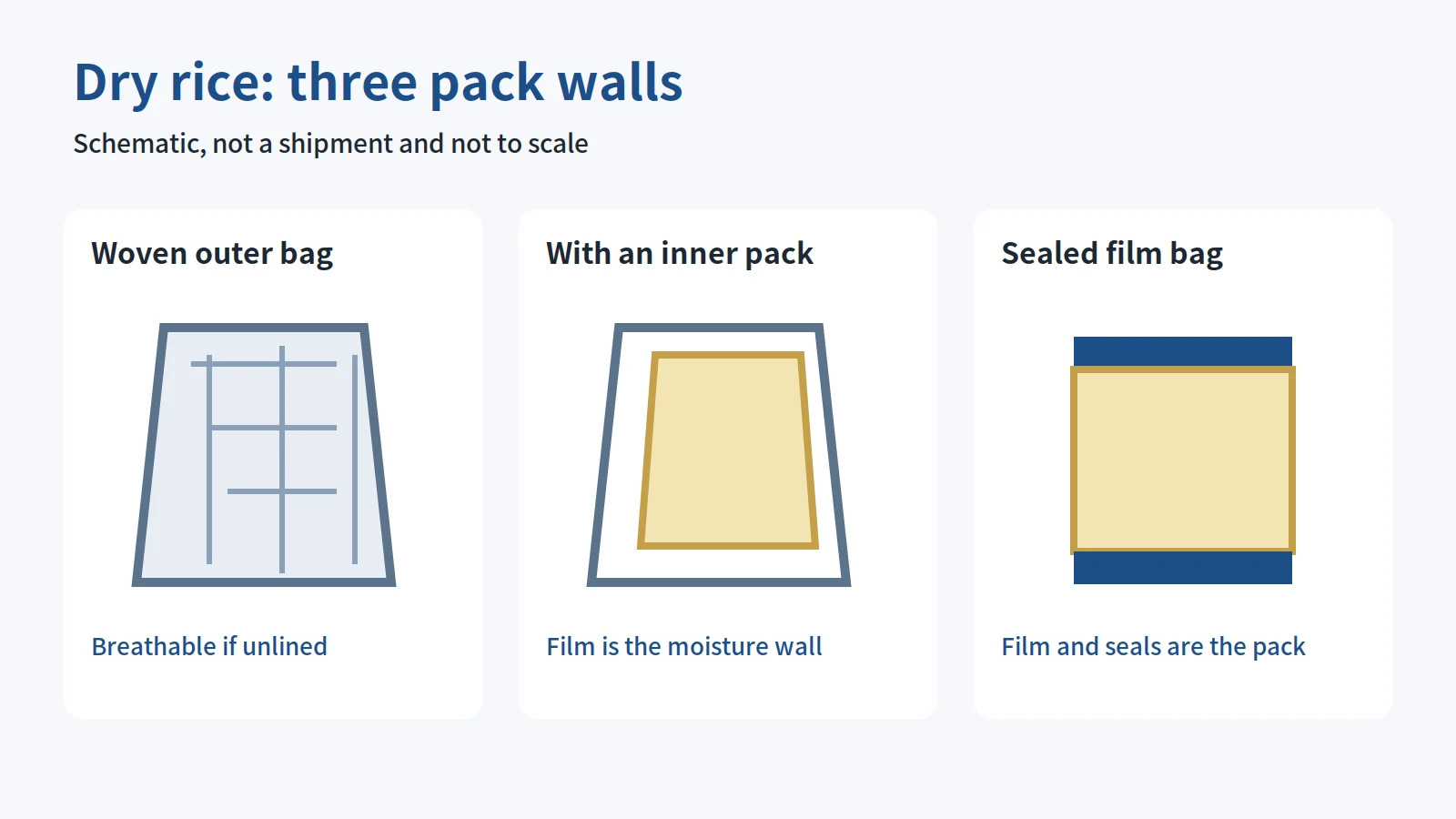
Rice Packaging Materials: Woven Sacks, Liners and Sealed Retail Packs
What dry rice packaging is made of: a woven outer sack, a sack with an inner pack, or a sealed film bag. Polypropylene is not a moisture-proof guarantee.