

Topic hub
Packaging Film Performance: Barrier, Sealing and Mechanical Properties
Packaging film properties explained: barrier, sealing, friction, mechanical, optical and dimensional performance, and the standard tests behind each number.
Packaging film properties are the measurable characteristics that decide whether a film protects the product through its shelf life and runs reliably on the packaging line. Some numbers describe protection (oxygen and moisture barrier), others describe how the film behaves on a machine (seal strength, friction, stiffness). A data sheet lists them side by side, but they answer different questions, and they are only comparable when the test conditions match.
Start with the failure
Scroll horizontally to view all columns if needed. ↔
| Observed failure | Property group | First test route |
|---|---|---|
| Stale, soft or oxidized product | Barrier and package integrity | OTR/WVTR at storage conditions, then whole-pack checks |
| Weak or leaking seal | Sealing | Cooled strength, SIT curve and hot tack where loaded hot |
| Drag, slipping or tracking | Surface and dimensional | COF of the actual surface pair, then gauge profile |
| Tears or holes | Mechanical | Slow puncture, dart impact or flex conditioning according to the hazard |
Use the method table to record the specimen and conditions before comparing results.
The main groups of packaging film performance
Barrier. Oxygen transmission rate (OTR) and water vapor transmission rate (WVTR) describe how fast gas and moisture pass through the film. They drive shelf life for snacks, coffee, dry mixes, and pharmaceuticals. The OTR page and WVTR page explain units and test methods, while oxygen barrier packaging and moisture barrier packaging help you decide how much protection a product needs. The materials behind the numbers are covered under barrier film and high barrier film.
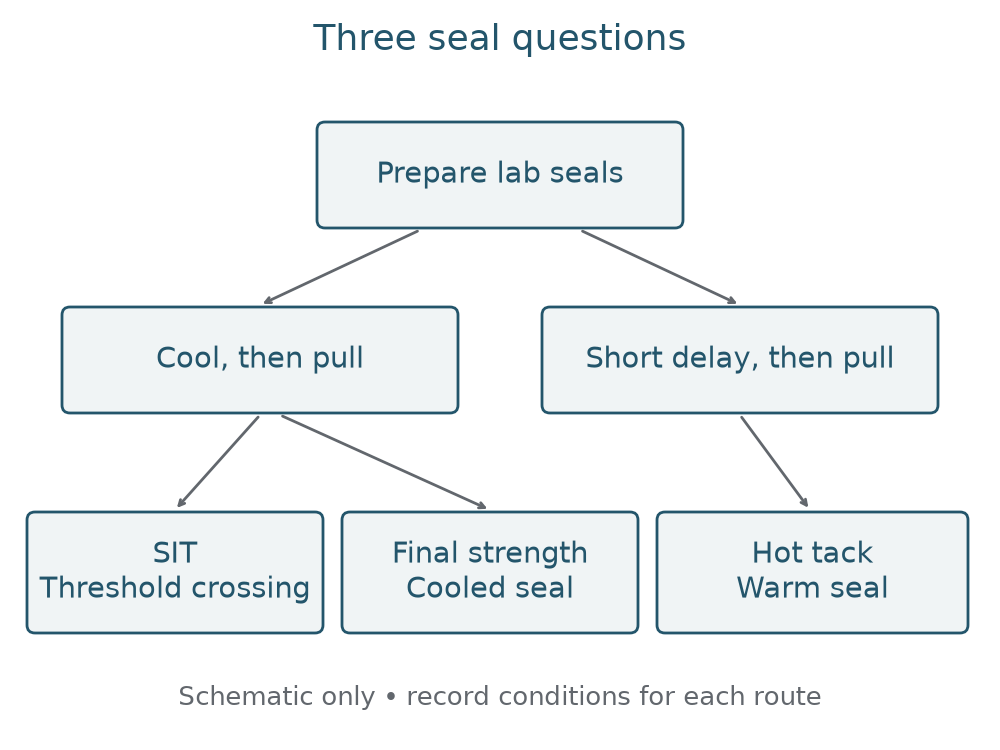
Sealing. Seal strength, seal initiation temperature, the sealing window and hot tack decide whether a pack closes reliably at line speed and stays closed in distribution. Seal initiation temperature marks where a sealant starts to bond, seal strength describes what the finished seal can carry, and hot tack covers the moments before the seal cools, which matters most when product drops into a fresh seal.
Surface and friction. Coefficient of friction (COF) controls how film slides over forming shoulders, pull belts and itself. Too high and the film drags or tracks off. Too low and the web slips or the stacked packs slide. The coefficient of friction page covers test setup and how to agree line-specific targets.
Mechanical. Tensile strength, elongation, puncture resistance, and flex durability determine whether the film survives forming, filling, shipping, and handling. Sharp products and rough distribution make puncture and flex cracking real concerns, and puncture resistant film explains which materials and tests apply.
Optical. Haze, gloss, and clarity matter for shelf appearance and for reading print through the film. They also tell you whether an opaque or metallized layer is blocking light, which can be a protection requirement in its own right.
Dimensional. Thickness, yield, and shrinkage affect cost per pack, web handling, and registration. Thickness variation shows up as tracking problems and uneven seals. Film thickness and gauge covers microns, mils and how to read a tolerance.

Property, meaning and common test method
Scroll horizontally to view all columns if needed. ↔
| Property | Specimen and report conditions | Public method reference |
|---|---|---|
| Oxygen transmission | Flat film; thickness, temperature, RH on each side and oxygen partial-pressure difference | D3985-24, F1927-20, ISO 15105-2:2025 |
| Water vapor transmission | Film/laminate; thickness, temperature and humidity gradient | F1249-25 infrared sensor; E96/E96M-21 gravimetric cup; ISO 15106-2:2003 infrared sensor |
| SIT / heat-seal preparation | Laboratory seals; criterion, width, dwell, pressure and cooling | F2029-16(2021) preparation, then F88/F88M-23 strength |
| Seal strength | Seal strip from lab or package; width, pull speed, support technique and failure mode | F88/F88M-23 |
| Hot tack | Warm seal; dwell, pressure, delay, strip width and separation speed | F1921/F1921M-12(2023) |
| COF | Film/film or film/other surface; sled, speed, temperature, humidity and film age | D1894-24 |
| Slow puncture | Film/laminate; probe, speed, conditioning and layer structure | F1306-21(2025) |
| Dart impact | Film; method, drop height and conditioning; failure mass at the specified probability | D1709-24 |
| Specimen thickness | Test specimen; instrument, contact force and reading positions; not a QC sampling plan | D6988-21, historical scope reference |
| Tensile properties | Thin film/sheet; thickness, direction, strain rate and conditioning | D882-26a |
| Flex resistance | Barrier material; conditioning severity, then a separately specified damage/barrier test | F392/F392M-23 |
Each row has its own page: oxygen transmission, water vapor transmission, SIT, seal strength testing, hot tack behavior, friction, puncture and gauge. Properties rarely act alone, so read the table as a set of linked checks, not a ranking.
Always state the test conditions
A property value without conditions is close to meaningless. OTR and WVTR change with temperature and relative humidity, and some barrier layers change a great deal. Seal strength depends on temperature, dwell time, pressure, jaw type, and the speed of the pull test. COF depends on the surface pair, the sled weight, and whether the film has aged and let slip additives migrate to the surface.
When comparing two suppliers, check that the numbers come from the same method and the same conditions. If a data sheet omits them, ask. The guide on comparing film specifications goes into more detail.
Lab data versus on-machine behavior
Laboratory tests isolate one variable on a flat, clean sample. A real line adds contamination in the seal area, flexing, folds, tension, temperature drift, and variation across the web. A film with a good lab seal curve can still leak on a vertical form-fill-seal machine when product dust sits in the seal. A film with excellent OTR on a flat sample can lose much of that performance in a finished pouch after flex cracking or poor seals.
Treat lab numbers as a way to screen and compare materials, then confirm on your own equipment with your own product. The machine compatibility pages explain how film properties map to specific machines, and VFFS film shows the seal and friction needs in practice.
From properties to shelf life
Barrier numbers only mean something against a product requirement. Shelf life is the point where those numbers meet the product’s sensitivity, the pack size and the storage conditions, and the packaging and shelf life page shows how film choice feeds into it. Package-level testing and real-time or accelerated storage studies confirm the result, which a data sheet value alone cannot.
Next checks by group
For barrier, obtain storage-condition results on the finished pack. For sealing, compare cooled and warm-seal results on the same structure. For surface handling, test the contact pair involved in the fault. For mechanical damage, match the loading mode to the product hazard. For optics, agree the viewing or light-protection requirement. For dimensions, measure a profile rather than one point.
Sources and method
Reviewed October 8, 2026 against the official public scope/abstract pages linked in the table. ISO 15106-2 identifies the infrared method; other parts use different sensors. References identify the editions used here, not laboratory certification or approval of a material. The D6988-21 entry preserves its test-specimen and non-QC scope; the publisher now also lists D6988-26. Consult the agreed full method for execution.
Performance
In this section
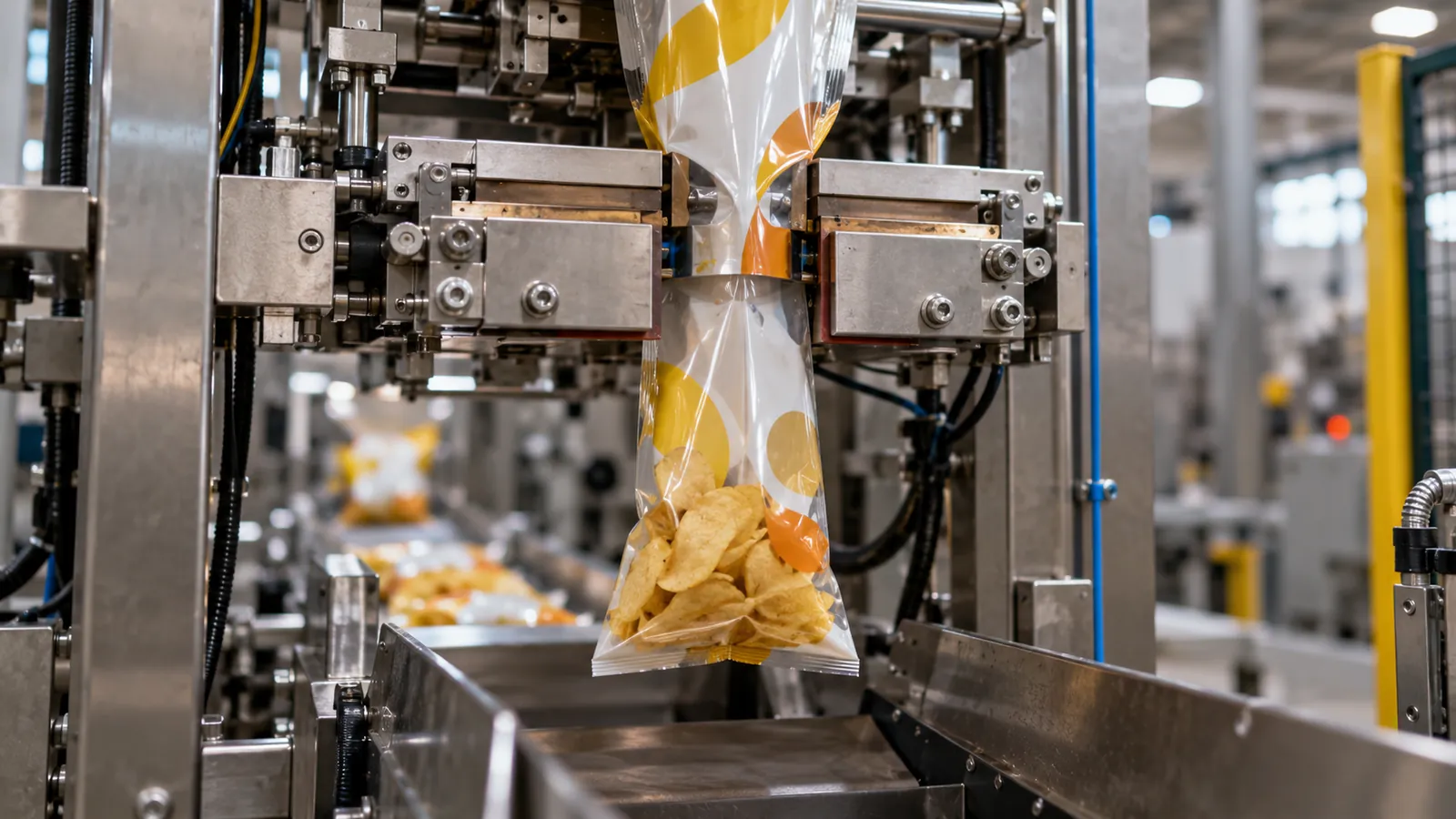
Hot Tack in Packaging Films: What It Is and Why It Matters
Hot tack packaging performance is the strength of a heat seal while it is still molten. Learn the ASTM F1921 test, the hot tack curve and how it affects VFFS lines.
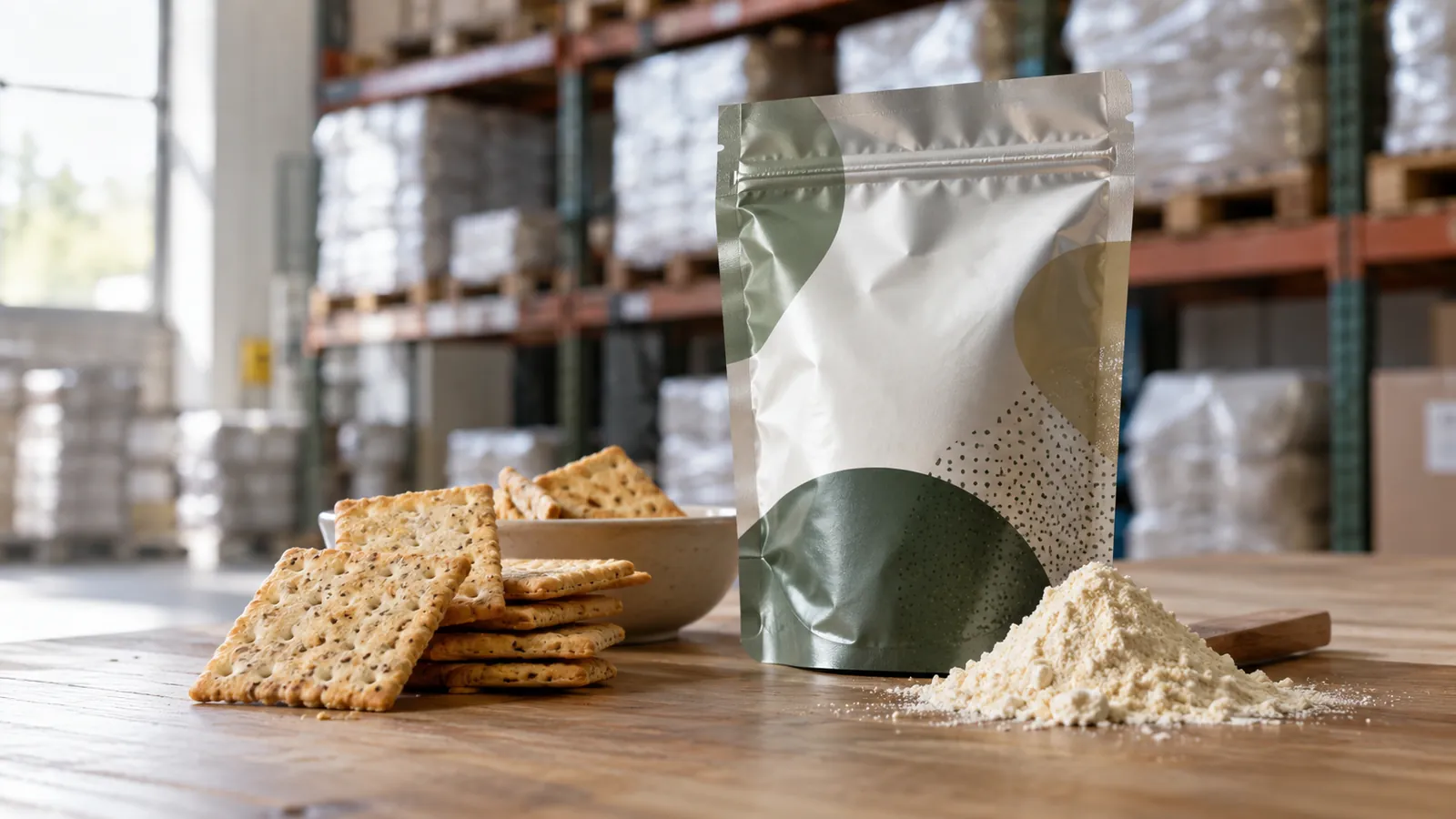
Moisture Barrier Packaging: Protecting Dry and Moist Products
Moisture barrier packaging keeps dry products crisp and moist products fresh. See how to match film structures, desiccants and seals to the product and climate.
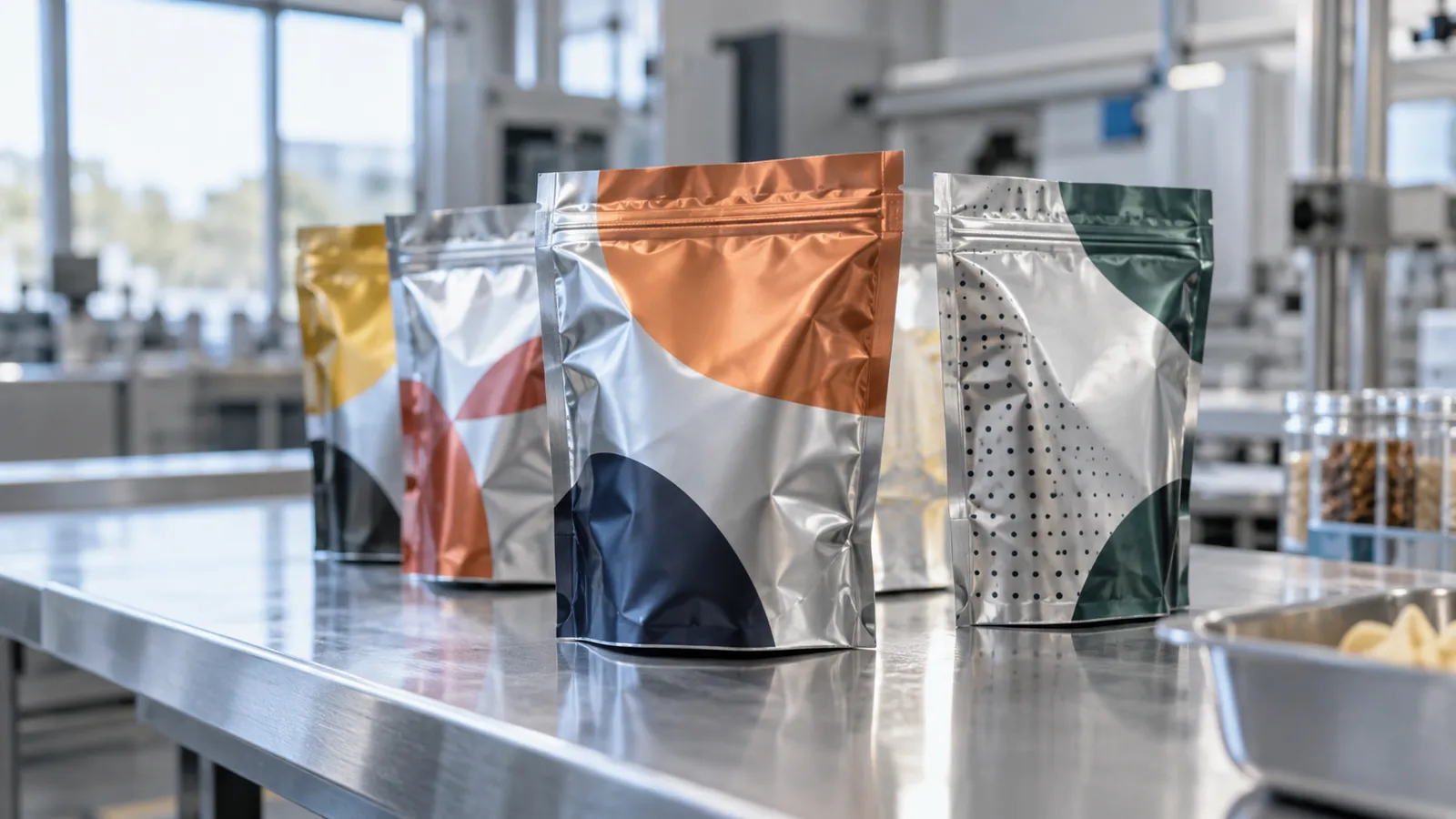
Oxygen Barrier Packaging: Choosing the Right Level of Protection
Oxygen barrier packaging should match what the product can tolerate. Learn how to size protection, use nitrogen flushing and scavengers, and validate shelf life.
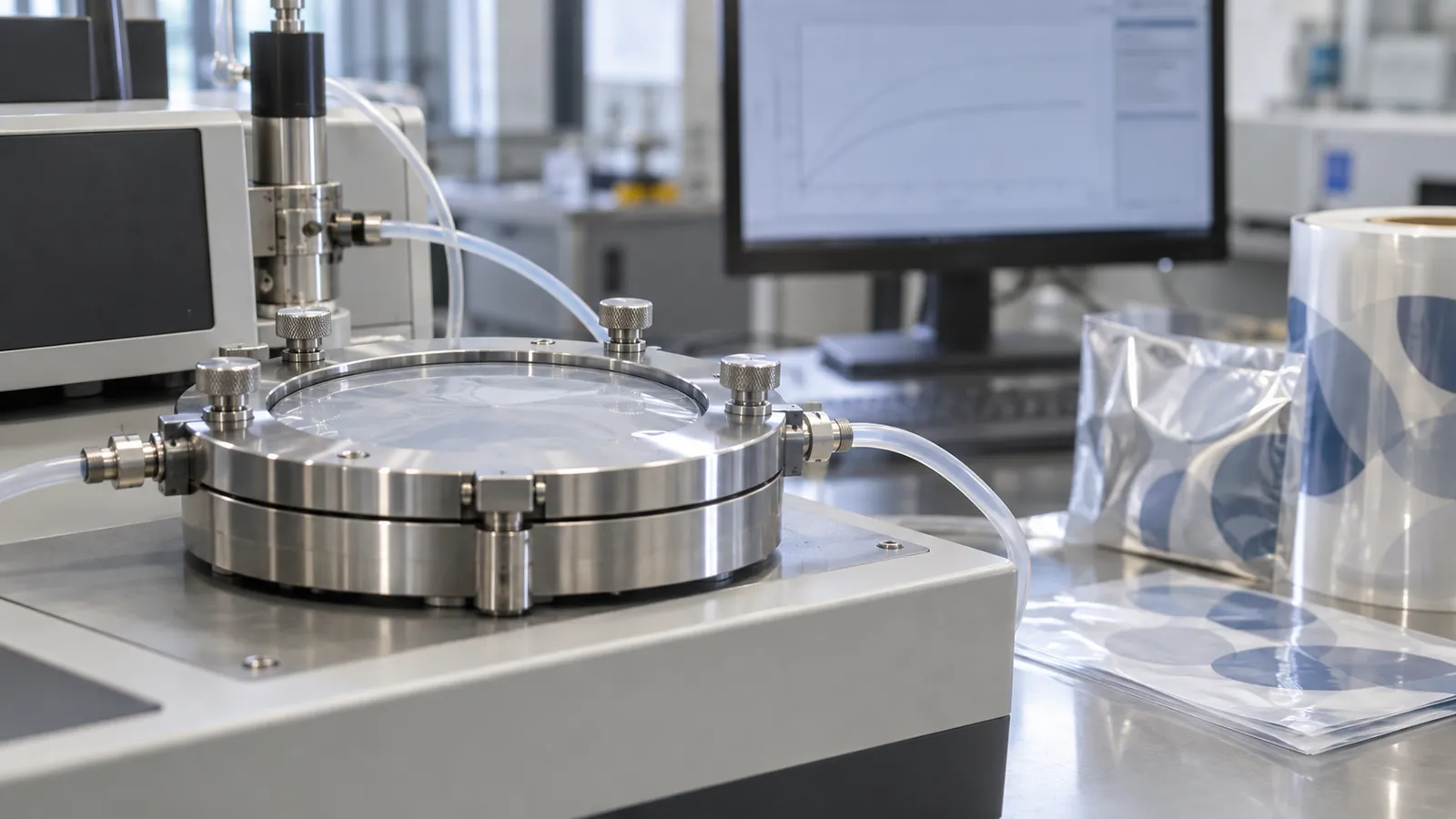
Oxygen Transmission Rate (OTR): Units, Test Methods and How to Read It
Oxygen transmission rate (OTR) measures how much oxygen passes through a film. Learn the units, test methods, conditions and how OTR relates to shelf life.
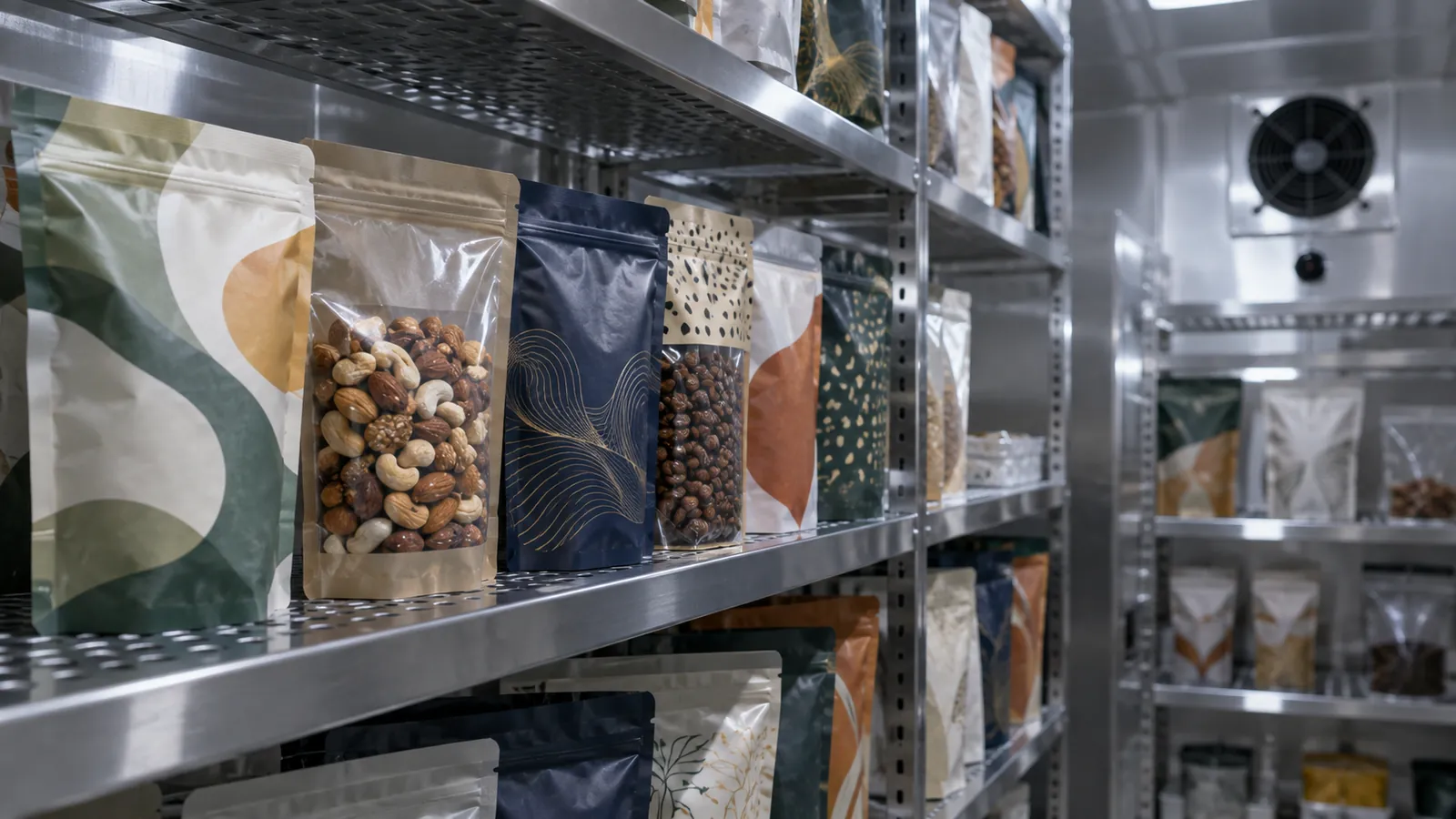
Packaging and Shelf Life: How Film Choice Affects It
Packaging film shelf life depends on oxygen, moisture, light and seal integrity. Learn the failure modes, real-time vs accelerated tests and a study checklist.
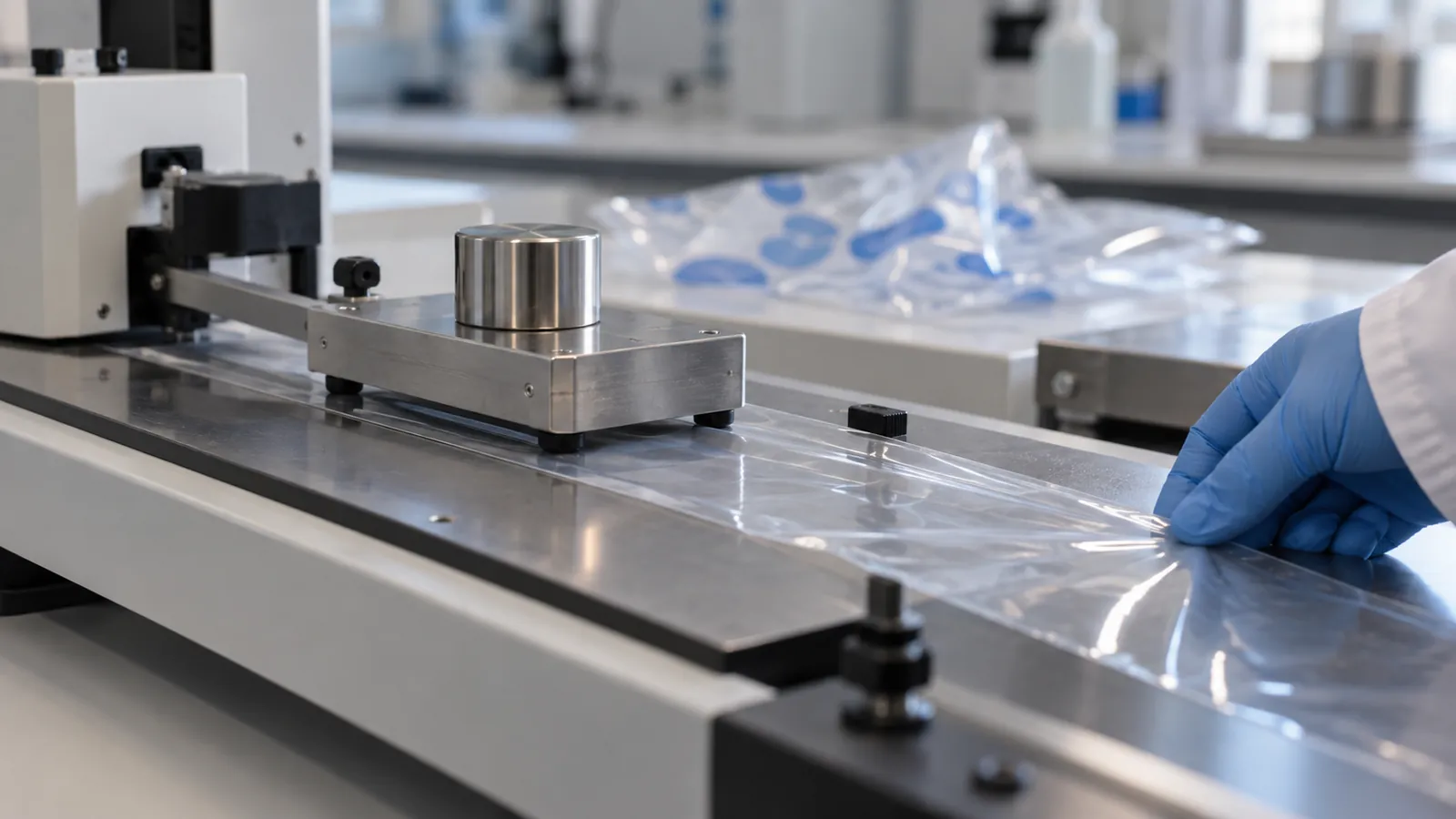
Packaging Film Coefficient of Friction (COF): Testing and Targets
Packaging film coefficient of friction explained: static vs kinetic COF, ASTM D1894 testing, slip additive migration and how to set COF targets for your machine.
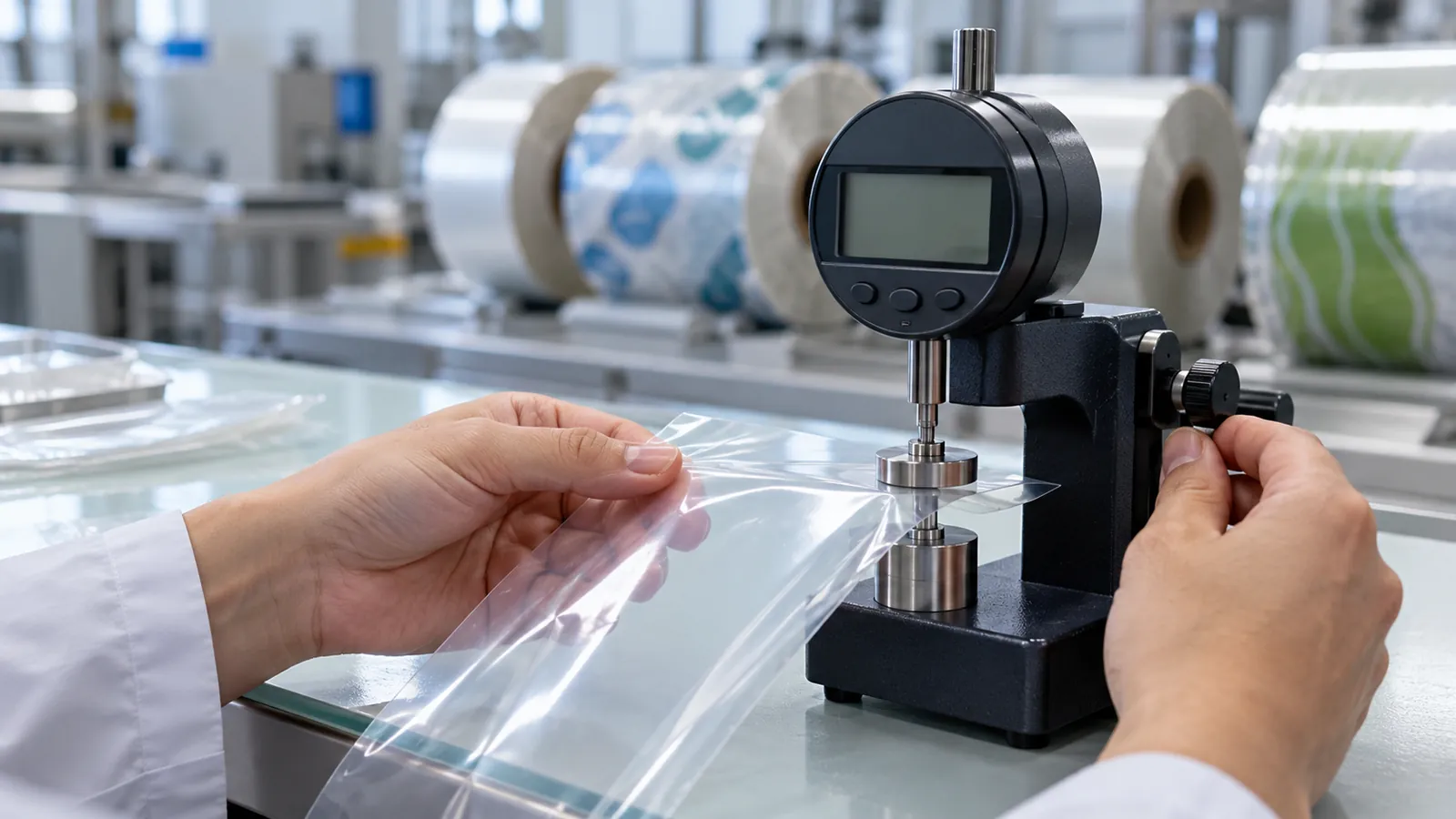
Packaging Film Thickness: Microns, Gauge and Mils Explained
Packaging film thickness explained: microns, gauge and mils, how to convert between them, how thickness is measured and what downgauging does to a pack.

Packaging Seal Strength: Testing and Specifying Seals
Packaging seal strength is how much force a heat seal resists before it opens. Learn ASTM F88 peel, burst and leak tests, failure modes and how to write a spec.
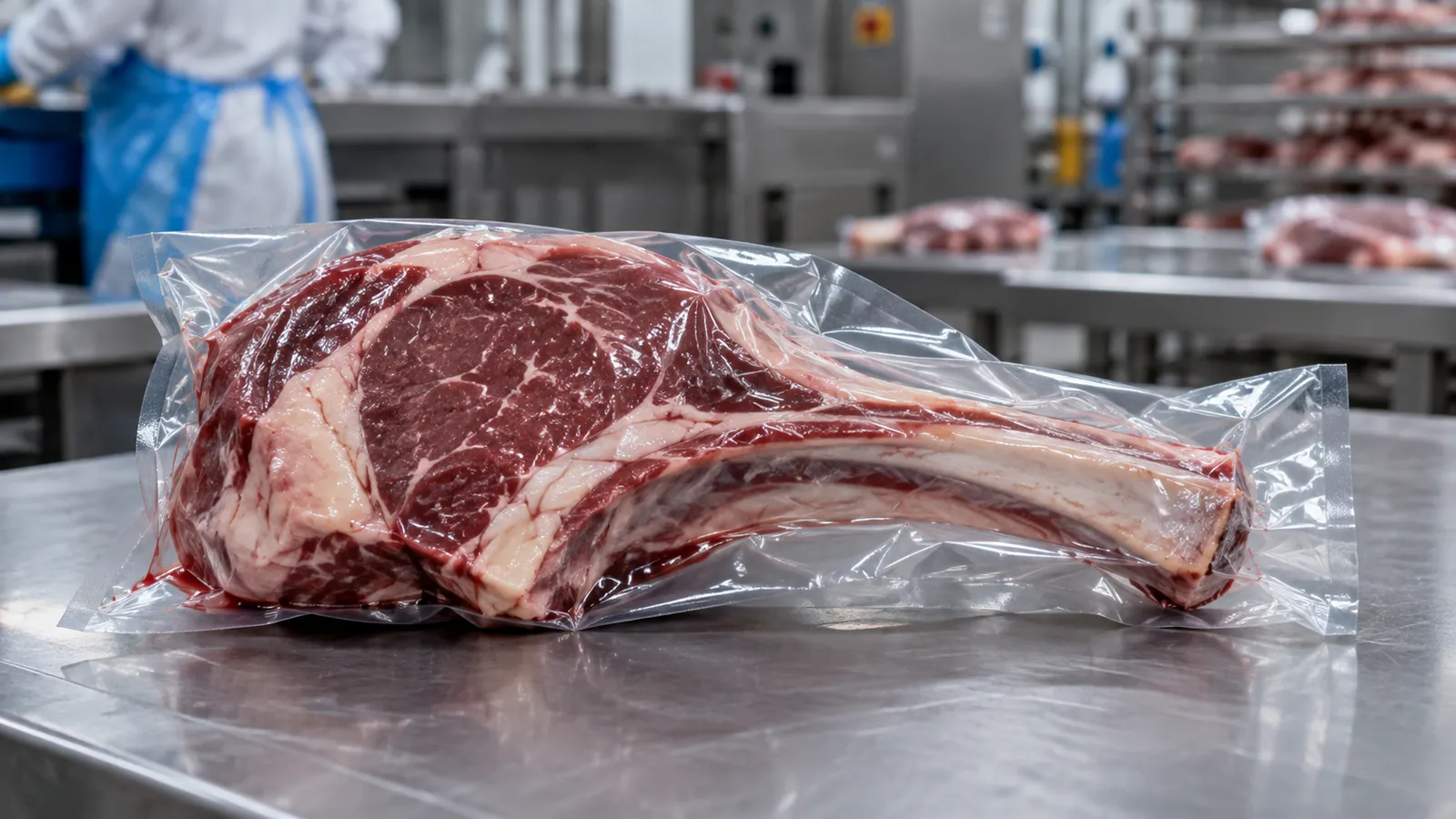
Puncture Resistant Film: Materials and Test Methods
Puncture resistant film explained: how puncture is tested (ASTM F1306, D1709), which materials help with sharp products, and how to specify and trial it.
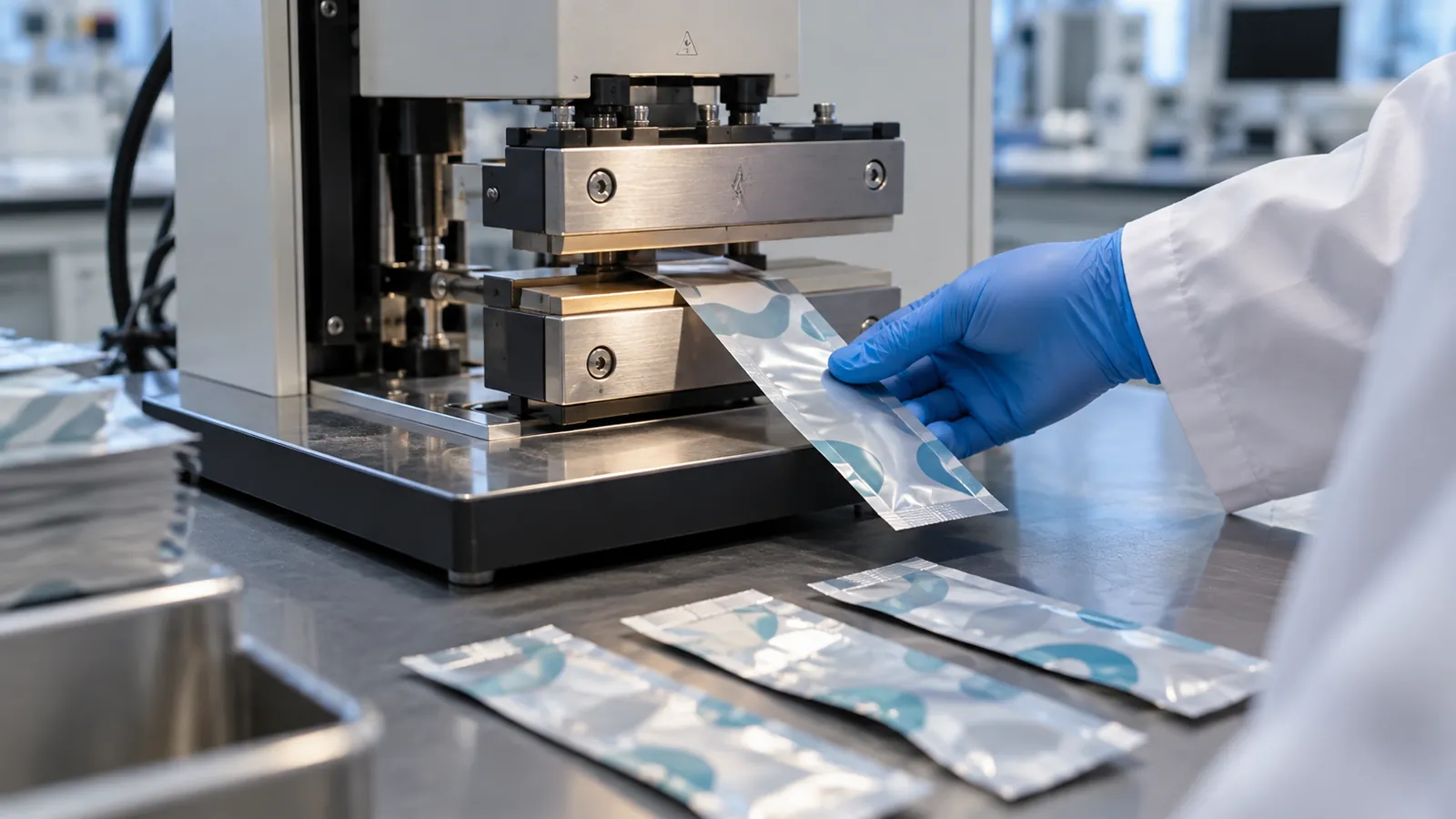
Seal Initiation Temperature (SIT): What It Is and How It's Measured
Seal initiation temperature is the lowest sealing temperature at which a heat seal reaches a defined minimum strength. Learn how SIT is measured and used.

Water Vapor Transmission Rate (WVTR): Units, Test Methods and Interpretation
Water vapor transmission rate (WVTR) measures how much moisture passes through a film. Learn units, test conditions, ASTM F1249, E96 and how to read the number.