
Oxygen Barrier Packaging: Choosing the Right Level of Protection
Oxygen barrier packaging should match what the product can tolerate. Learn how to size protection, use nitrogen flushing and scavengers, and validate shelf life.
Oxygen barrier packaging limits how much oxygen reaches a product during its shelf life. Choose protection against a product-specific quality limit, then validate the package and storage conditions; an oxygen budget cannot establish a food-safety date. The metric itself is explained under oxygen transmission rate (OTR), and the materials under barrier film.
Start with an oxygen budget
Every oxygen-sensitive product tolerates some oxygen before quality drops below what you are willing to sell. Think of that tolerance as an oxygen budget. The package spends it from three sources:
- Oxygen already inside at filling: the headspace gas, plus oxygen dissolved in or trapped within the product.
- Oxygen that permeates through the film over the storage period.
- Oxygen that enters through seals, folds, pinholes and closures.
Whatever is left after the first item is what the package can let in over the shelf life. A product with a large budget and a short shelf life can live with a modest barrier. A product with a tiny budget and a long shelf life needs a very good barrier, a low starting oxygen level, or both.
The quality team defines the limit from product studies, such as rancidity, aroma, color or potency, rather than from a film data sheet. Low-oxygen microbiological safety requires separate product/process validation. The FDA Food Code 2022, §3-502.12 and Annex 3, explains why reduced oxygen can introduce pathogen risks even when spoilage is delayed; its retail-food scope is not a universal approval for industrial packs.
Quality team’s oxygen budget record
Scroll horizontally to view all columns if needed. ↔
| Input | Unit / basis | Entry |
|---|---|---|
| Quality failure budget | cc O₂/package; product study | _____ |
| Initial headspace oxygen | Headspace cc × measured O₂ fraction | _____ |
| Initial dissolved / entrained oxygen | cc O₂/package; same reference basis | _____ |
| Whole-pack ingress | cc/(package·day), at intended temperature / RH | _____ |
| Absorber usable capacity and activation conditions | cc O₂/package; supplier data at use conditions | _____ |
| Storage / gas / reference conditions and target time | °C, RH, pressure; days | _____ |
Assumed quality-screening example without an absorber: budget 10 cc, headspace oxygen 2 cc, dissolved/entrained oxygen 1 cc, ingress 0.1 cc/(package·day) → (10 − 2 − 1) ÷ 0.1 = 70 days. All inputs are hypothetical, ingress is assumed constant and the result is not a safe-use date. An absorber needs capacity and uptake-rate evidence before it can enter that model.
Resolve initial oxygen before choosing an ingress target, and keep microbial safety assessment separate from this quality calculation.
Headspace oxygen, nitrogen flushing and MAP
The cheapest oxygen to remove is the oxygen you never pack. Air is roughly one fifth oxygen, so a pouch sealed with air starts with a real share of its budget spent. Two common ways to lower that:
- Nitrogen flushing. A stream of nitrogen displaces air in the pack before the seal closes. On a VFFS machine, the gas is typically introduced through the forming tube. Residual oxygen is rarely zero, and it depends on gas flow, line speed, product shape and how much air the product itself carries in its voids.
- Modified atmosphere packaging (MAP). The pack is filled with a deliberate gas mix, often nitrogen with some carbon dioxide, selected for the product. Fresh meat and cheese use mixes that suit their spoilage biology, and some use high oxygen on purpose to hold red color. MAP is as much about the gas you retain as the gas you exclude, so the film must also hold the mix in.
- Vacuum. Reducing package pressure removes some air and can lower residual oxygen; measure the remaining oxygen. It suits products that tolerate being compressed, and it is covered on the vacuum pouch page.
Flushing only helps if the package then holds. A nitrogen-flushed pack with a leaky seal is just a more expensive way to deliver air slowly.
Oxygen scavengers and absorbers
Scavengers (also called absorbers) are active components that chemically react with oxygen. They come as small sachets, labels or patches placed in the pack, or as materials built into a film layer or closure. They can remove the oxygen left in the headspace after filling and take up some of what permeates in later.
They work best where the headspace is small, the pack is well sealed and the starting oxygen is already low. Practical points to check with the supplier:
- Many scavenger types need a certain moisture level or temperature to activate, and some are poorly suited to dry products.
- Capacity is finite. A scavenger rated for the headspace will not cope with a leaky pack.
- Sachets are a foreign object that a consumer may find, and some markets or customers will not accept them. Food-contact and labeling rules vary by market, so confirm the requirements for your destination.
- Scavenging layers in film add cost and must be kept away from conditions that exhaust them before use.
Treat scavengers as a way to close the last gap on a good barrier, not as a rescue for a weak one.
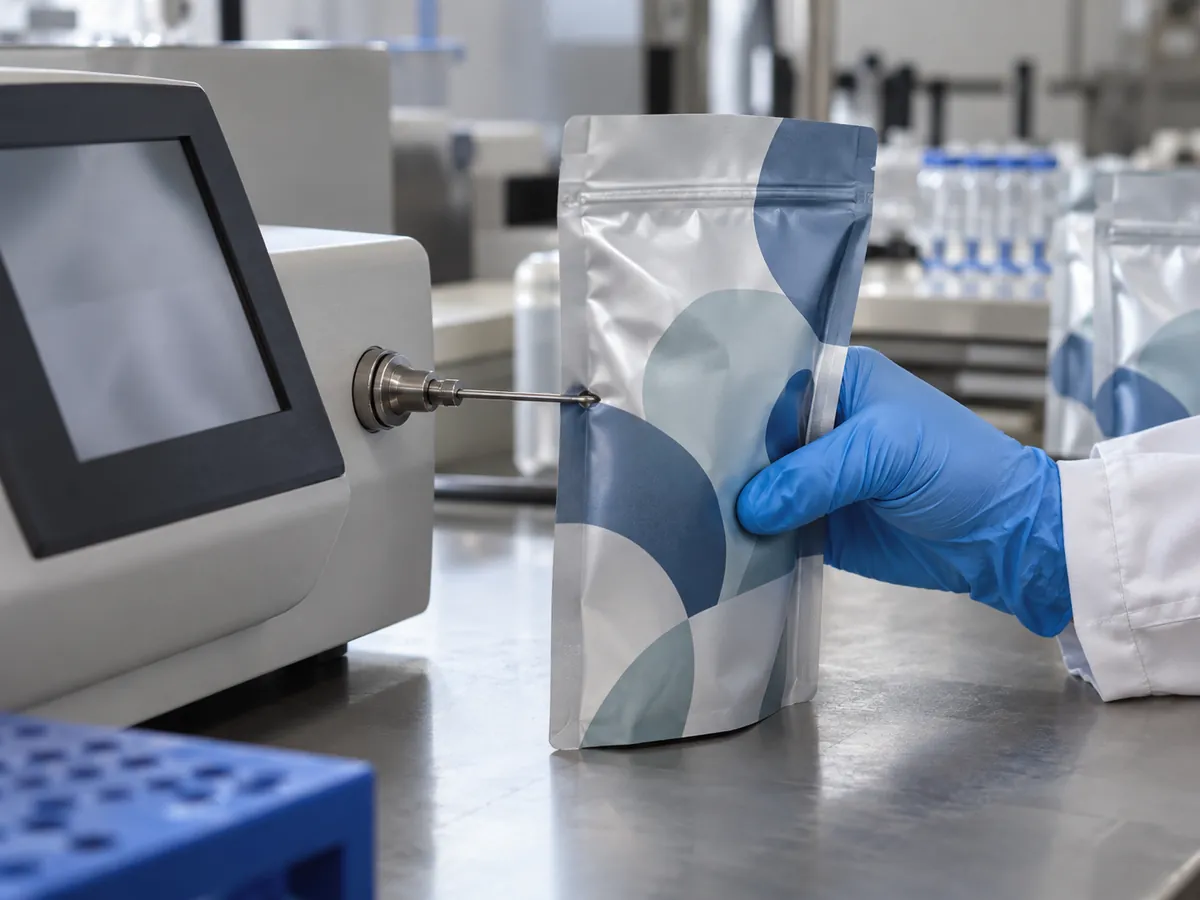
Seals and pinholes are leak paths
A film’s OTR is measured on flat, undamaged material. A finished package has seals, folds and sometimes closures, and all of them can let in more oxygen than the film does. Common weak points:
- Seal area. The sealant is often the only barrier at the seal edge, and contamination or an incomplete seal can leave a channel. Packaging seal strength covers how seals are tested and specified.
- Folds and gussets. Thin metallized and oxide layers can crack where the film is creased. ASTM F392 (Gelbo flex) gives a way to compare flex durability.
- Pinholes. Thin foil, metallized layers and coatings can have small defects that dominate the oxygen ingress of a high-barrier film.
- Closures, zippers, valves. These are usually not made of the barrier material.
If a package has a good-barrier film and a poor-barrier shelf life, look at these paths before changing the film. ASTM F1307-20 measures package transmission for packages that normally enclose a dry environment; ASTM D3985-24 tests flat film/sheet. For wet products or MAP, agree test conditions and a method matching the intended internal environment.
Matching structures to need levels
The table below is a starting point for a conversation with a film supplier, and it is not a specification. Real choices depend on shelf life, storage conditions, pack size and the other barriers the product needs, such as moisture and light.
Scroll horizontally to view all columns if needed. ↔
| Quality requirement | Starting approach | Evidence that decides |
|---|---|---|
| A tested structure already meets the budget | Retain it as a comparison control | Production-pack storage results |
| Initial oxygen is too high | Assess gas flush / vacuum and product-carried oxygen | Residual oxygen measurement and process suitability |
| Permeation consumes the remaining budget | Compare barrier-containing laminates or coextrusions | Grade, layer thickness, humidity and whole-pack rate |
| Capacity remains insufficient | Consider an absorber-compatible design | Working capacity, uptake rate, activation and storage validation |
EVOH, PVDC, metallized, oxide-coated and foil structures are candidate routes, not guaranteed protection levels. No same-condition material ranking is claimed. The barrier film and high barrier film pages explain structure roles; check the whole design against recycling requirements too.
Validating with shelf-life tests
Calculation narrows the options, but testing decides. A reasonable sequence:
- Define the failure criterion (sensory limit, peroxide value, potency, color) and the storage conditions, including temperature swings.
- Shortlist two or three structures with different barrier levels, bracketing your estimate.
- Make real packs on the real machine, with the real gas flush and seals instead of hand-made samples.
- Store them at the expected conditions and, if the product allows, at a higher temperature to speed up changes. Accelerated results need care, since temperature changes film permeability and product chemistry differently.
- Check headspace oxygen over time and the product quality against your criterion.
- Select a structure that meets the agreed quality margin and separately validated safety requirements.
How barrier links to dates is covered in packaging and shelf life.
What to put in an oxygen barrier specification
- State the product’s oxygen sensitivity and the failure you are protecting against.
- Define target shelf life and storage temperature and humidity.
- Set the allowed residual headspace oxygen and how it will be checked.
- Ask for OTR with unit, temperature, relative humidity and test method, and state whether it is flat film or package data.
- Request barrier data after flexing or converting if the structure has metallized, oxide or foil layers.
- Specify seal integrity requirements and how leaks will be tested.
- Decide whether scavengers are allowed and acceptable in your market.
- Confirm results with shelf-life trials on production packs.
Frequently asked question
Can oxygen absorbers be reused?
Do not count a used absorber as fresh capacity. A manufacturer’s public handling guide explicitly excludes reuse for its oxygen-absorber system. Follow the chosen system’s instructions and verify unused working capacity for the package budget; this is supplier guidance, not a recommendation.
Sources and method
Reviewed October 8, 2026. F1307-20 and D3985-24 public scopes distinguish dry-environment packages from film specimens. FDA Food Code 2022 supports the separation of quality preservation and reduced-oxygen safety controls. The table avoids unsupported material tiers; a supplier’s grade/structure data and product studies must establish the actual protection. Numerical inputs above are explicitly assumed.
Continue reading
Related articles
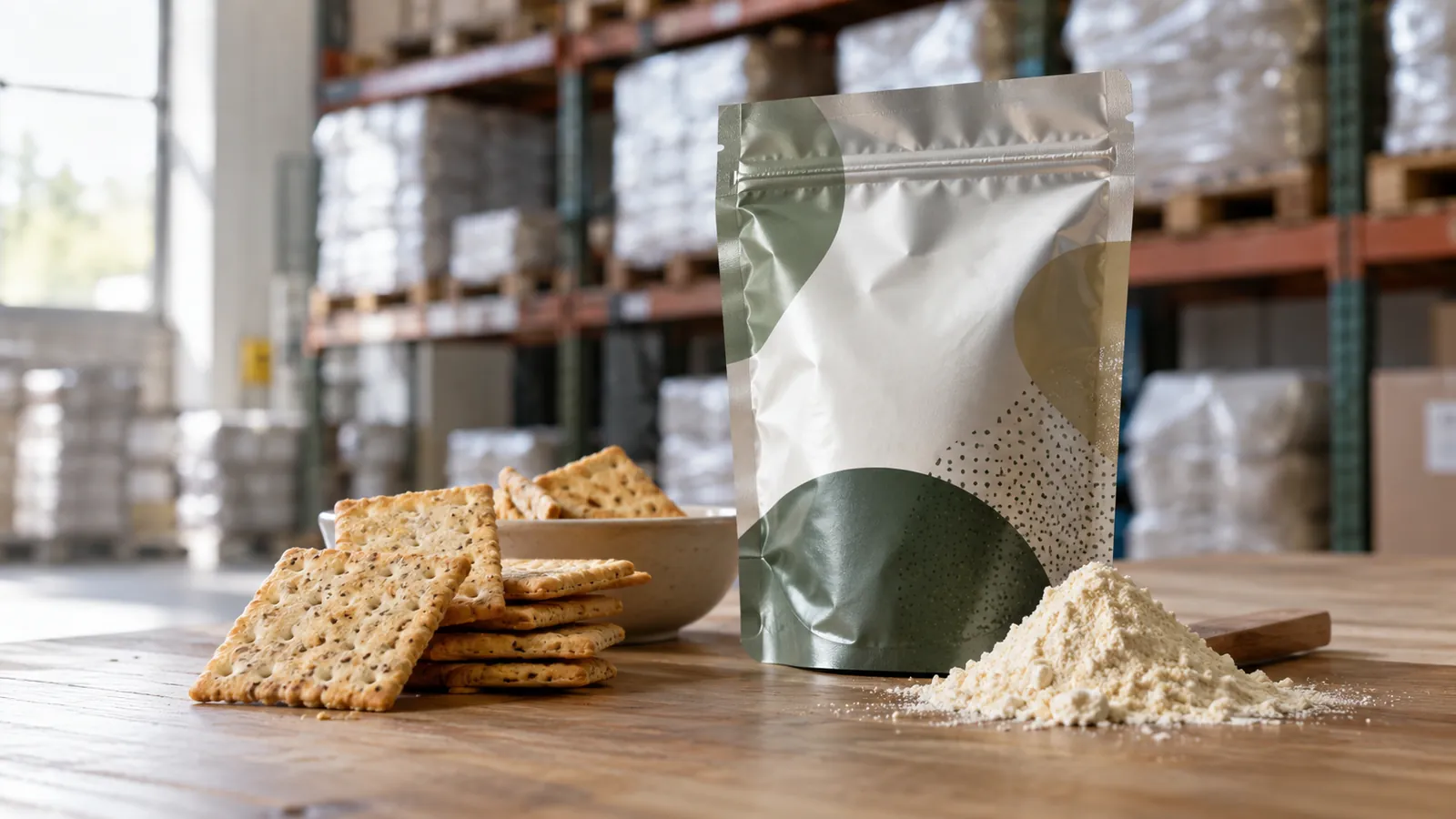
Moisture Barrier Packaging: Protecting Dry and Moist Products
Moisture barrier packaging keeps dry products crisp and moist products fresh. See how to match film structures, desiccants and seals to the product and climate.
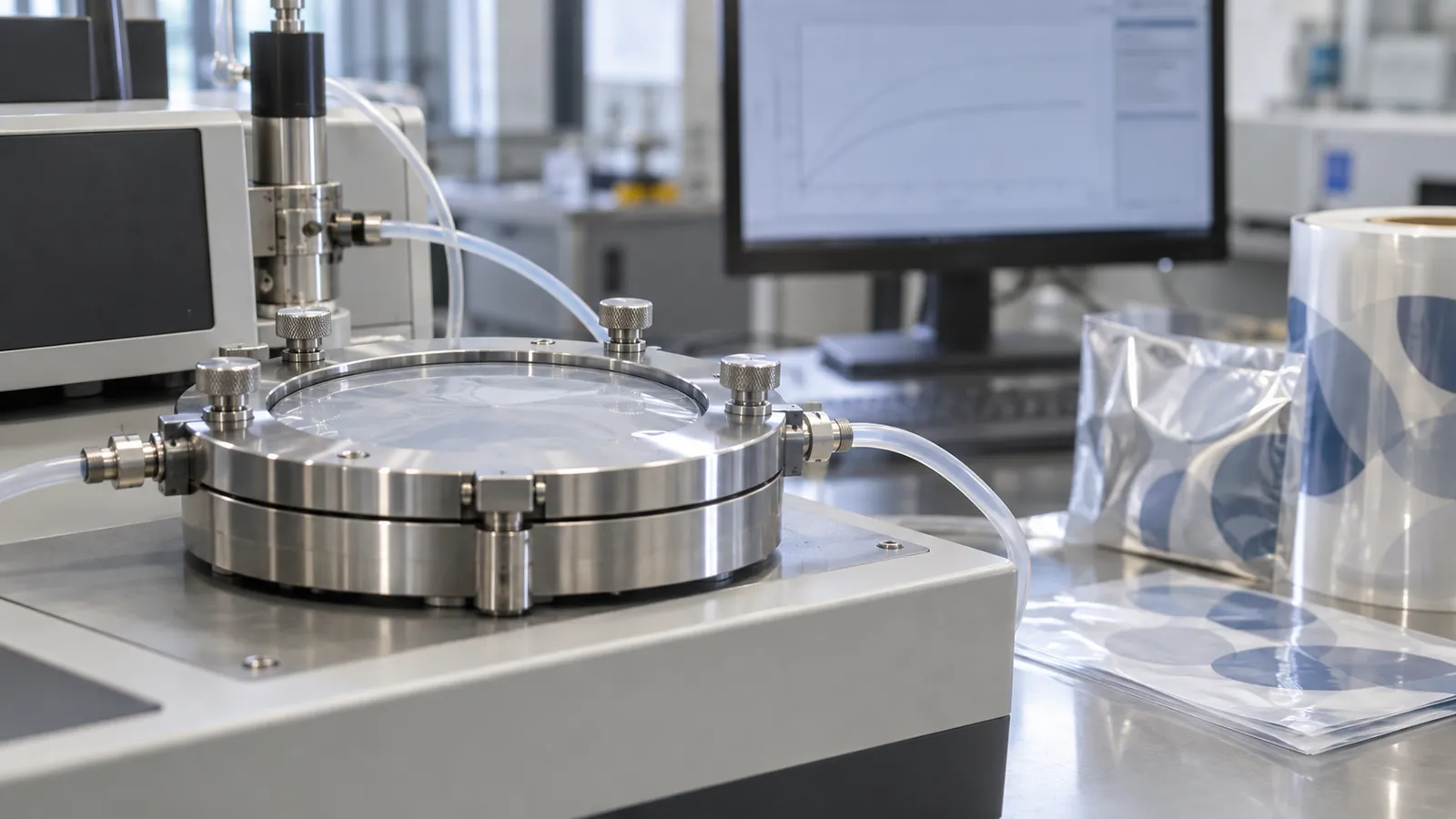
Oxygen Transmission Rate (OTR): Units, Test Methods and How to Read It
Oxygen transmission rate (OTR) measures how much oxygen passes through a film. Learn the units, test methods, conditions and how OTR relates to shelf life.
Packaging and Shelf Life: How Film Choice Affects It
Packaging film shelf life depends on oxygen, moisture, light and seal integrity. Learn the failure modes, real-time vs accelerated tests and a study checklist.