
High Barrier Film: Structures, Materials and When You Need One
High barrier film keeps oxygen and moisture transmission very low. See common structures, trade-offs, typical products and how to specify one.
Extra barrier can add cost without extending shelf life if oxygen or moisture is not what makes the product fail. High barrier film should be selected against a product requirement; the label has no universal OTR or WVTR threshold.
Start with the seven-question record below to connect failure evidence, storage, structure and validation. For the fundamentals, see barrier film.
Scroll horizontally to view all columns if needed. ↔
| Decision | Evidence needed |
|---|---|
| Failure mechanism | Product changes during storage, not a barrier label |
| Clear or opaque pack | Visibility requirement and candidate structures |
| Heat or flex exposure | Barrier and integrity after the intended process |
| Target market | Food-contact and recycling requirements for the full pack |
What “high barrier” means
The term depends on context. A package for oil-roasted nuts, a retort meal and a moisture-sensitive tablet each need different barrier levels. A structure that is high barrier for a snack with a few months of shelf life may be inadequate for a product expected to last two years.
Because there is no universal standard, you may see labels such as medium barrier, high barrier and ultra high barrier, but their boundaries change by supplier, region and product category. Treat the label as a marketing class, not a specification. Ask for OTR and WVTR values with stated temperature and humidity, then compare to your own requirement.
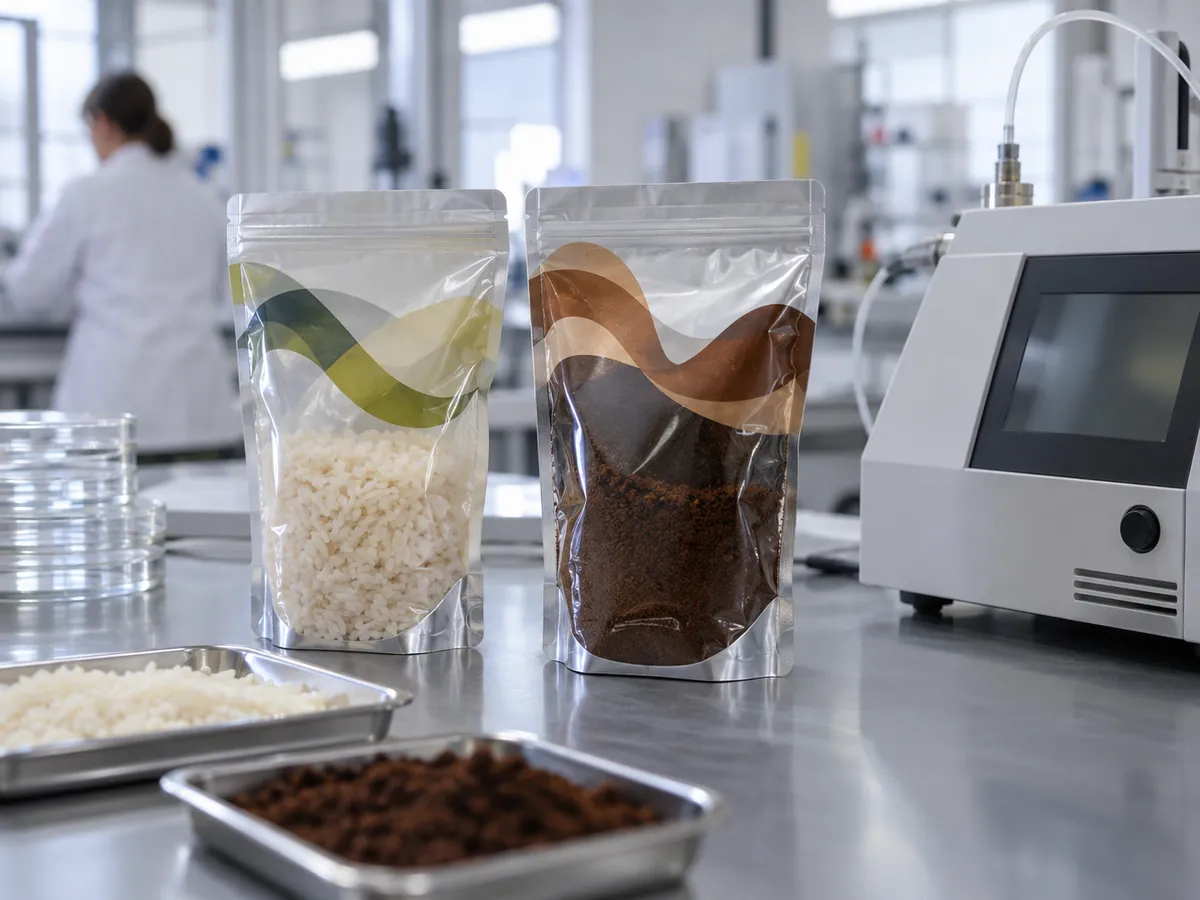
Common high-barrier structures
Scroll horizontally to view all columns if needed. ↔
| Structure | What provides the barrier | Notes |
|---|---|---|
| PET / AL / PE | Aluminum foil | Near complete barrier; opaque; foil can crack when folded; hard to recycle |
| PET / metPET / PE | Metallized PET | Lighter and lower cost than foil; opaque; barrier can fall if flexed |
| PE / PA / EVOH / PE (ties omitted) | EVOH: oxygen; PE: moisture resistance; PA: mechanical support | Public catalogue top-film example; validate the complete stack |
| AlOx- or SiOx-coated PET laminates | Thin ceramic-like oxide layer | Transparent; coating can crack with flex, so often laminated inside |
| High-barrier coated BOPP | PVDC or other barrier coating on BOPP | Good oxygen and moisture barrier in a thin coating; chlorinated coatings are being phased out by some brand owners |
These are examples, not recipes. A manufacturer’s public catalogue lists the PE/PA/EVOH/PE construction; it does not make PA a moisture shield. Actual barrier depends on layer thickness, coating quality and conversion.
Trade-offs
High barrier is rarely free.
- Foil, oxide coatings and EVOH structures usually cost more than plain polyolefin films.
- Foil and metallized films are opaque. Clear barrier needs EVOH or oxide coatings, which cost more or have other limits.
- Foil, metal layers and oxide coatings can crack when flexed or creased, so the finished package may be worse than flat-film data suggests. ASTM F392/F392M-23 provides flex conditioning; barrier is then measured separately.
- Laminates that combine PET, foil, nylon and PE are difficult to recycle. Moves toward mono-material packaging and recyclable flexible packaging usually cost some barrier performance. Rules and collection vary by market.
- Stiffer or more brittle layers can affect forming, sealing and pouch handling.
Do you need a high barrier film? A selection checklist
High barrier film packaging costs more, can limit clarity and recycling, and can be harder to run, so it is worth confirming that the product really needs it. Work through these questions before asking for quotes.
- What makes the product fail first? If oxygen or moisture uptake ends the shelf life, barrier is the main lever. If the product fails through light, staling inside the pack, microbial growth or breakage, a higher barrier film may add cost without adding shelf life.
- How long, and where? A long shelf-life target, or storage and distribution in warm, humid conditions, raises the requirement. Humid storage matters most for EVOH and nylon, whose oxygen barrier weakens as humidity rises.
- Is the oxygen already inside the pack? A barrier film slows oxygen coming in; it does not remove oxygen sealed in with the product. Headspace oxygen is handled by vacuum, gas flushing or oxygen absorbers, and should be checked alongside the film.
- Does the pack have to be clear? If shoppers must see the product, foil and metallized films are ruled out, and the choice moves to EVOH or oxide-coated films.
- Will the pack be folded, flexed, frozen or heated? Creasing, transport vibration, freezing and retort can all reduce barrier in the finished pack. Ask for data after flexing, and for retort or hot-fill data where the process uses heat.
- Is there a recycling target? A mono-material barrier structure may be needed for the markets you sell in, usually at some cost in barrier. Settle this before choosing between foil and a polymer barrier.
- Will it run on your line? Stiffer or brittle layers and different sealants can change sealing conditions and forming behavior. Plan a machine trial with the actual structure.
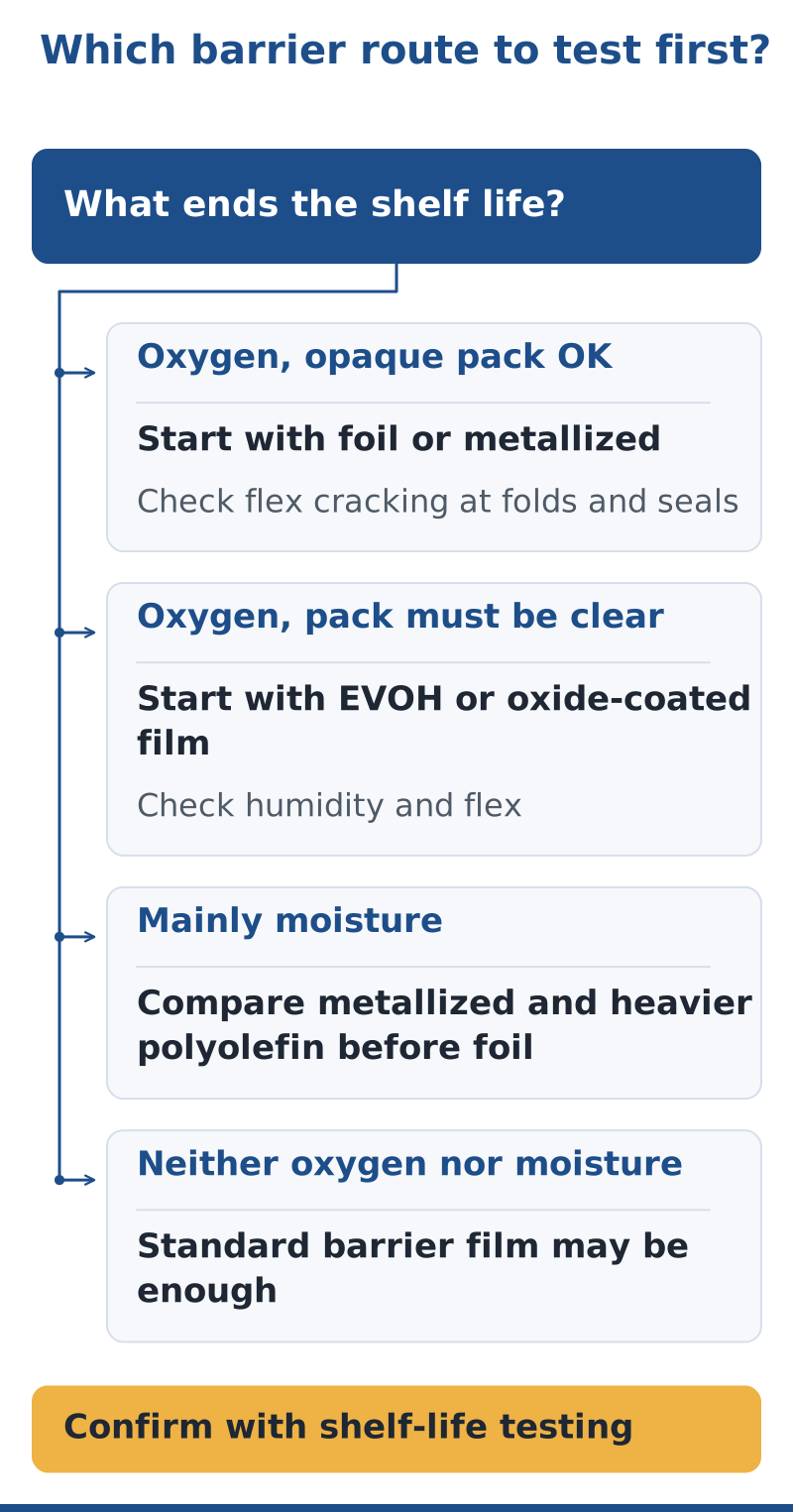
How the answers usually point:
- Oxygen limits shelf life and the pack can be opaque: start with foil or metallized structures, then check flex cracking at folds and seals.
- Oxygen limits shelf life and the pack must be clear: start with EVOH or oxide-coated films, then check humidity and flex performance.
- Moisture is the main risk and oxygen matters less: compare metallized and heavier polyolefin structures before moving to foil.
- Neither oxygen nor moisture limits shelf life: a standard barrier film may be enough; confirm with shelf-life testing rather than adding barrier by default.
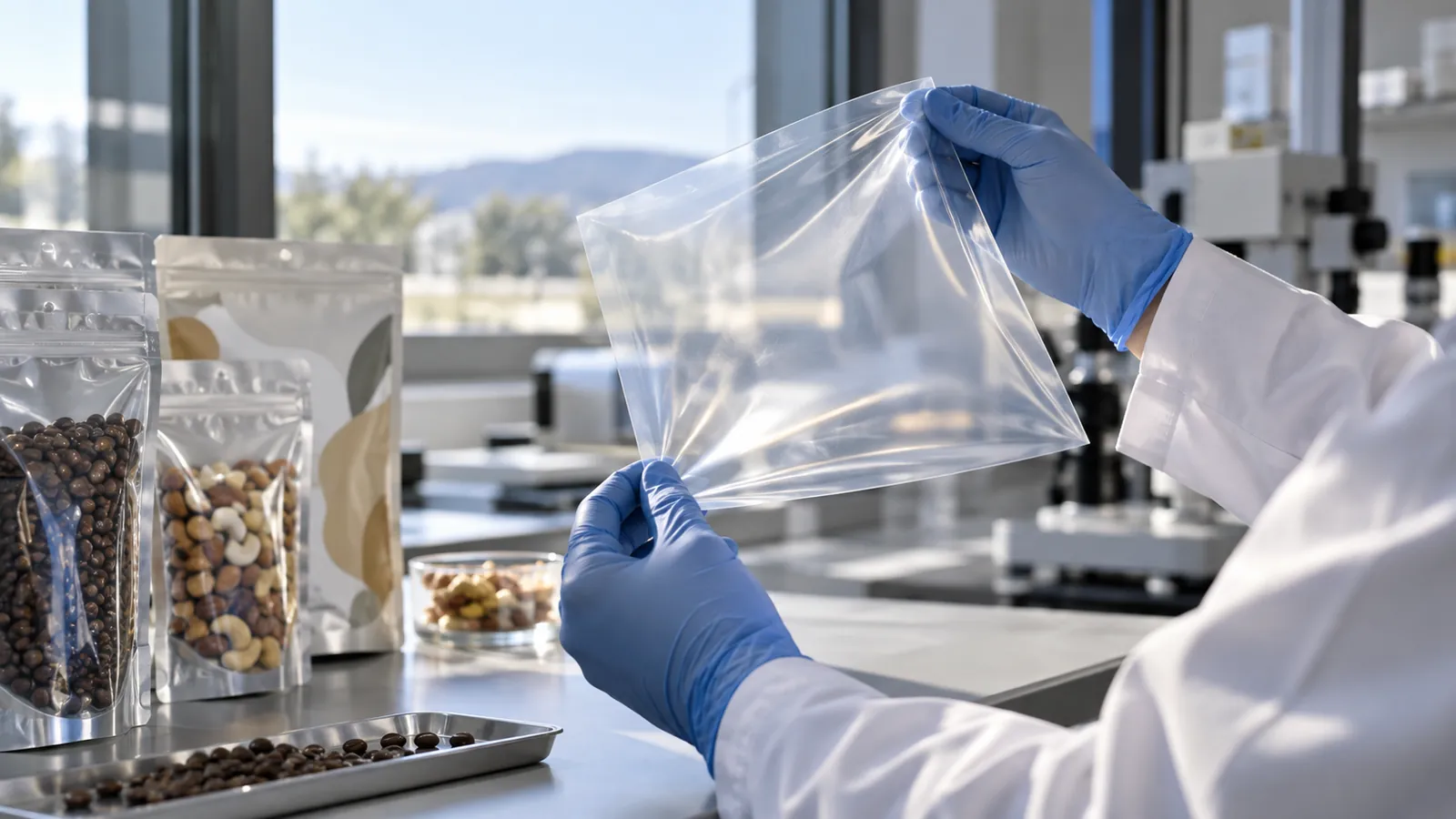
Typical products that need high barrier
- Coffee: the barrier protects aroma and prevents oxidation, often with a one-way degassing valve. See coffee packaging materials.
- Retort foods: the barrier has to survive heat sterilization. See retort pouches. US FDA guidance on low-acid foods in hermetically sealed containers identifies 21 CFR Part 113. A barrier test is not thermal-process validation; assess the product, pack and scheduled process together.
- Pharmaceuticals: moisture and oxygen sensitive tablets and powders, with foil often used. See pharmaceutical flexible packaging and pharmaceutical packaging foil.
- Oxygen-sensitive dried foods: nuts, milk powder, infant formula, jerky and similar products.
Foil, metallized or clear barrier
Choose aluminum foil when the barrier must be as close to complete as possible and opacity is acceptable. Choose metallized PET or BOPP when you need strong barrier with lower weight and cost, and the shelf-life target allows. Choose EVOH or oxide-coated films when the pack should be see-through, and plan for humidity or flex limits.
Reading a high-barrier claim
When a supplier quotes a high-barrier structure, check these points.
- The unit and the basis. OTR is often given per square meter per day, sometimes per package per day. WVTR likewise. Values for a flat film are not the same as the rate through a filled, sealed pack.
- Whether oxygen and moisture are both covered. A structure can be excellent for oxygen and only average for water vapor, or the reverse. EVOH-based coextrusions are the usual example: strong oxygen barrier, with the moisture side handled by the outer polyolefin layers.
- The conditions behind the number. A transmission rate at 23 °C and 50% RH can differ greatly from one at 38 °C and 90% RH, especially for EVOH and nylon. Retort and hot-fill structures need data that reflects the real process.
- Where the number came from. Supplier typical values, a certificate of analysis and your own incoming test results are three different things.
Barrier needs also change over the life of the package. A pack that is fully protected while sealed may behave differently once the consumer opens it, so a resealable zipper or a degassing valve may matter as much as the film for products used over several days.
Why shelf-life testing still matters
Calculated transmission rates are a starting point, but a real package has seals, folds, corners, fitments and printing, and each can change performance. Shelf-life testing on filled packs, at normal and accelerated storage conditions, is the practical check. It also shows whether the product itself fails first, for example through flavor change before measurable oxidation. Plan the test early, because a structure change after launch means repeating it.
What to put in a high barrier film specification
Copy this record for each candidate. Leave unknowns blank until supported by project data.
Scroll horizontally to view all columns if needed. ↔
| Question | Conditions or candidate to fill | Evidence and validation result |
|---|---|---|
| What fails first? | Product, failure mode and shelf-life target: ___ | Storage evidence and acceptance criterion: ___ |
| How long, and where? | Temperature, humidity, distribution and duration: ___ | OTR/WVTR method, units and result: ___ |
| Is oxygen already inside? | Headspace and filling process: ___ | Residual oxygen and product-aging result: ___ |
| Must the pack be clear? | Visibility and candidate layer stack: ___ | Optics and barrier result: ___ |
| Is it flexed or heated? | Flex conditioning or heat cycle: ___ | Before/after barrier and integrity: ___ |
| Which recycling market? | Stream, full composition and guideline version: ___ | Compatibility evidence and collection access: ___ |
| Will it run? | Line, sealant, gauge and jaw settings: ___ | Trial losses, seal integrity and decision: ___ |
For oxygen, record ASTM D3985-24 or controlled-humidity F1927-20, as applicable. F1249-25 covers film WVTR. Match temperature, humidity and specimen basis; film results do not replace whole-pack assessment.
Use the specification comparison guide to keep candidate evidence comparable. The materials hub covers alternative material families.
Questions about high barrier film packaging
What is the purpose of barrier film?
A barrier film slows the movement of gases, water vapor, aromas or light between the product and the outside, so the product keeps its quality for its intended shelf life. Which of those it needs to stop depends on the product. The general concepts are on the barrier film page; this page covers the high end of that range.
What is a high barrier bag?
It is a bag or pouch made from a high-barrier laminate or coextrusion, usually one of the structures listed above. The bag’s real performance also depends on its seals, corners, zipper or valve, which is why barrier figures for the flat film and for the finished bag can differ. When you compare high-barrier bags, ask which of the two each figure describes and under what temperature and humidity it was measured.
Sources and method
Reviewed October 8, 2026. ASTM links above provide the public scopes for oxygen, water-vapor and flex methods; full laboratory procedures are not reproduced here. The manufacturer’s public catalogue identifies the PA/EVOH/PE layer example; the manufacturer’s technical brochure identifies PE/PP moisture protection. FDA’s linked December 2021 guidance applies to US low-acid foods in hermetically sealed containers, not every heated food. No universal barrier threshold or finished-pack result is supplied by these references.
Continue reading
Related articles
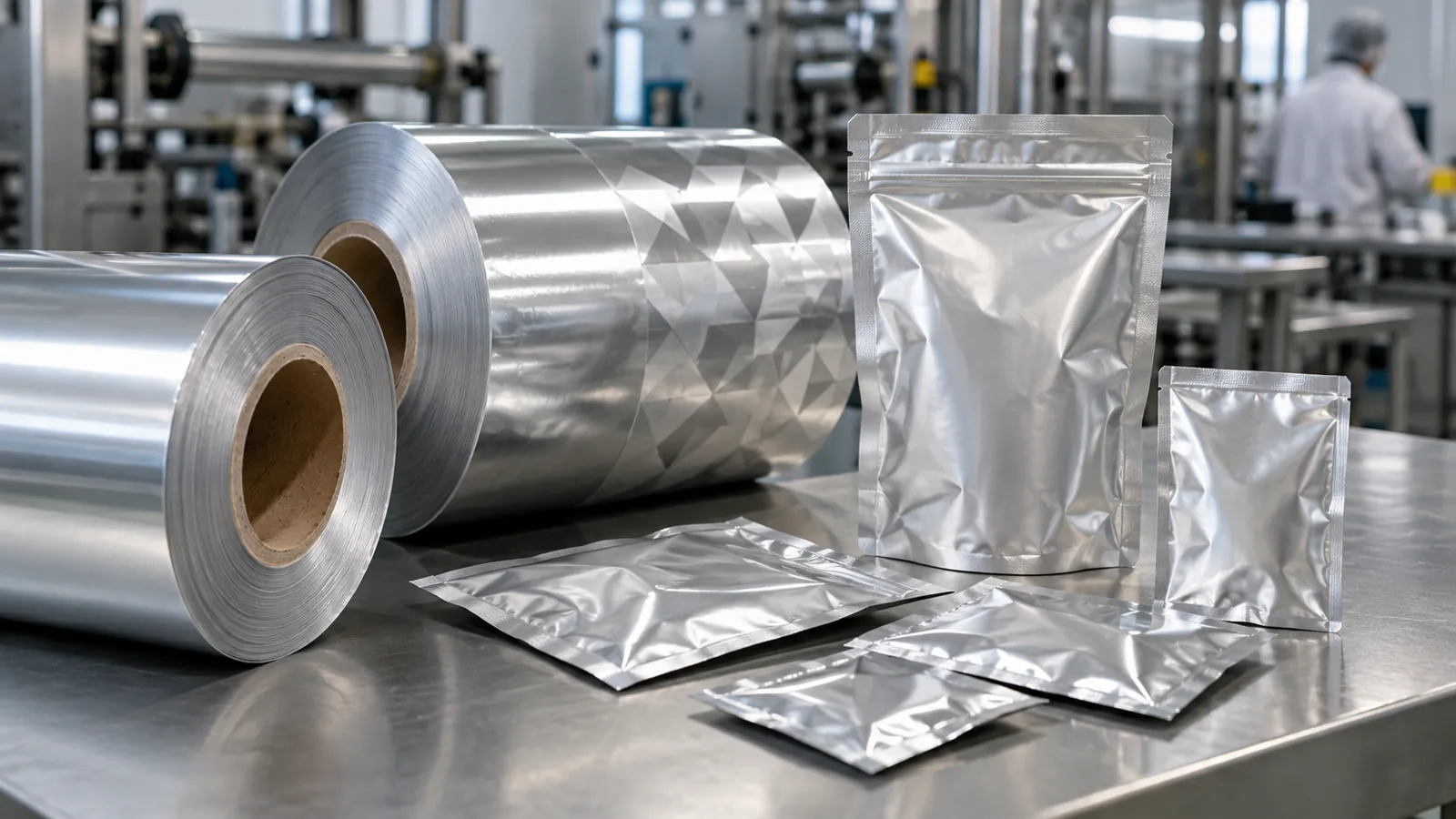
Aluminum Foil Packaging: Foil Laminates, Gauges and Uses
Aluminum foil packaging explained: why foil gives near-complete barrier, layer thickness and temper, laminate structures, uses and recycling limits.
Alu-Alu Blister Packaging: When Full-Foil Blisters Make Sense
Alu alu blister packaging uses a cold-formed foil cavity and foil lid for near-total barrier. See when it is chosen and how it compares with PVC blisters.
Barrier Film for Packaging: Oxygen, Moisture, Light and Aroma Barriers
Barrier film slows the passage of oxygen, water vapor, light and aroma through packaging. See which materials block what and how barrier is measured.