

Applications
Pharmaceutical Flexible Packaging: Materials, Formats and Requirements
A guide to pharmaceutical packaging materials and formats: blisters, strip packs, sachets and pouches, plus barrier, documentation and machine needs.
Pharmaceutical flexible packaging is the set of films, foils and laminates used to hold and protect drug products in blisters, strip packs, sachets, stick packs and pouches. Materials are chosen first to protect the drug against moisture, oxygen and light, and then for machine performance, patient use and documentation. A material change without supporting stability evidence can require repeat studies. Use the format routes below to identify the protection task and its evidence.
Format routes
Scroll horizontally to view all columns if needed. ↔
| Format | Protection task | Evidence to record | Further reading |
|---|---|---|---|
| Blister | Protect each formed dose | Grade/gauge, formed-cavity barrier, seal and final-pack stability | Pharma blisters |
| Strip pack | Seal each dose between webs | Paired seal layers, integrity and stability | Pharma foil |
| Sachet / stick pack | Protect powder or granules | Full layer list, product contact, contaminated seals and stability | Sachet format |
| Overwrap | Bundle or add barrier to an existing pack | Declared role, sealed-wrap integrity; sterile validation if applicable | Pharma flow wrap |
Why pharma packaging is treated differently
Many drug products degrade when exposed to humidity, oxygen or light. The packaging is therefore part of the stability data. ICH Q1A(R2), §2.2.4 calls for stability testing in the proposed marketed container-closure system. Subsequent changes need assessment against product evidence and the applicable filing route.
In practice this means:
- Supplier documentation: you need specifications, certificates of analysis, compliance statements and material traceability.
- Change control: changing a film, lacquer, adhesive or supplier can mean new testing and regulatory updates, even when the change looks minor.
- Regulatory filings: in the US, Type III DMFs can hold packaging information referenced by an authorized applicant. Packaging information can also be provided directly in an application. FDA states that DMFs are neither approved nor disapproved; a reference is not material approval. Rules and routes differ elsewhere, so confirm requirements for your destination market.
The supplier evaluation guide helps organize documentation checks.

Formats
Pharmaceutical blister packaging
Thermoformed blisters use a plastic forming web heat-sealed to a lidding foil. Common webs include PVC, PVDC-coated PVC and PCTFE laminates. Compare grade, layer thickness or dry coating mass and test conditions rather than assigning a universal barrier order. The lid is typically hard-temper foil; see blister foil.
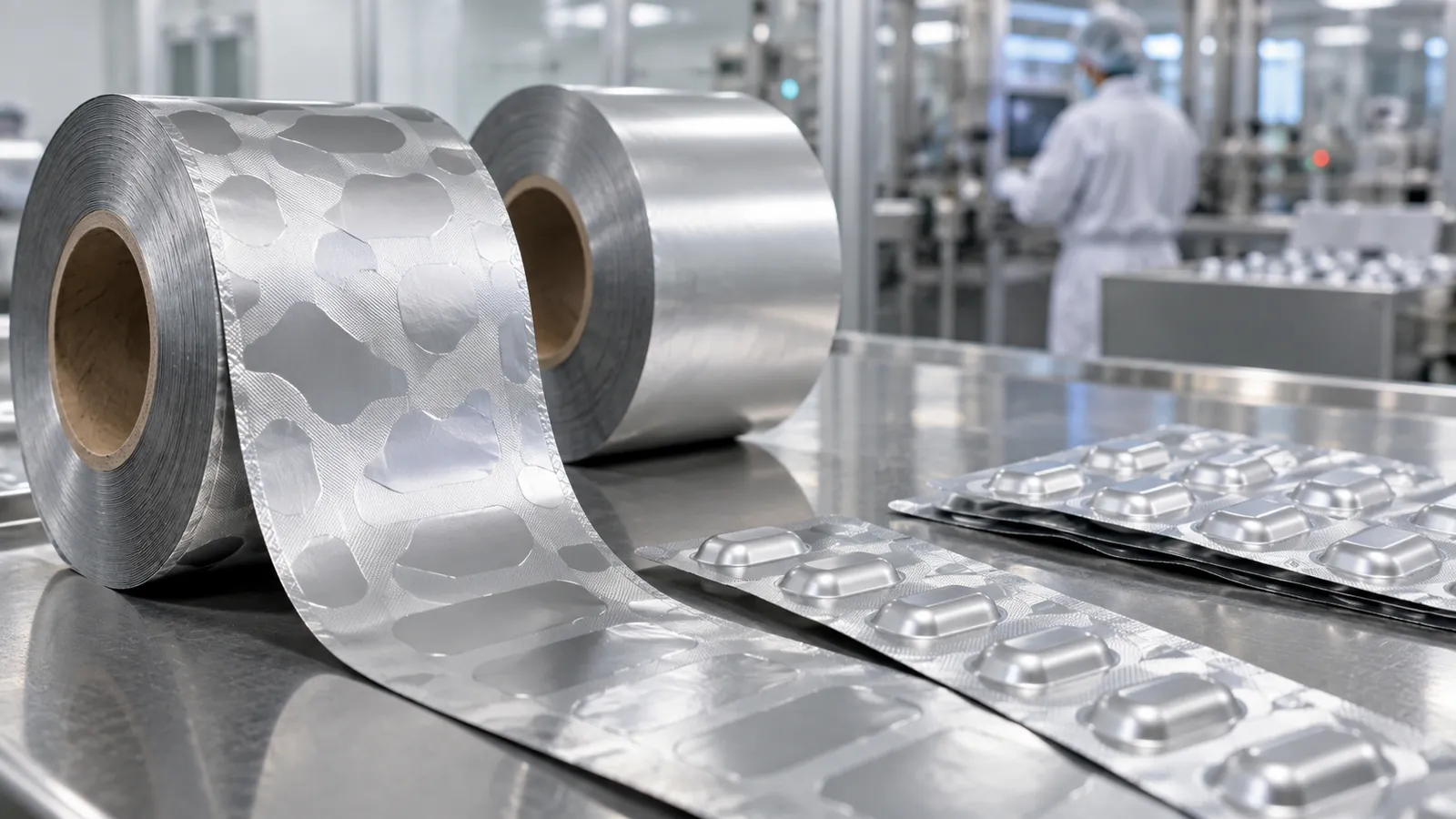
Cold-form alu-alu blisters use a formable aluminum laminate for the cavity itself, which gives very high barrier to light, moisture and oxygen. The cost is a larger blister footprint and no visibility of the tablet. The cold form foil page covers the laminate and its forming limits, and alu-alu blister packaging explains when the full-foil format is worth the extra footprint. The wider format, outside pharma too, is described on blister packaging, and the pharma-specific detail on forming films, lidding and child resistance is in pharmaceutical blister packaging. If you are unsure whether a given product needs a lidding foil or a forming foil, blister foil vs cold form foil sets out the difference.
Strip packs
Strip packs seal each dose between two layers of heat-sealable foil or foil laminate, with no thermoformed cavity. They are compact and well suited to products that need a strong barrier but are not easily formed.
Sachets and stick packs
Powders, granules and oral rehydration products are often packed in sachets or stick packs from paper/AL/PE or PET/AL/PE laminates. Where foil is not needed, high-barrier films may do the job.
Overwraps and flow wrap
Blisters, devices and kits are often wrapped again in a film pillow pack, either for extra barrier or to bundle several items. This is flow wrap work rather than blister work, with its own film, sealing and clean-room questions, covered in pharmaceutical flow wrap. The general format is explained in flow wrap packaging.
Materials
Scroll horizontally to view all columns if needed. ↔
| Material | Role in pharma packs | Notes |
|---|---|---|
| Aluminum foil | Lidding, cold-form webs, sachet and strip laminates | Near-complete barrier when free of pinholes and cracks |
| PVDC | Coating on PVC or other films | Improves moisture barrier |
| PCTFE | Laminated to PVC for blister forming webs | Very low water vapor transmission among clear options |
| Desiccant-containing films | Layer or liner that absorbs moisture | Used where residual humidity in the pack matters |
| High-barrier polymer films | Sachets, pouches, some strip packs | See high barrier film |
Barrier is described by WVTR and OTR. Values depend on temperature and humidity conditions, so compare only results measured under the same conditions, and confirm numbers on supplier data sheets.
Patient use and coding features
- Child resistance: peel-push lidding or other designs, validated per the rules of the market.
- Senior-friendly opening: child-resistant packs still need to be usable by adults, so openability is tested too.
- Printed codes: batch, expiry and, where required, serialization marks printed or laser-marked on the lid or laminate, and verified by vision systems.
Machines
Packaging format drives the machine: blister machines (thermoforming or cold-forming, filling and sealing), strip-pack machines, and sachet or stick-pack machines, which are vertical form-fill-seal variants. Seal quality depends on matching the heat-seal layer of each web, and on temperature, pressure and dwell. For related machine questions see VFFS film.
Pharma, medical devices and food contact
Pharmaceutical packs border two other areas. Sterile medical products, such as surgical instruments or implants, use sterile barrier systems and different test standards; see medical device packaging for how those differ from drug packaging. Nutraceuticals, medicated confectionery and some powders may fall under food rules rather than drug rules, or under both, so the status of the product decides which regulations apply. Food contact packaging regulations gives an overview of the food side, and the answer for your destination market should come from your regulatory adviser.
Choosing a starting material
Start with how the product fails. As a hypothetical example, a moisture-sensitive tablet with an assumed two-year shelf-life target might prompt evaluation of PCTFE or foil-based blisters. Two years is not a universal material-selection threshold; final-pack stability evidence decides suitability. A product that must also resist light and oxygen tends to move toward alu-alu or foil-laminate strip packs. Record the tested construction and assess changes before using a replacement.
Stability and material evidence record
For each candidate, record the full layer order, grade and thickness/coating mass with the supplier document revision; stability protocol, storage conditions, tested pack configuration and report; and the material lot and change-notification terms. Keep food-contact declarations separate from drug-container suitability and registration-support evidence. Use the film specification comparison guide for the material-data fields.
Sources
Reviewed 8 October 2026: FDA’s Type III and DMF overview links above explain the reference route; ICH Q1A(R2) addresses stability in the proposed marketed pack. FDA container-closure guidance addresses packaging suitability and documentation for human drugs and biologics, including postapproval packaging changes. These documents do not approve a film recipe or replace the product’s regulatory assessment.
Related pages
For the lid, read blister foil. For choosing among all foil types, including cold-form, strip and sachet laminates, read the pharmaceutical packaging foil guide. For general foil behavior, see aluminum foil packaging.
Pharmaceutical Packaging
In this section

Pharmaceutical Blister Packaging: Forming Films, Lidding and Barrier
Pharmaceutical blister packaging pairs a forming film with a foil lid. Compare PVC, PVDC, PCTFE, PP and alu-alu for moisture barrier, machines and child resistance.

Pharmaceutical Flow Wrap: Wrapping Blisters, Devices and Kits
Pharmaceutical flow wrap seals blisters, devices and kits in a film pillow pack. Review barrier overwraps, peelable films, clean-room machines, coding and film choices.
Pharmaceutical Packaging Foil: Types and How to Select Them
Pharmaceutical packaging foil covers lidding, cold-form, strip pack and sachet laminates. See the types, key properties and how to choose between them.