
How to Evaluate a Flexible Packaging Supplier Before a First Order
Check printing process, in-house converting, documentation and communication before you place a first order for printed film or pouches.
Paying for film that does not match your line can turn a first order into scrap and stoppages. Evaluate supply scope, documentation and a line trial before authorizing volume, using the following editorial gates rather than a universal numerical cutoff.
Scroll horizontally to view all columns if needed. ↔
| Gate | Pass | Pending evidence | Pause approval |
|---|---|---|---|
| Supply scope | Intended structure, format and outsourced steps identified | Missing process or subcontractor details | Cannot confirm who makes the ordered pack |
| Key documents | Versioned spec, lot records and market-specific support match the actual structure and use | Reports or supporting documents missing | Evidence contradicts the intended use or ordered structure |
| Machine trial | Agreed sample, product and line criteria met; results signed | Trial or sampling incomplete | Opening, seal, leak or handling criteria fail |
Record an owner and evidence location for each gate. “Pending” does not release production; agree the missing evidence and review date.
Start with order fit
Printing process drives much of the commercial picture. Rotogravure usually means engraved cylinders, a one-time tooling charge and a higher minimum order. Flexographic printing uses photopolymer plates, and digital printing is often chosen for short runs and frequent artwork changes. Ask which process the supplier would use for your job and what that means for minimum quantity, tooling charges, and who owns the cylinders or plates if you later move production. Also ask how the cost is split when artwork changes: a new color or a revised barcode can mean new tooling for one color or for the whole set, depending on the process.
Then confirm the rest of the fit.
- Do they laminate and convert pouches in-house, or only supply rollstock and outsource the rest?
- Have they made packs for your product type, such as dry, liquid, oily or frozen goods?
- Do they know the food-contact documentation your destination market expects?
- Is your quantity within their normal run size?
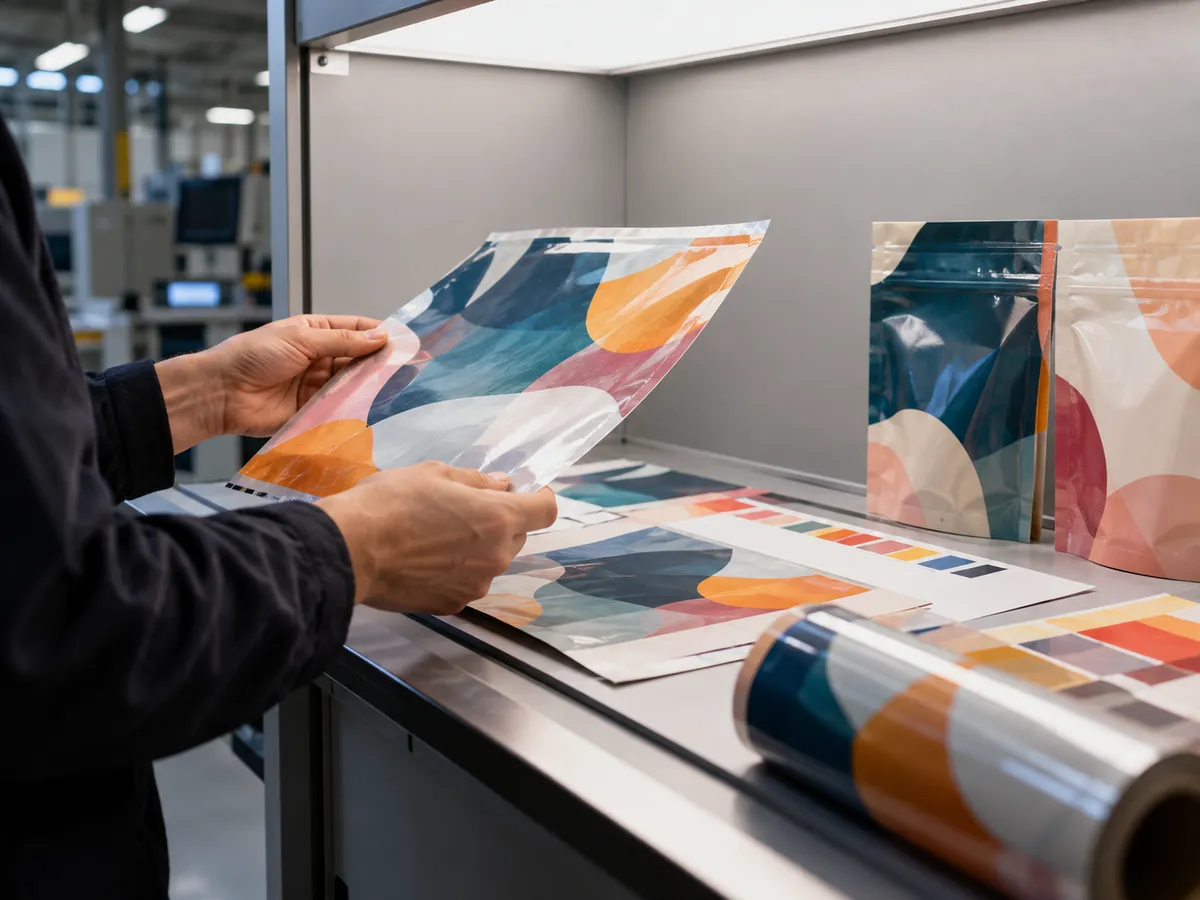
Ask how the film is laminated and cured
Most printed pouch structures are laminated packaging: a printed outer web is bonded to a barrier layer and a sealant layer. The lamination method affects what the pack can survive. Ask whether the supplier uses solvent-based, solventless or water-based adhesive systems, and whether the adhesive system suits your fill temperature, retort or freezer exposure. Ask how long laminated rolls are cured before slitting and conversion, because adhesive that has not fully cured can show weak bond strength, odor or migration concerns. Use how flexible packaging is made to check which process steps and records apply to your order.
Request bond-strength and residual-solvent practices in writing, along with the inspection frequency. You do not need to audit the plant to ask who checks these, how often, and what happens to a roll that fails.
Check the evidence behind each claim
Catalog language is a starting point, not proof. Ask for documents and physical samples before you commit.
Scroll horizontally to view all columns if needed. ↔
| Claim | Evidence to request | Why it matters |
|---|---|---|
| Barrier structure | Layer-by-layer spec sheet and OTR/WVTR test reports | Shelf life depends on the real structure, not a product name |
| Food-contact compliance | Market-specific compliance statement and support identifying the actual structure and intended use | Avoids a rejected shipment or a relabeling problem |
| Print quality | Printed samples or a press proof | Shows registration, color and ink coverage on real film |
| Zippers, spouts or other features | Physical samples from prior runs | Shows the feature on that sample; check consecutive-lot records and agreed first-order sampling for consistency |
| Seal performance | Seal strength data and sealing-window guidance | Shows how the pack behaves on your machine |
| Pouch dimensions | Tolerance statement and measured samples | Prevents fit problems on fill and cartoning equipment |
Barrier numbers are only meaningful with their test conditions. When a report quotes OTR or WVTR, check the temperature and humidity at which it was measured and whether the value is for the film or for the finished pack with seals and folds.
Look at pouch-making capability
If you are buying finished pouches, converting capability matters as much as printing. Ask what pouch styles the supplier makes regularly, such as stand-up pouches, flat bottom or side gusset styles, and which features they apply in-line: zippers, tear notches, hang holes, spouts or valves. Ask for seal-width and dimensional tolerances, and how seals are tested during a run. Leak testing, seal-strength sampling and visual inspection should be routine, and the supplier should be able to say how many pouches are pulled per roll or per shift.
If your line runs rollstock instead, the question changes to slitting accuracy, roll build, core strength, splice marking and lot-to-lot consistency, covered in the next section.
Extra checks for a film or rollstock supplier
Choosing a flexible packaging film supplier is a different job from choosing a pouch maker. With finished pouches, the supplier forms and seals the pack and you inspect the result. With film on the roll, your own form-fill-seal or flow wrap machine does that work, so the risk moves to how consistently the film behaves from one roll and one lot to the next. A film that ran well in a trial and then drifts in slip, gauge or sealing behavior will show up as stoppages and leaking packs on your line, not at the supplier.
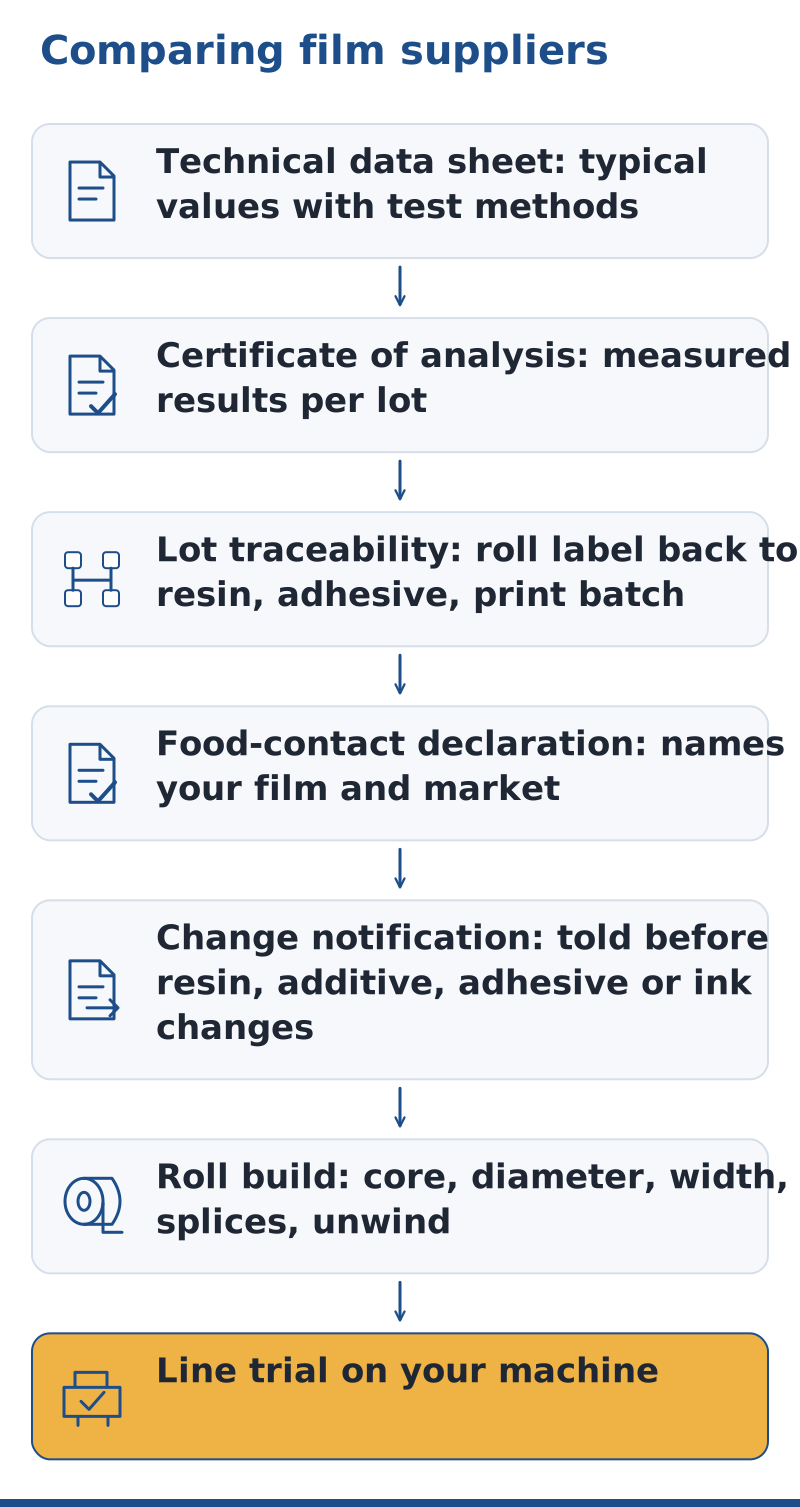
When you compare film suppliers, ask each one the same questions:
- Technical data sheet (TDS). Does it give typical values with the test method and conditions for each property, such as film thickness, coefficient of friction, seal initiation temperature and, where relevant, OTR and WVTR? A TDS shows typical values; it is not a promise for every roll.
- Certificate of analysis (COA). Will each lot ship with measured results against the specification you agreed, and which properties are measured on every lot rather than occasionally? Agree the list before the first order.
- Lot traceability. Can a roll label be traced back to the resin, adhesive and print batch, so that a problem roll can be isolated without holding the whole delivery?
- Food-contact declaration. Does the declaration of compliance name the film or laminate you are buying and your destination market, rather than only the base resin?
- Change notification. Will the supplier tell you in writing before changing a resin grade, additive package, adhesive, ink or production site? Small changes in slip or sealant can alter how the film runs.
- Roll build. Can they hold your core size, maximum roll diameter, width tolerance, splice limit and unwind direction? The full list is on the rollstock packaging page.
Location matters less than these answers. A nearby converter can shorten freight and make line trials easier to attend, but distance does not tell you whether the film will run the same way next quarter. Put any differences between quotes into a side-by-side comparison with the specification comparison guide before deciding on price.
Confirm food-contact documentation
Food-contact evidence must be reviewed for the destination market and intended use, not treated as one universal document. Ask which compliance statements and supporting records cover the purchased printed laminate, its ink, adhesive and sealant, the food type, contact time and temperature. Keep supplier declarations separate from batch inspection results. Regulations differ by region, so check the current rules for your market in the food contact packaging regulations overview and confirm specifics with your regulatory contact. A supplier who cannot say which documents exist, or offers only a generic statement, is a risk for any food or pharmaceutical product.
Plan samples and trials before volume
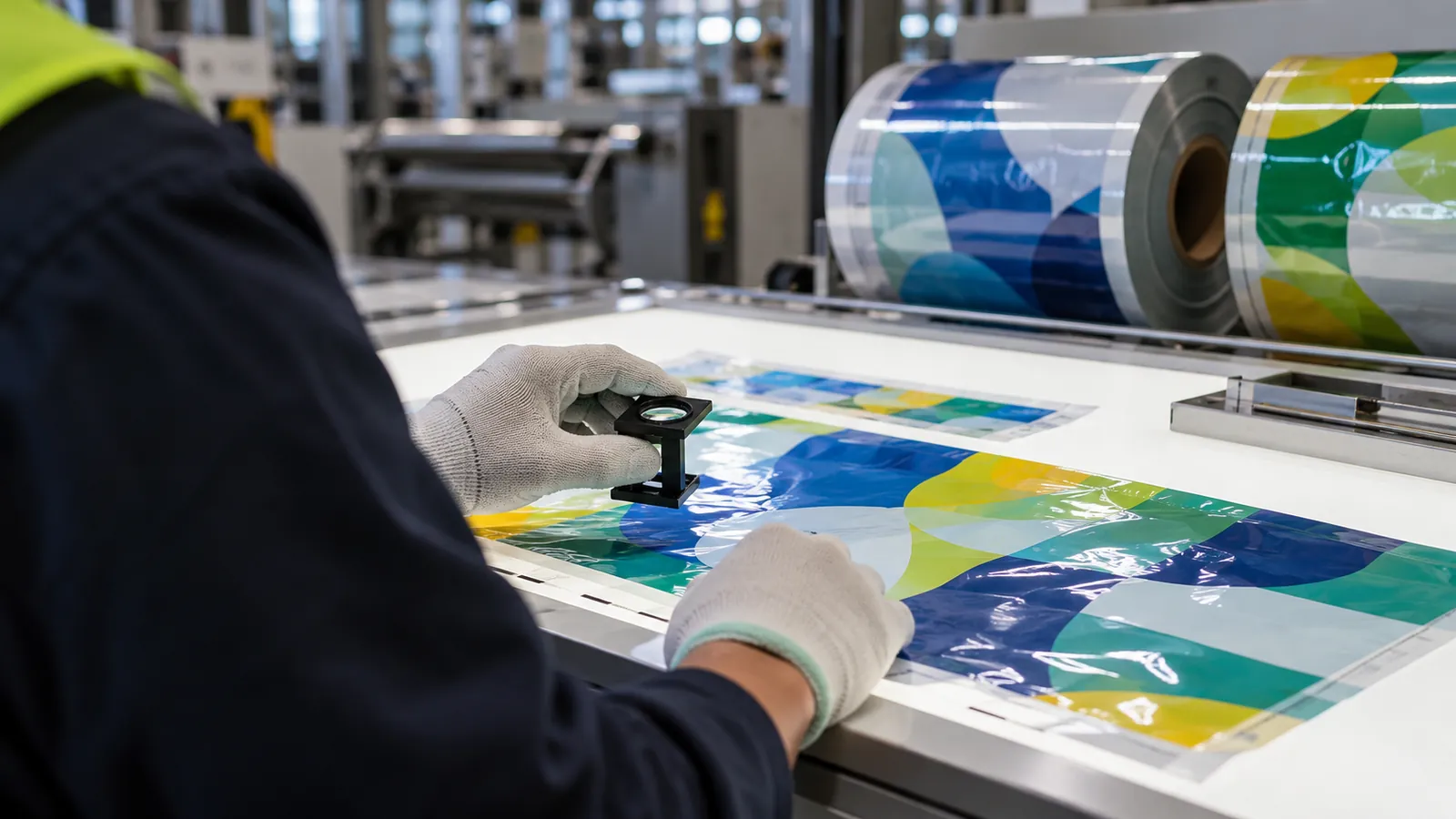
Ask for physical samples early, and be clear about what each stage proves. A flat printed sample shows color and registration. A pouch or roll sample from the intended structure shows handling, but not necessarily how it runs at speed. A trial on your own equipment shows sealing, tracking and stoppages. If you plan to run the film on a vertical machine, compare the sample against the VFFS film requirements. If you fill premade pouches, check it against premade pouch materials before approving the sample.
Agree in advance who pays for trial material, who attends the trial, and what data you will both record. Record consecutive-lot sampling and first-order acceptance separately: a prior-run sample demonstrates only the feature on the supplied specimen.
Judge how the supplier communicates
Look at how they handle artwork files, how color is approved (proof, press check or physical standard), and whether tolerances are given in writing. Note whether questions get specific answers or general reassurance. A supplier who says what is not yet confirmed is usually easier to work with than one who agrees to everything.
Pay attention to how the supplier treats bad news. Ask what happens if the first run fails an agreed criterion: is the remedy a remake, a credit or a negotiation, and who decides? Put the answer in the order terms before there is a problem.
Use the first order as a controlled test
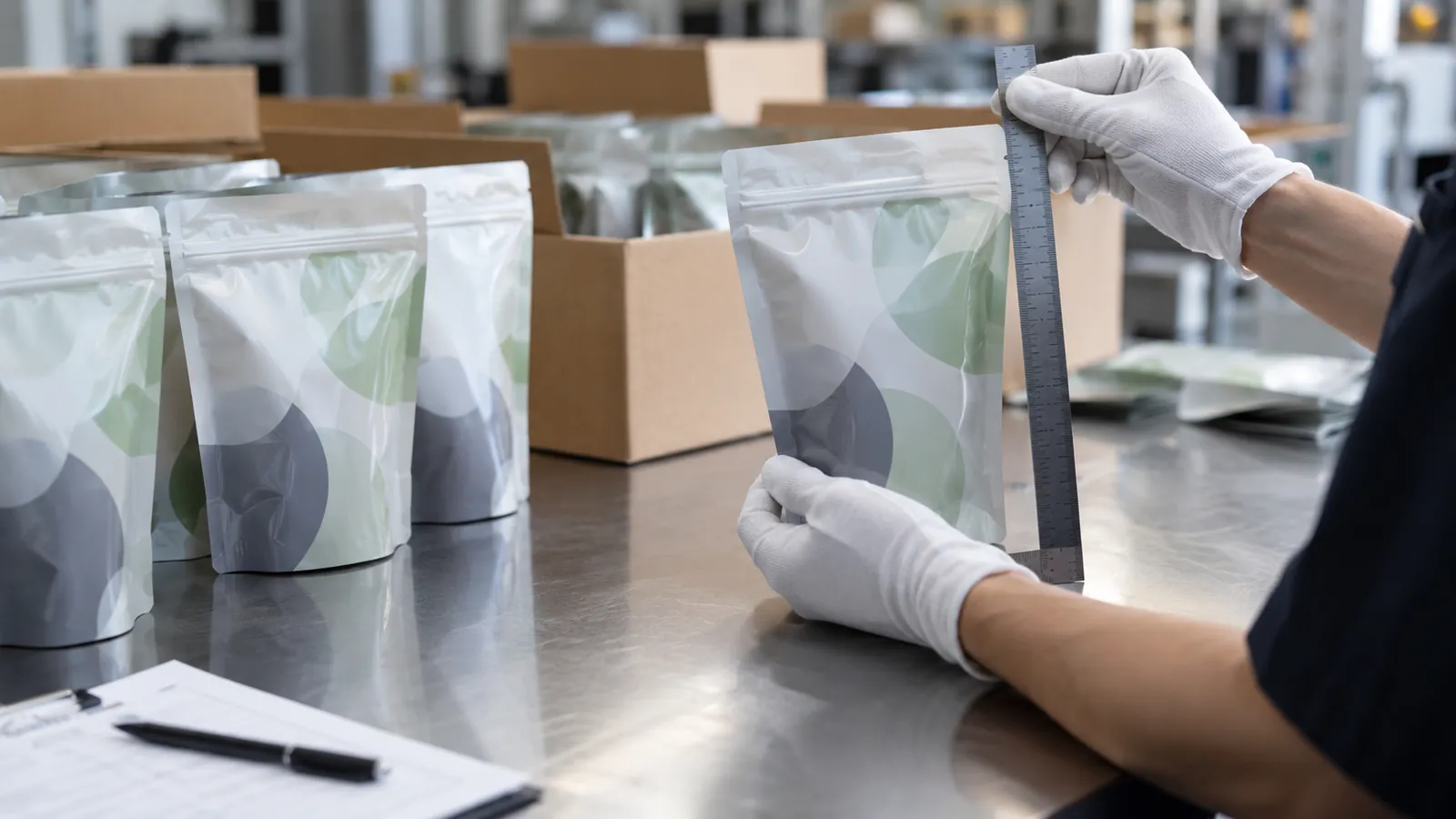
Keep the first order simple enough to inspect. Write down the acceptance criteria before production starts:
- Dimensions and tolerances
- Seal integrity requirements and how they will be checked
- The approved color standard
- Roll specifications, if you are buying rollstock
- Retained samples from the start, middle and end of the run
The first-order risk checklist covers the full pre-shipment and receiving routine. If the supplier proposes a cheaper structure than the one you specified, work out whether the cheaper film costs more before accepting the change.
Method and sources
The gates and evidence requests are editorial procurement advice, not regulatory pass/fail rules or results of our audits. A supplier TDS describes its material; batch reports support only the measured lot and tests. Neither replaces review of the intended food-contact use.
For US projects, FDA’s component regulatory-status guidance explains authorization scope and manufacturer-specific FCNs. FDA’s food-type and use-condition tables support matching documents to the actual application. These are US references; confirm requirements separately for other markets. Accessed 8 October 2026.
Continue reading
Related articles
First-Order Risk Checklist for Printed Pouches and Rollstock
A compact checklist for controlling specification, payment, quality and shipment risk on a first order of printed pouches or rollstock.
Flexible Packaging Film Problems: A Troubleshooting Guide
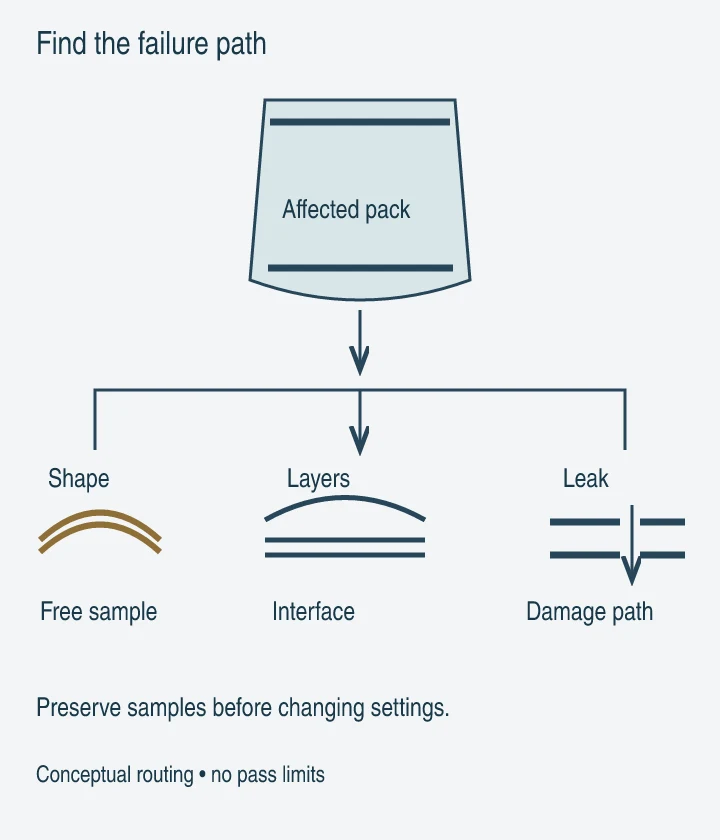
Film defects can cause scrap, leaks and repeat downtime. Locate the failure and preserve comparison samples before choosing a test or changing materials.

How to Choose Flexible Packaging Film: A Step-by-Step Selection Guide
An end-to-end engineering guide to selecting flexible packaging films: product barrier risks, machine kinematics, substrate structures, and trial verification protocols.