
Laminated Packaging: How Lamination Works and Why It Matters
Laminated packaging bonds films, foil or paper into one web for print, barrier and seal. Learn dry, wet and extrusion lamination, curing and bond strength.
A poorly bonded laminate can separate during converting or use. Laminated film is a packaging material made by bonding two or more separate webs, such as plastic films, aluminum foil or paper, into one structure that runs and converts as a single web. Lamination in packaging is the step that does the bonding. Each web does a different job: the outer layer carries print, a middle layer blocks oxygen or moisture, and the inner layer seals. Lamination is the main way to combine materials that cannot be coextruded together, which is why most printed pouches and high-barrier packs are laminates.
This page covers how lamination works and what can go wrong. For the three film builds side by side, see flexible packaging film. “Laminated flexible packaging” usually means these multi-web structures.
Before choosing a process, confirm:
- Whether the adhesive carrier is dried before or after the webs meet.
- Whether a reactive adhesive needs a controlled cure before conversion or release.
- Whether the complete laminate is qualified for the product and heat exposure.
How lamination works
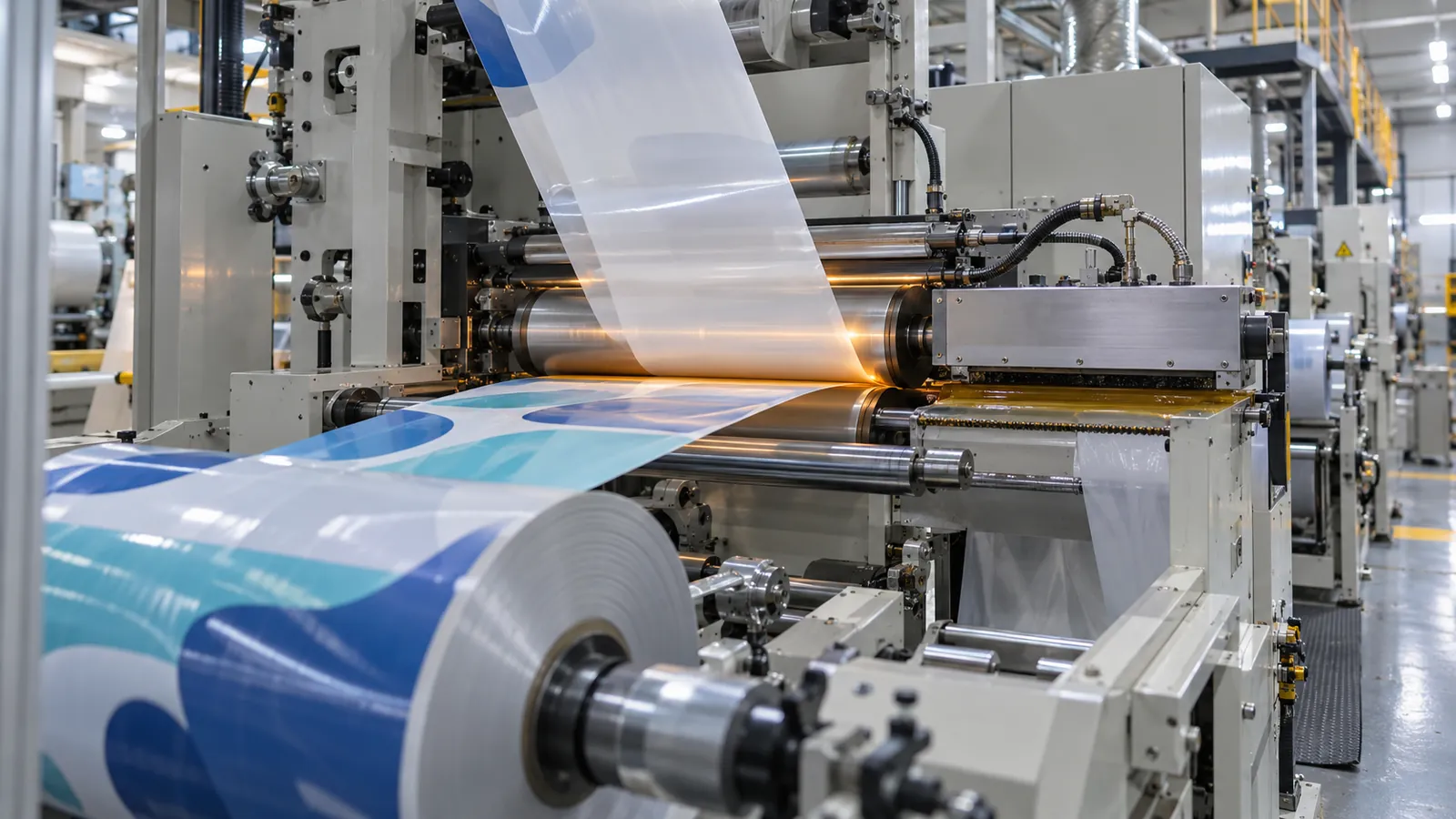
Lamination joins webs in a nip between rollers, with something in the middle that bonds them. The bond is either a thin layer of adhesive or a layer of molten polymer. The result is a single web that is wound, cured if needed and slit, then used as rollstock or converted to pouches. The same word also covers dry bonding, extrusion bonding and, in some cases, thermal bonding, though the first two dominate packaging.
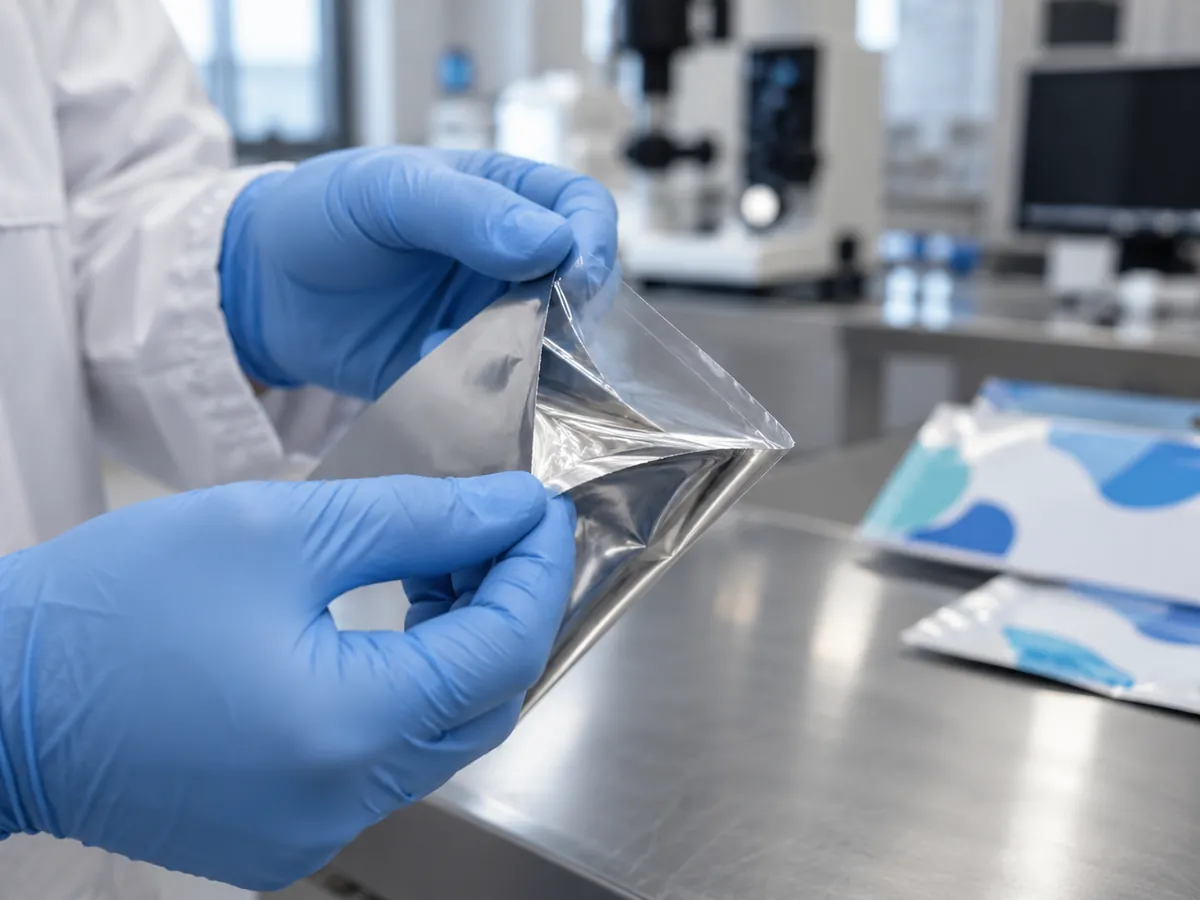
Illustrative layer order, outside to inside; optional layers and actual thicknesses follow the approved specification:
Scroll horizontally to view all columns if needed. ↔
| Position | Function |
|---|---|
| Printed outer web | Carries the print |
| Bond layer | Joins the outer and barrier webs |
| Barrier web, if specified | Controls transmission |
| Bond layer | Joins the barrier and sealant webs |
| Inner sealant | Forms the package seal |
Adhesive lamination
Adhesive lamination coats one web and bonds it to another. The position of the dryer distinguishes dry from wet bonding; solventless systems have no carrier to evaporate. A manufacturer’s public process guide describes the dry and wet sequences, and an adhesive manufacturer’s guide describes solventless coating and nipping.
Scroll horizontally to view all columns if needed. ↔
| Process | Application, drying and bonding order | Check before release |
|---|---|---|
| Dry bond | Coat solvent- or water-based adhesive; dry off carrier; nip to second web | Drying record and grade-specific cure |
| Wet bond | Coat adhesive; join webs while wet; dry the joined laminate | Carrier escape through a suitable web, commonly paper; drying record |
| Solventless | Meter/mix the specified system; coat; nip; cure if reactive | Mixing, application and cure records; no carrier-drying stage |
| Extrusion | Prepare surfaces as specified; extrude molten polymer between webs; join and cool at the nip | Treatment, resin and bond qualification |
Adhesive systems give a thin bond line, which is why adhesive is often left off a structure notation. Adhesive amount is specified as a coating weight in g/m² on the adhesive maker’s data sheet; the dry bond-line thickness in µm follows from that weight and the adhesive’s solids and density, so take both figures from the data sheet for the grade and process you use rather than from a general rule. Many systems are two-part and reactive, so the adhesive keeps cross-linking after lamination and the bond keeps developing.
Extrusion lamination
In extrusion lamination, a molten polymer, most often PE, is extruded as a curtain between two webs and cooled in the nip. The polymer acts as both the bond and an added layer. It gives a thicker bond line than adhesive lamination and can also work as a sealant or a barrier. A related process, extrusion coating, puts the polymer on one web only. Primer and surface treatment requirements depend on the substrate, resin and existing treatment. Confirm the selected route in the process specification; primer is not a fixed requirement for every extrusion laminate.
Curing time
Reactive adhesives continue developing their bond after lamination. Use the technical data sheet for the exact adhesive/hardener pair and approved substrates to define time and temperature for slitting, pouch making and final release. Record the document revision, lamination time and actual storage conditions on the batch; a calendar hold alone does not demonstrate readiness.
Slitting, pouch making or filling before cure is complete can cause problems:
- Low bond strength: the layers can separate when the pouch is sealed, flexed or filled.
- Tunneling: the layers pull apart in a ridge when the web is wound tightly.
- Variable seal behavior: a bond that is still developing may behave differently in the heat of the seal bar.
- Residual migration: unreacted components can move into the pack. Food-contact rules vary by destination market, so ask your supplier for documentation and confirm the requirements you must meet.
Takeaway: Release the batch only against its agreed cure, bond and applicable food-contact acceptance records. Do not copy a hold time from a different adhesive grade.
Bond strength and delamination
Bond strength is the force needed to peel the layers apart, measured in a peel test. It differs from seal strength, which measures the heat seal (ASTM F88 is the common seal strength method). Peel results depend on the test speed, the angle and the sample, so compare values only from the same method.
Common causes of delamination:
- Insufficient cure: the adhesive has not reached full bond.
- Poor surface treatment: low surface energy on a film prevents wetting by the adhesive or ink.
- Wrong coat weight: too little adhesive leaves dry spots; too much can cause slip or tunneling.
- Contamination: slip additives, ink residues or moisture at the interface.
- Heat and product attack: hot fill, retort or aggressive products (oils, acids, alcohol, surfactants) can weaken some adhesives. Retort needs adhesives rated for it; see retort pouches.
- Ink that is not compatible with the adhesive: the bond fails at the ink layer.
Ask what the adhesive is rated for, and test the actual product with the actual structure.
Reverse-printed laminates
Reverse printing puts ink on the inside face of the transparent outer web, which then gets laminated. The ink is trapped between layers, so it does not scuff and the surface is glossy. The print also becomes part of the bond: the ink must be compatible with the adhesive, and the adhesive coats over ink instead of film, so ink coverage and any white backing layer affect bond strength. Thin ink films with good wetting generally bond better than heavy flooded areas.
Common laminate structures
The examples below use the standard outside-to-inside notation. They are illustrations, not specifications, and thicknesses vary.
Scroll horizontally to view all columns if needed. ↔
| Structure | Typical use | Notes |
|---|---|---|
| PET / PE | Snacks, dry goods, general pouches | Printable, strong, moderate barrier |
| BOPP / BOPP (met) | Chips, confectionery | Metallized layer improves moisture and oxygen barrier |
| PET / AL / PE | Coffee, powders, sensitive products | Foil gives very high barrier |
| PET / PA / PE | Vacuum, frozen foods | Nylon adds puncture resistance |
| BOPP / CPP | Wrap, bakery, bags | Clear, cost-effective |
| Paper / PE or paper / foil / PE | Sachets, dry goods | Paper outer face with a sealant behind |
Retort suitability cannot be inferred from a generic PE sealant notation. Obtain the specific sealant and adhesive grades, the intended heat cycle and finished-pouch validation; see retort-pouch material qualification.
See metallized film and aluminum foil for the barrier layers, and high barrier film for options without foil.
Laminates vs coextrusion
Scroll horizontally to view all columns if needed. ↔
| Question | Laminated | Coextruded |
|---|---|---|
| Print position | Can be reverse-printed inside | Usually surface printed |
| Material mix | Almost any combination, including foil and paper | Limited to compatible polymers |
| Processing | Several steps, curing time | One pass, no adhesive |
| Barrier range | Wide, up to foil | Limited, depending on barrier resin |
| Recyclability | Harder if mixed materials | Easier if one family |
| Cost | Higher for multiple steps | Lower for simple builds |
Laminate when you need premium print or high barrier. Use coextrusion when one pass and a single polymer family are enough.
Recycling laminates
Laminates of dissimilar materials are the hard case for recycling because collection and sorting systems struggle to separate PET, PE, nylon and foil. Adhesive and ink add a further complication. The practical responses are all-PE or all-PP laminates, where the layers are one polymer family, and thin barrier coatings that preserve recyclability. See mono-material packaging and recyclable flexible packaging. Recyclability depends on local collection and on guidelines from bodies such as APR and RecyClass, so confirm the rules for each market.
What to put in a laminate specification
Use this record with the approved structure, rather than a generic laminate recipe.
Scroll horizontally to view all columns if needed. ↔
| Field | Source | Acceptance record to complete |
|---|---|---|
| Layer order, grades and thickness | Converter’s approved drawing | Revision / measured result: ___ |
| Process, adhesive/hardener and coat weight | Grade-specific technical data sheet | Batch / application record: ___ |
| Cure before each conversion/release stage | Technical data sheet and approved process | Time / actual temperature / disposition: ___ |
| Bond strength and failure mode | Agreed method, speed and conditioning | Limit / result / mode: ___ |
| Print and ink system | Approved artwork and compatibility record | Ink / coverage / bond result: ___ |
| Product and thermal exposure | Intended-use qualification | Conditions / post-exposure result: ___ |
| Recycling target and food contact | Market-specific assessment/documents | Version / approved bill of materials: ___ |
Lamination is one stage in how flexible packaging is made.
Questions about laminated film packaging
What are the three types of lamination?
In packaging they are usually listed as dry, wet and extrusion lamination. Dry lamination joins webs after the adhesive carrier has been dried off, wet lamination joins them while the adhesive is still wet and needs a porous web such as paper, and extrusion lamination uses a molten polymer as the bond. The process table also separates solventless bonding, which needs no carrier-drying step.
What to use instead of lamination?
Consider a single-layer or coextruded film when its material combination can meet the pack’s protection and sealing requirements. Paper may still need a coating or laminate. Compare film builds and paper-based packaging limits before replacing the laminate.
Sources and method
- A manufacturer’s dry and wet process guide places drying before bonding for dry lamination and after bonding for wet lamination.
- A manufacturer’s wet-lamination substrate guide lists paper-based combinations.
- An adhesive manufacturer’s solventless process guide describes coating, nipping and reactive bonding.
- TAPPI extrusion-coating and laminating material explains the molten-polymer/chill-nip sequence; a manufacturer’s line overview lists treatment options.
Public process references checked 9 October 2026. They explain process routes, not approval of a particular package. Cure schedules and acceptance limits come from the actual grade documents and qualified batch process.
Continue reading
Related articles
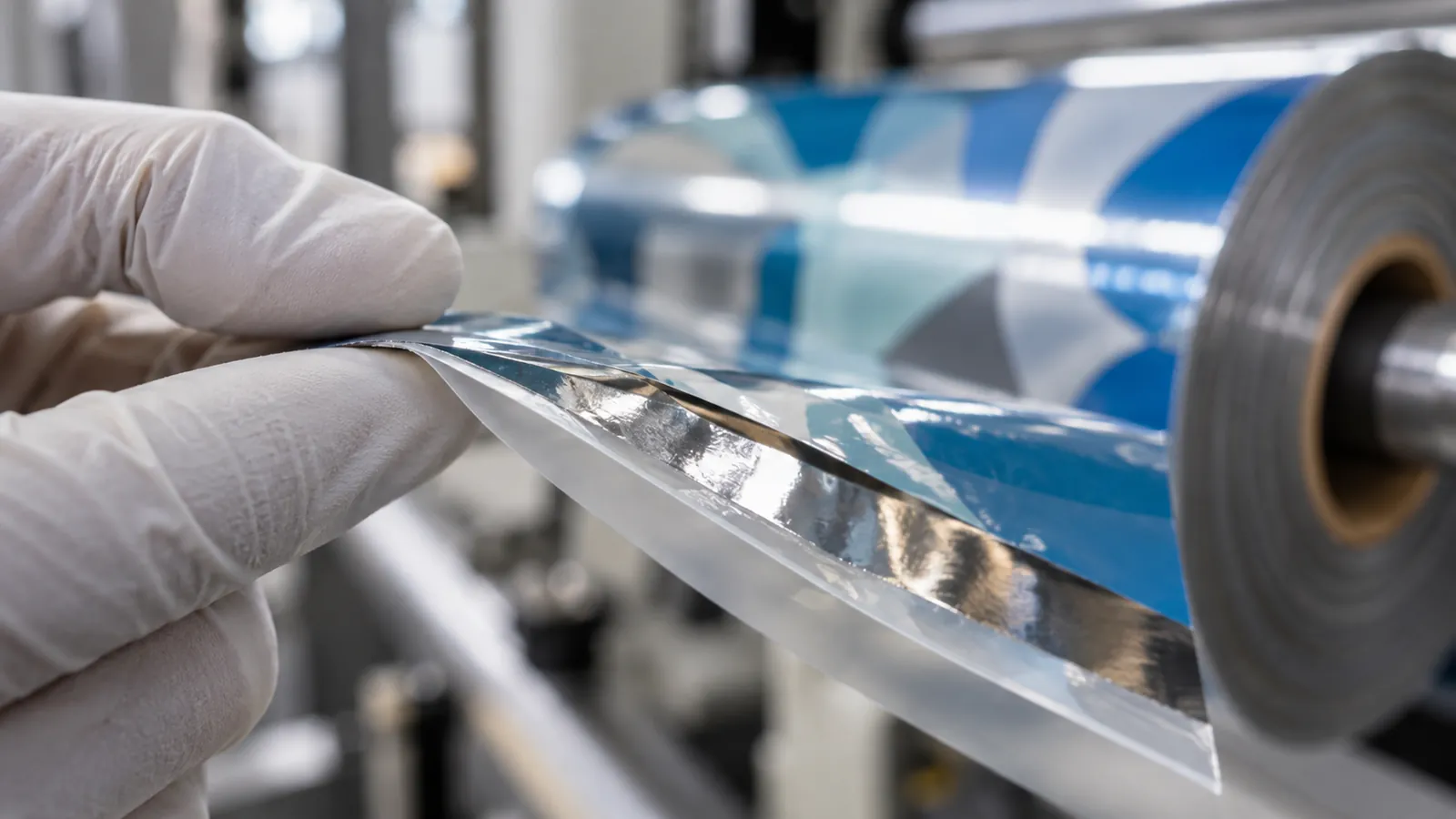
Flexible Packaging Film: Monolayer, Coextruded and Laminated Films
Flexible packaging film is built as monolayer, coextruded or laminated webs. Learn how layers, printing and rollstock affect performance.
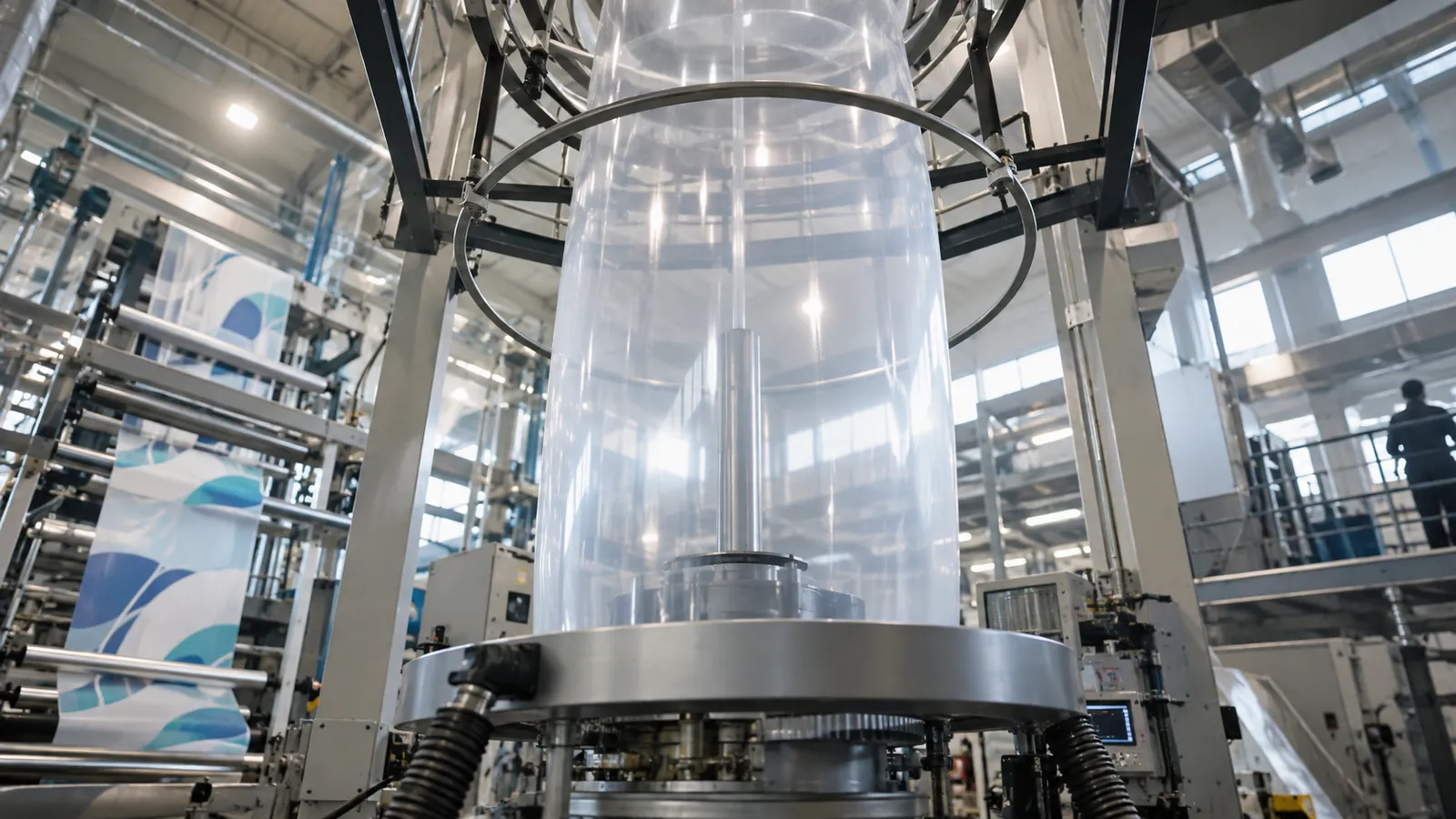
How Flexible Packaging Is Made: From Resin to Finished Pouch
How flexible packaging is made, step by step: extrusion, printing, lamination, coating, slitting, pouch making and the quality checks at each stage.
Types of Flexible Packaging: Formats, Materials and Constructions
Types of flexible packaging can be sorted by format, material family or construction. Use this guide to match each type to products and narrow your choice.