

Topic hub
Flexible Packaging: Materials, Types and How It Works
Flexible packaging is any package made from film, foil or paper that changes shape when filled. Learn the materials, formats, process and trade-offs.
Choosing the wrong barrier can shorten shelf life, while an incompatible sealant can cause leaking packs and line waste. Flexible packaging changes shape when filled or handled; choose its layers, format and machine together. It is made from thin, bendable webs such as plastic film, aluminum foil, paper or laminates of these. Pouches, bags, wraps, sachets and lidding are all examples. Most flexible packaging is a layered structure, and the layers are chosen to do specific jobs: print, seal, stiffen and protect the product.
Use this sequence to find the decision you need to make next. Each link leads to existing guides.
Material to machine: starting points
Scroll horizontally to view all columns if needed. ↔
| Decision | Record first | Guide |
|---|---|---|
| Material | Layer roles, product contact and processing route | Materials |
| Performance | Barrier conditions, seal and mechanical requirements | Performance |
| Format | Fill quantity, handling, opening and delivery form | Formats |
| Machine | Actual equipment, speed, seal window and roll/pouch specification | Machine compatibility |
What counts as flexible packaging
The term covers packages that look different but share the same building blocks.
- Pouches and bags: stand-up pouches, flat pouches, pillow bags, gusseted bags and large industrial sacks.
- Wraps: flow-wrapped bars and confectionery, overwraps, and shrink-wrapped multipacks.
- Sachets and stick packs: small single-serve packs for powders, liquids and condiments.
- Lidding: peelable or heat-sealed lids on trays, cups and tubs, including blister lidding foil for tablets.
- Sleeves: shrink and stretch sleeves around bottles and cans.
Some of these are made on the packing line from a continuous roll, and others arrive as ready-made pouches. That distinction gets its own section below.
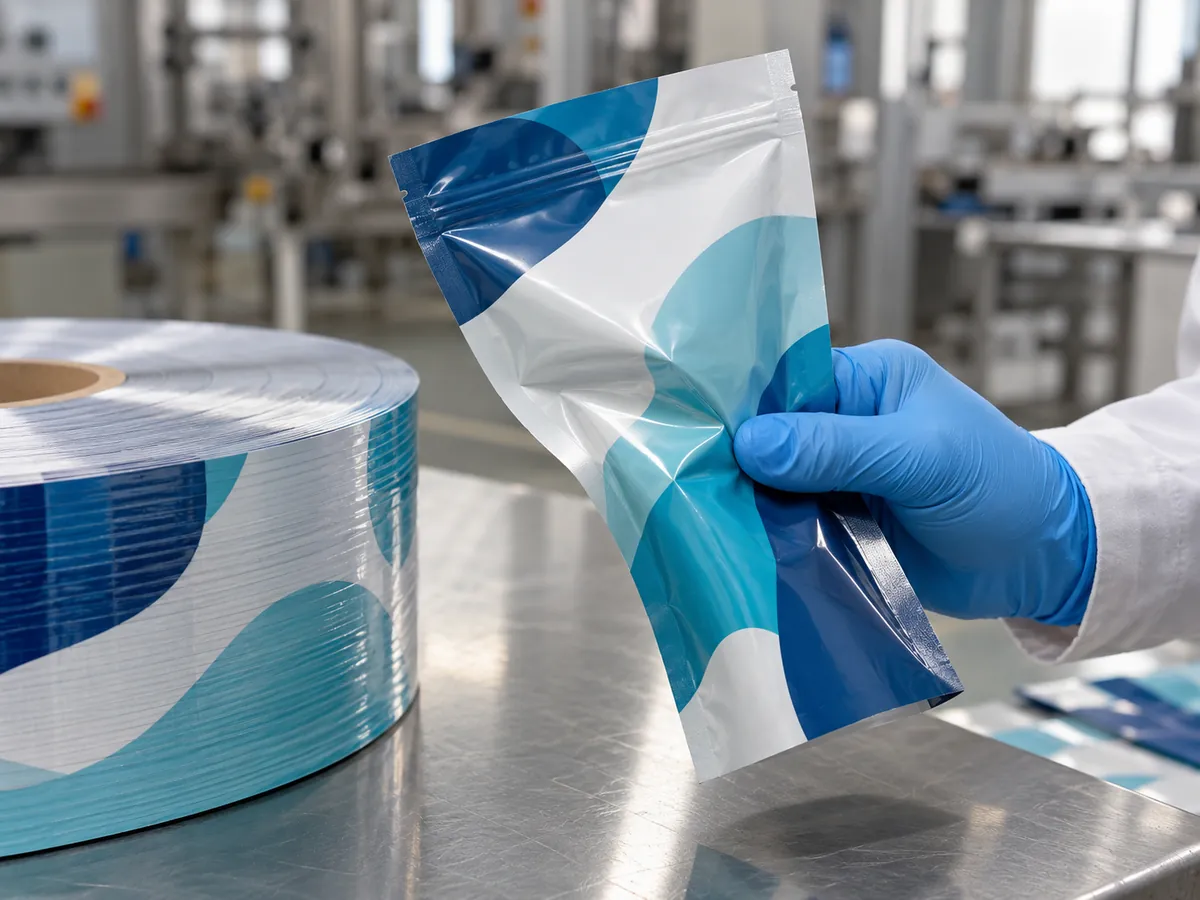
Flexible vs rigid packaging
Flexible vs rigid packaging is rarely an either-or choice. Many products can go in a pouch, a jar or a tray, and the decision usually comes down to the points in the table.
Scroll horizontally to view all columns if needed. ↔
| Factor | Flexible packaging | Rigid packaging (glass, metal, thick plastic) |
|---|---|---|
| Material use | Weigh the actual pouch and secondary protection for the same delivered product | Weigh the actual container and secondary protection on the same basis |
| Transport | Ships flat on rolls or as empty pouches, so a lot of packages fit in a truck | Empty containers take up volume |
| Barrier | Wide range, from low to very high depending on structure | Glass and metal are inherently high barrier; plastics vary |
| Recyclability | Verify the full structure and destination collection/sorting route | Verify local acceptance of the actual glass, metal or plastic container |
| Machinery | Form-fill-seal, flow wrap or premade pouch fillers | Filling, capping, seaming lines |
Neither side wins every row. Compare the same product quantity, shelf life and distribution route; material mass alone cannot establish environmental advantage.
Where to start reading
If you are new to the subject, types of flexible packaging sorts the formats, materials and constructions into one overview. Flexible vs rigid packaging goes further than the table above on material use, transport and end of life. Two pages cover the supply chain in more detail: rollstock packaging covers how to specify film on the roll, and laminated packaging explains how bonded layers work together. For the full production route, read how flexible packaging is made.
Three sections help you put the basics to use. The applications section shows how requirements change by product category, the regulations section covers packaging rules such as extended producer responsibility and food contact, and the guides give practical checklists for specifying film and buying from suppliers. Regulations differ by market, so confirm the current rules for where you sell.
What the flexible packaging industry includes
When people ask what the flexible packaging industry is, they usually mean the chain of companies that turns resin, foil and paper into a finished, filled pack. No single company has to do every step, and a buyer’s questions go to different links in the chain depending on the problem.
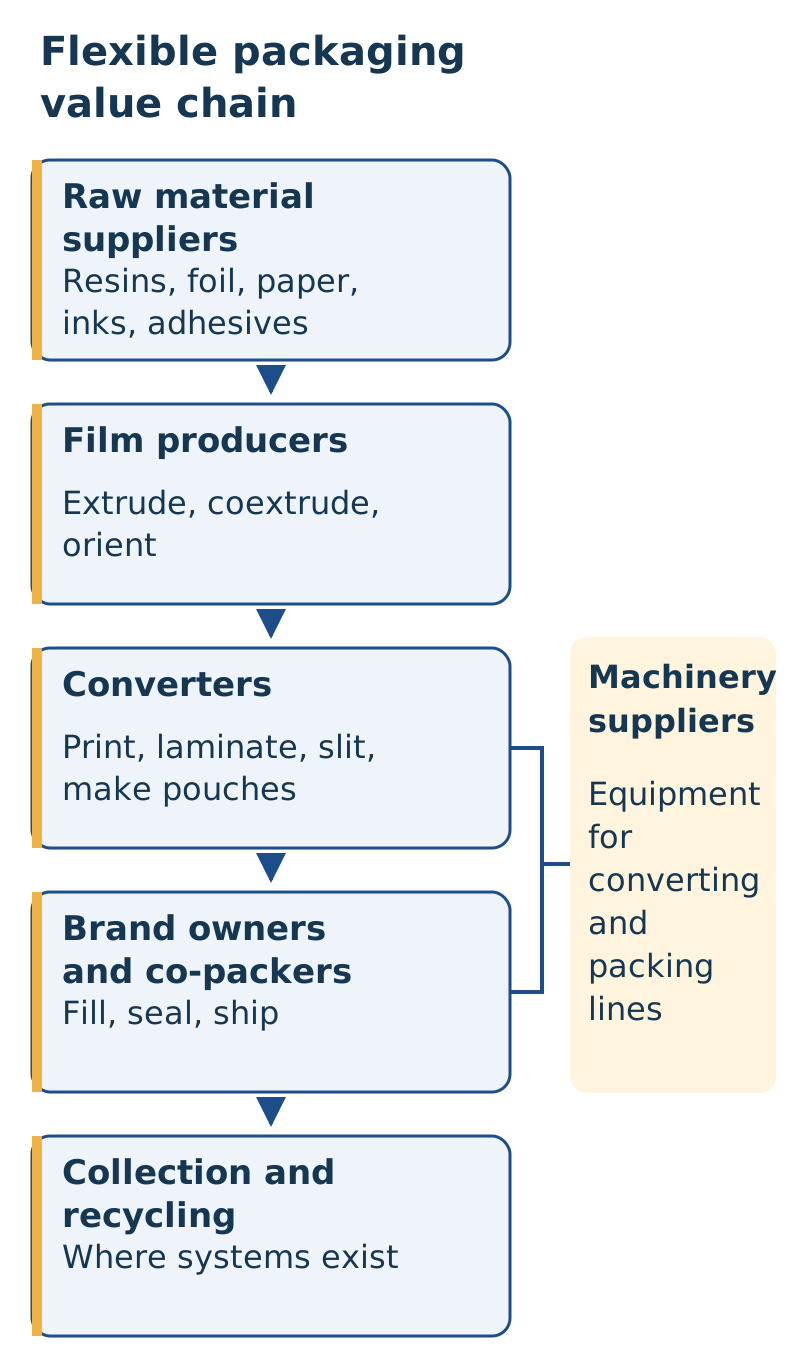
Scroll horizontally to view all columns if needed. ↔
| Link in the chain | What it does | Questions that belong here |
|---|---|---|
| Raw material suppliers | Make polymer resins, aluminum foil, paper, inks, adhesives and coatings | Which grade, which additives, what the material is declared for |
| Film producers | Extrude, coextrude and orient base films such as PE, CPP, BOPP and BOPET | Thickness, film type, surface treatment, base-film data |
| Converters | Print, laminate, coat or metallize, slit, and make pouches or bags | Structure, print, roll or pouch specification, lead time on the order |
| Machinery and tooling suppliers | Build form-fill-seal, flow wrap and pouch filling equipment, plus printing and converting machines | Which film properties the machine needs to run reliably |
| Brand owners and co-packers | Fill, seal, code and ship the product | Product needs, line speed, shelf life, market rules |
| Collection and recycling | Sort and reprocess packaging after use, where systems exist | Which structures the local system can actually take |
Many companies combine links. A converter may also extrude its own film, and a brand owner may buy film and pouches from several converters. That is why a supplier evaluation should start by asking which steps a supplier does in-house and which it buys in.
Converters are where most buyers start, because they translate a product need into a printed structure. The production route shows the steps a converter typically runs, and the quality checks by step show what can go wrong at each one.
Flexible packaging materials
Every flexible structure is built from a small set of material families, each with a typical role. Polyethylene (PE) and polypropylene are the usual sealant layers. Polyester (PET) and oriented polypropylene (BOPP) are common printable outer layers. Polyamide (nylon) adds puncture strength. EVOH, PVDC coatings, metallization, oxide coatings and aluminum foil provide barrier. Paper brings stiffness and a natural look, and shrink films shrink around the product when heated.
The materials hub maps these families against the roles they play. For individual polymers, see PE film, BOPP film, PET film and aluminum foil.
How flexible packaging is made
Making a flexible package takes several steps, and different companies often handle different ones.
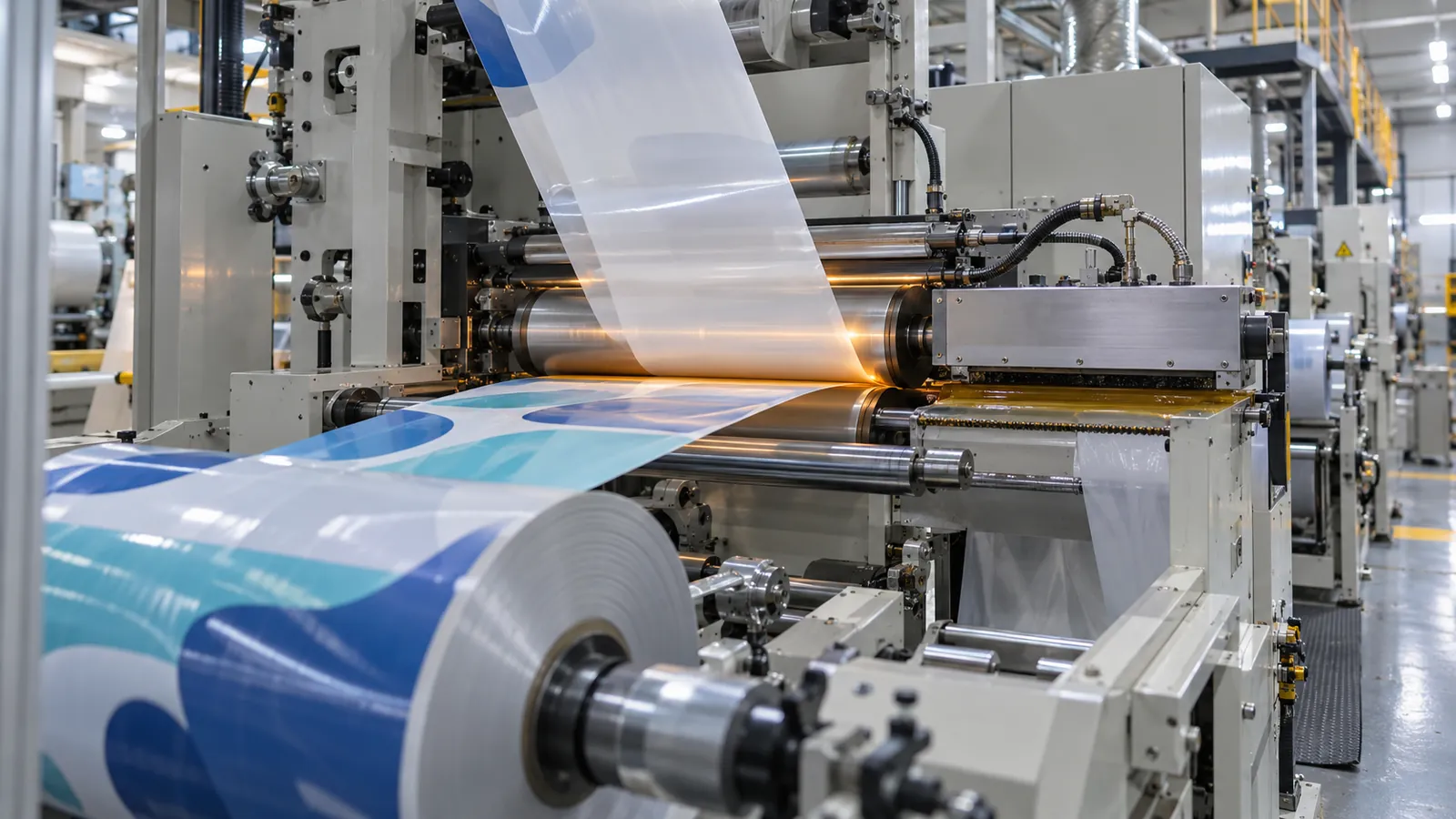
- Extrusion: polymer resin is melted and formed into film, either by blown or cast extrusion. Coextrusion combines several polymers in one pass. Some films, such as BOPP and BOPET, are also stretched in both directions to orient them.
- Printing: designs are printed on the film, usually by flexographic or gravure printing, and sometimes digitally.
- Lamination: printed and unprinted webs are bonded together with adhesive or an extruded polymer layer.
- Slitting: the wide laminated roll is cut into narrower reels that fit the customer’s machine.
- Converting: reels are either shipped as rollstock or turned into premade pouches and bags.
Film construction is covered in flexible packaging film.
Rollstock vs premade pouches
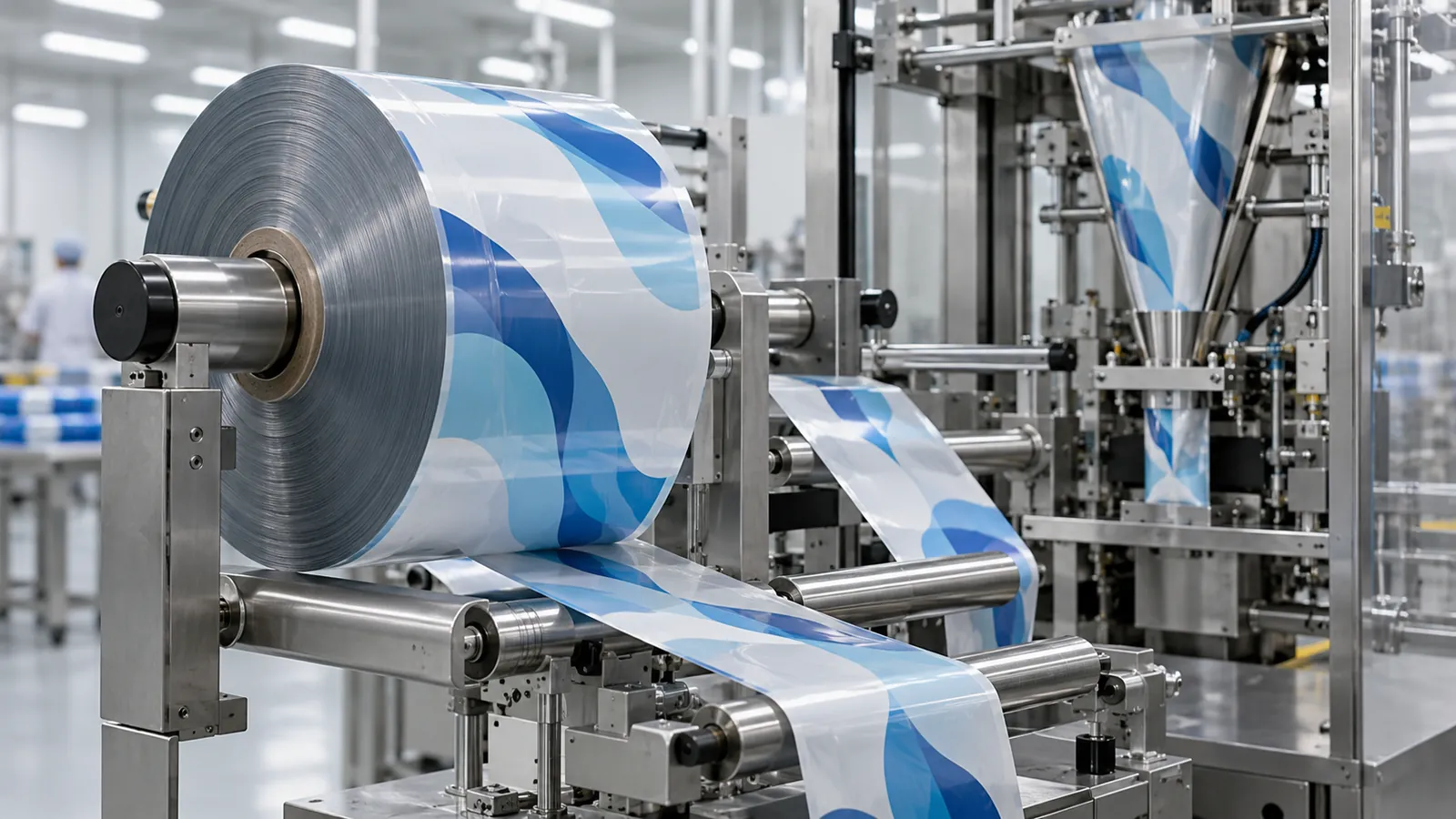
Rollstock is a reel of printed film that is formed into a package on the filling line. Vertical form-fill-seal machines make pillow and gusseted bags this way, and horizontal flow wrappers make wrapped bars and biscuits. Because the package is formed and sealed as part of the fill, the film has to run reliably on the machine, which is why VFFS film and flow wrap film have their own specifications.
Premade pouches are formed and sealed on three sides, or with a bottom gusset, by a converter and shipped empty. The filler opens, fills and closes them. This route suits stand-up pouches, zippers, spouts and shapes that are hard to form on the line. The material questions are covered in premade pouch materials.
Compare rollstock and premade pouches at the actual pack format, annual volume, run length and available equipment. Include conversion/filling cost, changeovers, scrap and capital; no universal cost ranking follows from delivery form. A first-order risk checklist helps buyers going either route.
Main flexible packaging formats
A format is the finished shape of the package. The formats hub groups them, and the most common are:
- Stand-up pouches, which sit upright on shelf and often carry zippers or spouts.
- Flow wrap packs, the fin- or lap-sealed tubes used for bars, biscuits and medical items.
- Retort pouches, built to survive heat sterilization.
- Pillow bags, quad-seal bags, sachets, stick packs and shrink-wrapped products.
Performance properties
The properties that decide whether a structure works are measurable, which is the point of the performance section. Barrier is described by oxygen transmission rate and water vapor transmission rate. Sealing is described by the seal initiation temperature and seal strength. A spec sheet also lists strength, stiffness, puncture resistance, friction and optical properties. Always compare numbers measured under the same conditions; the film specification guide explains how.
Machine compatibility
A film that performs well in the lab can still jam on a machine. Friction, stiffness, seal window, thickness tolerance and roll quality all affect line speed and waste. The machine compatibility hub covers VFFS, flow wrap and premade pouch filling. A cheaper film can cost more on the line once jams and waste are counted.
Applications
Different products ask different things of a package. Snack packaging needs moisture and light protection, a good print surface and fast sealing. Coffee packaging is about oxygen and aroma, often with a degassing valve. Pharmaceutical flexible packaging needs tight barrier, traceability and, for blisters, pharmaceutical foil. The applications hub covers more.
Sustainability
Evaluate material use for a defined product and delivered quantity, including secondary packaging and damage losses. Recycling is a separate, destination-specific question. Multilayer laminates combine polymers and sometimes foil, which collection systems cannot easily separate. The main response is mono-material packaging, where the structure is built from one polymer family, and wider work on recyclable flexible packaging. Article 71 of Regulation (EU) 2025/40 sets 12 August 2026 as the general application date, with exceptions and separately phased obligations. Teams placing packaging on the EU market should check the relevant provisions, not treat that date as the start of every obligation. Recyclability claims vary by region and collection system, so confirm them locally.
Choosing a flexible packaging solution
Work back from the product:
- Define what the product needs protection from (oxygen, moisture, light, aroma loss, puncture) and for how long.
- Pick the barrier level and structure, then check the material options in materials.
- Decide on rollstock or premade pouches based on volume, format and equipment.
- Confirm the structure runs on your machine at your speed.
- Check recyclability and regulatory requirements for each market.
- Evaluate suppliers on technical support as well as price; see how to evaluate a flexible packaging supplier.
Start with the barrier need and the machine, because they narrow the options more than anything else.
Learning path and further reading
If you want to learn flexible packaging systematically, read in the order the decisions are made. Each step depends on the one before it.
- Vocabulary and formats. Types of flexible packaging and the formats hub give you the names buyers and converters use.
- Materials and structures. Packaging film types maps the polymers, then flexible packaging film and laminated packaging show how layers are combined.
- Properties and test methods. The performance section explains barrier, sealing and strength, and why a number means little without its test conditions.
- Machines and delivery form. Rollstock packaging and the machine compatibility hub cover how film behaves on the line.
- Rules and end of life. The regulations section and sustainability section cover food contact, extended producer responsibility and recyclability.
- Buying. The guides turn the above into checklists for comparing specifications, judging total cost and evaluating suppliers.
People searching for a “flexible packaging materials PDF” are often looking for one document that covers all of this. This site does not offer a downloadable textbook, and we do not link to unofficial copies of paid books or standards. The pages above are free to read and print, and the organizations below publish primary material.
- Flexible Packaging Association (FPA). The US trade association for converters and suppliers of flexible packaging materials. It publishes industry, sustainability and advocacy material at flexpack.org.
- ASTM International, Committee F02 on Primary Barrier Packaging. Develops many of the test methods cited on spec sheets, including the F88 seal strength method and F99, a guide to writing specifications for flexible barrier rollstock. Standards are sold by ASTM; summaries are free on its website.
- PMMI, The Association for Packaging and Processing Technologies. The US trade association for packaging and processing machinery, useful for the equipment side of the chain, at pmmi.org.
- CEFLEX. A European consortium representing the flexible packaging value chain, focused on collection, sorting and recycling, at ceflex.eu.
These organizations represent their members or the wider industry, so read their material as one informed view and check claims against the test method or regulation they cite.
Method and sources
Comparisons here are project checklists, not measured savings or life-cycle results. Record product, pack mass, destination, production volume and distribution conditions before drawing conclusions. EUR-Lex Article 71 above was reviewed 8 October 2026; it supports the PPWR date and exceptions, not an environmental or cost ranking.
Flexible Packaging
In this section
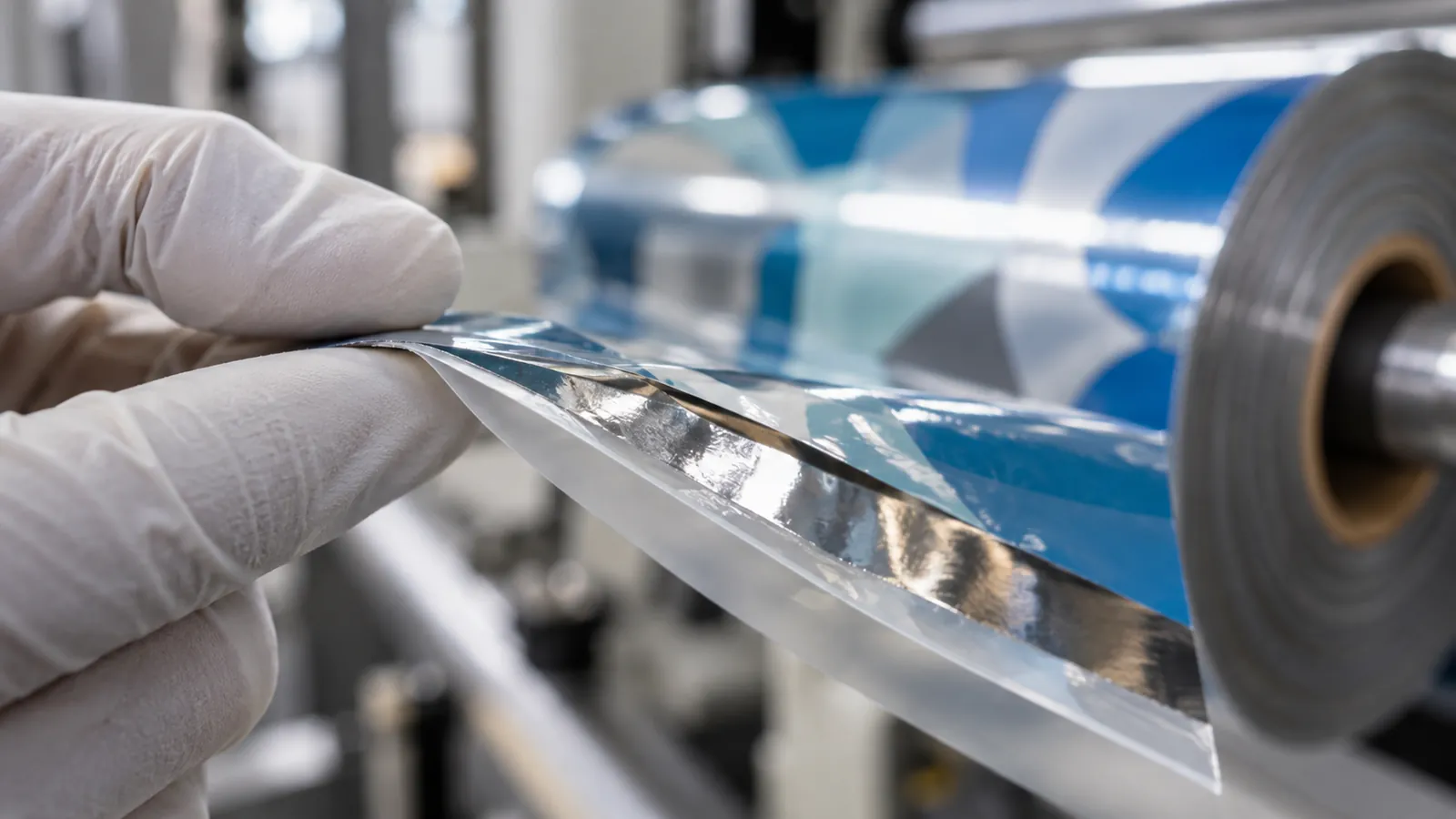
Flexible Packaging Film: Monolayer, Coextruded and Laminated Films
Flexible packaging film is built as monolayer, coextruded or laminated webs. Learn how layers, printing and rollstock affect performance.

Flexible vs Rigid Packaging: How to Compare Them
Flexible vs rigid packaging compared on material use, transport, protection, shelf impact, filling lines, cost and recycling, plus when rigid still wins.
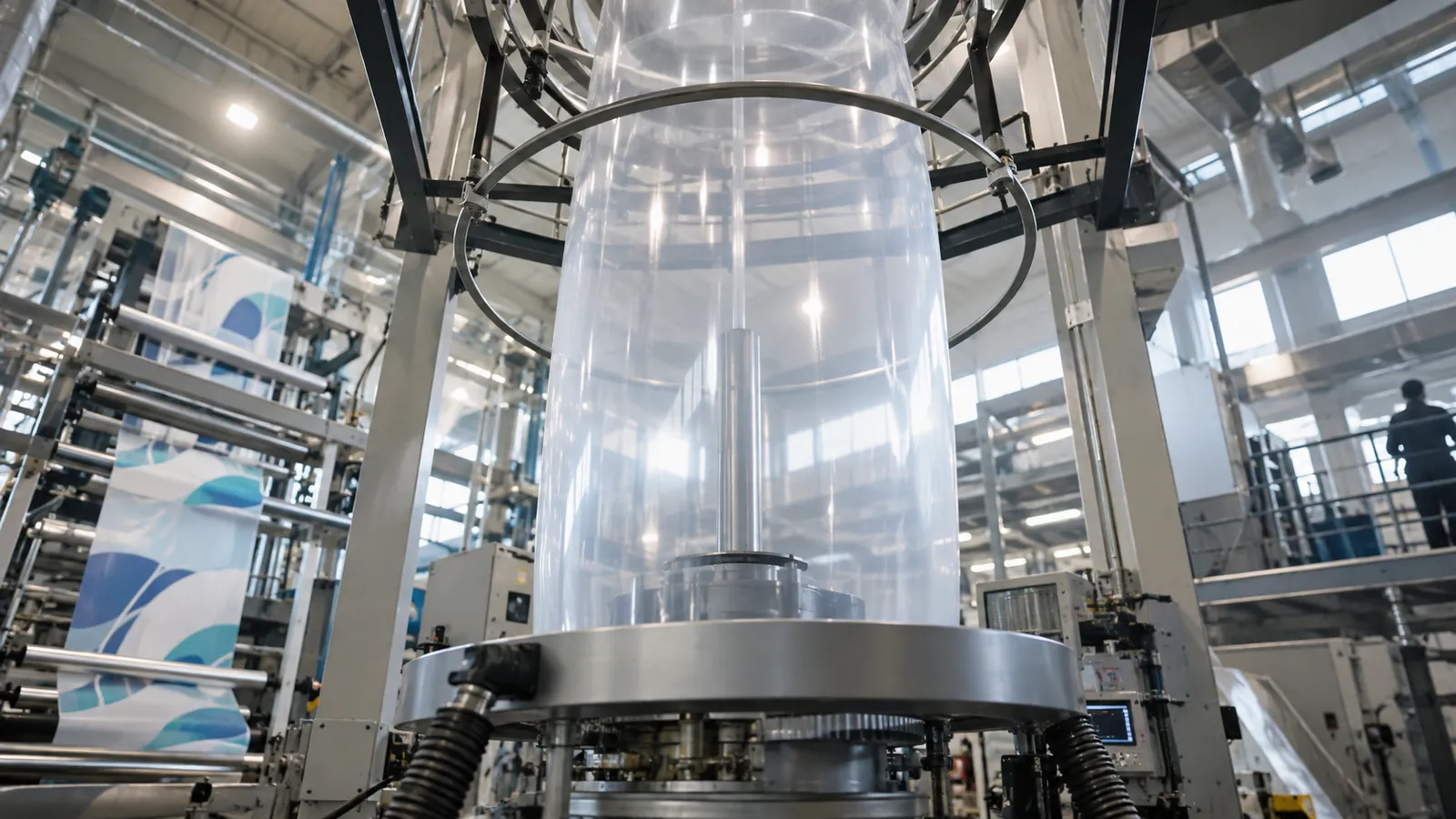
How Flexible Packaging Is Made: From Resin to Finished Pouch
How flexible packaging is made, step by step: extrusion, printing, lamination, coating, slitting, pouch making and the quality checks at each stage.
Laminated Packaging: How Lamination Works and Why It Matters
Laminated packaging bonds films, foil or paper into one web for print, barrier and seal. Learn dry, wet and extrusion lamination, curing and bond strength.
Rollstock Packaging: Specifying Film on the Roll
Rollstock packaging is printed film supplied on reels and formed into packs on your line. Learn which machines use it and what a roll spec must include.

Types of Flexible Packaging: Formats, Materials and Constructions
Types of flexible packaging can be sorted by format, material family or construction. Use this guide to match each type to products and narrow your choice.