
Topic hub
Flexible Packaging Formats: Pouches, Wraps, Sachets and More
An orientation to flexible packaging formats: pouch types, wraps, sachets and sticks, with a comparison table and how to choose between them.
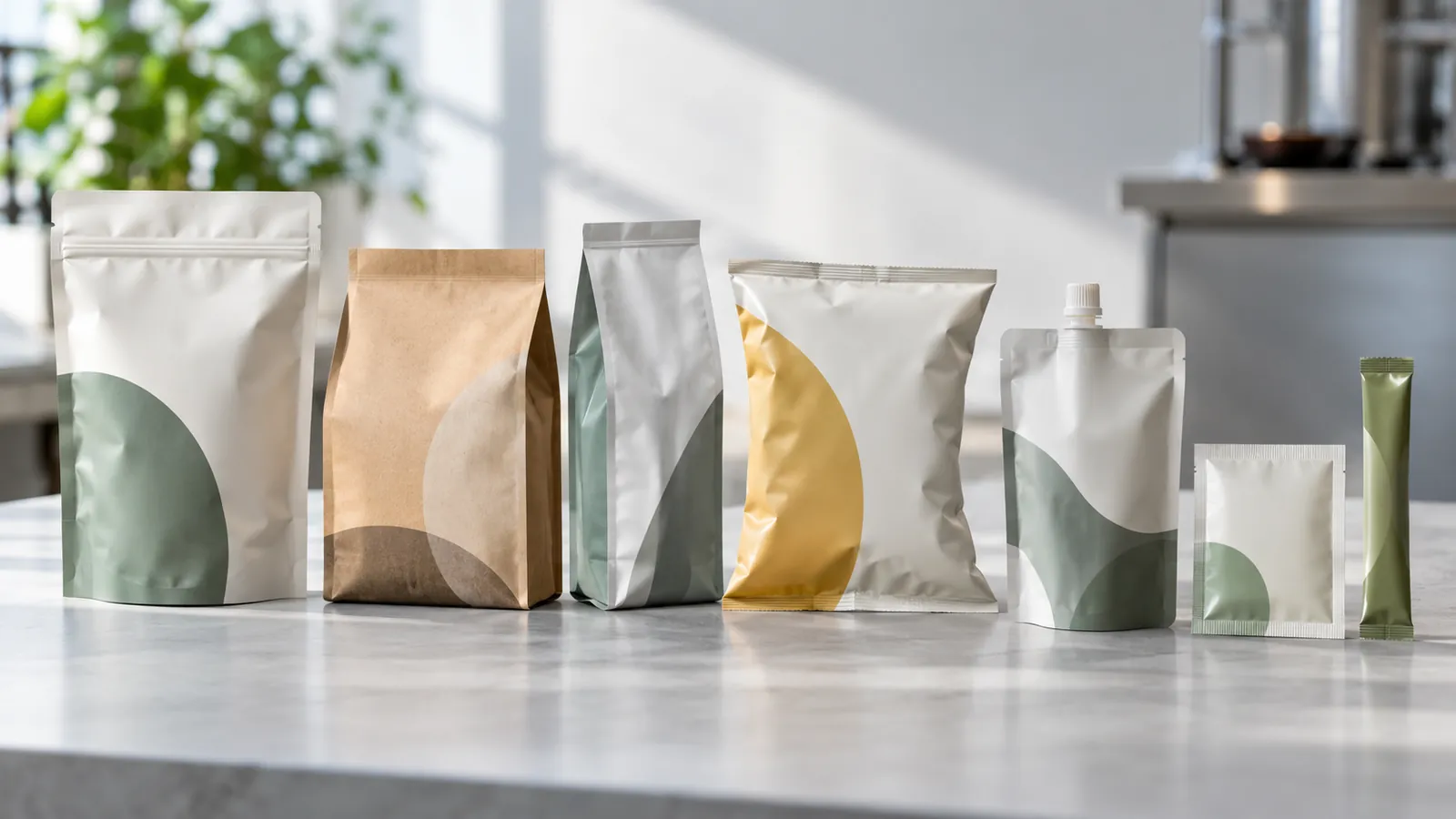
A format mismatch can leave a filler unable to feed the pouch or seal its folds. Flexible packaging formats are the shapes a film or laminate takes once it is converted into a pack: a pouch, a bag, a wrap, a sachet, a blister lidding or a shrink sleeve. The same material can end up in several of them, so the format decides how the pack is filled, sealed, displayed and opened. This page maps the common types of flexible packaging and gives a way to choose between them.
Types of flexible packaging at a glance
Most flexible package formats fall into two families. Some are formed on the packaging line from a reel of film (rollstock). Others are made in advance by a converter and arrive at the filler as empty premade pouches. A few, like flow wrap and shrink wrap, wrap the product directly instead of holding it in a pre-shaped container.
For quad seal, the two routes are conditional: the VFFS line needs the matching forming and sealing kit, while the premade route needs handling suitable for the supplied gusseted bag. An equipment maker’s public documentation describes the former; a pouch converter’s public pages describe premade quad-seal pouches. The table below lists the formats readers ask about most. “Typical machine type” is a general guide.
Takeaway: Individual lines vary, so confirm with your equipment supplier. “What the film has to do” names the film demands that each format adds on top of the product’s own barrier needs; the section on comparing film requirements across formats shows where each property is defined and measured.
Scroll horizontally to view all columns if needed. ↔
| Format | Typical products | Formed on the line from rollstock, or premade | Typical machine type | What the film has to do |
|---|---|---|---|---|
| Stand-up pouch | Snacks, coffee, pet food, sauces, liquids | Both | Premade pouch filler, or horizontal form-fill-seal (HFFS) | Hold a strong bottom seal under the fill weight; resist puncture for liquids and heavy fills |
| Flat bottom pouch | Coffee, granola, pet food, powders | Mostly premade | Premade pouch filler | Stay sealable where layers overlap at the corners; stiff enough to keep the box shape |
| Side gusset pouch | Coffee, tea, rice, flour | Premade, or formed on the line | Premade filler or VFFS with gusset tooling | Seal through the extra layers at the gussets; carry barrier around a valve if one is fitted |
| Quad seal bag | Coffee, frozen foods, bulk snacks | Formed on the line or premade | VFFS with compatible quad seal tooling, or filler rated for premade gusseted bags | Seal through thick overlaps at four corner seals; hold print registration across four panels |
| Spouted pouch | Juices, baby food, purees, liquid detergents | Premade | Premade pouch filler with spout handling | Sealant polymer matched to the spout; tolerate hot fill or retort where used |
| Retort pouch | Ready meals, rice, sauces, tuna, pet food | Premade (some formed) | Premade filler, then retort sterilizer | Retort-grade sealant and adhesives that survive sterilization without delaminating |
| Sachet | Sugar, condiments, powders, sample-size liquids | Formed on the line | VFFS or HFFS multi-lane | Barrier for the product; a sealant that seals through powder or paste in the seal area |
| Stick pack | Powdered drinks, supplements, sweeteners | Formed on the line | Narrow multi-lane vertical machine | Barrier for moisture- or oxygen-sensitive powders; run and seal on a narrow multi-lane machine |
| Pillow bag | Chips, snacks, frozen vegetables, grains | Formed on the line | VFFS | Run over the forming collar and seal in a short dwell time |
| Flow wrap | Bars, biscuits, confectionery, medical devices | Formed on the line | Horizontal flow wrapper | Stable friction on a horizontal machine; a sealant suited to fin or lap seals; barrier if gas flushed |
| Vacuum pouch | Meat, cheese, fish, ground coffee bricks | Premade, or thermoformed | Chamber or nozzle vacuum sealer | Resist puncture from bones or sharp edges; oxygen barrier for fresh meat and cheese |
| Zipper pouch | Snacks, nuts, frozen items, hardware | Both | Premade filler or VFFS/HFFS with zipper applicator | Match the top seal and zipper-end attachment to the supplied drawing |
| Blister pack | Tablets, capsules, small devices | Formed on the line | Thermoform or cold-form blister machine | Forming film that keeps wall thickness in deep cavities; lid sealant compatible with the forming film |
| Shrink wrap | Multipacks, bottles, trays, pallets | Formed around the product | Sleeve or L-bar sealer plus shrink tunnel | Shrink in the directions and amount the product shape needs |
Rollstock or premade pouches
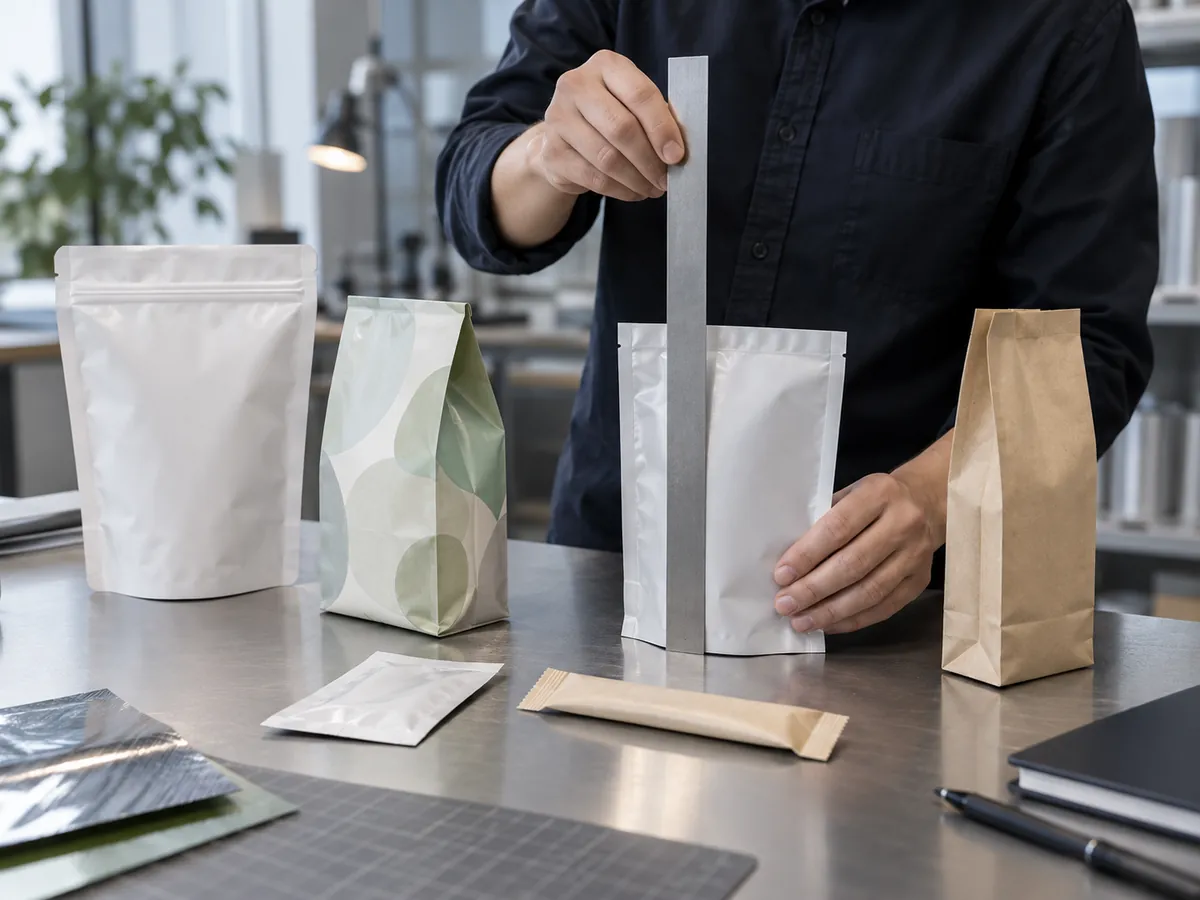
The first decision is usually whether to run film from a reel or buy premade pouches. Rollstock forms the pack on the line, so the film must run on that machine. Compare cost at the actual run length, yield and setup conditions. Premade pouches shift the forming work to a converter. They allow shapes, zippers, spouts and print finishes that are hard to form in line, and they suit shorter runs and frequent changeovers. Compare pouch price, handling losses and inventory against the rollstock route.
The film you can use changes with the route. Rollstock needs stable friction, a wide seal window and consistent reel quality. Premade pouches put more weight on seal integrity at the top seal and on how the pouch opens, stands and feeds into the filler.
Takeaway: The film side of each route is covered in packaging film and machine compatibility, premade pouch packaging materials and the comparison of VFFS vs premade pouch machines.
Comparing film requirements across formats
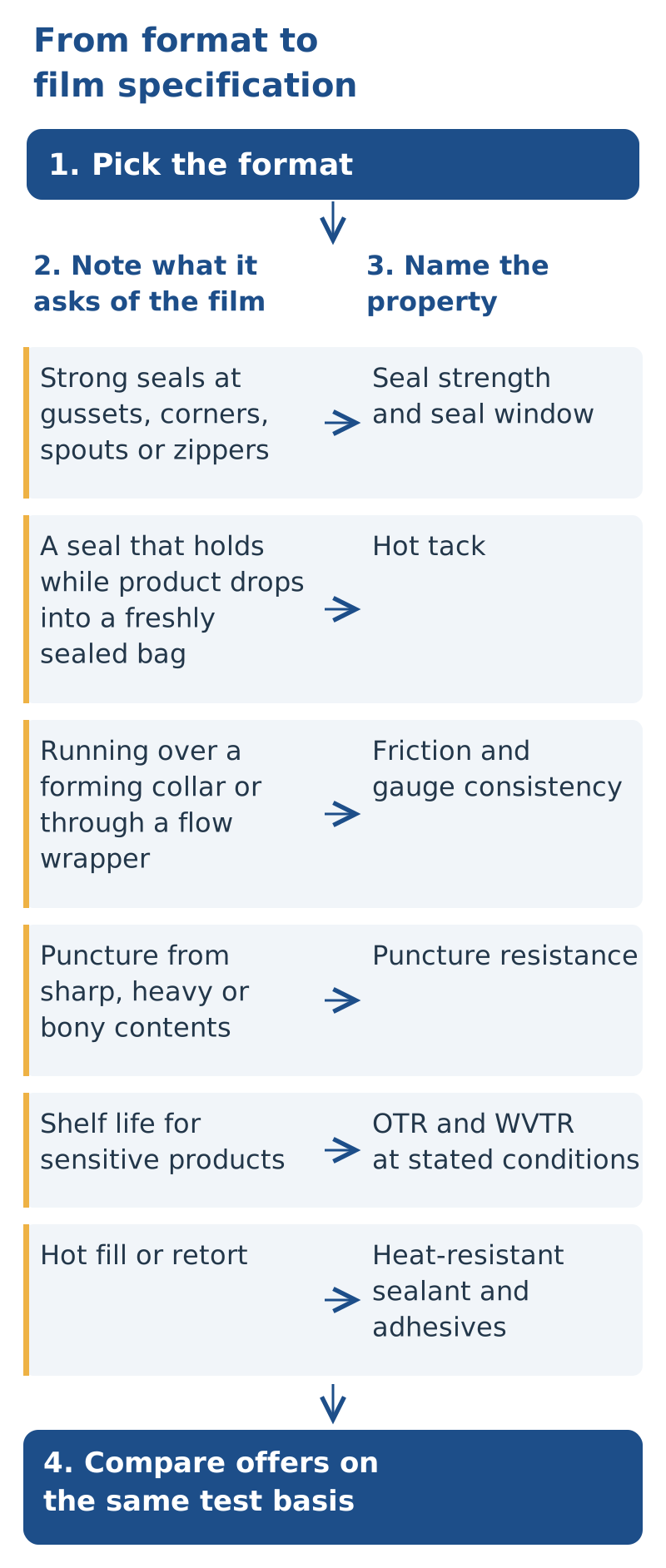
Comparing flexible packaging films only makes sense once the format is fixed, because the format decides which film properties are critical. The same laminate can pass in a pillow bag and fail at a zipper attachment or thick seal intersection in another layout. Read the “What the film has to do” column as a list of properties to put in the film specification, then check each one on the page that defines it and explains its test conditions.
Scroll horizontally to view all columns if needed. ↔
| If the format needs | Property to specify | Where it is explained |
|---|---|---|
| Strong seals at gussets, corners, spouts or zippers | Seal strength, and the seal temperature window | Seal strength, seal initiation temperature |
| A seal that holds while product drops into a freshly sealed bag | Hot tack | Hot tack |
| Smooth running over a forming collar or through a flow wrapper | Coefficient of friction and gauge consistency | Coefficient of friction, film thickness |
| Resistance to sharp, heavy or bony contents | Puncture resistance | Puncture resistance |
| Shelf life for oxygen- or moisture-sensitive products | Oxygen and water vapor transmission rates at stated conditions | OTR, WVTR, barrier film |
| Survival of hot fill or retort | Heat-resistant sealant and adhesives | Retort pouch, CPP film |
| Controlled shrink around a product or bundle | Shrink behavior by direction | Shrink film |
| Formed cavities sealed to a lid | Forming film and lidding pair | Blister pack, blister foil |
Film types and structures are compared on the packaging film types page.
Takeaway: Values for these properties depend on the material, the gauge and the test method, so this page gives none; compare two offers on the same basis using the film specification comparison guide.
Types of pouches by film structure and seal layout
Here a pouch means a flexible packaging pouch made from film or laminate for food, beverage, pet food and household products. Nicotine pouches, tobacco pouches and travel or gear pouches are a different subject. There is no fixed count of pouch types, but most packaging pouches are one of the seven styles below, with retort as a heat-processed version. For the film, what separates them is where the seals run and how many layers each seal has to pass through.
Scroll horizontally to view all columns if needed. ↔
| Pouch type | Seal layout | Where sealing is hardest | Typical structure (outer / barrier / sealant) | Typical products | What the filler or sealer must handle |
|---|---|---|---|---|---|
| Flat pouch, 3-side seal | One web folded in half, sealed on two sides, then across the top after filling | The top seal, made through any powder or paste left in the mouth | PET/PE for low barrier; PET/foil/PE or PET/metallized PET/PE for moisture, oxygen or light; paper laminates | Single servings, samples, condiments, powders | Form-fill-seal or premade flat pouch filler; a sealant that seals through product in the seal area |
| Flat pouch, 4-side seal | Two separate webs sealed together on all four edges | Corners where the side seals meet; both webs need sealants that bond to each other | Different front and back, for example a clear web on one side and a foil laminate on the other | Samples, single doses, products that need a window on one face | Two reels or premade pouches; matched sealants on both webs |
| Stand-up pouch | Front and back panels plus a bottom gusset (round, K-seal or plow bottom); top sealed after filling | The bottom seal under the fill weight; top closure and zipper-end intersections, where fitted | Dry goods: printed PET or BOPP / metallized or barrier layer / PE. Liquids: nylon added, thicker sealant. Coffee: foil or high-barrier coating | Snacks, coffee, pet food, sauces, liquids | Premade filler that opens the pouch by suction or grippers, or horizontal form-fill-seal from rollstock; jaw path and attachment settings matched to the drawing |
| Side gusset pouch | Tube with folded side gussets, a fin or lap back seal, straight bottom seal through the gussets | Top and bottom seals where they pass through the extra gusset layers | Printed PET or BOPP / barrier layer / PE; foil or metallized layer for coffee; paper outer on some | Coffee, tea, rice, flour | VFFS with gusset plates, or premade bags closed on a top sealer; less common on automatic pouch fillers |
| Flat bottom pouch | Five panels with a squared, folded base and vertical side seals | The base and gusset corners, where several layers overlap | Printed PET or BOPP / metallized or coated barrier / PE; foil added for coffee; stiff enough to hold the box shape | Coffee, granola, pet food, powders | Mostly premade; the filler must open a wide, squared mouth, and stiff gussets can resist opening |
| Quad seal bag | Four vertical corner seals and end closures; a separate longitudinal join may remain | Thick overlaps at the four corners, and registration across four panels | PET or BOPP outer, PE sealant; foil or metallized for coffee; nylon or thicker layers for pet food | Coffee, frozen foods, bulk snacks, pet food | VFFS with a quad seal forming set, or premade bags; film stiffness and friction checked with the machine supplier |
| Spouted pouch | A stand-up, flat or gusseted pouch with a spout welded into the top or a corner seal | The seal around the spout flange; the sealant polymer must match the spout (PE to PE, PP to PP) | Ambient liquids: PET or nylon / PE. Hot fill or retort: CPP sealant with foil or high-barrier layer | Juices, baby food, purees, liquid detergents | Premade pouches with spout insertion and spout handling; fill through the spout or before the top seal |
| Retort pouch | Flat or stand-up layout, sterilized after sealing | Every seal, because it must hold through heat and pressure | PET / foil / nylon / retort-grade CPP, or a clear version with oxide-coated PET; adhesives rated for retort | Ready meals, rice, sauces, tuna, pet food | Premade filler, then a retort sterilizer; low residual air in the pouch |
Zipper and vacuum pouches are usually one of these styles with a closure or a vacuum step added, so they change the seal at one point rather than the whole layout.
Read across a row from the seal layout. Wherever the seal crosses a fold, a gusset, a zipper or a spout, it has to fuse through more material than a plain seal, so that is where to ask the converter for seal strength and leak test results. It is also why one laminate can run well as a flat pouch and fail as a flat bottom or quad seal bag: the barrier and print layers may be the same, but the sealant and jaw settings have to cope with thicker overlaps. The source mapping below identifies which public equipment or converter document supports each layout. It does not establish universal capacity or line performance.
The structures in the table are illustrative candidates, not verified prescriptions for every format. A film manufacturer’s public barrier-film brochure illustrates PET/barrier/PE and PET/barrier/CPP laminates; match the complete grade and process to the product. Layer thickness, barrier values and sealant grades depend on the product and the supplier, so this table gives none. The layers themselves are covered in nylon film, metallized film, aluminum foil and high barrier film.
Takeaway: A structure that works in one pouch type still needs a trial on the actual filler before it is approved for another.
Format pages
Every format in the table has its own page. This section only sorts them by family.
Premade pouches. The stand-up pouch format page covers gusset styles, closures and laminate choices, and the flat bottom style adds a box-style base with panels for print. The side gusset style is the classic coffee and tea bag shape. For liquids there is the spouted format, and for products that go through heat sterilization, the retort format. Reclosing options are compared on the zipper options page, and oxygen-sensitive or fresh products often move to a vacuum format.
Formed on the line from rollstock. The pillow-style bag is the basic vertical form-fill-seal bag, and the quad seal style adds four corner seals for a more upright, shelf-friendly shape. Single-serve packs include the sachet format and the stick pack format, which differ in shape and in the machines that make them.
Wraps and sealed covers. Flow wrap packaging forms a pack around the product on a horizontal machine, while shrink wrapping tightens film around bundles, trays and bottles with heat. The blister format page covers formed cavities sealed with a lid, used well beyond pharmaceuticals.
Two comparisons help when the choice is close.
Takeaway: Flow wrap vs shrink wrap sets out when a sealed film pack beats a tight overwrap, and rollstock vs premade pouches goes deeper into the first decision above, including volume, changeover and cost.
Choosing between formats, step by step
Work through these steps in order, because each one narrows the next.
- Product behavior. Is it dry, a powder, a liquid, a paste, or sharp and abrasive? Liquids point to spouted or standing pouches; powders to sachets, sticks or gusseted bags; fragile items to flow wrap.
- Shelf life and barrier. Oxygen- and moisture-sensitive products need a barrier structure; barrier film explains what that means in practice.
- Process. Hot fill, retort, modified atmosphere or vacuum each limit the sealant and laminate you can use.
- Volume and changeovers. High volume favors rollstock; many SKUs and short runs favor premade.
- Shelf presence and use. Standing on shelf, resealing, tear-open and portion control all steer the format.
- End of life. Mono-material goals narrow the structures available, which can also narrow the formats (see recyclable flexible packaging).
The flexible packaging overview explains what flexible packaging is and how the materials relate.
Takeaway: To see which formats specific products tend to use, from snacks and coffee to pharmaceuticals, browse packaging by application.
Sources and method
Compiled from public manufacturer documents, accessed 8 October 2026, rather than site trials. Names and links here identify evidence, not recommended suppliers. The sketches explain positions; they are not production drawings. Material examples require the exact converter specification.
Scroll horizontally to view all columns if needed. ↔
| Table judgement | Manufacturer and exact source URL | Source nature / limit |
|---|---|---|
| Three-side, standing and zipper layouts; center-seal route | TOTANI, Search by Shape of Pouch | Equipment-maker format illustrations; no universal single-web route assumed |
| Flat-bottom base and gusset layout | TOTANI, BOX POUCH seen in photos | Manufacturer’s specific design; not all flat-bottom bags |
| Quad seal formed on line; additional longitudinal seal possible | Equipment manufacturer, quad-seal bag anatomy | Equipment-maker diagram and optional offset vertical seal |
| Quad seal premade route | Pouch converter, flat-bottom and quad-seal pouches | Converter’s premade product construction; filler compatibility still required |
| Spout and zipper as premade features | Pouch converter, premade pouches | Converter product categories; exact attachment and sealing pair vary |
| Flow-wrap longitudinal and end sealing | Equipment manufacturer, flow-wrapper brochure | Equipment brochure, heated fin wheels and rotary crimper example |
| Heat-processing pouch layouts | TOTANI, shape page above; FDA Form 2541d | Manufacturer retort-use examples and regulator’s flexible-pouch process fields; no process approval inferred |
| PET/barrier/PE or CPP candidates | Film manufacturer, barrier-film brochure | Material-maker example laminates, not validated pack recipes |
Every source in this table was accessed on 8 October 2026. Other format rows are orientation only; use the linked format page and equipment drawing before specifying.
Formats
In this section
Blister Packaging: Formats, Materials and Uses
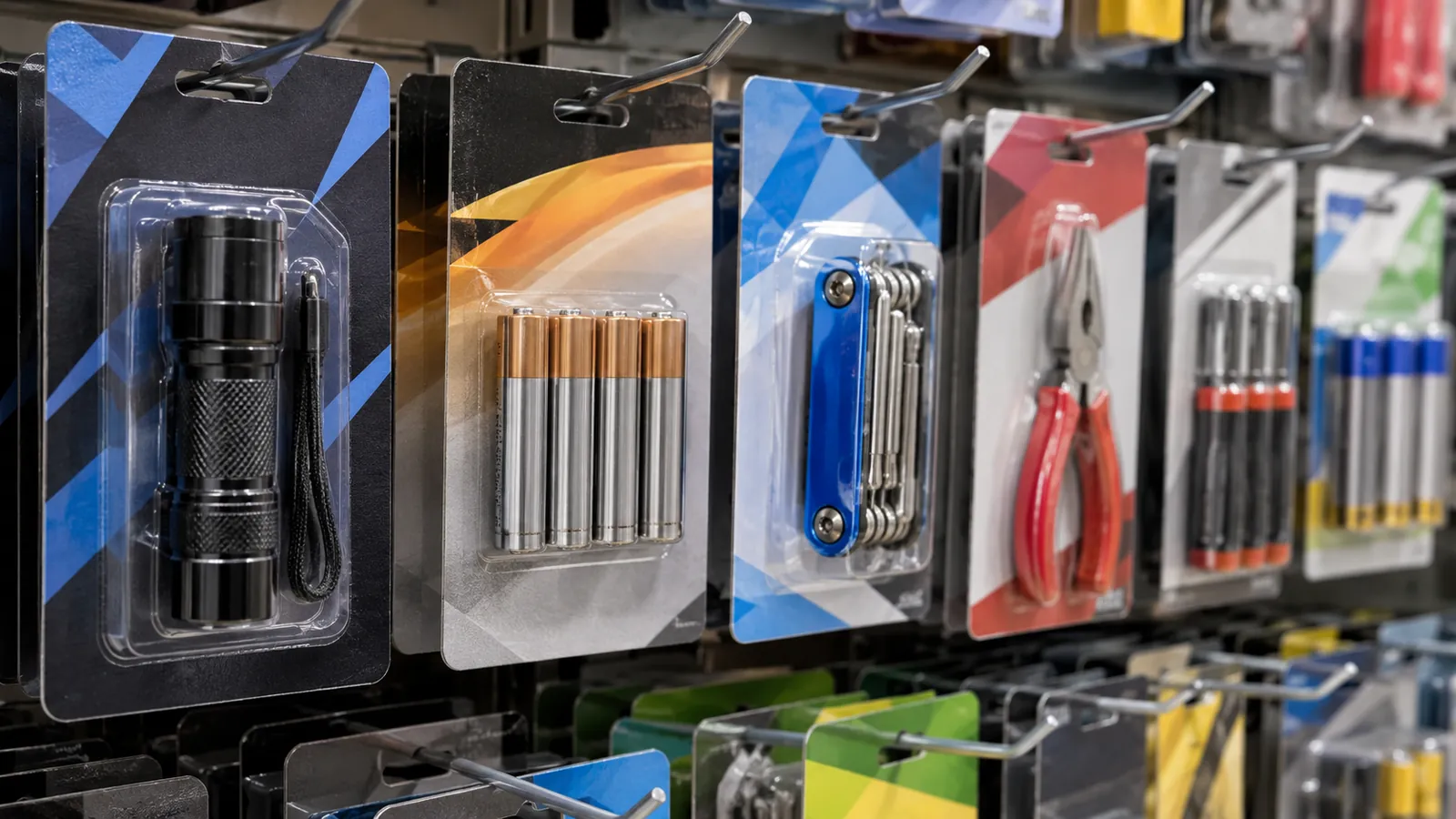
Blister packaging holds a product in a thermoformed or cold-formed cavity sealed to a lidding or card; see types, materials and typical uses.
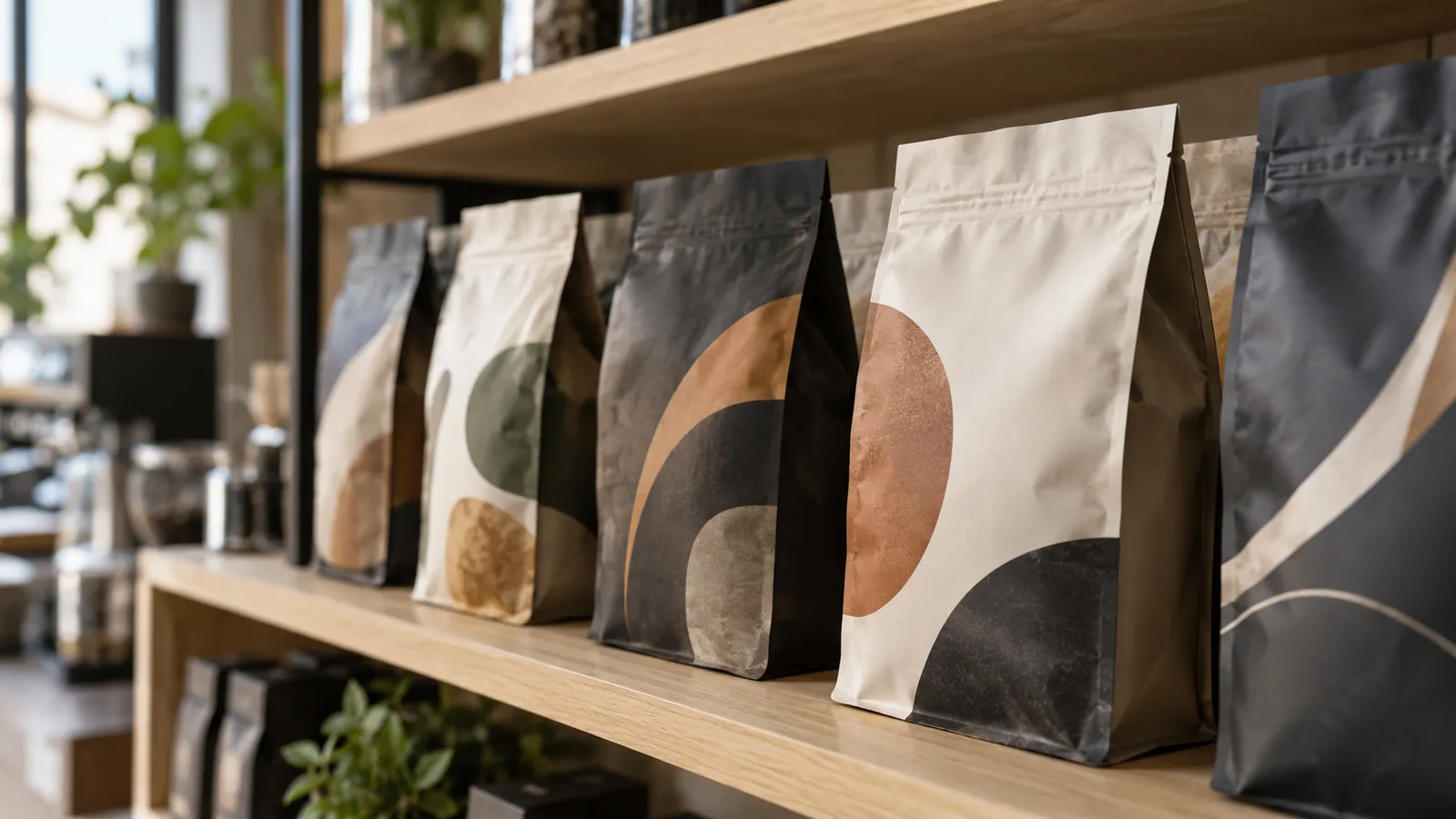
Flat Bottom Pouch: Box-Style Pouches Explained
A flat bottom pouch has a rectangular base and two side gussets that make a boxlike, self-standing pack. See construction, features and how it compares.
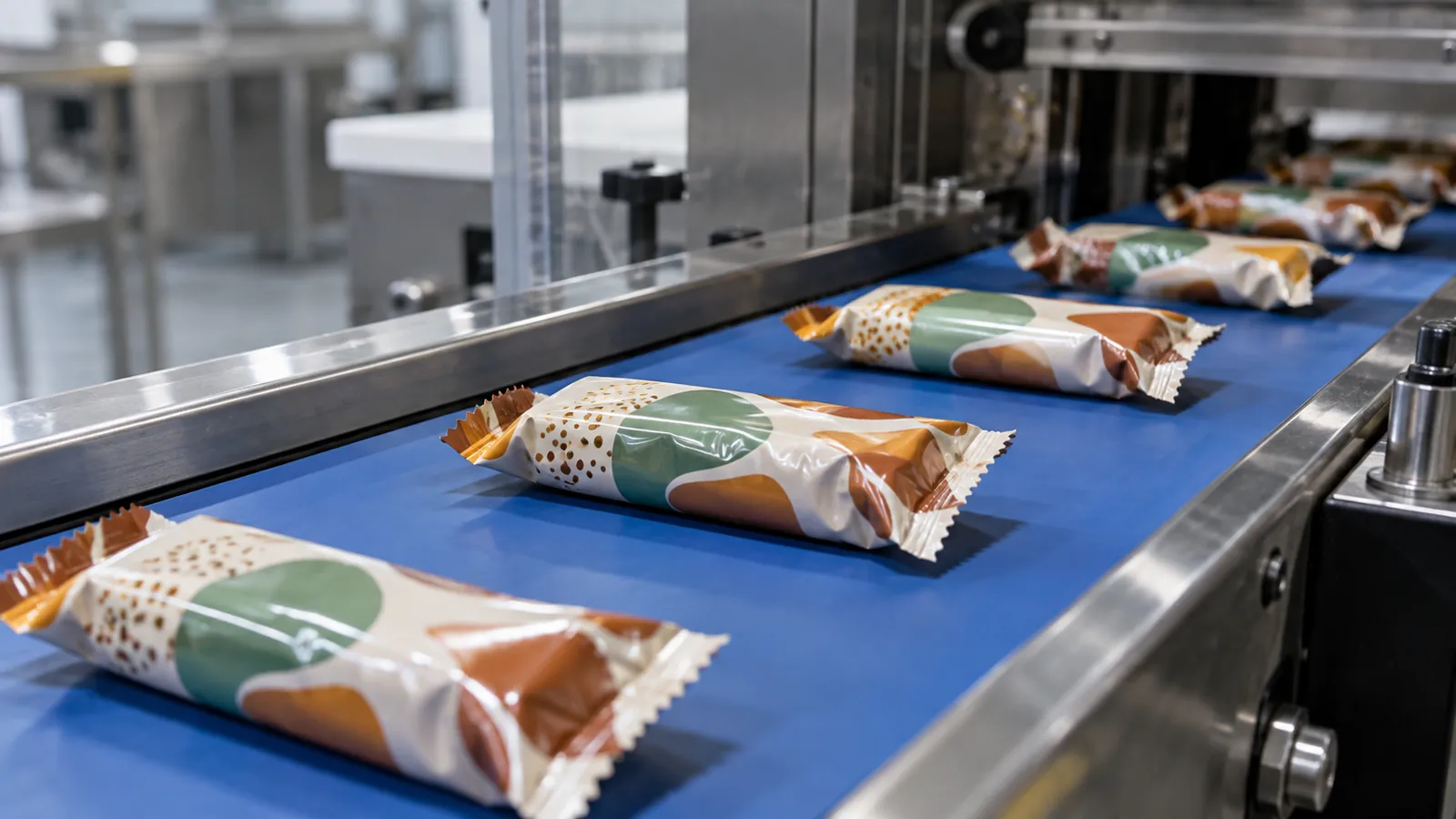
Flow Wrap Packaging: How It Works and What It Suits
Flow wrap packaging forms a film tube around the product with a fin or lap seal and two end seals. See variants, suitable products and trade-offs.
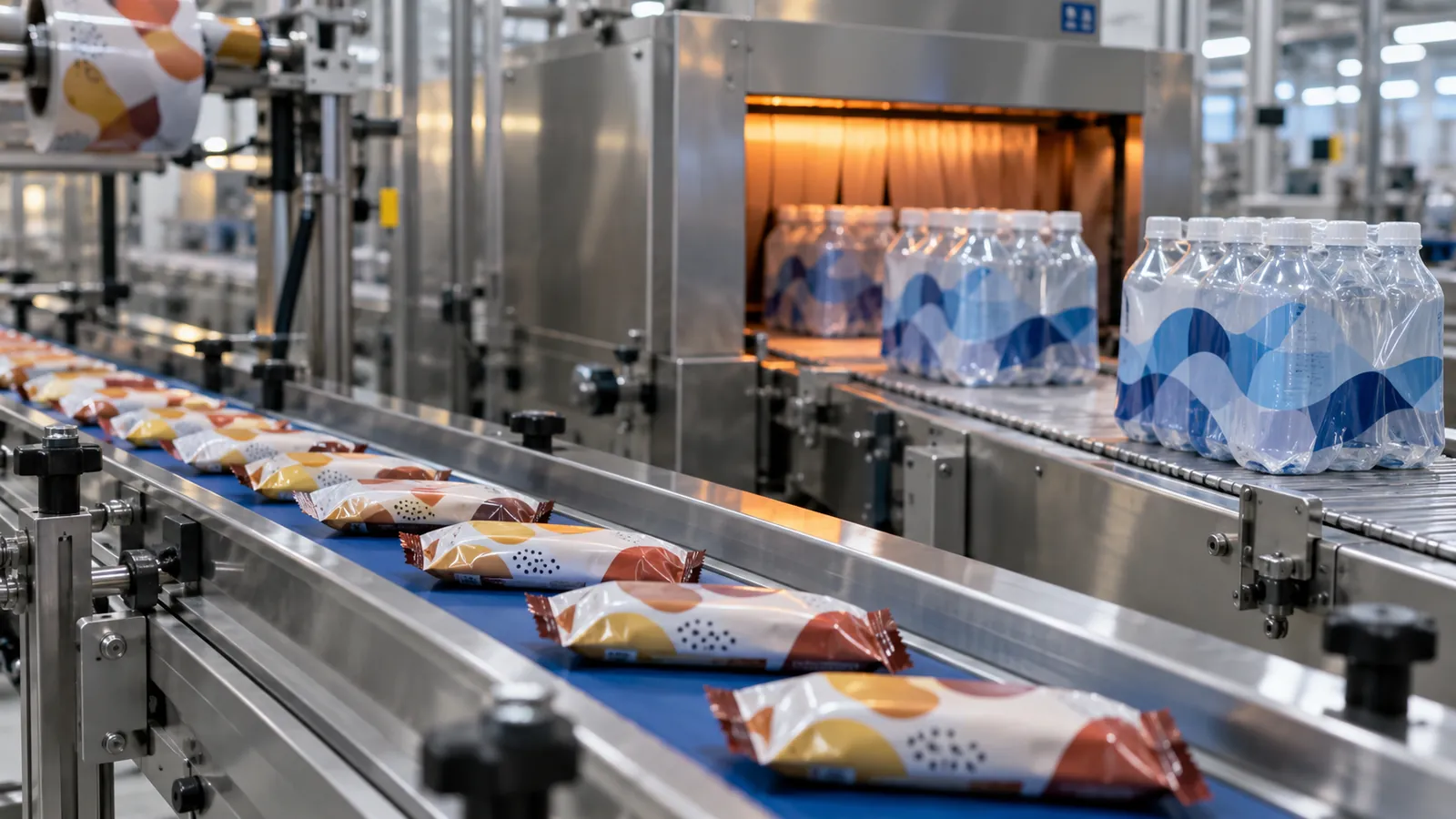
Flow Wrap vs Shrink Wrap: Choosing a Wrapping Format
Flow wrap vs shrink wrap compared on product fit, barrier, seals, print, heat and machines, with a checklist to choose the right wrapping format.
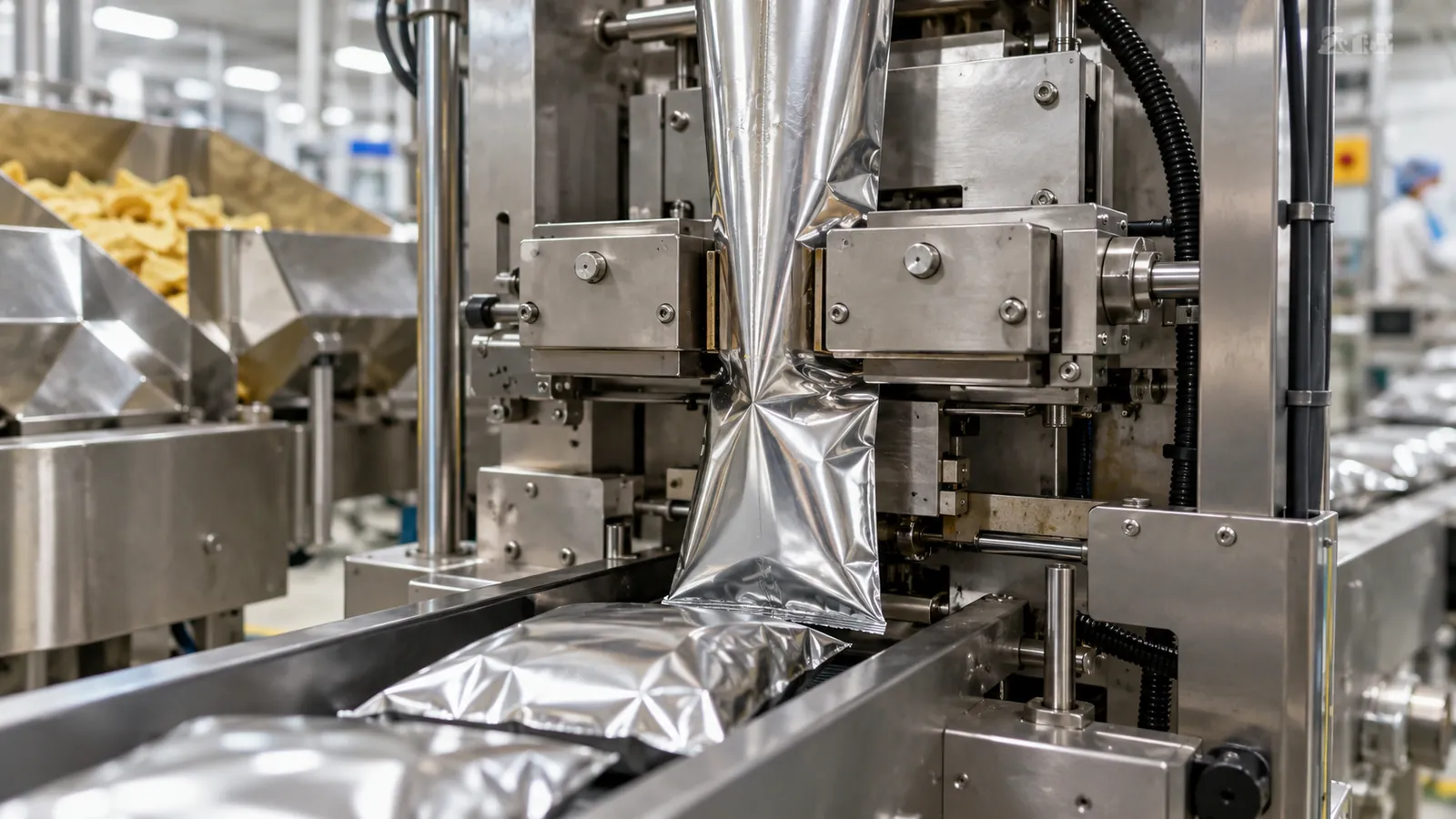
Pillow Bag Packaging: The Basic Form Fill Seal Bag
Pillow bag packaging is the simplest bag made on a vertical form fill seal machine: one back seal, two end seals, and a pillow-shaped pack.
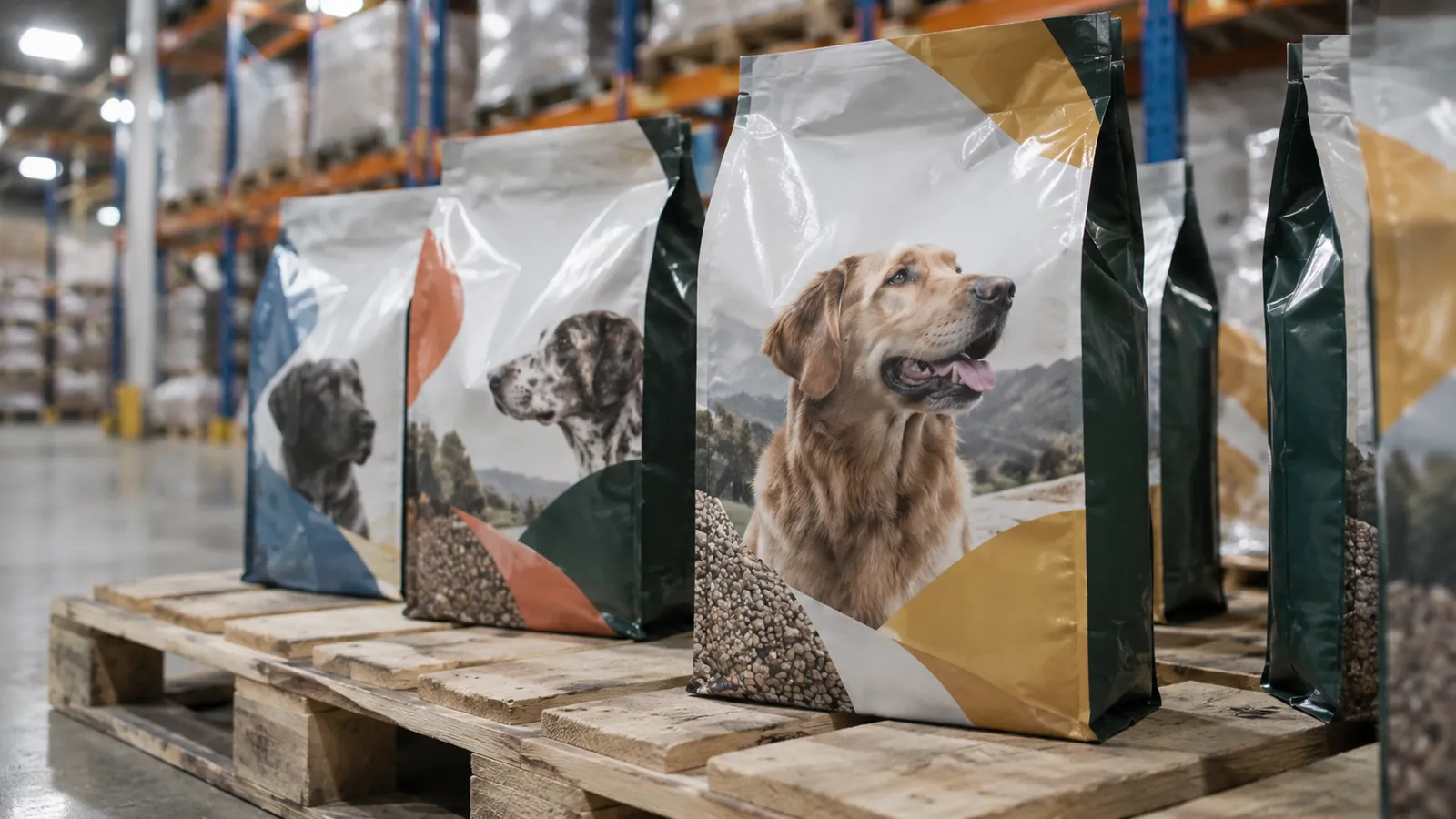
Quad Seal Bag: Four Corner Seals and When to Use Them
A quad seal bag has four vertical corner seals that give a squared, stable shape. Learn how it is made, where it is used and how it compares to side gusset.
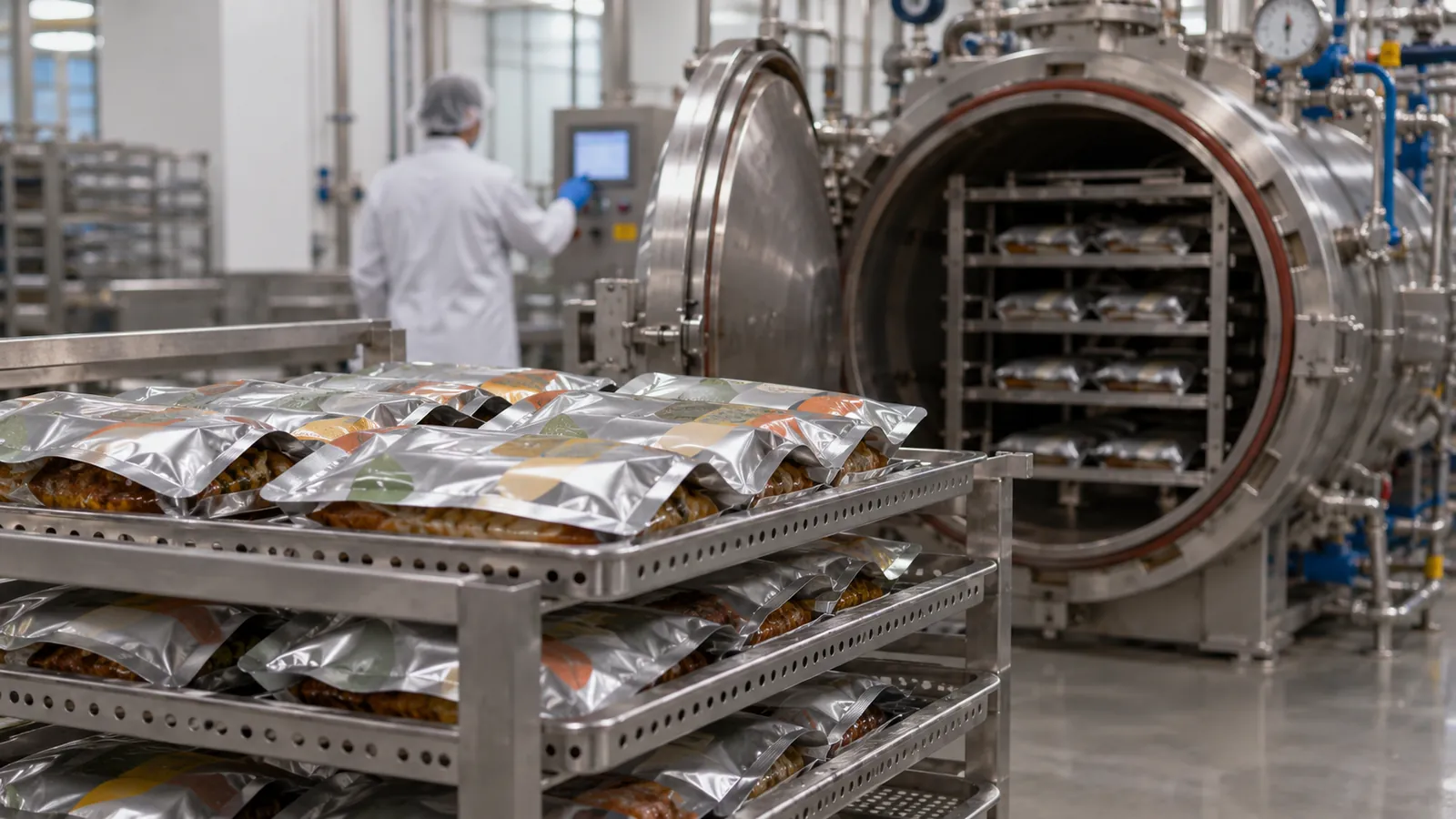
Retort Pouch: Structures, Processing and Uses
A retort pouch is a filled, sealed flexible pack sterilized in a retort. Learn the structures, seal integrity needs, regulations and typical uses.
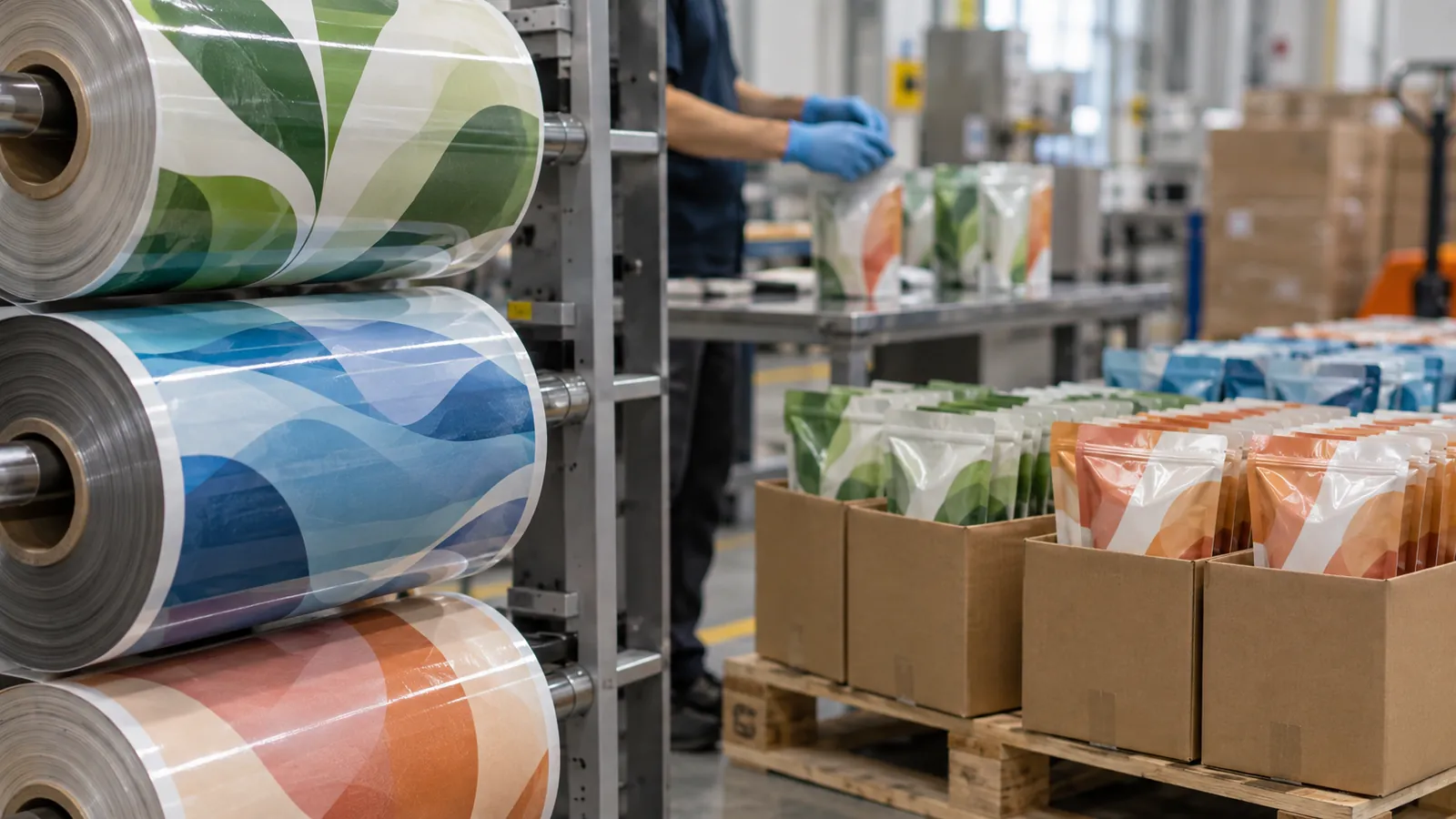
Rollstock vs Premade Pouches: Which Is Right for Your Line?
Rollstock vs premade pouch compared on material cost, inventory, changeovers, pack quality and features, with a checklist to pick the right supply route.
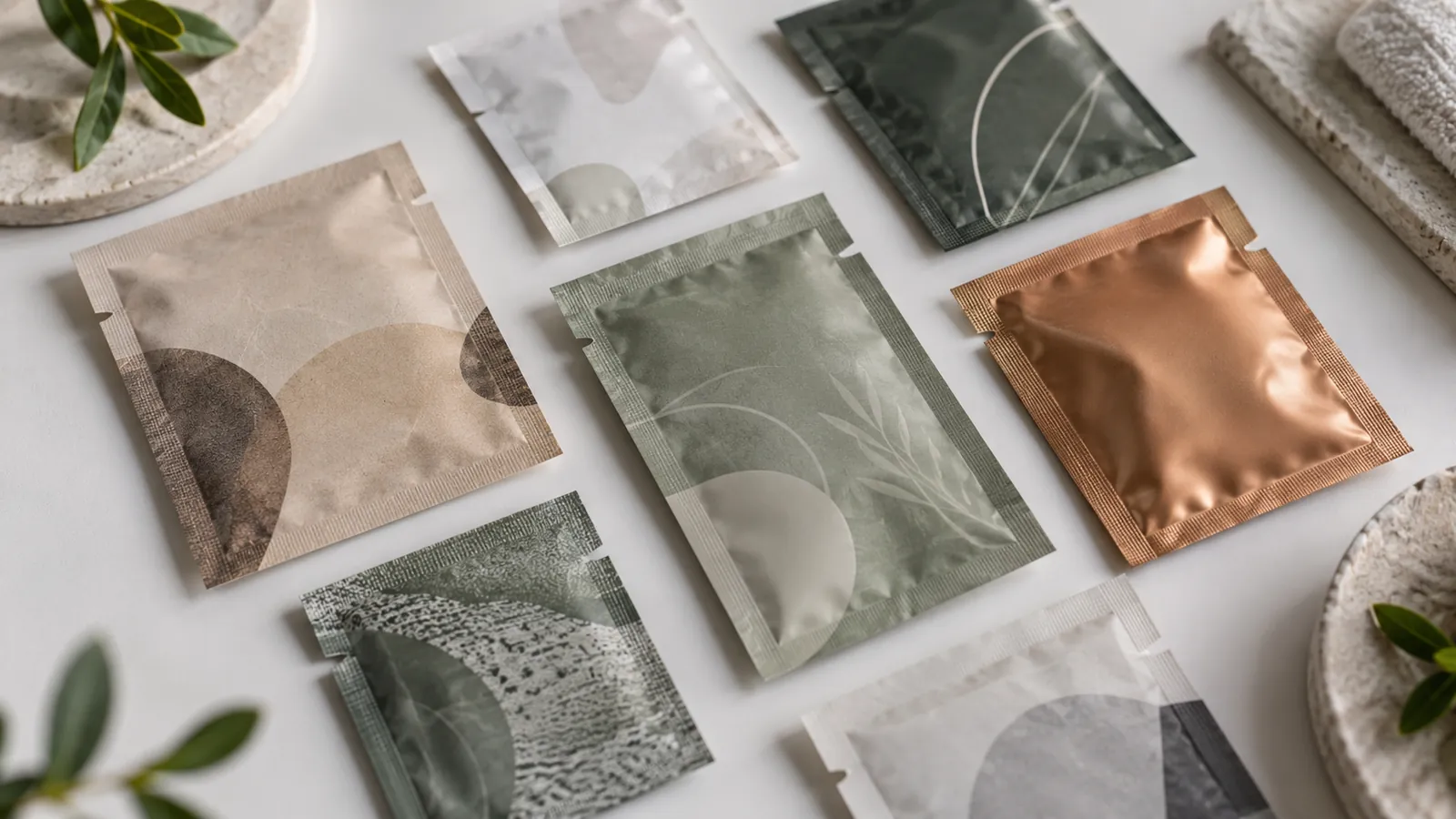
Sachet Packaging: Types, Materials and Uses
Sachet packaging is a small flat pouch sealed on three or four sides for single doses. Learn the types, typical materials, uses and how it differs from a stick pack.
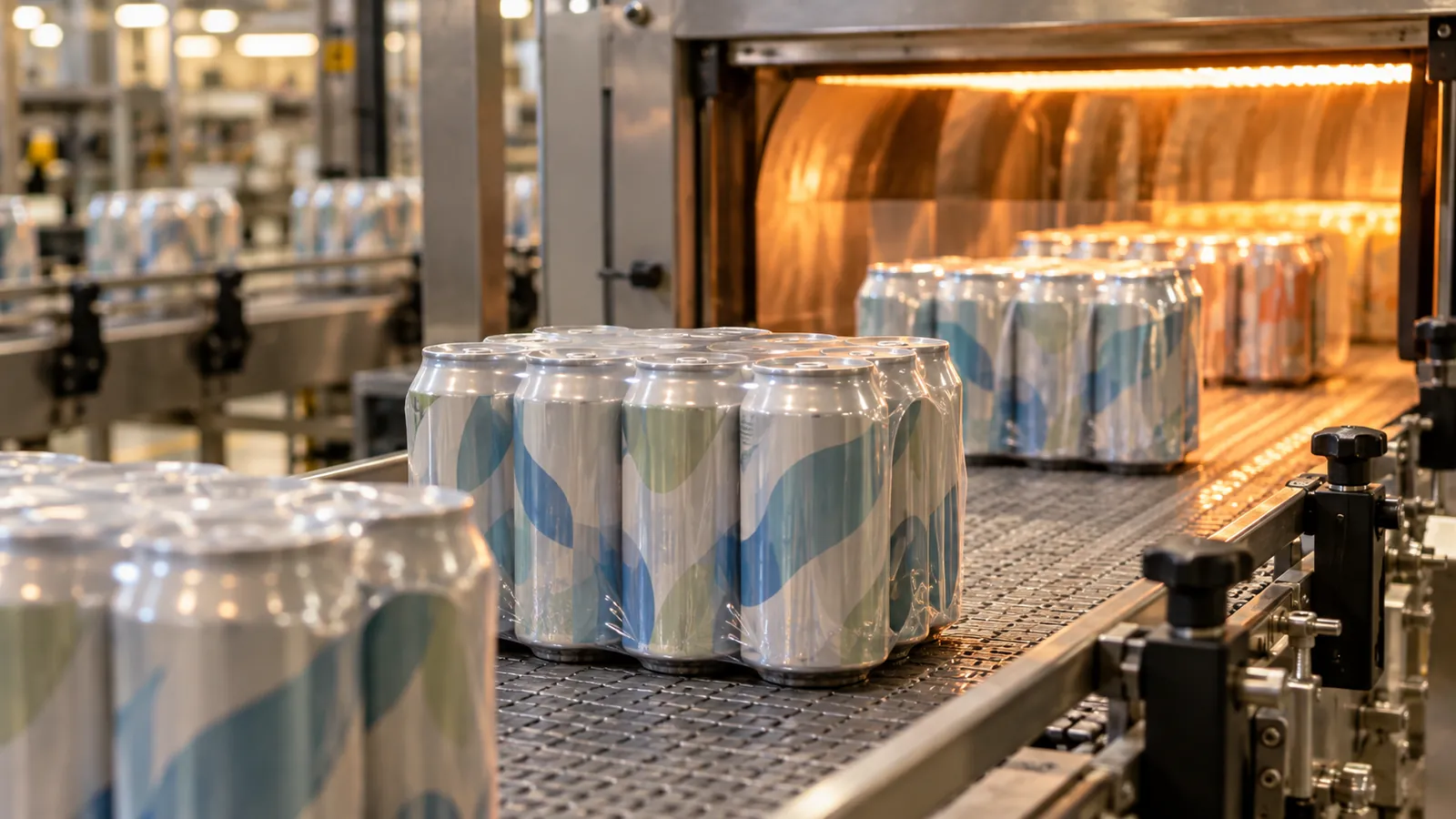
Shrink Wrap Packaging: Overwraps, Bundles and Sleeves
Shrink wrap packaging uses heat-shrinkable film to wrap a product or group of products tightly; here are the main formats and what each suits.
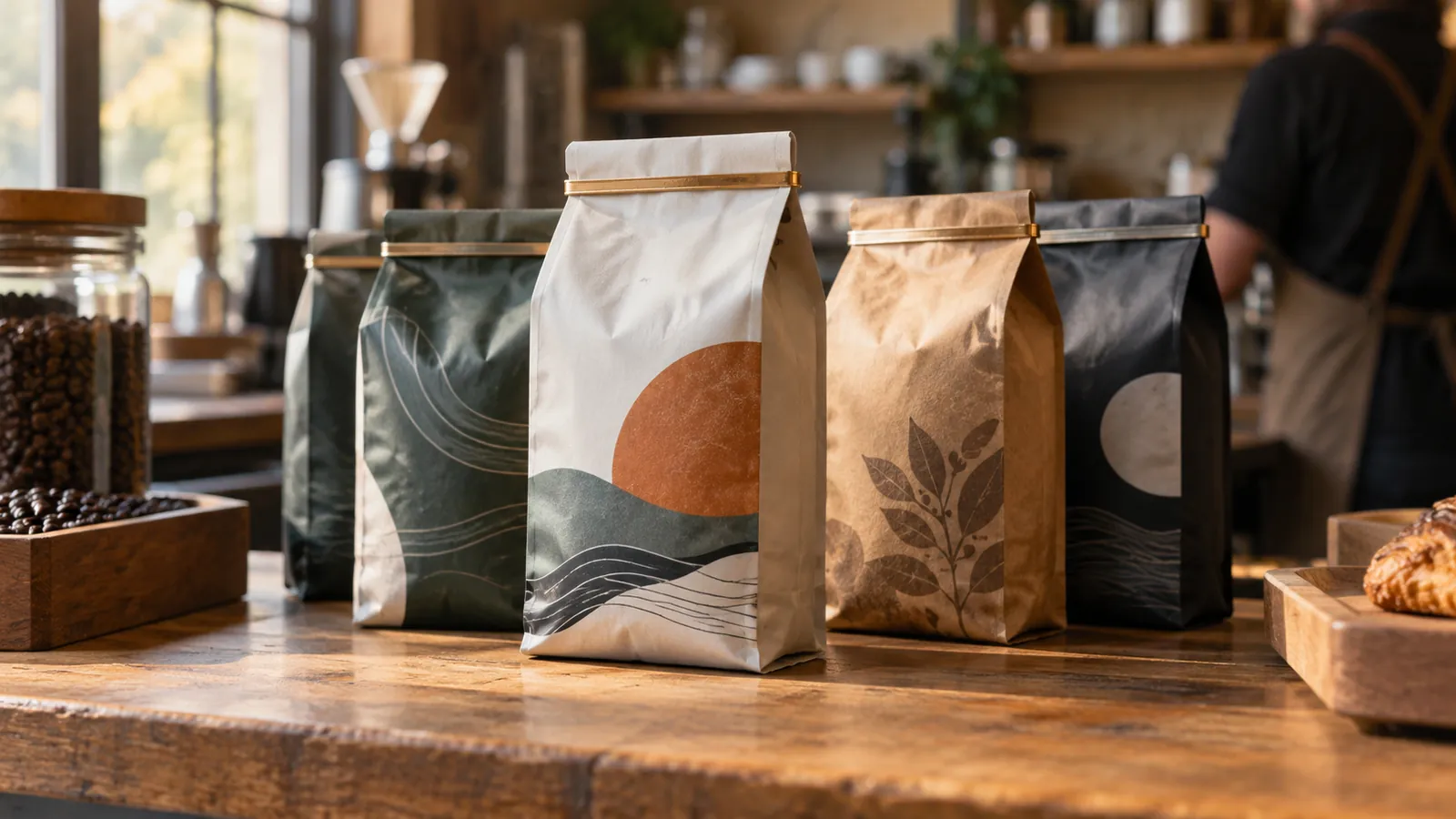
Side Gusset Pouch: Structure, Uses and Features
A side gusset pouch has fold-in side panels that expand when filled. Learn back seal options, uses, tin ties, valves and how it compares to flat bottom.
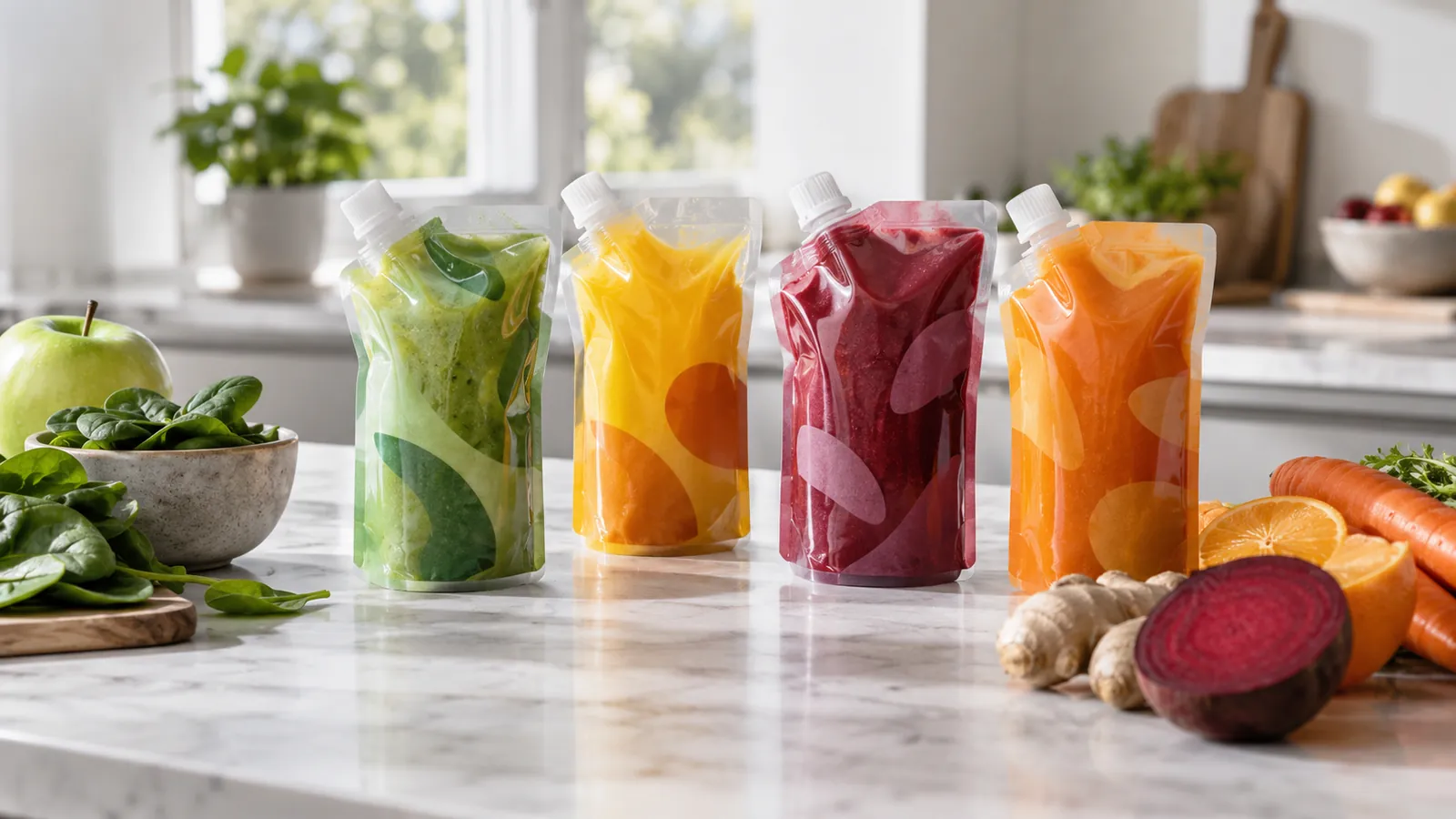
Spouted Pouch: Spout Types, Materials and Filling
A spouted pouch is a flexible pouch with a plastic spout fitment for pouring or squeezing. Compare spout and cap types, structures, filling and recycling.
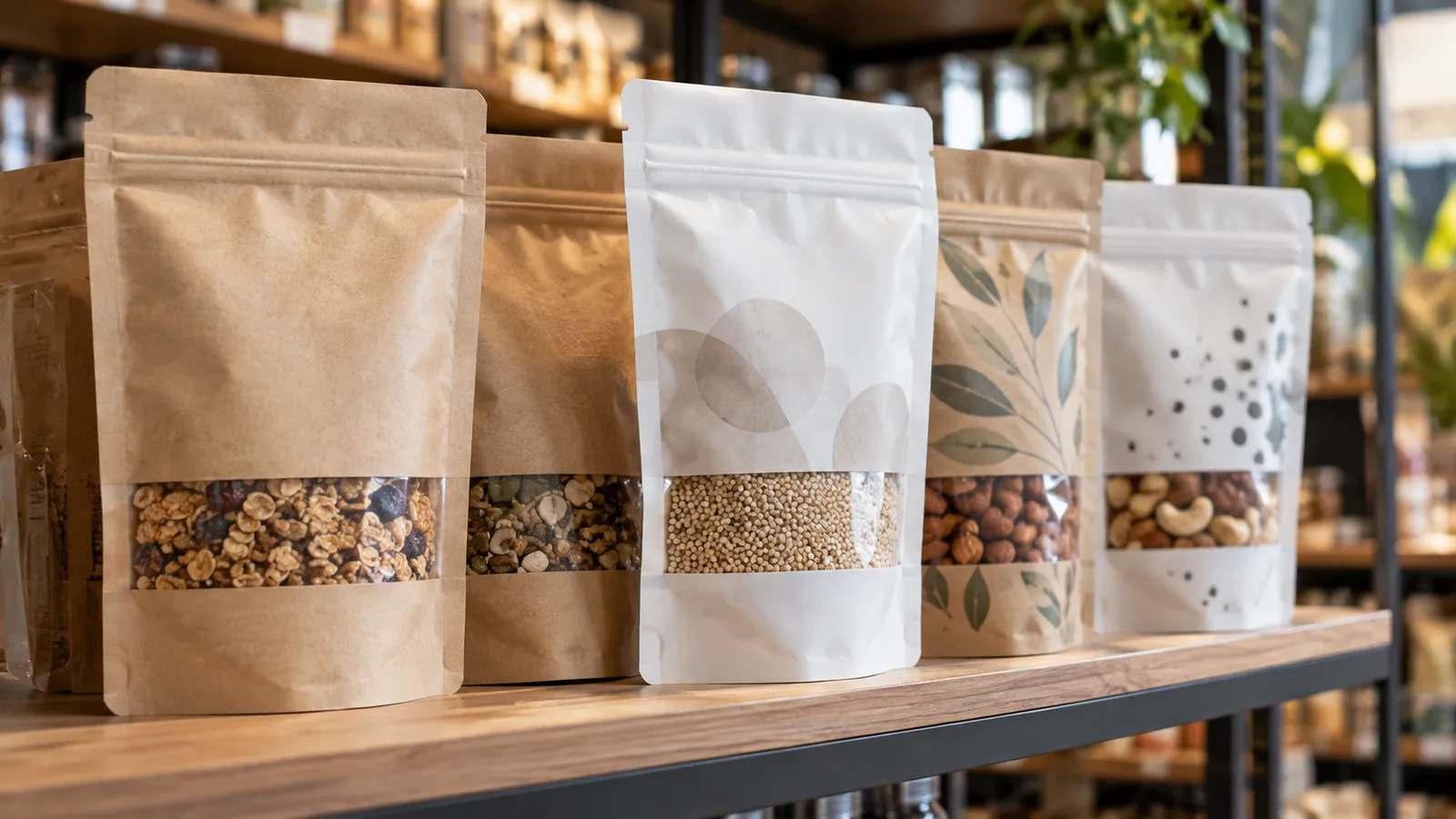
Stand-Up Pouch: Types, Materials and Features
A stand up pouch has a bottom gusset that lets it stand on shelf. Learn gusset styles, closures, laminate structures and filling considerations.
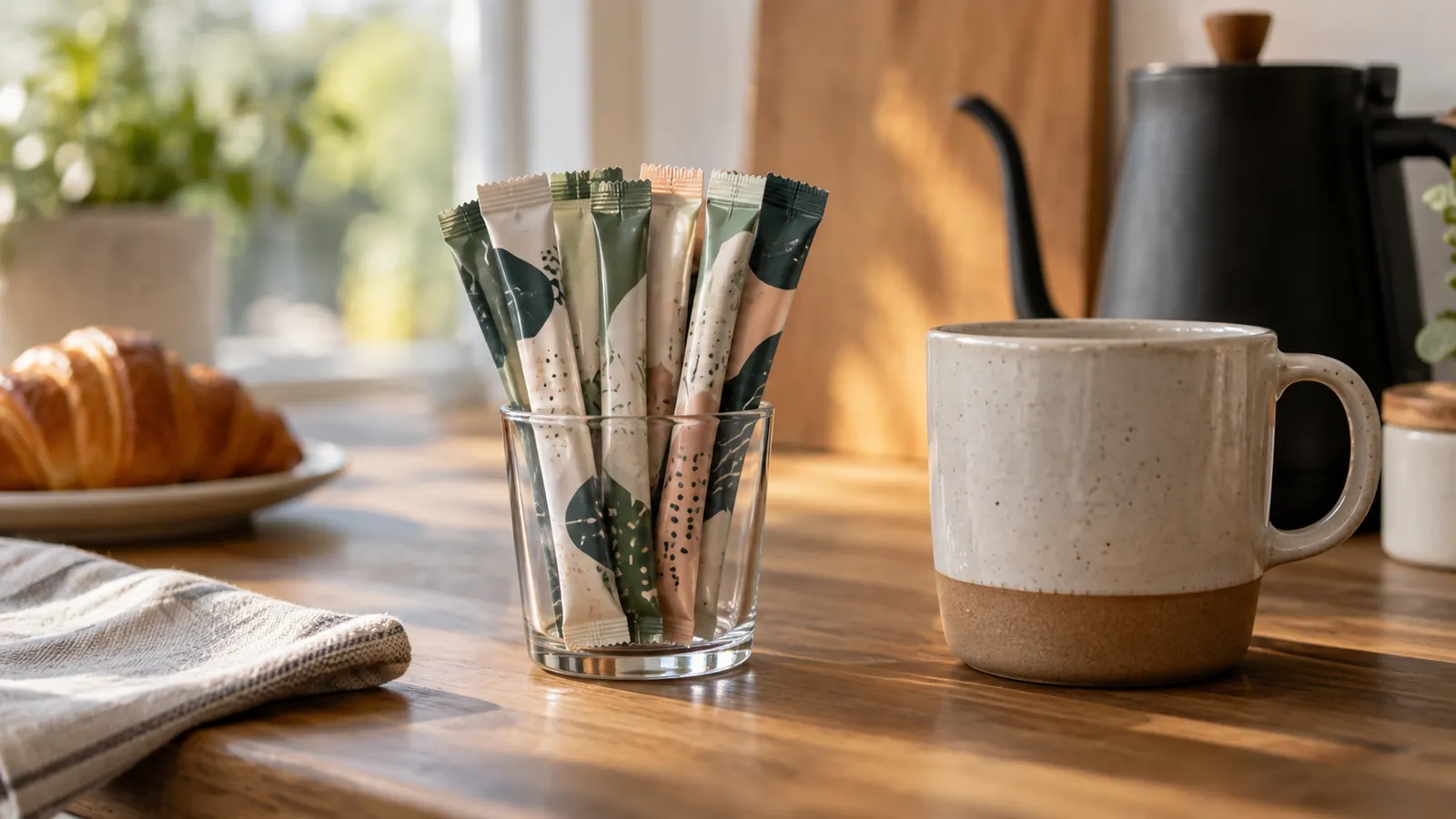
Stick Pack Packaging: Format, Materials and Uses
Stick pack packaging is a narrow single-dose tube with a fin or lap seal and two end seals. See uses, why brands pick it, opening features and how it compares.
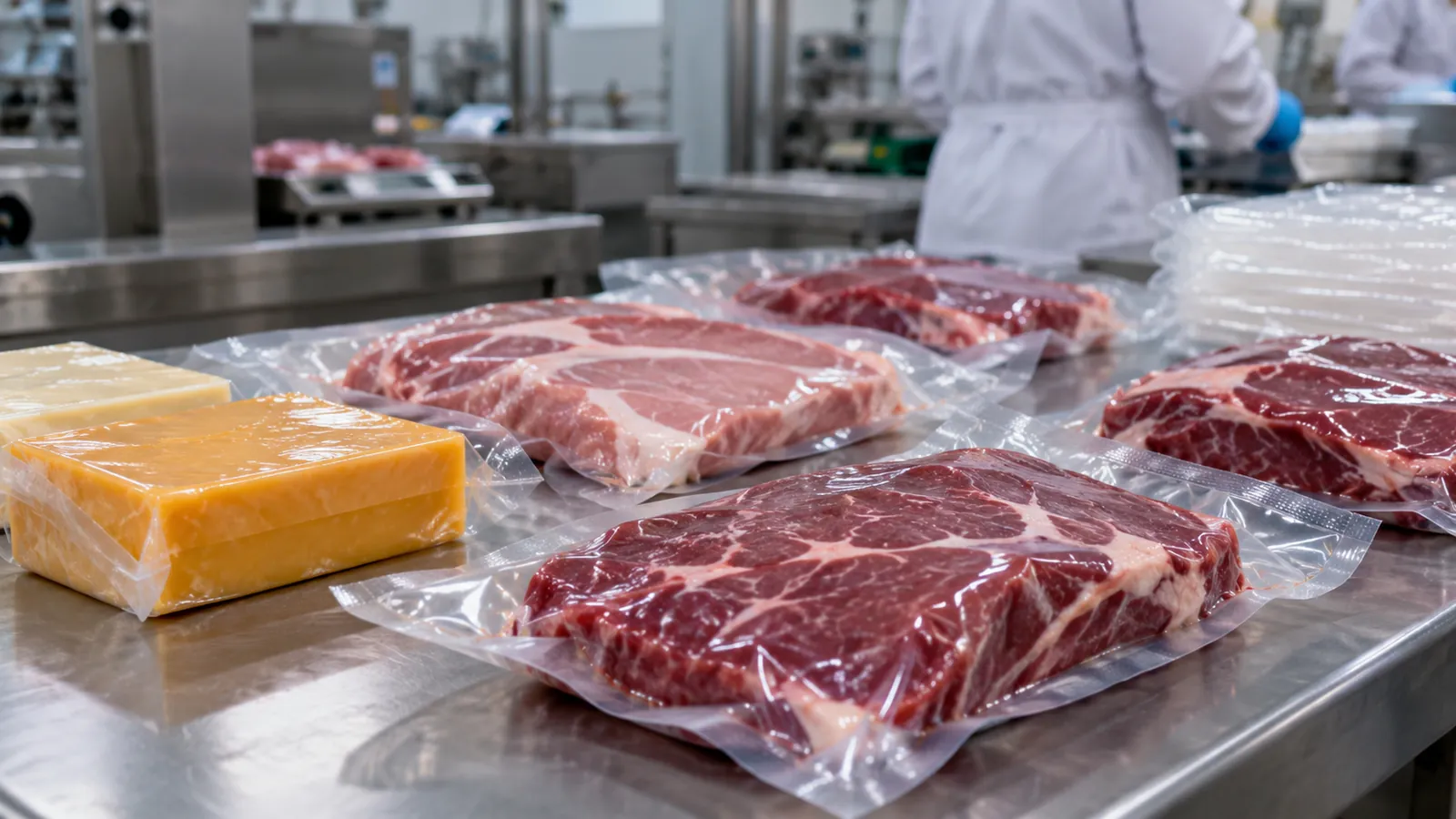
Vacuum Pouch Packaging: Materials and How It Works
Vacuum packaging pouch guide: nylon/PE structures, chamber vs thermoform-fill-seal machines, puncture resistance, barrier needs and how to specify.
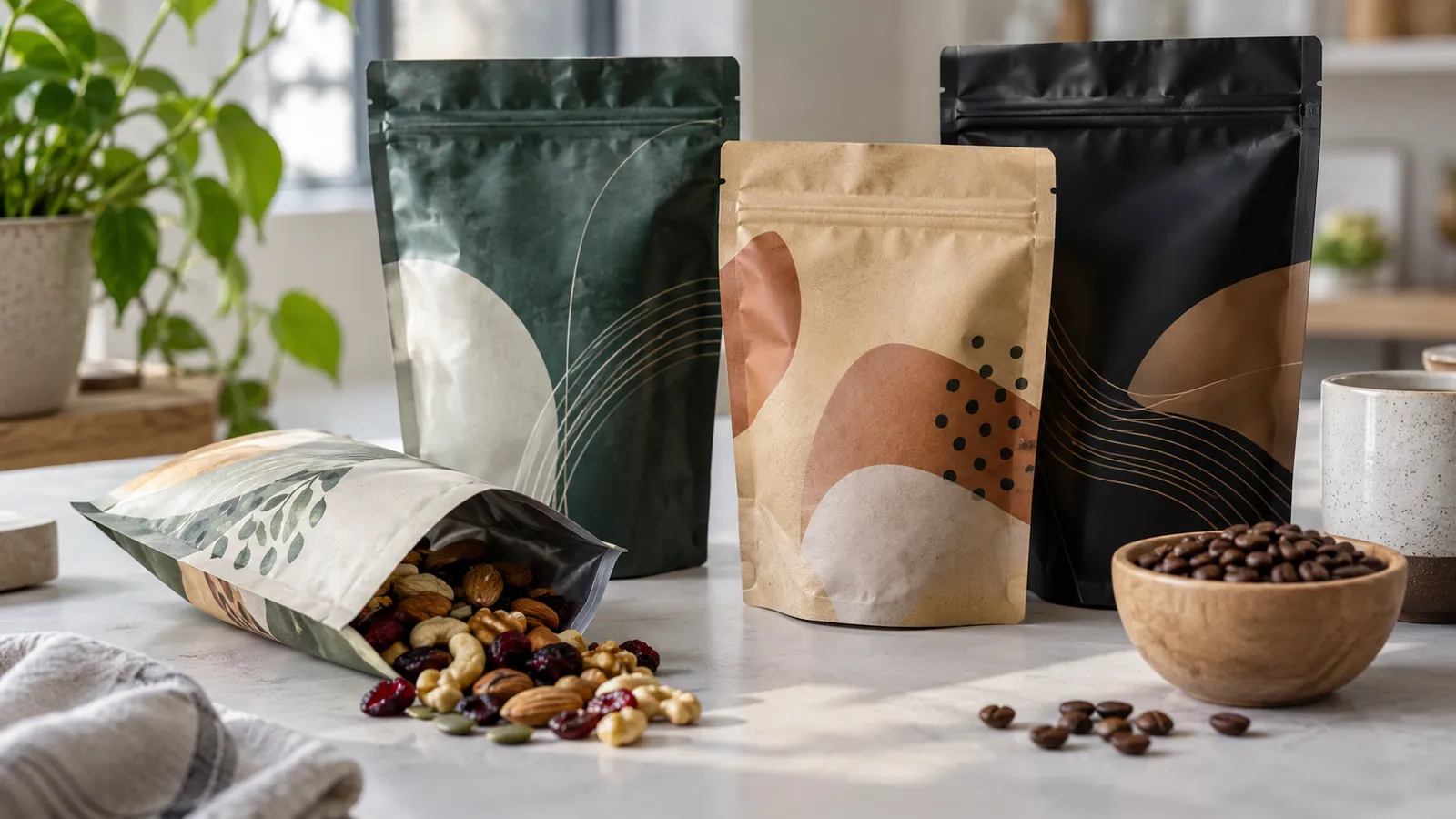
Zipper Pouch Packaging: Reclosable Features Compared
Zipper pouch packaging adds a reclosable feature to a bag. Compare press-to-close, slider and pocket zippers, how they are sealed, and recyclability.