
Spouted Pouch: Spout Types, Materials and Filling
A spouted pouch is a flexible pouch with a plastic spout fitment for pouring or squeezing. Compare spout and cap types, structures, filling and recycling.
A leaking flange or a filling path that cannot pass the product can reject a spouted-pouch run. A spouted pouch is a flexible pouch with a rigid plastic spout fitted into the seal, so liquids, purees and pastes can be poured, squeezed or sipped. It is also called a pouch with spout or spout pouch. Most spouted pouches are stand-up pouches with a bottom gusset, but the format also includes flat pouches and shaped bags. It is used for baby food, drinks, sauces, detergents and refills.
Scroll horizontally to view all columns if needed. ↔
| Spout position | Product input | Filling route to trial |
|---|---|---|
| Corner | Viscosity ___; largest particle ___ | Through-spout if passage/nozzle permits; test draining |
| Center | Viscosity ___; foaming ___ | Through-spout with compatible gripping and cap equipment |
| Corner or center | Particles or paste that cannot pass the fitment | Open-pouch filling with a validated final seal sequence |
Position alone does not establish fill speed. Record product temperature, nozzle passage and fitment handling before selecting the route.
Spout position: corner or center
Where the spout sits affects how the pouch pours, fills and looks.
- A corner spout is sealed into one top corner. It pours cleanly, drains well and is easy to drink from, so it is common for beverages, jellies and products that should be squeezed out fully.
- A center spout sits in the middle of the top seal. It looks symmetrical, fills evenly and suits products poured into another container, such as detergent refills and sauces.
- Side and other positions are used for special shapes or dispensing needs.
The pouch body is often a stand-up pouch, and stand-up pouch covers the bottom gusset styles.
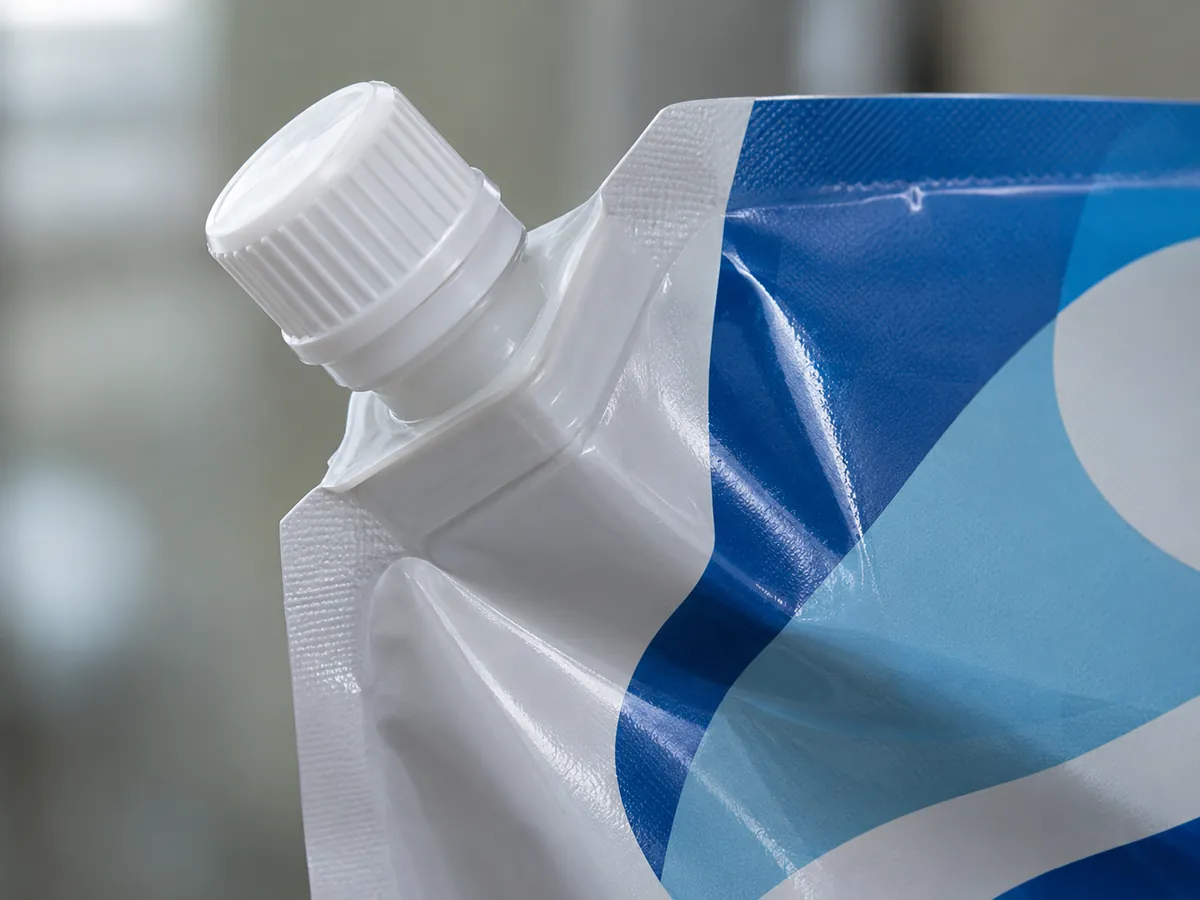
Spout and cap types
The spout is a molded fitment, usually in a polyolefin resin, with a flange that is heat-sealed between the pouch films. Caps are fitted afterward.
Scroll horizontally to view all columns if needed. ↔
| Type | Use | Notes |
|---|---|---|
| Screw cap | Most common; reclosable | Simple and secure; may have a tamper-evident ring |
| Flip-top or snap cap | Sauces and squeezable products | One-handed use; no threads to wipe |
| Disc or push-pull cap | Sports drinks, some pastes | Open by pushing or pulling a closure |
| Dispensing or valve cap | Controlled flow of pastes, cosmetics | A silicone or similar valve controls flow |
| Child-resistant cap | Some household and chemical products | Requires an action beyond a simple twist; rules vary by market |
| Tamper-evident band | Food and drink | Visible sign that the pack has been opened |
Child-resistant and tamper-evident features depend on the product and destination market, so confirm what rules apply to your product before choosing a cap.
Typical uses
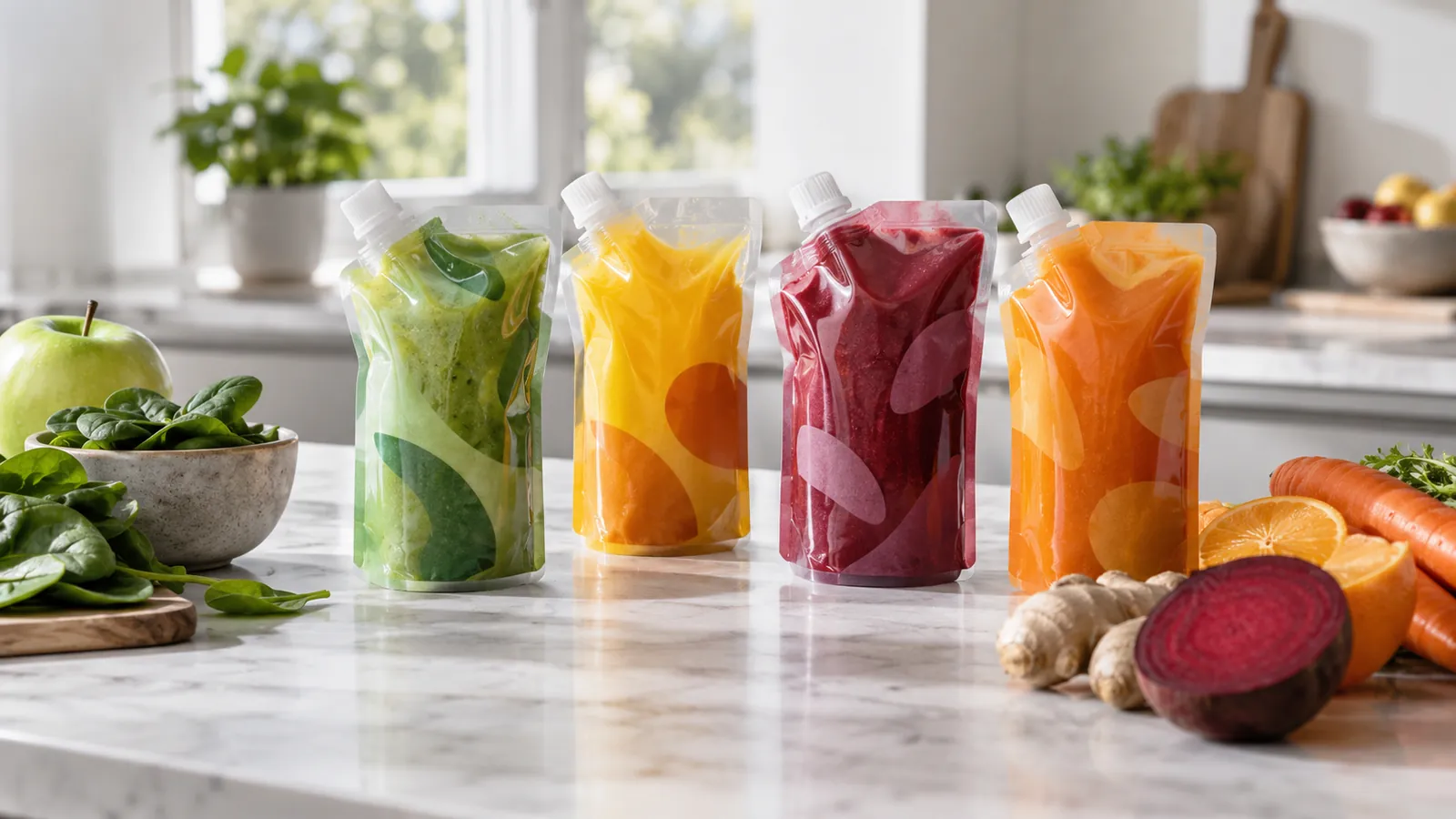
- Baby food and purees: corner spouts allow squeezing or direct feeding. Hot fill or retort may be used, so structure matters (see retort pouch).
- Beverages and juices: single-serve drink pouches with a corner or center spout.
- Sauces, condiments and pastes: squeezable and easy to dispense, and often packed hot.
- Detergents, soaps and cleaning refills: a large pouch with a center spout refills a rigid bottle (household products packaging).
- Cosmetic and personal care: lotions, gels and liquid soap refills (flexible cosmetic packaging).
Pouch structures
Specify the film sealant and weld-in spout grade as a matched sealing system. A manufacturer’s public spout/process document shows PE and PP fitment options and emphasizes coordination of laminate, spout and equipment. The cap resin may differ from the weld-in resin; identify the part that actually contacts the film.
- Ambient filling: obtain product-contact compatibility and barrier data for the exact structure.
- Hot filling: record maximum fill temperature, contact time and any subsequent pasteurization conditions; obtain approval for that film/spout/cap combination.
- Retort: obtain the exact validated thermal/pressure cycle and full package specification. A manufacturer’s public pouch range lists hot fill, pasteurization and retort as application-dependent options; this does not approve every PE or PP grade for all three.
- Oxygen-sensitive products: record test temperature/humidity with OTR and validate the filled pack.
Same-family PE/PE or PP/PP is a starting compatibility question, not proof of a sound weld. Do not transfer a published welding temperature to a different fitment or infer retort suitability from resin name.
Sealing the spout into the pouch
The spout seal is a critical transition between flexible film and a rigid fitment. The pouch is flat and the spout is a rigid, rounded shape, so the heat seal must wrap around the spout base, usually a boat- or eye-shaped flange, without gaps.
- The tapered ends of the flange help the film seal smoothly. A poor flange shape or a misaligned pouch leaves channels.
- Shaped jaws that match the flange do the sealing. Pressure, temperature and dwell are tuned so that the film melts into the flange without thinning.
- Confirm weld compatibility of the specific sealant and spout grades in a trial.
- The seal at the spout ends concentrates peel stress when the pouch is squeezed or dropped. Drop and squeeze tests on filled pouches reveal weaknesses.
- Gross leak and burst tests help check spout seals. Packaging seal strength explains how seals are assessed.
Filling: through the spout or before sealing
There are two routes.
When filling through the spout, the spout is already sealed in. The pouch is filled through the spout opening, then the cap is applied. This is common for liquids and beverages and lets the pouch be sealed on all sides before filling. It needs a filler that can grip the spout, with nozzles sized to the spout opening. Flow rates are limited by the spout diameter, so a small spout slows filling. Foaming products need careful nozzle control.
Open-pouch filling can suit products that will not pass through the spout. A pre-fitted spout pouch may have a separate filling opening sealed afterward; another process inserts the spout during final sealing. Confirm the supplied pouch and machine sequence.
Keep product off the flange and confirm cap handling, thermal processing and residual-air control on the actual filler; premade pouch materials covers the supply route.
Recyclability of spout and pouch
A spouted pouch combines a flexible film and a rigid fitment, which complicates recycling. Many pouches use a multi-material laminate, such as PET with PE, that is hard to recycle in current systems. Options being explored:
- A mono-material pouch, such as all-PE with a PE spout and cap, keeps everything in the same polymer family (mono-PE packaging and recyclable flexible packaging cover this).
- Matching the spout and cap polymers to the pouch, since a polyolefin spout in a polyolefin pouch is easier to handle than mixed materials.
- Avoiding metal springs, foil or incompatible barrier layers.
Whether any of this is accepted depends on local collection and sorting, so check design guidance from recycling organizations and your destination market.
What to specify for a spouted pouch
Keep this record with the sample/lot, equipment ID, conditioning and agreed acceptance limits.
Scroll horizontally to view all columns if needed. ↔
| Trial input/check | Record and result |
|---|---|
| Product and route | Viscosity/particles/temperature ___; spout or open-pouch fill ___ |
| Material match | Weld-in resin/grade ___; sealant/grade ___; approval document ___ |
| Thermal process | Fill and post-process time/temperature/pressure ___; package condition ___ |
| Flange weld | Jaw/temperature/dwell/pressure ___; end-channel or peel result ___ |
| Cap and dispensing | Torque/closure condition ___; pour/squeeze result ___ |
| Filled-pack checks | Drop/squeeze/leak method ___; result and failure location ___ |
| Shelf life | Storage conditions ___; barrier and product result ___ |
Use seal-strength guidance for the distinction between mechanical strength and leak integrity.
Method and sources
Manufacturer public documentation supports PE/PP spout options, matched component/equipment selection and application-dependent thermal processing. Evidence record: a public spouted-pouch concept document (file URL dated 2024-01) and a manufacturer’s premade-pouch application matrix, reviewed October 8, 2026. These are supplier statements, not our tests. No general welding or retort temperature is specified here; the drawing labels fields to confirm on the actual package.
Continue reading
Related articles
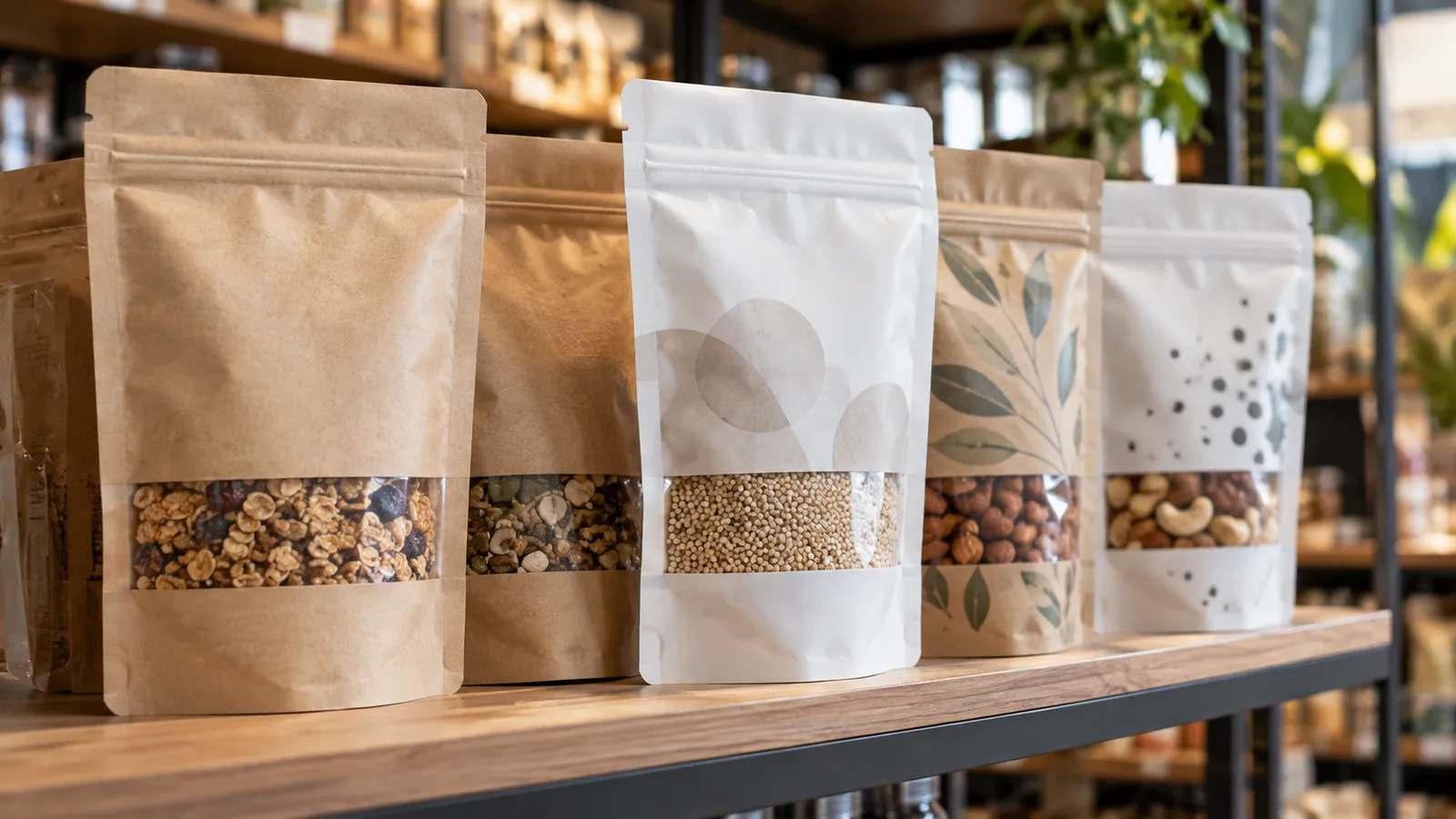
Stand-Up Pouch: Types, Materials and Features
A stand up pouch has a bottom gusset that lets it stand on shelf. Learn gusset styles, closures, laminate structures and filling considerations.

Flat Bottom Pouch: Box-Style Pouches Explained
A flat bottom pouch has a rectangular base and two side gussets that make a boxlike, self-standing pack. See construction, features and how it compares.
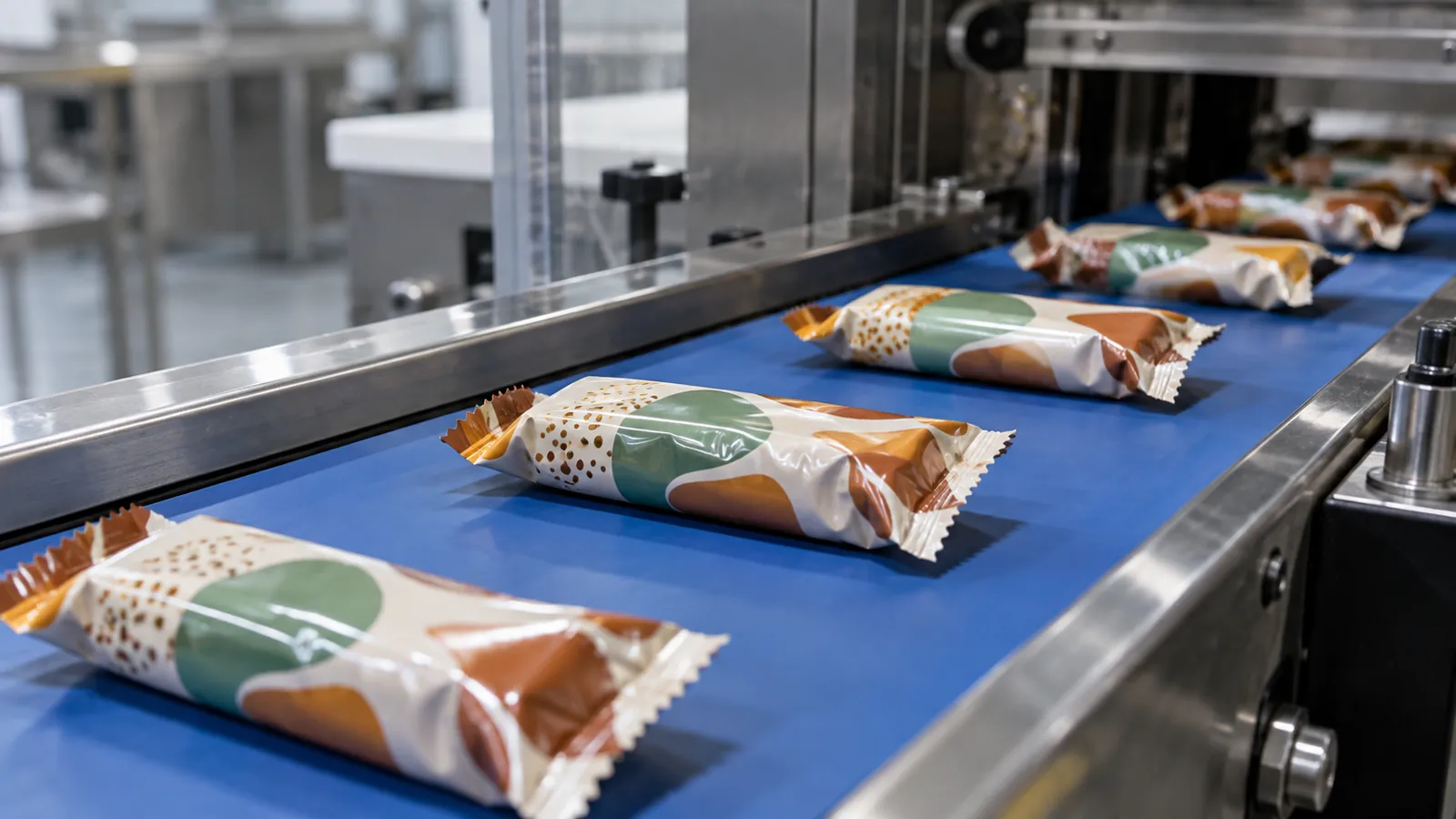
Flow Wrap Packaging: How It Works and What It Suits
Flow wrap packaging forms a film tube around the product with a fin or lap seal and two end seals. See variants, suitable products and trade-offs.