
Flexible Cosmetic Packaging: Sachets, Refill Pouches and Wipes
Flexible cosmetic packaging explained: sample sachets, refill pouches, wet-wipe packs, chemical compatibility, premium print and typical structures.
A formula that is compatible with one pack may leak or lose fragrance in another. Choose the contact layer and laminate adhesive for the actual formula, then test the finished sachet, refill or wipe pack.
Scroll horizontally to view all columns if needed. ↔
| Formula / format | Candidate contact layer to confirm | Aging observation / retest trigger |
|---|---|---|
| Cream / lotion sachet | Documented PE or other sealant grade | Seal creep, delamination, odor; formula or grade change |
| Oils / fragrance, sachet or pouch | Formula-qualified sealant and adhesive | Swelling, leakage, fragrance loss; ingredient change |
| Alcohol-containing lotion / wipes | Qualified contact film, adhesive and closure | Weight loss, bond and reseal; alcohol or label change |
| Liquid refill with spout | Sealant matched to fitment | Spout / side-seal leaks after aging and drops; weight or fitment change |
What goes wrong with cosmetic products
- Chemical attack on the film: oils, essential oils, alcohol, fragrance and surfactants can swell or soften the sealant, cause delamination between layers, or make seals creep over time.
- Loss of volatiles: fragrance and water can migrate out of the pack, and in some cases flavor or odor from the film can migrate in.
- Oxidation: oils, vitamins and natural actives can degrade with oxygen and light.
- Leakage: a tiny pinhole or weak corner in a sachet makes a mess in a bag or a bathroom.
- Appearance: cosmetics are bought on look, so print quality, color and finish count as much as protection.
- Dosing and opening: a sample sachet must tear open cleanly and deliver the right amount.
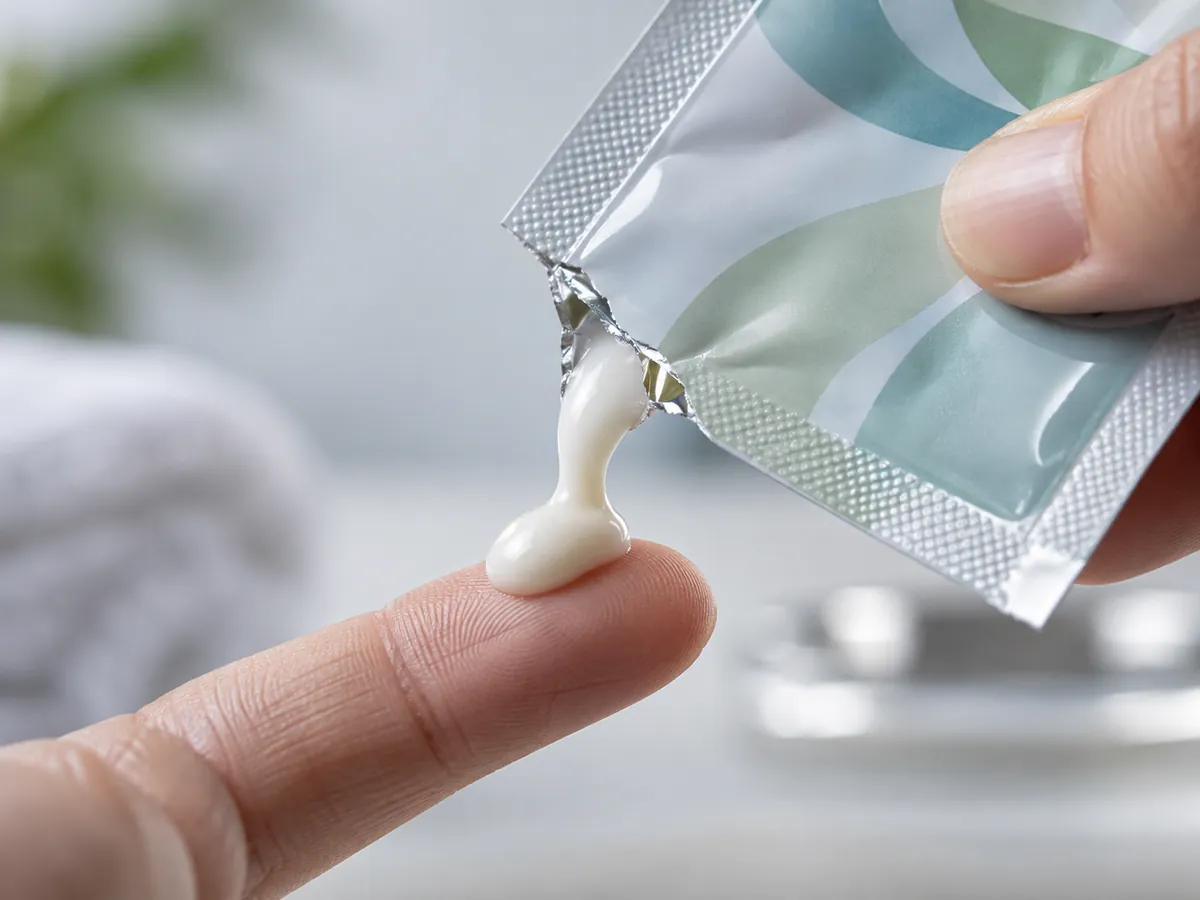
Chemical compatibility: test with the real formula
Assess oils, alcohol, fragrance and surfactants with the finished laminate, seal and closure. An adhesive manufacturer’s public portfolio distinguishes ethanol-resistant systems and systems intended for cosmetic wet wipes. A packaging manufacturer’s public cosmetic-sachet information describes chemical resistance for its laminates. These are separate properties, not approval for an unspecified cosmetic formula.
Obtain grade-specific contact-layer and lamination-adhesive documentation; a generic PE or PET name cannot settle compatibility. In finished-pack aging trials, record seal strength, delamination, color, odor, weight loss and leakage. Choose storage and accelerated-aging conditions in the product validation plan rather than inventing a universal temperature or duration.
Takeaway: An adhesive’s stated resistance does not establish the compatibility of the whole pouch.
Sample and single-dose sachets
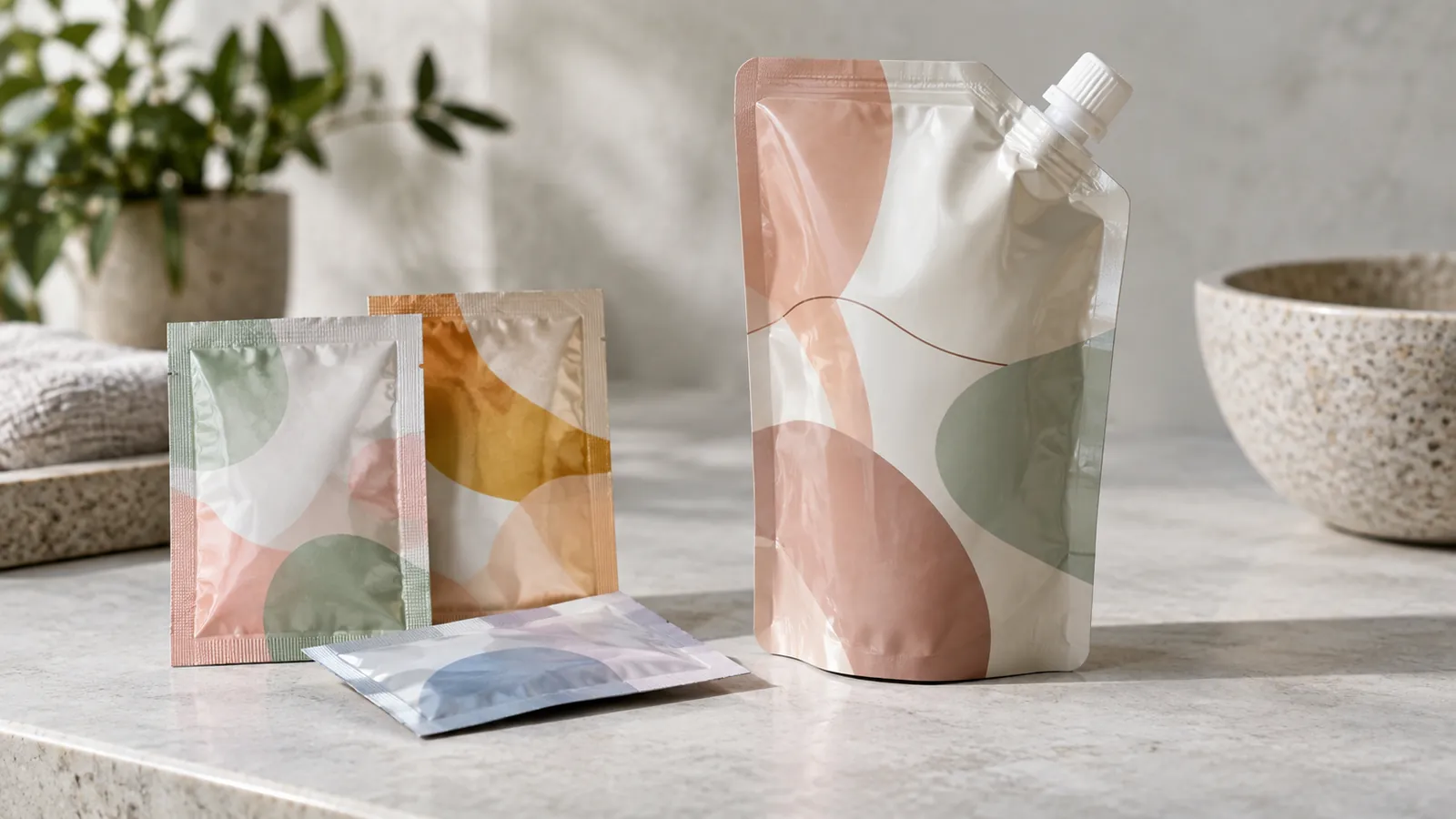
Sachets are small pouches, usually sealed on three or four sides, used for samples, trial sizes and single-use treatments. They need a film that seals cleanly through creamy or oily product, tears easily with a notch or laser score, and prints well. A common construction is a printed outer layer, an aluminum foil or metallized layer for barrier and opacity, and a polyethylene or similar sealant. Thin walls and a small seal area leave little margin, so seal width and sealant choice matter. The format is covered in sachet packaging, and sachet film explains how the film runs on machines.
Refill pouches for liquids
Spouted refill pouches let consumers refill a bottle or dispenser; compare material use on the actual refill and bottle designs. They have to hold liquid without leaking, resist drop and squeeze, and survive shipping. Heavier fills and viscous formulas need strong side seals, a good spout-to-film seal and a film gauge matched to the weight. The spout-to-film joint is a potential leakage location; inspect it after storage and handling. The spouted pouch and stand-up pouch pages cover the format and structure, and mono-material packaging covers recyclability claims and design guidelines.
Wet-wipe packs with resealable labels
Wipes are packed in flow-wrapped packs or in pouches with a resealable label or a lid. The main job is keeping the lotion in: water and alcohol vapor must not escape, and the film must not absorb the lotion. A high moisture barrier film, often metallized or a coextruded film with a good WVTR, is common. The resealable label has to stick repeatedly to the film, even after contact with lotion, so test adhesive compatibility with the lotion. WVTR explains how moisture barrier is measured, and flow wrapping of wipe stacks follows the principles in flow wrap packaging.
Cosmetic packaging structures
Confirm the numbers with supplier data. OTR and WVTR values depend on temperature and humidity, so ask for the test conditions.
Scroll horizontally to view all columns if needed. ↔
| Cosmetic product | Common structure | Why it is used |
|---|---|---|
| Cream and lotion sachets | PET / foil / PE or PET / metallized PET / PE | Barrier, opacity, clean tear and a seal that tolerates product in the seal area |
| Oil-based or fragranced products | Candidate barrier laminate with formula-qualified contact layer and adhesive | Confirm swelling, odor retention and seal behavior in aging |
| Liquid refill pouches | PET / PE or PET / PA / PE with spout | Strength, drop resistance, spout seal |
| Wet wipes | Metallized BOPP or PET / PE laminate, with a resealable label | Moisture barrier, printable surface, reseal |
| Premium samples | Paper / foil / PE or matte-coated PET laminate | Tactile feel and high-end appearance |
| Recyclable-design refills | PE-based candidate structure with documented barrier and auxiliary layers | Verify complete-package performance and destination recycling criteria |
The main materials are PET film and aluminum foil.
Premium print and finishes
Cosmetics buyers pay for appearance. Packs often use reverse-printed film with matte or soft-touch coatings, metallic effects, spot gloss, cold foil or embossing. Print is usually done on the outer film and then laminated, so the ink is protected. Some effects, like soft-touch, change the feel of the pack and can slightly affect seal behavior or friction against forming parts, so test finishes on the line. A matte surface also shows scuffs differently. Keep color tolerances realistic: a brand color on a metallized or foil structure will not look the same as on white film. Laminated packaging explains how layers are combined.
Steps to specify a cosmetic pack
Scroll horizontally to view all columns if needed. ↔
| Check | Record for each sample / time point | Result / action |
|---|---|---|
| Pack identity | Formula / batch; contact and adhesive grades; pack weight; spout / label | Keep baseline samples |
| Aging | Time, temperature, storage orientation; leaks, weight, odor and delamination | Hold failed samples for investigation |
| Seals / handling | Seal settings; clean / contaminated results; drops / transport | Retest affected joints after aging |
| Change control | Formula, fragrance, preservative, layer, adhesive or fitment change | Repeat affected compatibility, barrier and handling checks |
| Wipe reclose | Opening count; lotion contamination; peel, reseal and weight loss | Compare with initial and aged packs |
Formula changes and wipe reclosing
Repeat the relevant finished-pack checks after a formula change, even if the product looks the same. For wipes, test the label or lid after lotion contact and repeated openings; a closure that sticks initially does not establish moisture retention throughout use.
For the next checks, household refill packaging covers formula and handling risks, spouted pouches covers fitments, and seal strength testing distinguishes force from leak integrity.
Method and sources
Published examples identify documentation to request; they do not establish oil, alcohol or fragrance compatibility for the reader’s formula. Portfolio and laminate statements reviewed 2026-10-08; no formula-aging data are presented.
Continue reading
Related articles
Bakery Packaging Film: Keeping Bread and Cakes Fresh
Bakery packaging film explained: how staling, moisture loss and mold shape film choice for bread, cakes, cookies and tortillas, plus formats and machines.
Cheese Packaging Film: Ripening, Vacuum and MAP
Cheese packaging film explained: gas-permeable ripening films, vacuum bags for blocks, MAP for sliced and shredded cheese, reclosable packs and structures.
Coffee Packaging Materials: Barrier, Valves and Pouch Formats
Coffee packaging materials explained: oxygen and aroma barrier, one-way degassing valves, nitrogen flushing, pouch formats and machine fit.