
Sachet Packaging: Types, Materials and Uses
Sachet packaging is a small flat pouch sealed on three or four sides for single doses. Learn the types, typical materials, uses and how it differs from a stick pack.
A contaminated seal or misplaced tear notch can turn a single portion into a leaking sachet. A sachet is a small flat pouch, commonly with three sealed edges and a fold or with four sealed edges; choose the geometry around the dose, opening and filling equipment. This page covers the format; sachet film covers machine inputs.
Small packs leave limited space for filling and opening features. Confirm the finished seal layout and usable cavity on a drawing, then test filled samples.
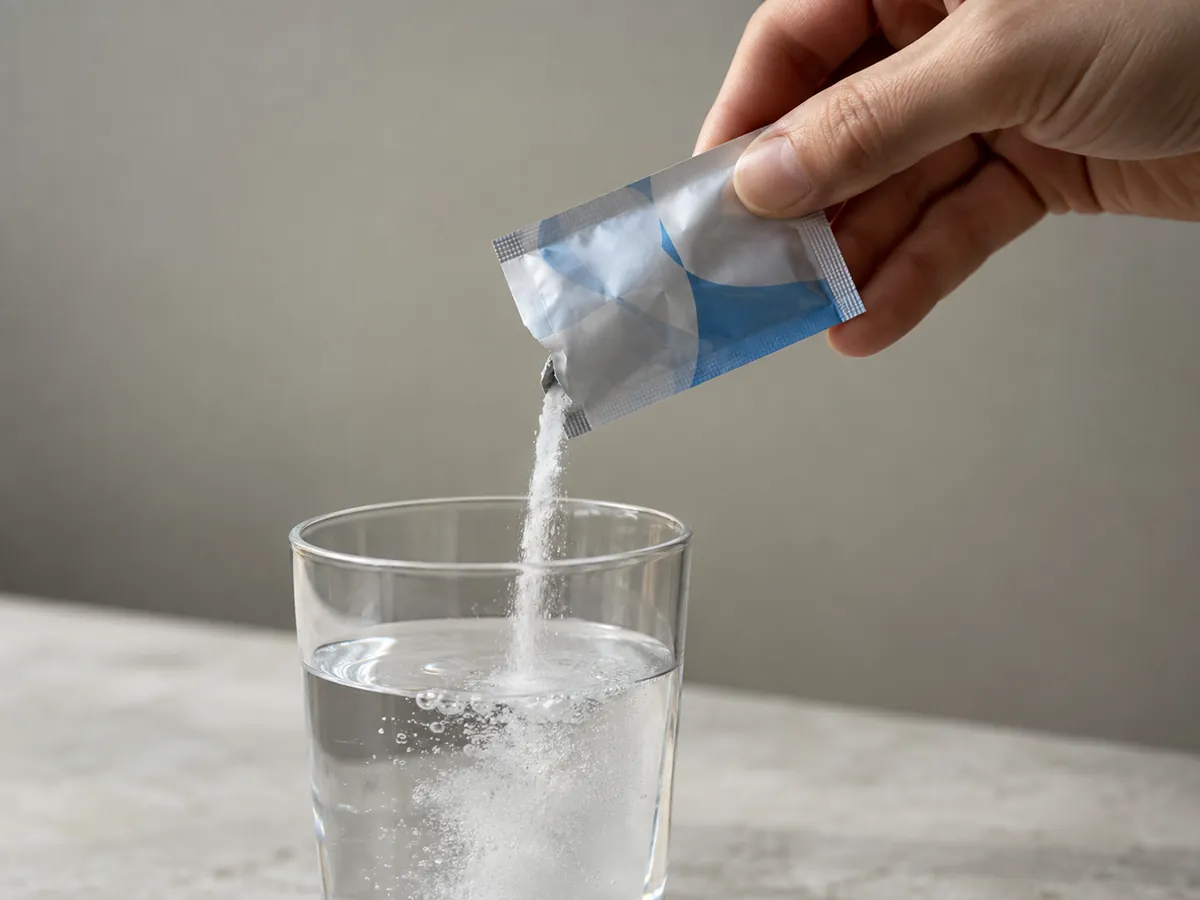
Types of sachets
3-side seal sachets
One piece of film is folded in half, then sealed along two sides and the top once it is filled. The fold forms the fourth edge. This is one option for powders, liquids and creams. It needs only one web of film and gives a neat, flat pack.
4-side seal sachets
Front and back film faces are sealed together on all four edges; the web arrangement depends on the machine. This allows different materials on the front and back, for example a clear window on one side and a foil layer on the other. It is used where each side has a different job, or where cutting and sealing four edges gives a flatter pack or a square shape.
Shapes and tear features
Standard sachets are rectangular or square. Some have rounded or cut corners, shaped outlines or a patterned seal. Opening features include:
- A tear notch is a small cut in the side seal that starts a tear across the pack.
- A laser score is a line of weakness that lets the film tear in a controlled direction, which helps with tough or foil structures.
- A pour spout style opening is a cut corner that forms a spout when torn.
Tear performance depends on the film. The machine page, sachet film, has notes on how notches and film orientation affect opening.
Typical sachet materials
Separate polymer family from construction process. A mono-material design can be multilayer or laminated; it does not mean a single film layer. RecyClass’s March 2026 Design Book (v2.0) describes a mono-material laminated pouch. The following structures are candidates to evaluate, not application approvals.
Scroll horizontally to view all columns if needed. ↔
| Candidate structure | Product questions to verify |
|---|---|
| PET/PE | Dry condiments, general samples, low-barrier goods |
| PET/AL/PE | Pharma powders, supplements, products sensitive to moisture, oxygen or light |
| PET/metPET/PE | Cosmetic samples, powders, household products |
| Paper-based laminates | Sugar, tea, natural-look products |
Compare finished-structure barrier data at matching conditions; aluminum foil packaging explains foil structures. A mono-material laminate still needs barrier and sealing validation. The sealant must also resist the product, since oils, alcohol and surfactants can attack some layers.
For a recent paper-based liquid sample trial, the Kelpi and Bower material evidence checklist identifies the formulation, seam and destination questions left open by the announcement.
Design points that affect performance
Set seal width from pouch dimensions, structure, fill amount and equipment trials; there is no universal few-millimeter allowance. Keep product out of the sealing area through fill control and cleaning. A contamination-tolerant sealant still needs a defined contamination challenge and acceptance criteria.
ASTM F88/F88M-23 measures seal separation strength; ASTM F2096-11(2019) addresses gross leaks by internal pressurization. Choose methods suitable for the pack and agree limits before testing: strength alone does not establish absence of leaks.
Uses of sachets
- Condiments and food: ketchup, mayonnaise, sugar, salt, instant coffee and seasoning. Take-out and food service use them for portion control.
- Cosmetic and personal care samples: creams, serums, shampoos and perfumes handed out as trial sizes (cosmetic packaging).
- Pharmaceutical and health powders: single-dose powders, electrolytes and supplements (pharmaceutical flexible packaging).
- Household products: detergent, fabric softener and cleaning concentrates, often sold in small sachets in markets where a low price per purchase matters (household products packaging).
Why brands use sachets
- Single-dose control gives the user the right amount.
- Record unit cost for the specified structure and order rather than assuming a low cost.
- Sachets suit sampling and trial, since they are light and can be bundled with other products or magazines.
- The flat shape stores, ships and displays easily.
- The full surface can be printed.
On the other side, a sachet is single-use and not resealable, it generates more packaging per gram of product than a large pack, and recycling is difficult because of the small size and laminated layers. Check local collection and the rules in your destination market before making recyclability claims; recyclable flexible packaging has background.
Sachet vs stick pack
Scroll horizontally to view all columns if needed. ↔
| Feature | Sachet | Stick pack |
|---|---|---|
| Shape | Flat, rectangular or square | Long, narrow tube |
| Seals | Three or four sides | Fin or lap longitudinal seal and two end seals |
| Typical products | Liquids, creams, powders, wipes | Powders, granules, gels, liquids |
| Opening | Notch on side seal | Notch at the top or bottom seal |
| Machine | Horizontal or vertical, 3- or 4-side seal | Narrow tube, often many lanes |
| Pour and use | Squeezed or poured from a corner | Easy to pour from the end into a cup or mug |
The narrow format is covered in stick pack packaging, and other small pack styles that use a fin seal in pillow bag packaging.
Choosing a sachet format
Use this filled-pack record with the first pouch order checklist. Record sample/lot ID, machine, settings, conditioning and the agreed acceptance limit for each check.
Scroll horizontally to view all columns if needed. ↔
| Check | Result to record |
|---|---|
| Dose and usable cavity | Mass/volume ___; headspace ___; seal layout ___ |
| Opening | Notch/score location ___; tear result and spillage ___ |
| Seal cleanliness and strength | Product contamination ___; method/conditions ___; result ___ |
| Finished-pack leakage | Method/conditions ___; pass/fail and leak location ___ |
| Squeeze and drop | Load/height/orientation ___; leakage or burst location ___ |
Keep the filling opening, notch and printed registration clear of the agreed seal area. Evaluate the seal after filling and handling, not just on a clean lab coupon.
Method and sources
The RecyClass Design Book, March 2026 (v2.0), page 39, supports the distinction between mono-material composition and lamination. The ASTM public scopes linked above distinguish strength from gross-leak testing. The sachet diagram is an editorial geometry schematic, not a supplier specification. Sources reviewed October 8, 2026; the table contains blank trial fields, not test results.
Continue reading
Related articles

Flat Bottom Pouch: Box-Style Pouches Explained
A flat bottom pouch has a rectangular base and two side gussets that make a boxlike, self-standing pack. See construction, features and how it compares.

Quad Seal Bag: Four Corner Seals and When to Use Them
A quad seal bag has four vertical corner seals that give a squared, stable shape. Learn how it is made, where it is used and how it compares to side gusset.
Retort Pouch: Structures, Processing and Uses
A retort pouch is a filled, sealed flexible pack sterilized in a retort. Learn the structures, seal integrity needs, regulations and typical uses.