
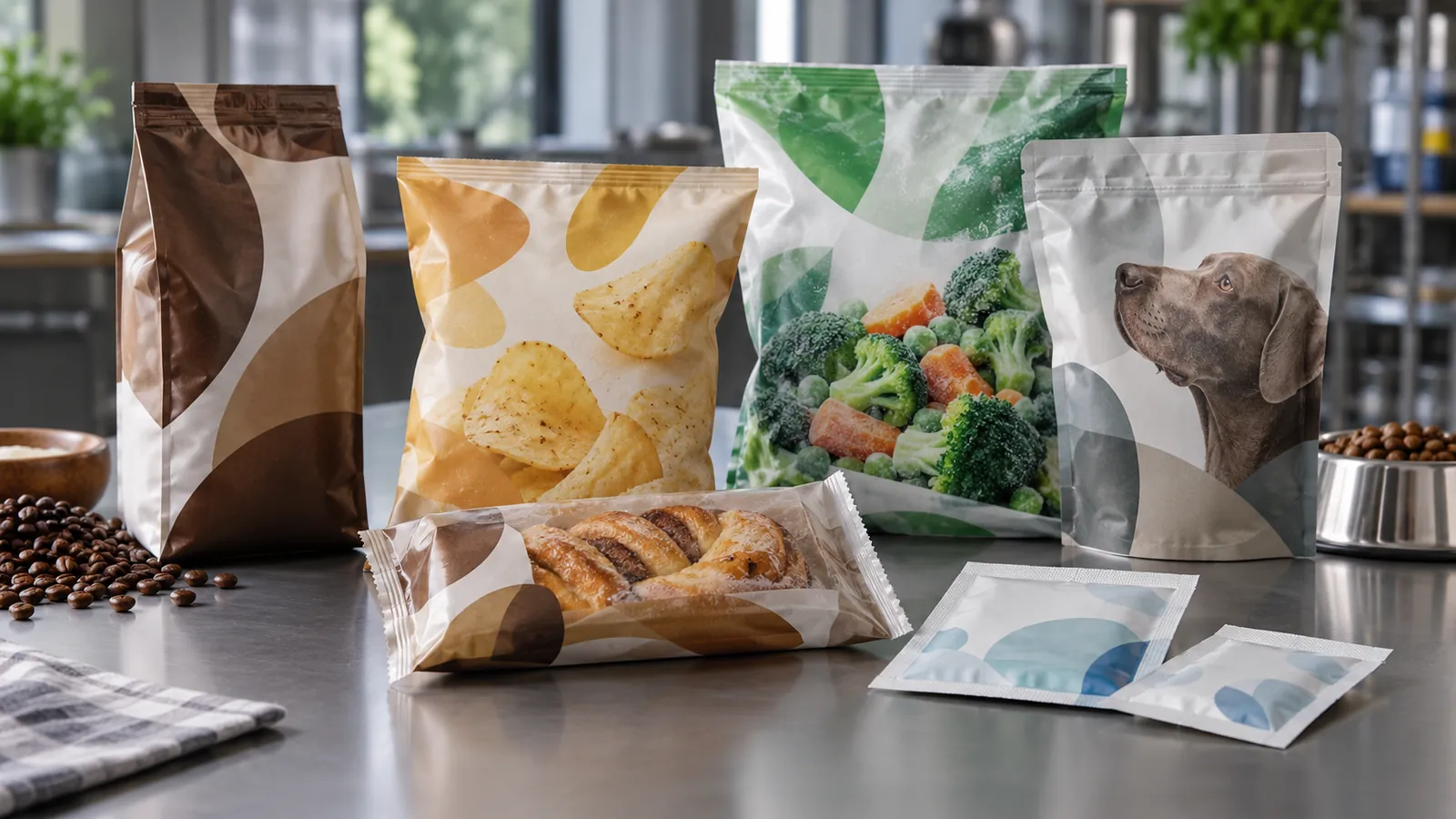
Topic hub
Flexible Packaging Applications by Industry
Flexible packaging applications by industry: how product risk drives barrier, structure, format and machine choice for snacks, coffee, pharma and more.
Start with the product, not the film. A bag of chips, a pound of roasted coffee and a blister strip of tablets all use flexible materials, but each one fails in a different way, so each ends up with a different structure, barrier level, format and filling machine. This section shows how that reasoning works across industries.
Product families: snacks, coffee, bakery, candy, pet food, frozen food, meat, cheese, cosmetics, household products, pharmaceutical packaging, medical devices, spice packaging, rice packaging materials, tea packaging materials, and nut packaging materials.
How each application page is built
Each application page follows the same chain, which mirrors the site-wide path from material to application:
- Product: what is being packed, and in what condition (dry, wet, oily, fragile, gassing, sterile, hot-filled).
- Required protection: what the package must keep out or in, such as oxygen, water vapor, light, aroma, grease, microbes or mechanical damage.
- Structure: the film or laminate that delivers that protection, for example a packaging film built from several layers.
- Barrier: how much oxygen and moisture resistance the structure needs, using OTR and WVTR values measured under stated conditions.
- Format: the package shape, from pillow bag to stand-up pouch.
- Machine: the line that will form, fill and seal the pack, and what that line demands from the film.
Most specification mistakes start with a skipped step. A high-barrier laminate that will not seal on the existing machine fails just as surely as a pouch that lets the product go stale.
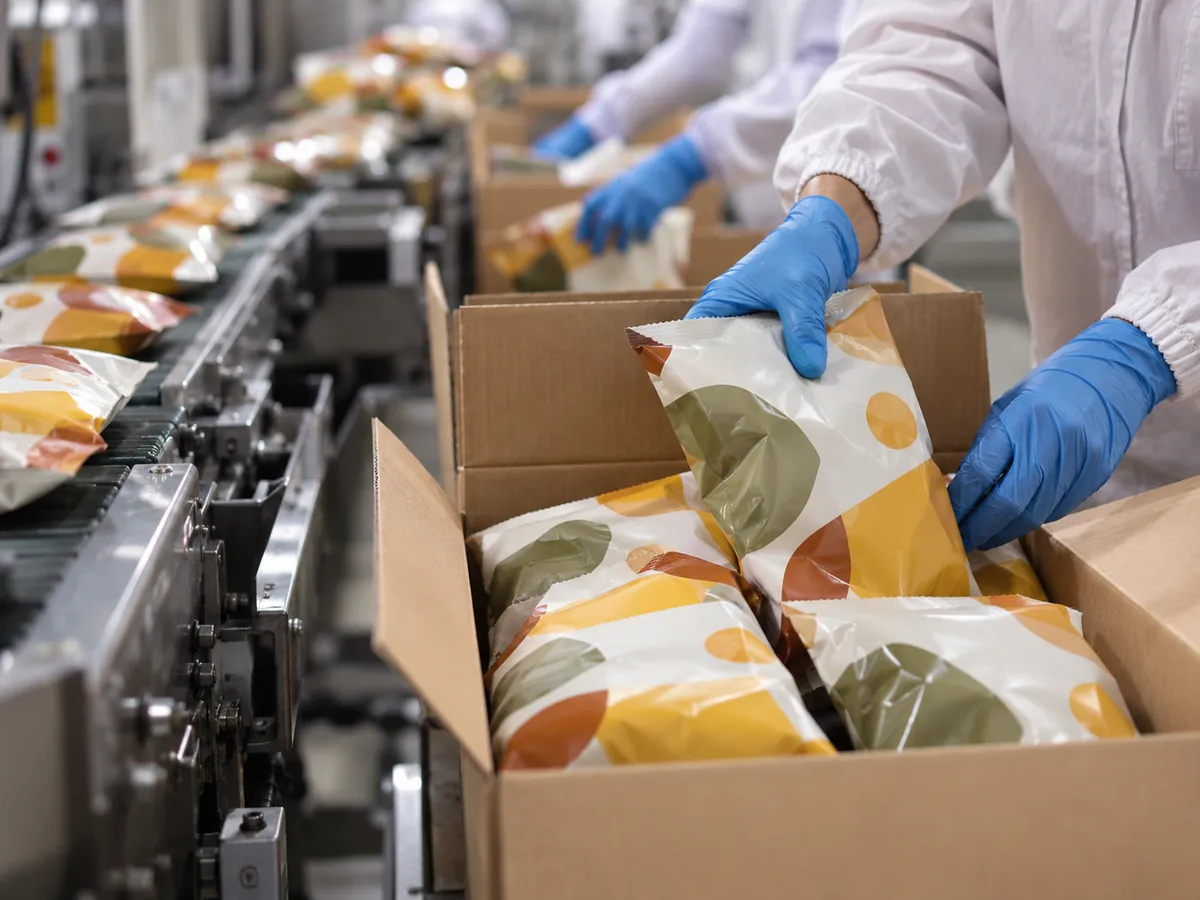
Flexible packaging by industry: main risks and barrier needs
Use the table below as a starting orientation, not a specification. Actual requirements depend on shelf life, distribution conditions and the particular product, so confirm numbers with supplier data and your own shelf-life testing.
Scroll horizontally to view all columns if needed. ↔
| Application | Main risk to the product | Typical barrier need | Common formats |
|---|---|---|---|
| Snacks | Rancidity from oxygen, loss of crunch from moisture, light, breakage | Moderate to high oxygen and moisture barrier, often metallized | Pillow bags, gusseted bags, stand-up pouches |
| Coffee | Aroma loss, oxidation, CO2 buildup after roasting | High oxygen and aroma barrier, plus degassing | Flat-bottom pouches, side-gusset bags, stand-up pouches, stick packs |
| Frozen food | Freezer burn, moisture loss, seal failure at low temperature | Good moisture barrier, low-temperature seal integrity | Bags, pouches, overwraps |
| Pet food | Fat oxidation, odor, puncture and tear in heavy bags | Moderate to high barrier, strong puncture resistance | Large gusseted and stand-up bags, pouches |
| Bakery | Staling, mold, moisture exchange | Low to moderate barrier, often with breathability or anti-fog needs | Flow wraps, bags, overwraps |
| Candy | Heat damage at the seal, aroma loss, moisture pickup | Moderate moisture and aroma barrier; cold seal for chocolate | Twist wraps, flow wraps, stand-up pouches |
| Meat | Oxygen exposure, purge, bone puncture, color change | High oxygen barrier, puncture resistance, often shrinkable | Vacuum pouches, shrink bags, MAP tray lidding |
| Cheese | Mold, drying, off-flavor, ripening gas buildup | Varies: gas-permeable for ripening, high barrier for finished cuts | Vacuum bags, flow wraps, reclosable packs |
| Cosmetics | Chemical attack on seals, print scuffing, leakage | Moderate barrier, chemical resistance, premium print | Sachets, refill pouches, wipes packs |
| Pharmaceutical | Moisture, oxygen, light, contamination, patient safety | Very high barrier, often foil-based | Blister lidding, sachets, pouches |
| Medical devices | Sterility loss, particle shedding, seal integrity | Microbial barrier with controlled peelability | Pouches, lidding, header-bag formats |
| Household products | Product leakage, chemical compatibility, durability in handling | Moderate barrier, strong seals and tear resistance | Stand-up pouches, refills, sachets |
Choosing film packaging for food: from product risk to structure
Most film packaging for food is chosen backwards: a buyer sees a pouch they like and asks for the same film. A safer order is to name what spoils the food first, then decide what each layer of the film must do, and only then pick a format. The table above is organized by industry; the table below is organized by risk, so you can use it for a food that has no page of its own.
Scroll horizontally to view all columns if needed. ↔
| If the food is damaged by | The structure has to | Layers that commonly do that job | Measure or check with |
|---|---|---|---|
| Oxygen (rancid fats, faded color, lost aroma) | Slow oxygen entry for the whole shelf life | Foil, metallized film, EVOH or coated barrier films | Oxygen barrier and OTR |
| Moisture gain or loss (soft crisps, caked powder, freezer burn) | Slow water vapor in or out | Polyolefin layers, metallized film or foil | Moisture barrier and WVTR |
| Light | Block or reduce light reaching the product | Foil, metallized film, white or heavily printed layers | Opacity of the finished, printed pack |
| Fat and oil | Keep the inner layer and seal intact against grease | A sealant chosen for oily products; grease-resistant inner surface | Seal and bond checks after contact with the real product |
| Sharp or heavy contents | Resist puncture and abrasion | Nylon or thicker, tougher sealant layers | Puncture resistance |
| Gas released by the product | Let gas out without letting air in | A one-way valve fitted to a barrier pack | The coffee packaging page |
| Heat during filling or sterilization | Hold seals and layer bonds through the heat cycle | Heat-resistant outer film and adhesives rated for the process | The retort pouch page |
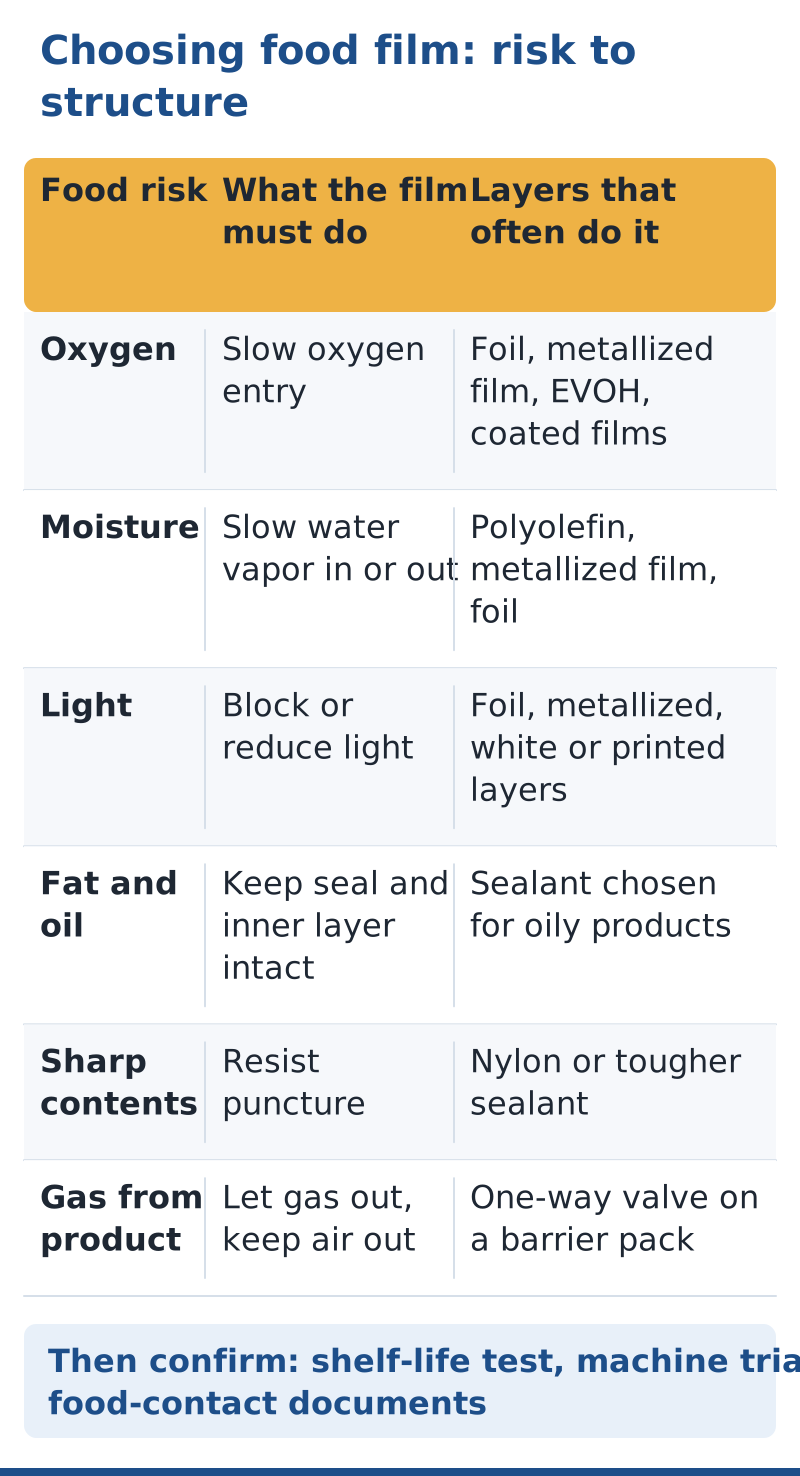
Three points come out of this table.
One film layer rarely covers everything. A food pack usually needs a printable outside, a barrier in the middle and a sealable inside, which is why so many food packs are laminated packaging rather than a single film. Simple dry foods with short shelf lives can sometimes run on one layer; oily, oxygen-sensitive or long-life foods rarely can.
Barrier level comes from the shelf-life target, not the product category. Two snack packs can need very different structures if one must last a few weeks and the other many months. Turn the target into OTR and WVTR requirements under stated test conditions, then confirm them with shelf-life testing on filled packs.
The format and machine can overrule the “best” film. A structure that protects well but will not seal on your line, or cracks at the gussets of the chosen pouch, fails in practice. Check the film against packaging film and machine compatibility before you order.
Once you know your two or three worst risks, go to the closest product page below for the detail: snacks for oxidation and crunch, coffee for aroma and degassing, meat for oxygen and puncture, frozen food for cold-temperature sealing.
Food-contact documents are a separate question
Choosing a structure for its protection does not show that it is legal for food contact. In the United States, substances that may migrate from packaging into food are regulated as indirect food additives, listed in 21 CFR Parts 174 to 178, including Part 174, Part 175 for adhesives and coating components, and Part 177 for polymers. In the EU, Regulation (EC) No 1935/2004 requires food contact materials not to transfer constituents to food in quantities that could endanger human health or bring an unacceptable change in the food’s composition, taste or odor; plastic layers fall under Regulation (EU) No 10/2011. Which rules apply depends on the market, the food and the conditions of use. Ask the supplier for a declaration of compliance covering the finished printed and laminated structure, and use the food contact packaging regulations overview to know what to ask for. Last checked 11 October 2026.
Application pages by product family
The pages fall into a few families, and the pages next to your product are often as useful as its own.
Dry and shelf-stable foods. Snack packaging film covers oxidation, moisture and light protection for chips, nuts and bars. Coffee packaging materials adds degassing valves and aroma barrier. Bakery packaging film goes the other way: because of staling and mold, the pack often protects less aggressively but has to control moisture exchange. Candy packaging film covers twist wraps, flow wraps and cold seal for chocolate, where heat at the seal is the problem. Pet food packaging adds grease and puncture demands on large bags. Spice packaging materials separates whole from ground spices and explains why spice oils call for a contact-layer test. Rice packaging materials separates the woven sack that carries dry rice from the inner pack that has to face shipping humidity. Tea packaging materials separates a brew-through bag from the pouch or liner that has to hold aroma. Nut packaging materials separates in-shell nuts, intact kernels, pieces and roasted nuts, and records moisture loss beside moisture gain.
Chilled and frozen foods. Frozen food packaging is dominated by toughness and sealing at low temperature. Meat packaging film and cheese packaging film both use vacuum and modified atmosphere formats, but cheese may need a film that lets ripening gas out, while meat usually needs the opposite. For respiring crops, the fresh produce film trial guide records whole or cut state, pack geometry, gas exchange and moisture observations before a material is chosen.
Personal care and home. Flexible cosmetic packaging covers sample sachets, refill pouches and wipes, where print quality and chemical compatibility lead. Household products packaging covers detergent pouches and refills, where stress cracking and drop strength matter more than oxygen barrier.
Regulated and sterile products. Pharmaceutical flexible packaging is a sub-hub with its own pages on foil, blisters and flow wrap. Medical device packaging centers on the sterile barrier system, where breathability for sterilization and controlled peel replace the usual barrier questions.
Products that sit between applications
Several products sit between families. A frozen meal in a vacuum pouch draws on frozen, meat and retort practice. Medicated confectionery draws on candy and pharma. A premium cosmetic refill may need the print finish of a snack bag and the chemical resistance of a detergent pouch. In those cases, list the failure modes from each page and design to the strictest one, then check the result against your machine before ordering.
Supporting detail elsewhere on the site
Application pages link out rather than repeat the fundamentals. Package shapes are in flexible packaging formats, how a chosen film behaves on a forming, filling and sealing line is in packaging film and machine compatibility, and the numbers behind barrier claims are in the performance hub.
Using this section
Write down the product’s two or three biggest failure modes first, pick the application page closest to your product, and then check each downstream choice against the machine you actually run. If your product sits between two applications, such as a roasted nut coffee blend or a medicated confectionery, read both pages and design to the stricter requirement. If you are unsure, request samples and run a line trial before committing to a volume order. The first-order risk checklist helps with that step.
Applications
In this section
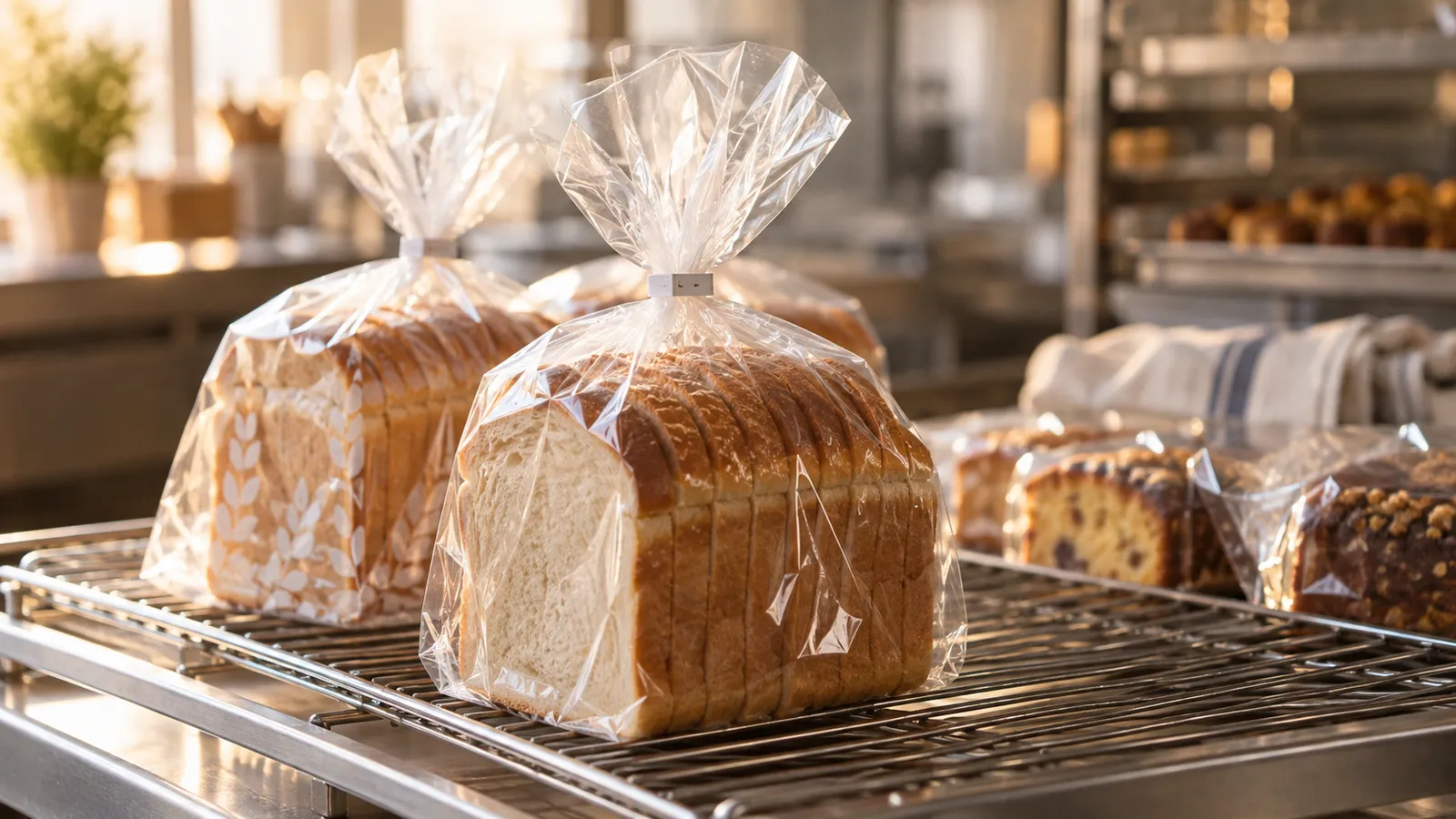
Bakery Packaging Film: Keeping Bread and Cakes Fresh
Bakery packaging film explained: how staling, moisture loss and mold shape film choice for bread, cakes, cookies and tortillas, plus formats and machines.

Candy Packaging Film: Twist Wraps, Flow Wraps and Cold Seal
Candy packaging film explained: twist-wrap and flow-wrap structures, cold seal for chocolate, moisture and aroma barrier, metallized and white BOPP.
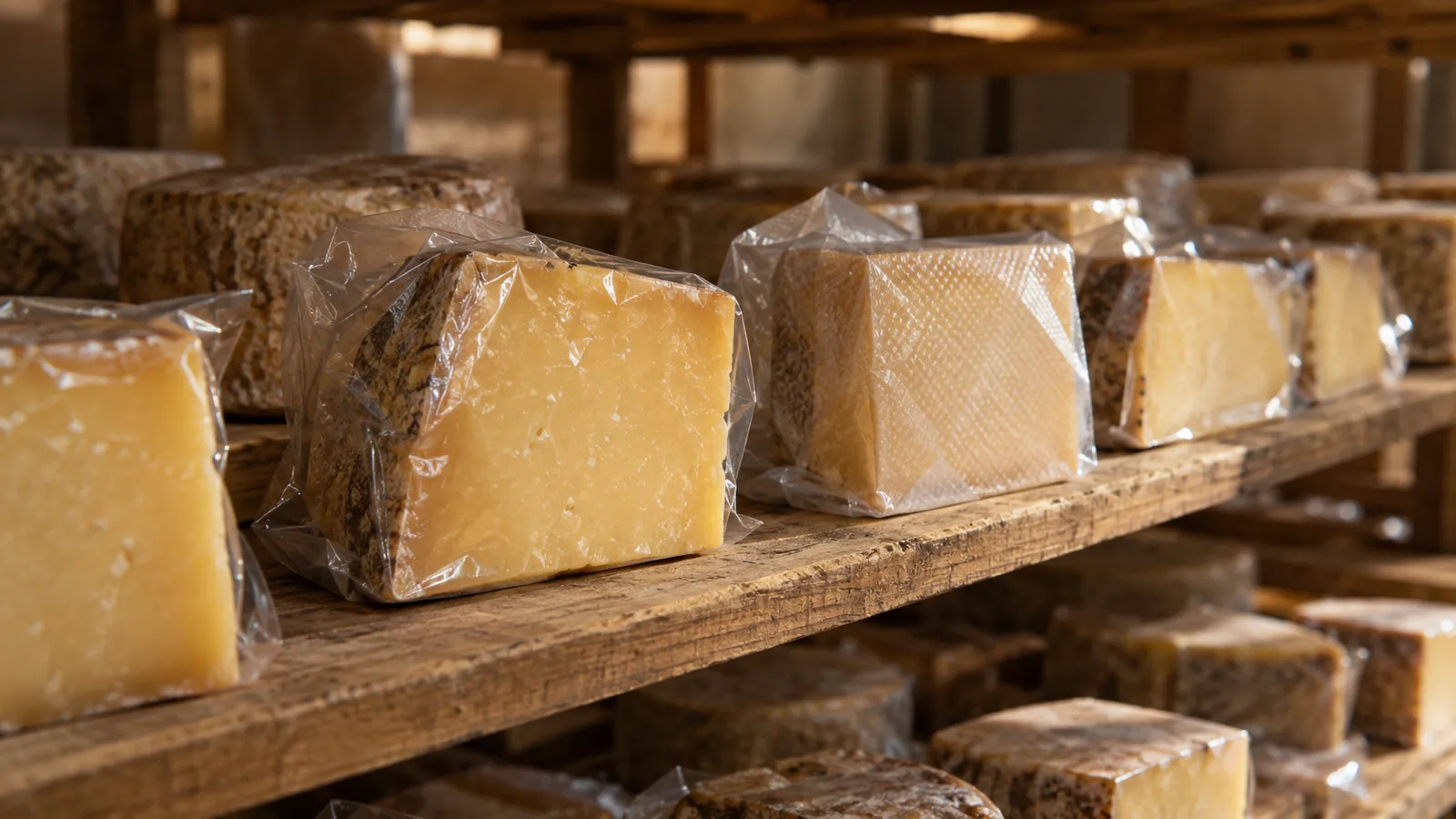
Cheese Packaging Film: Ripening, Vacuum and MAP
Cheese packaging film explained: gas-permeable ripening films, vacuum bags for blocks, MAP for sliced and shredded cheese, reclosable packs and structures.
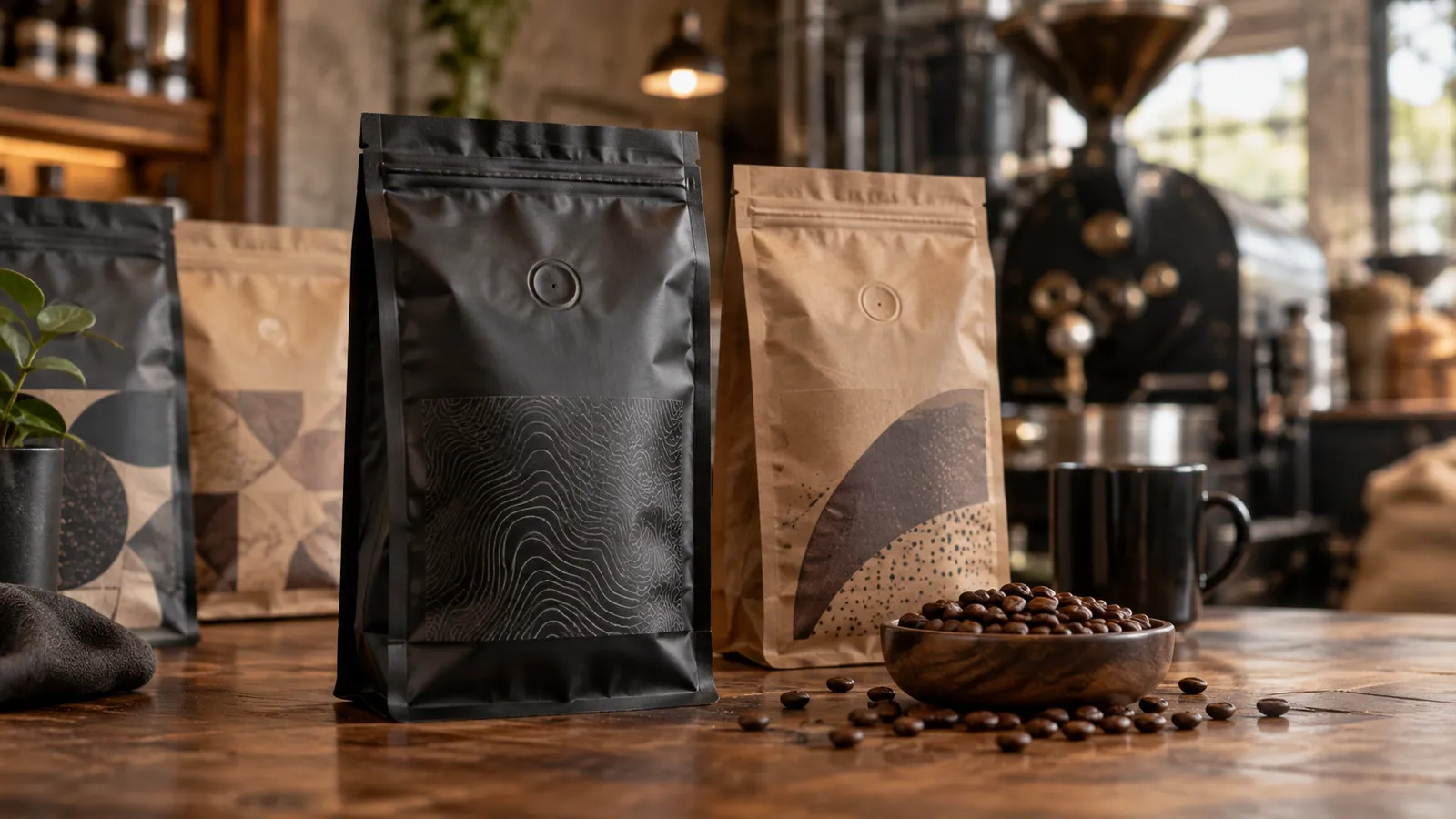
Coffee Packaging Materials: Barrier, Valves and Pouch Formats
Coffee packaging materials explained: oxygen and aroma barrier, one-way degassing valves, nitrogen flushing, pouch formats and machine fit.
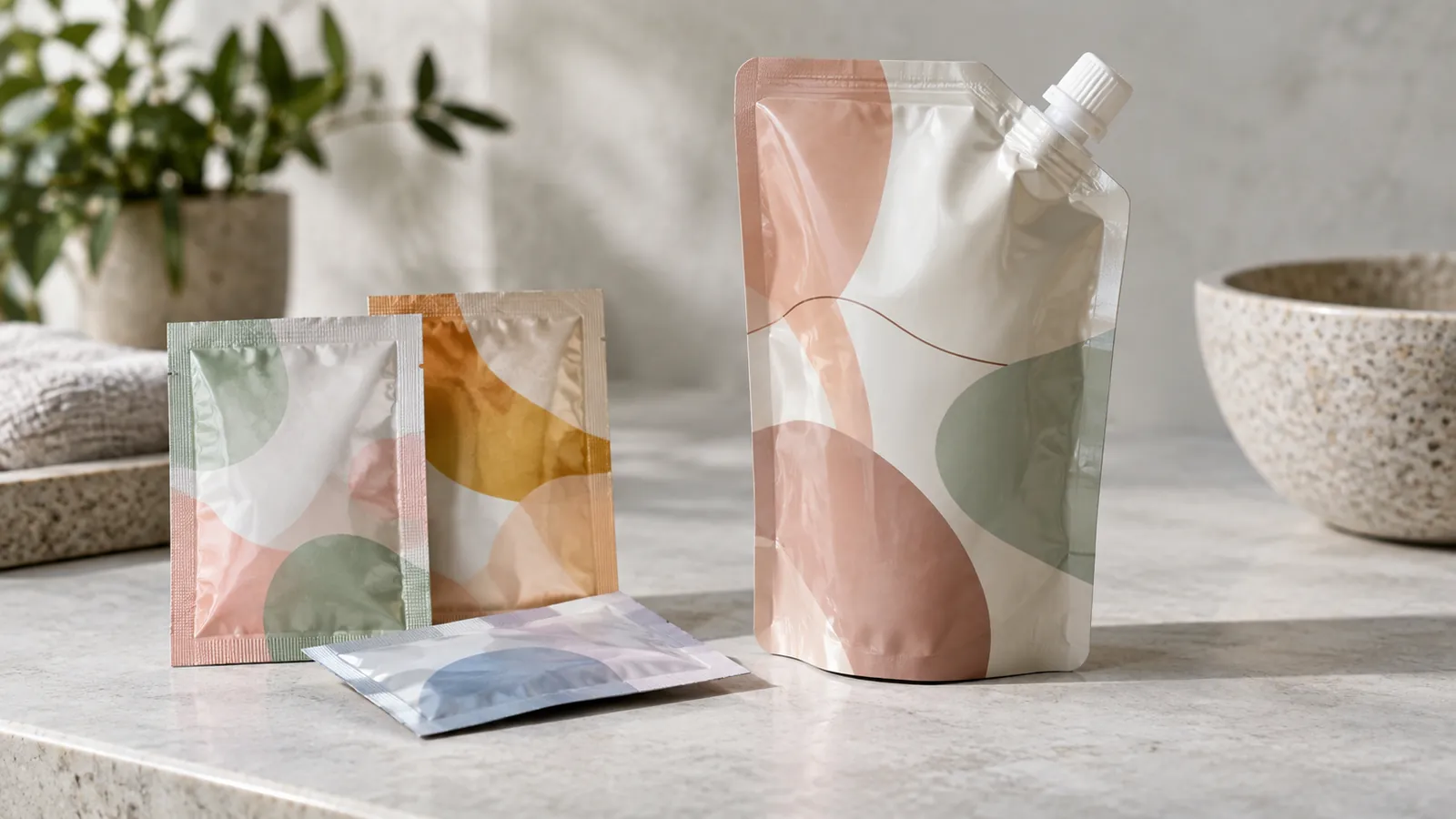
Flexible Cosmetic Packaging: Sachets, Refill Pouches and Wipes
Flexible cosmetic packaging explained: sample sachets, refill pouches, wet-wipe packs, chemical compatibility, premium print and typical structures.
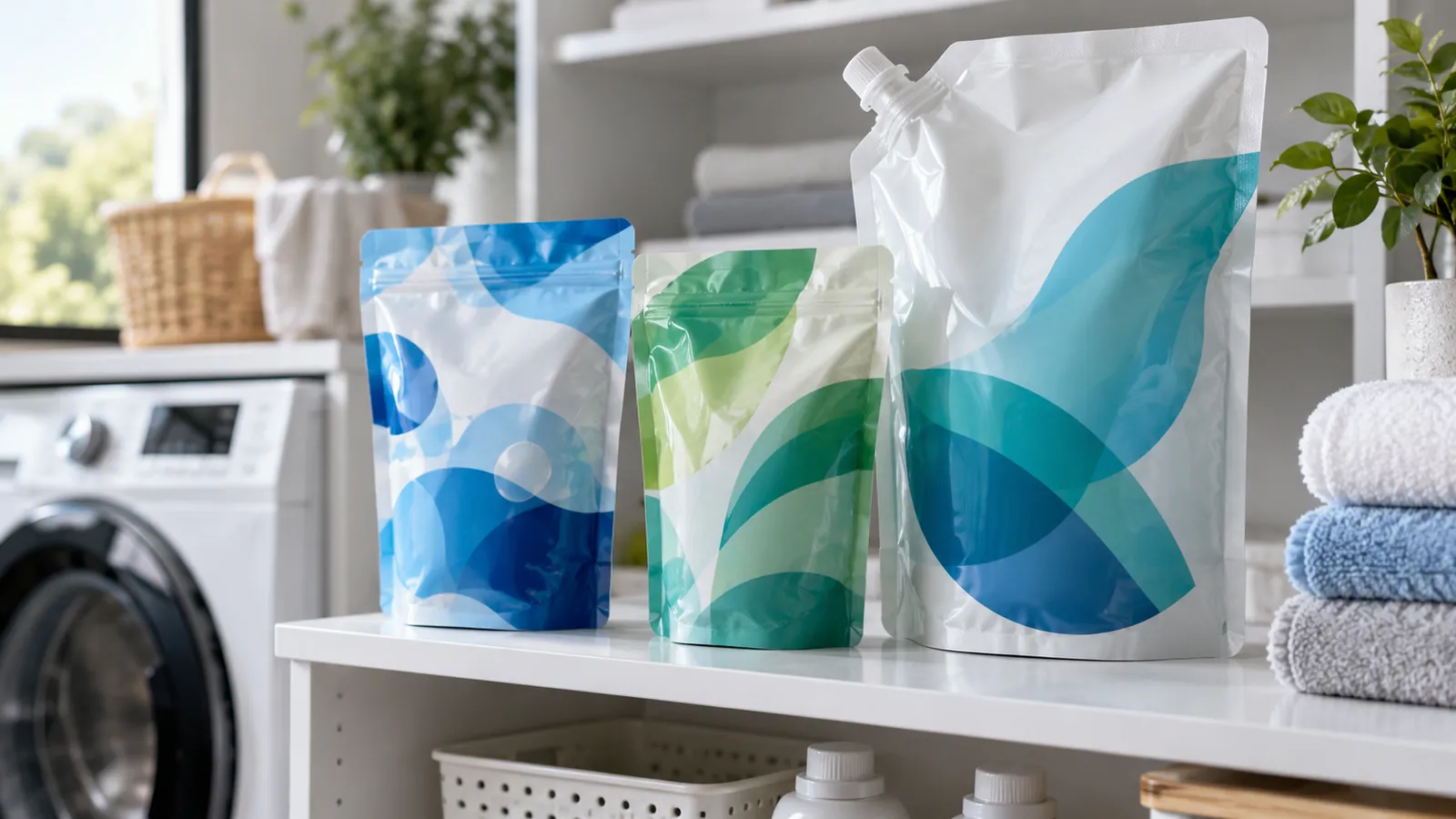
Flexible Packaging for Household Products: Detergents, Refills and Wipes
Flexible packaging for household products: detergent pouches, refill pouches and wipes, chemical resistance, stress cracking, drop strength and structures.
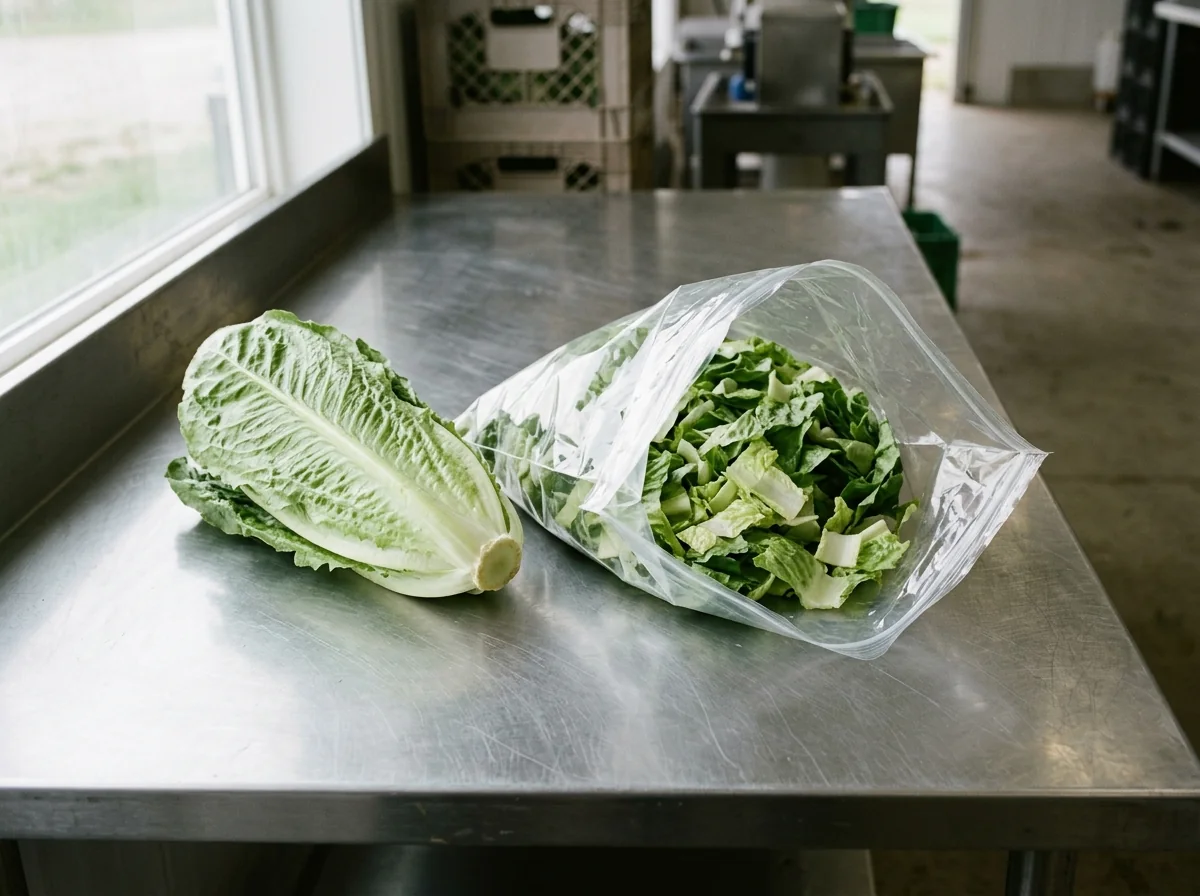
Fresh Produce Packaging Film: Respiration, Moisture and Trial Inputs
Match fresh produce film to crop, cut state, pack geometry and cold-chain conditions. Use a blank trial record for gas exchange, moisture and supplier data.
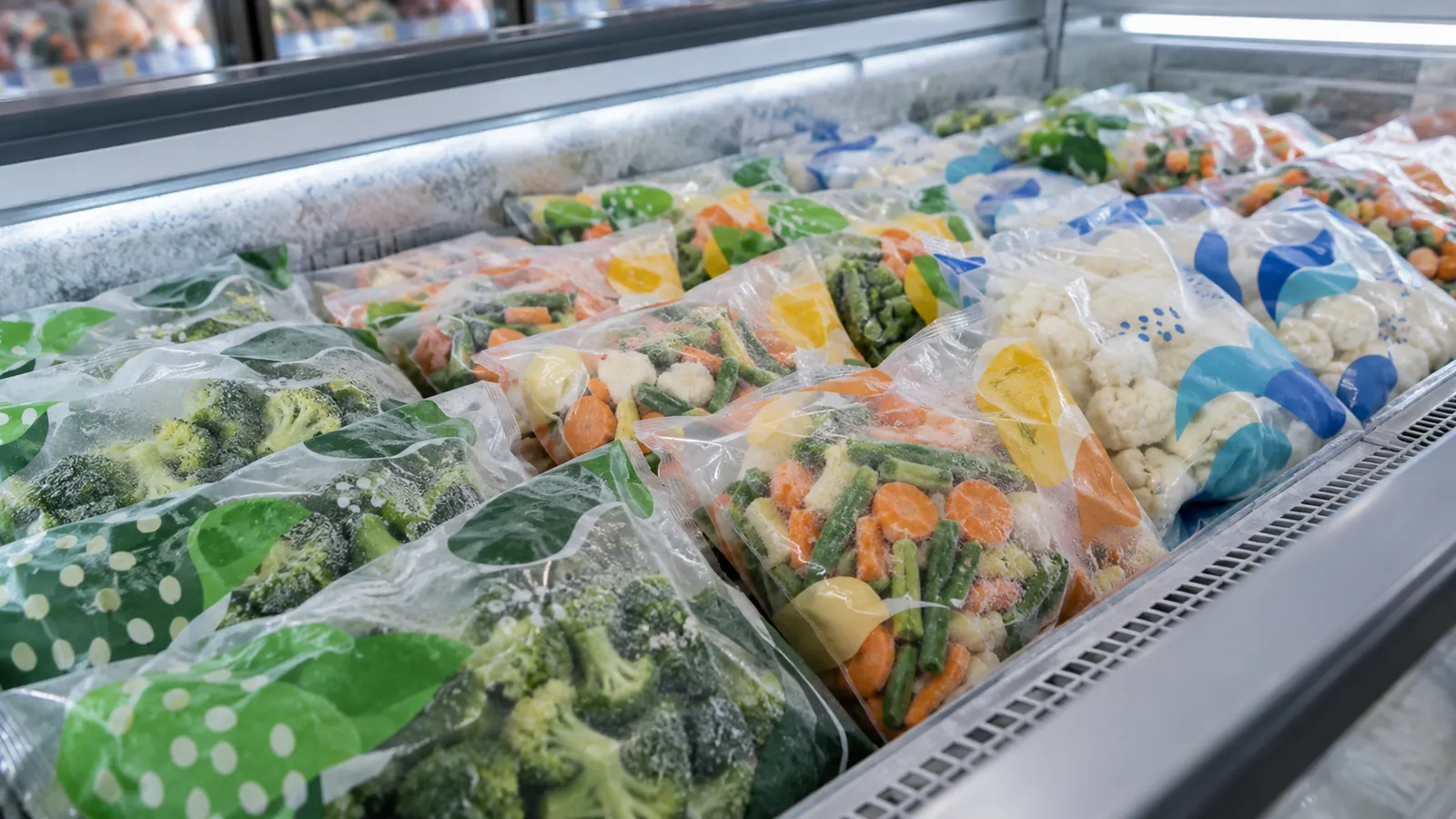
Frozen Food Packaging Film: Low-Temperature Toughness and Sealing
Frozen food packaging film explained: low-temperature toughness, puncture, freezer burn, sealing through frost, ventilated bags, formats and machines.
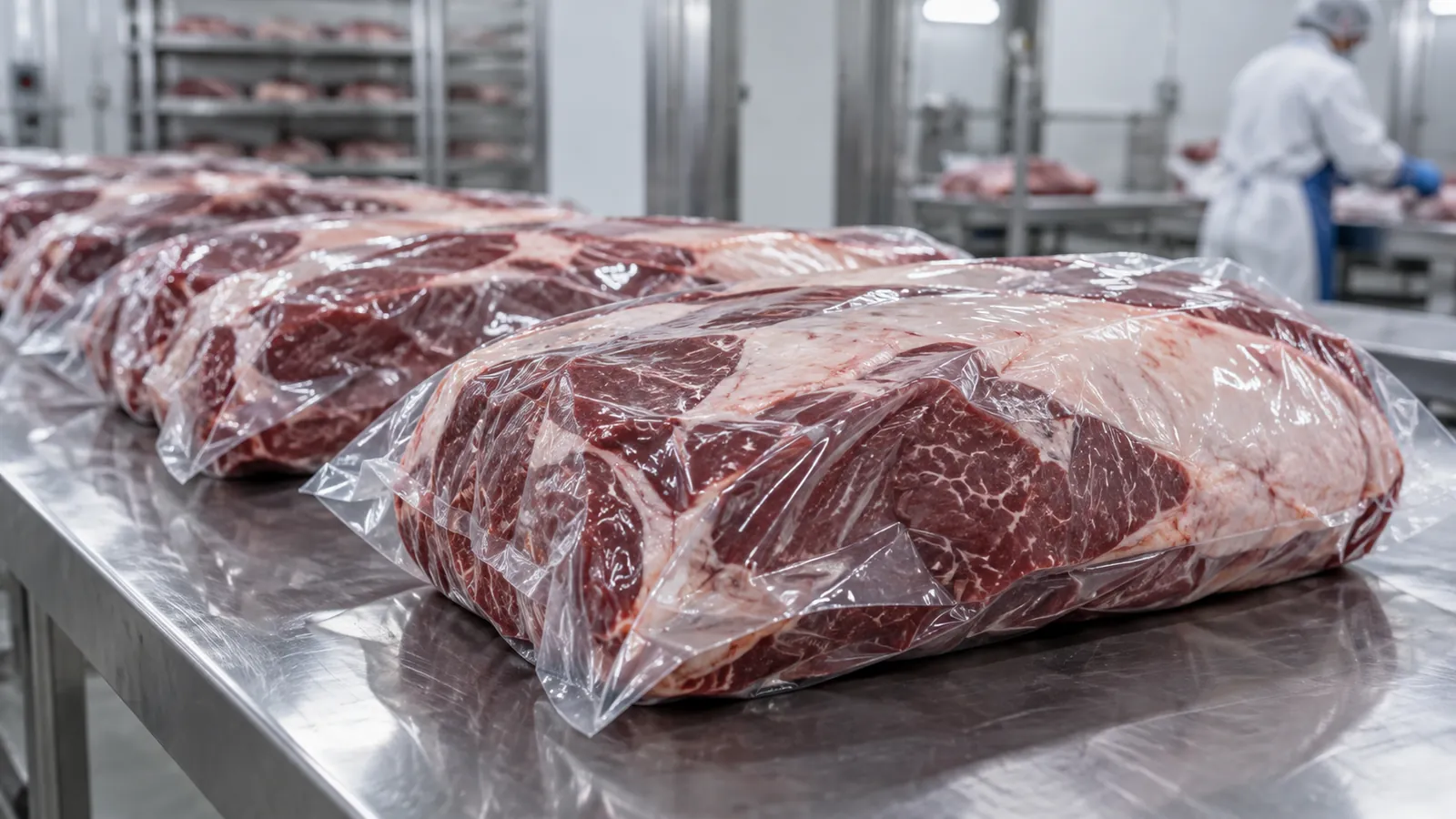
Meat Packaging Film: Vacuum, MAP and Shrink Bags
Meat packaging film explained: vacuum, MAP and skin pack structures, nylon and EVOH barrier layers, puncture protection, shrink bags and machines.

Medical Device Packaging Materials: Sterile Barrier Systems Explained
Medical device packaging materials form the sterile barrier: breathable paper or nonwoven, peel pouches, trays and lidding. See how sterilization drives choices.
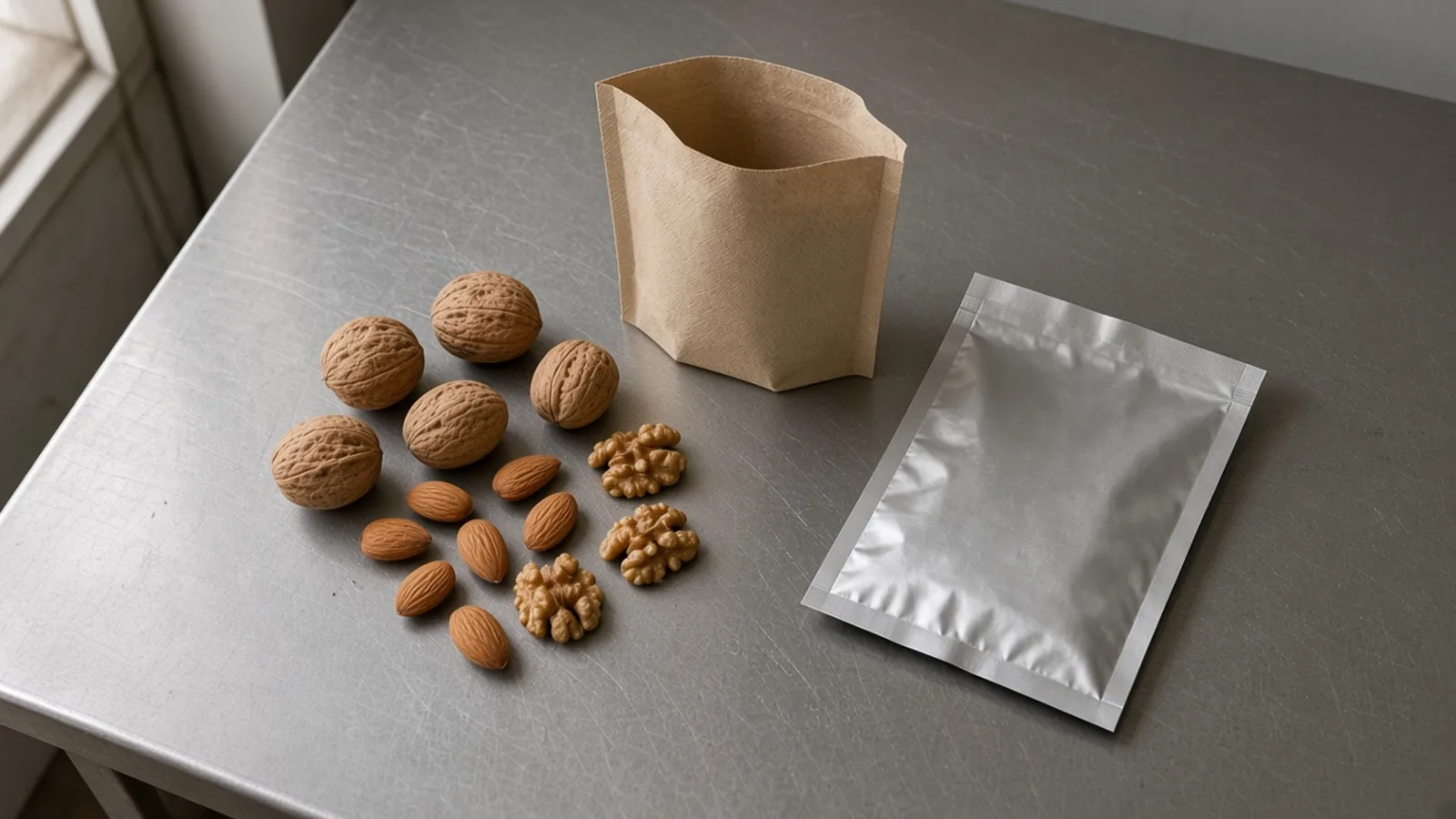
Nut Packaging Materials: Whole, Shelled, Raw and Roasted Products
Nut packaging materials follow shell, piece size and roast. Record moisture loss and gain, and leave barrier cells blank until a supplier sheet arrives.
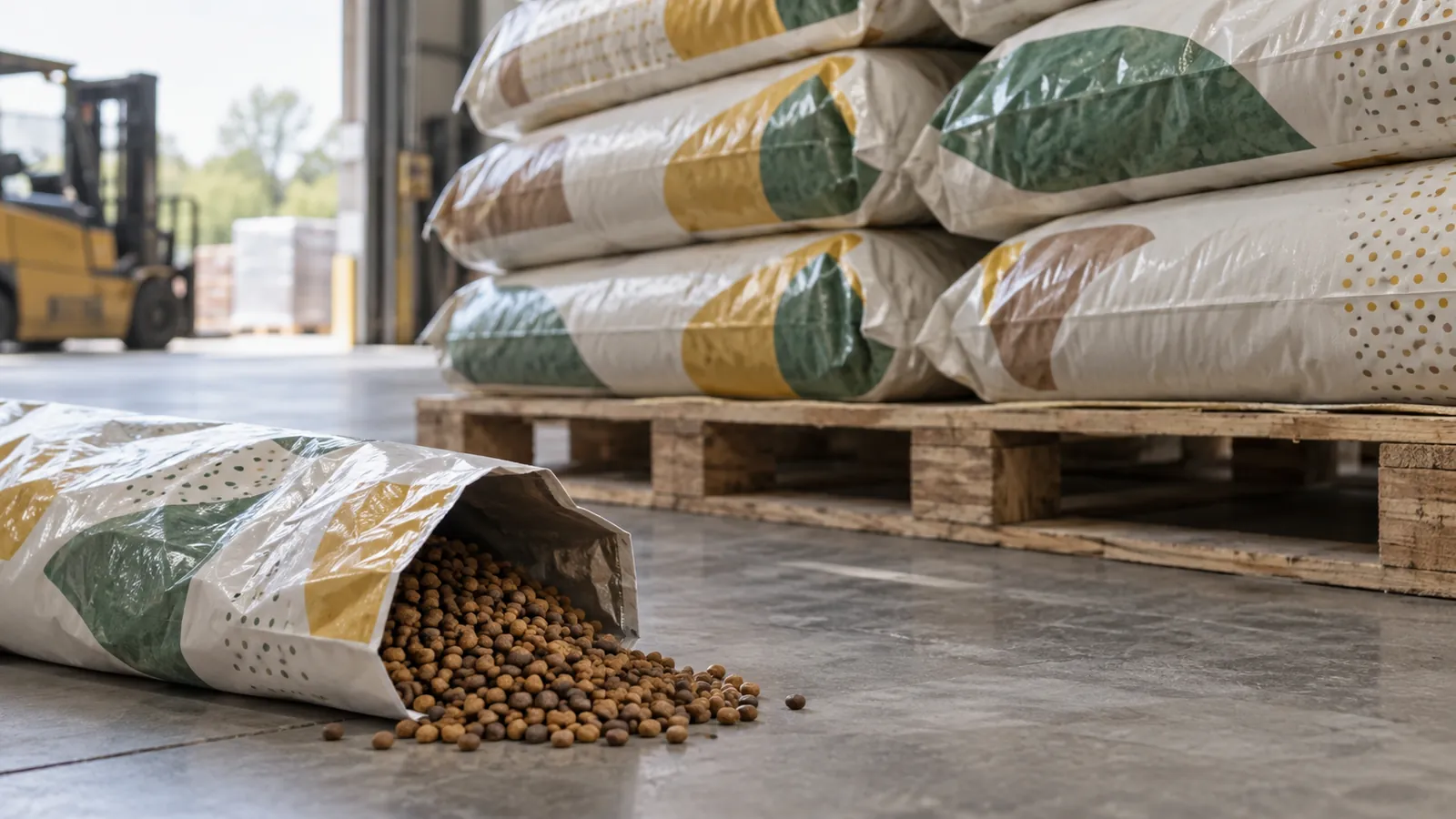
Pet Food Packaging Film: Structures, Formats and Machines
Pet food packaging film explained: structures for dry kibble, wet food and treats, grease and puncture needs, bag formats, machines and recyclable options.

Pharmaceutical Flexible Packaging: Materials, Formats and Requirements
A guide to pharmaceutical packaging materials and formats: blisters, strip packs, sachets and pouches, plus barrier, documentation and machine needs.
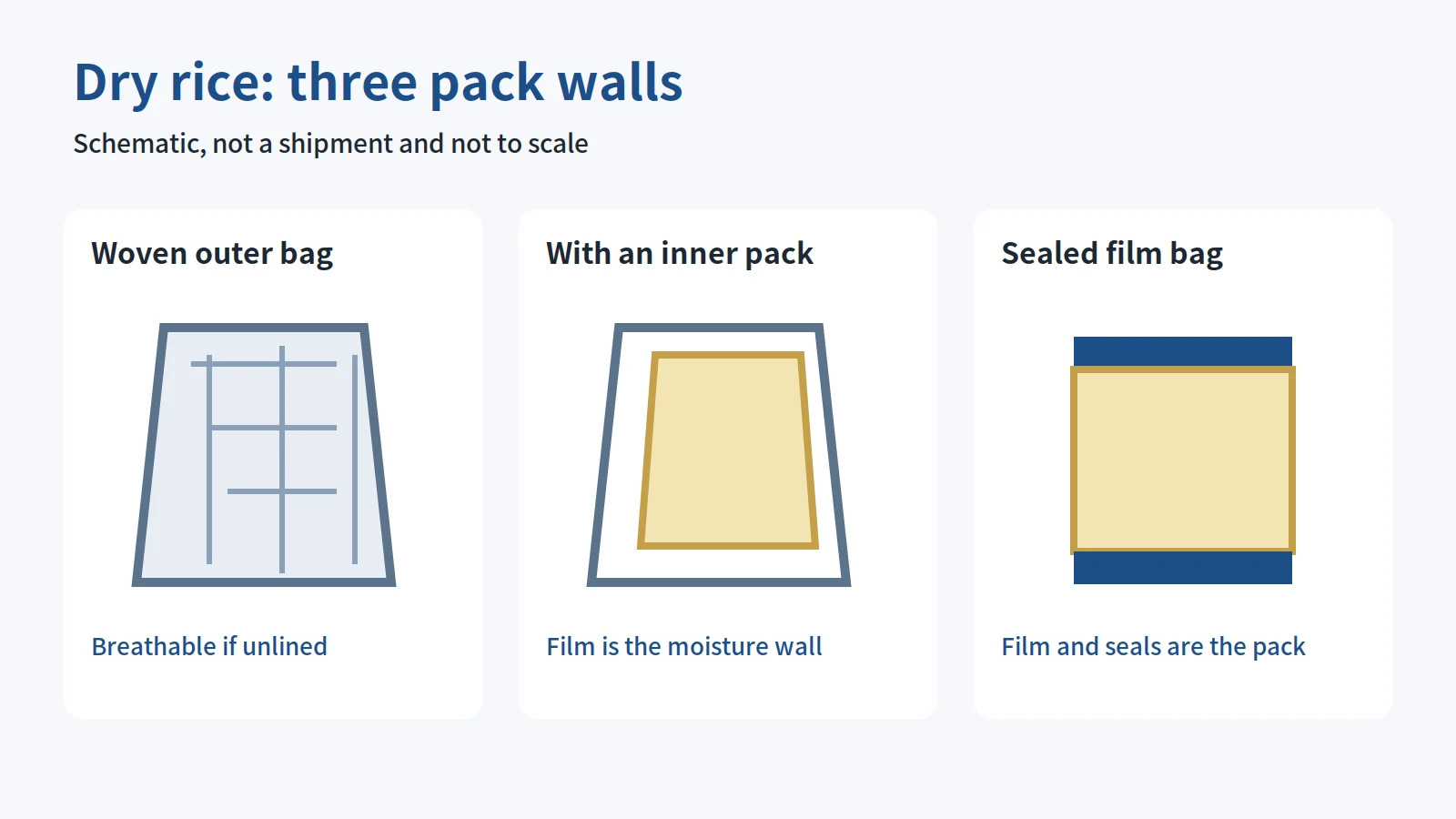
Rice Packaging Materials: Woven Sacks, Liners and Sealed Retail Packs
What dry rice packaging is made of: a woven outer sack, a sack with an inner pack, or a sealed film bag. Polypropylene is not a moisture-proof guarantee.
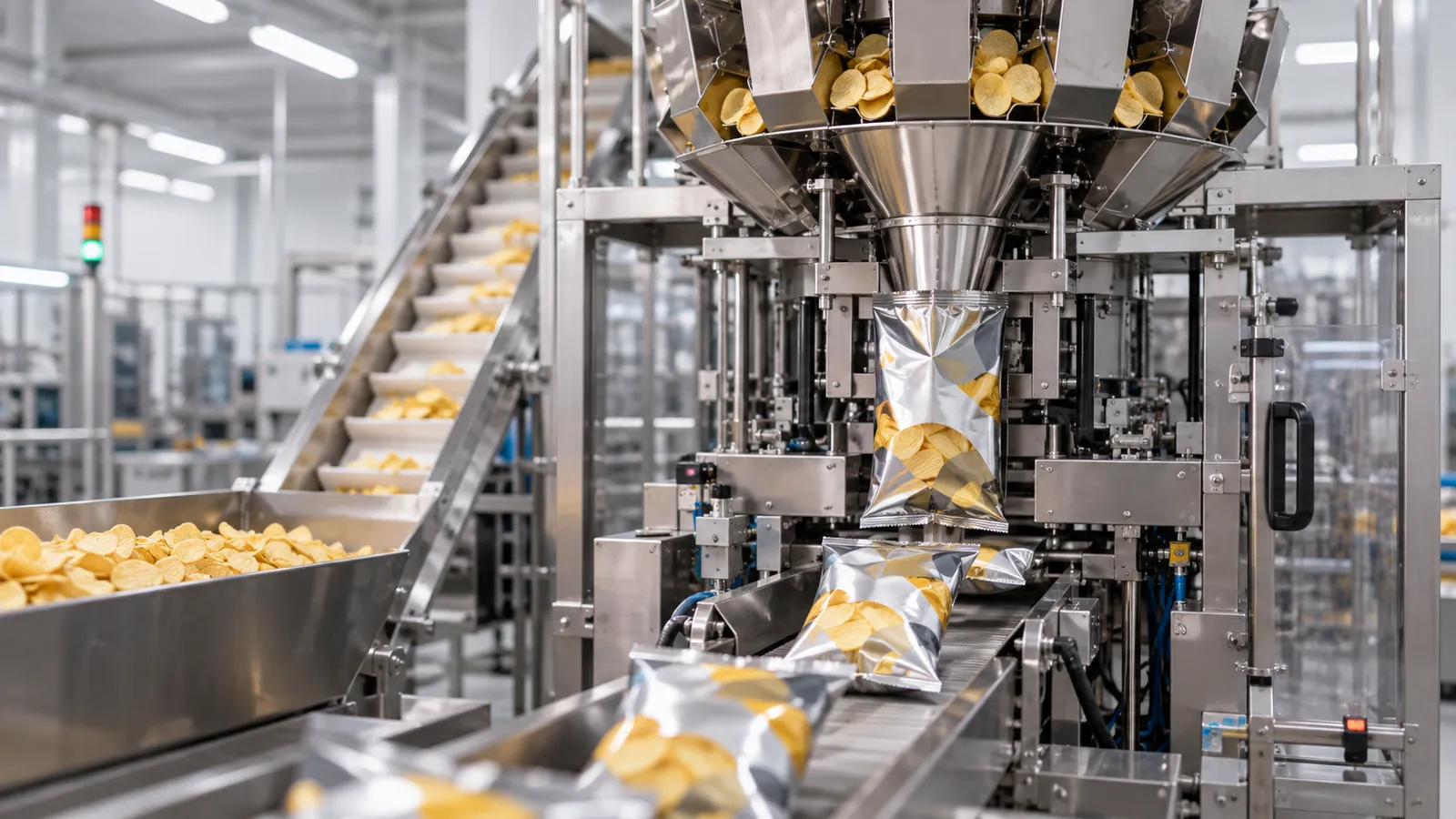
Snack Packaging Film: Structures, Formats and Machines
Snack packaging film explained: typical BOPP and PET structures, barrier needs, nitrogen flushing, bag formats and the machines that run them.
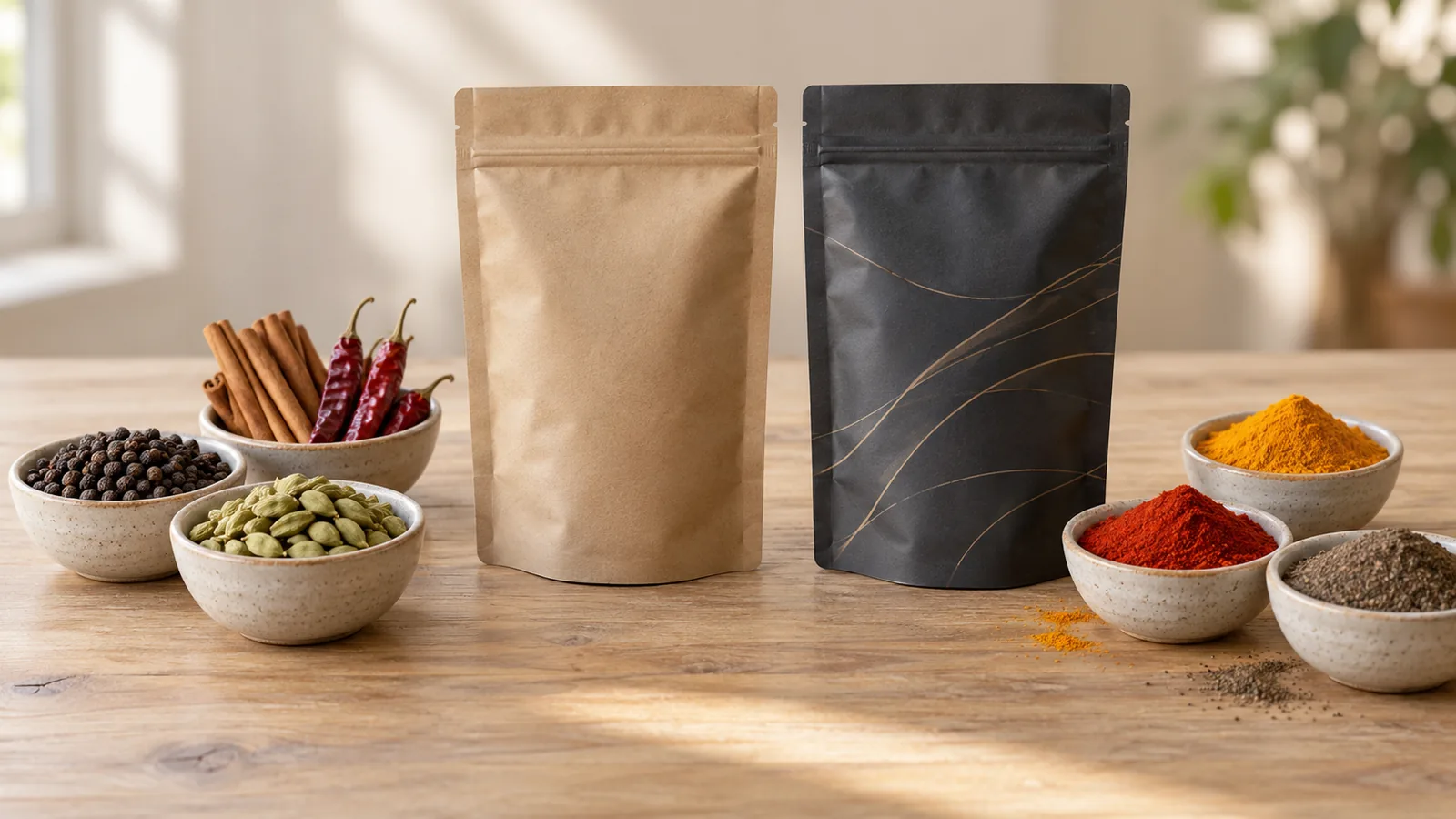
Spice Packaging Materials: Aroma, Moisture and Contact-Layer Checks
The best spice packaging depends on whole or ground form, climate and how spice oils meet the inner layer. Compare the risks, then copy a sample record.
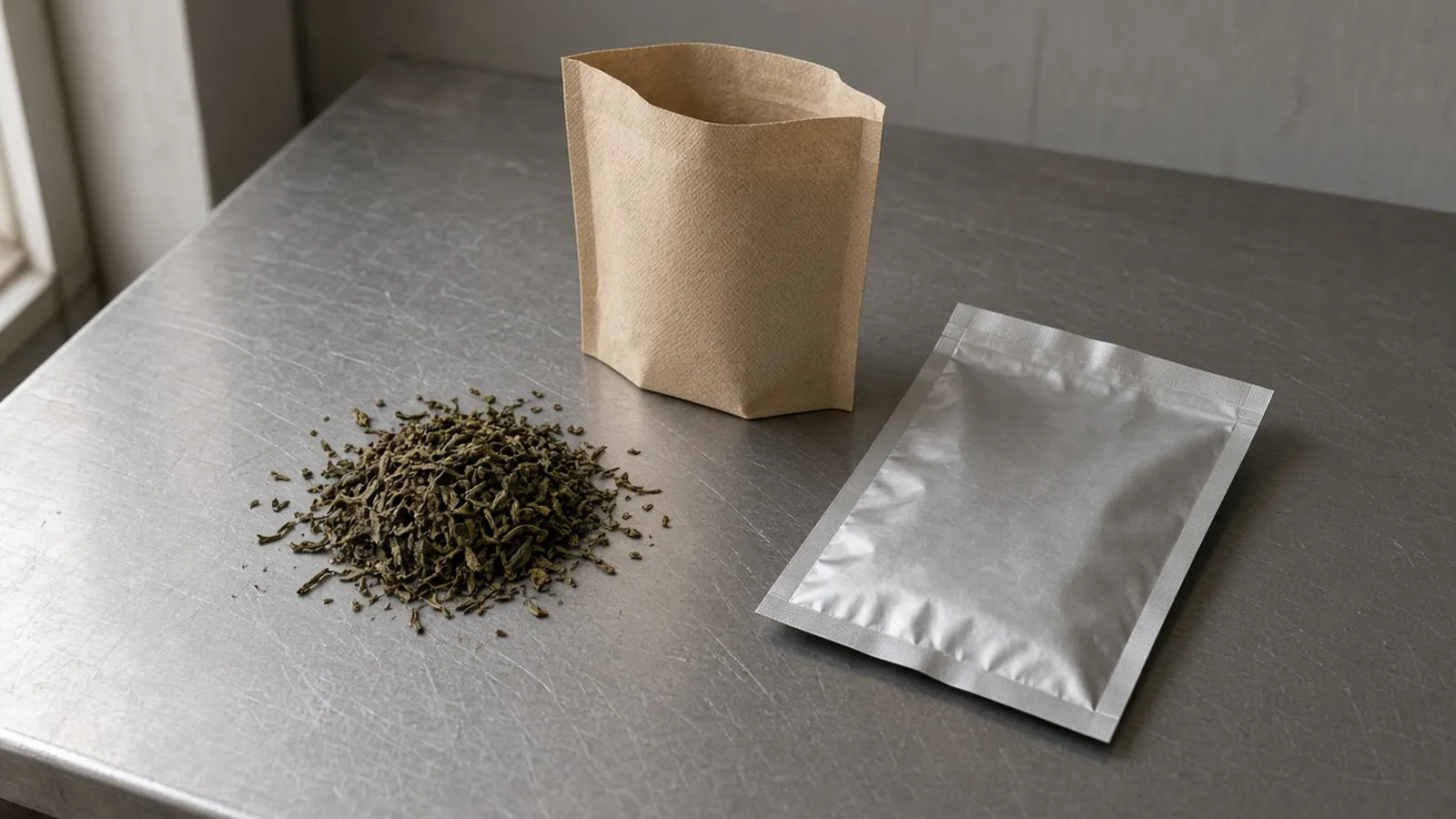
Tea Packaging Materials: Brew Bags and Storage Pouches
Tea packaging materials for dry leaf: a brew bag lets water through, and a storage pouch has to slow aroma loss. Record leaf, atmosphere and the seal.