
Packaging Film Types: A Practical Guide to Common Polymer Films
Packaging film types differ by polymer: PE, CPP, BOPP, BOPET, nylon, EVOH, PVC, PETG, POF and metallized film. See what each does and where it fits.
Choosing a print web without a compatible sealant can leave a pack unsealed. Start by assigning the outer, sealant, barrier and puncture-resistance jobs before choosing a polymer. The main types are polyethylene (PE), polypropylene (CPP and BOPP), polyester (BOPET), polyamide (nylon), EVOH, the shrink films (PVC, PETG, POF) and metallized films. Each polymer has a different balance of clarity, barrier, heat resistance and sealability, and most real packages combine several.
This page is a map of the polymers. How these films are assembled into webs is covered in flexible packaging film, and the broader material families are in the materials hub.
Packaging film types compared
Use the task entry first, then check the selected grade. This map assigns jobs; it does not rank barrier or heat resistance across unmatched thicknesses and test conditions.
Scroll horizontally to view all columns if needed. ↔
| Job | Start here | Check before selection |
|---|---|---|
| Outer print web | PET or BOPP | Treatment, register and jaw contact |
| Sealant | PE or CPP | Sealing faces, temperature, dwell and pressure |
| Oxygen or moisture barrier | Barrier films | OTR/WVTR at matching temperature, humidity and gauge |
| Puncture resistance | Nylon | Finished-pack puncture test and forming route |
Common mistake: a polymer name cannot establish a heat-seal window or a food-contact approval.
Where each film type sits in a food package
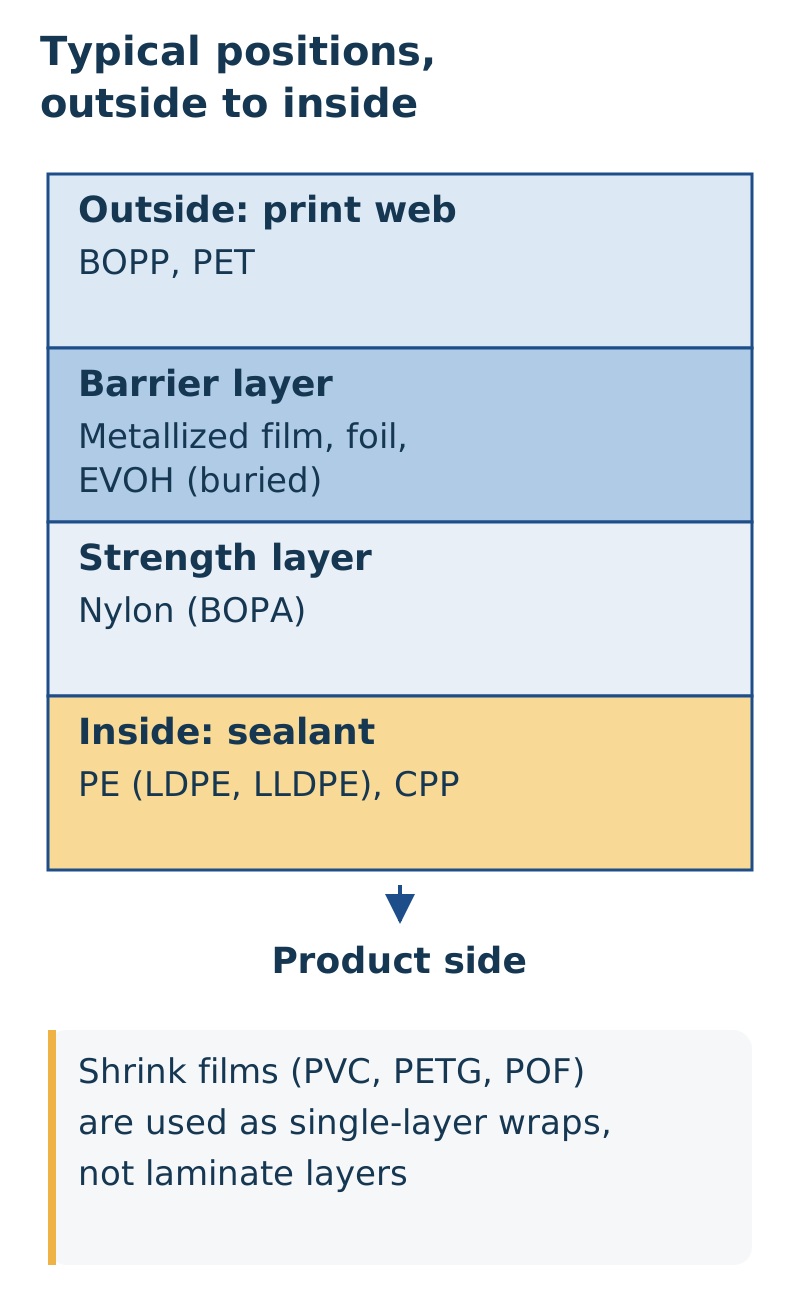
Most food packs are not one film but a stack, and each polymer usually earns its place in one position. Reading a structure is easier once you know the usual role of each type. The positions below are typical, not fixed: the same polymer can move to a different layer in a different design.
Scroll horizontally to view all columns if needed. ↔
| Film type | Usual position in a structure | Common food packaging uses | Detail page |
|---|---|---|---|
| LDPE / LLDPE | Inner sealant layer; also single-layer bags and liners | Sealant in pouches and laminates, produce bags, frozen food bags | LDPE, LLDPE |
| HDPE | Inner layer or single-layer film where stiffness and moisture barrier matter | Cereal and dry food liners, stiffer bags | HDPE film |
| CPP | Inner sealant, especially where heat resistance or clarity matters | Sealant in BOPP/CPP and PET/CPP packs for dry foods; retort-grade sealants | CPP film |
| BOPP | Printed outer layer, or a clear single web with a sealable coating | Snack and confectionery wrappers, bakery wraps | BOPP film |
| BOPET (PET) | Printed outer layer; base for metallized or oxide-coated barrier webs | Outer web of PET/PE pouches, retort and coffee laminates, lidding | PET film |
| BOPA (nylon) | Middle or outer layer for puncture and flex resistance | Vacuum pouches; forming packs require a forming-grade PA structure | Nylon film |
| EVOH | Buried barrier layer inside a coextrusion, between moisture-resistant layers | Oxygen barrier in meat, cheese and modified atmosphere packs | EVOH film |
| Metallized film | Barrier layer laminated behind the print web | Snack bags, coffee packs, some lidding | Metallized film |
| PVC, PETG, POF shrink | Single-layer shrink wrap, sleeve or bundle film, not a laminate layer | Retail overwraps, multipacks, tamper bands, bottle sleeves | Shrink film |
Some common food structures show how the positions combine, listed from outside to inside:
- BOPP/CPP for dry foods: a printed polypropylene outer layer and a polypropylene sealant.
- PET/PE for general pouches: a stiff, heat-resistant printed outer web and a polyethylene sealant.
- BOPP/metBOPP/PE or PET/AL/PE where the product needs a higher barrier: a print web, a metallized or foil barrier, and a sealant.
- PA/PE for vacuum packs: a nylon layer and a polyethylene sealant; forming applications require separate grade and draw-depth validation.
- PE/tie/EVOH/tie/PE coextrusions where an oxygen barrier is needed without a laminate.
This table describes structure, not compliance. Whether a particular film may be used for a particular food in a particular market depends on the grade, its declarations and the conditions of use, which are covered in food contact packaging. For side-by-side choices between two candidates, see LDPE vs LLDPE, BOPP vs CPP and PET vs BOPP.
LDPE, LLDPE and HDPE
A PE blend used as a sealant does not establish the oxygen barrier of the pack. Request the complete structure and measured OTR for oxygen-sensitive contents; PE film explains the family.
CPP (cast polypropylene)
A general CPP sealant is not automatically a retort sealant. Confirm the selected grade, bond system and post-process seal results before using it for sterilized packs.
BOPP
Do not treat every BOPP web as non-sealable. Plain outer webs, heat-sealable skins and coated grades have different jobs; BOPP film separates them.
BOPET
An outer-web PET grade is not a substitute for a heat-sealable PET grade. Specify the sealing surface separately from the printable carrier; PET film explains that distinction.
BOPA (nylon)
Biaxially oriented PA and cast or coextruded forming-grade PA are separate routes. Do not infer deep-draw performance from the BOPA name: confirm the grade, structure and forming depth. Nylon also needs humidity-specific barrier data.
EVOH
Do not list nylon as a generic moisture shield for EVOH. Specify the moisture-protective layers and check the complete structure at its use humidity; barrier film explains the barrier task.
PVC, PETG and POF
Sleeve seaming and overwrap heat sealing are different tasks. Compare PVC, PETG and POF by the intended pack route and tunnel trial, without assuming a universal cost or shrink ranking.
Metallized films
Metallization is not aluminum foil, and a base-film result does not establish finished-pack barrier. Check coating continuity and the converted structure; high barrier film covers these choices.
Telling look-alike films apart
Several film pairs look similar on a roll. Ask for the grade and structure rather than identifying them by appearance.
- LDPE vs LLDPE: record the blend and compare mechanical results at the same gauge.
- CPP vs PE sealant: compare seal initiation temperature and the useful seal window under the same settings.
- BOPP vs BOPET outer: compare register, jaw contact and barrier at matching conditions.
- Metallized vs clear barrier: choose whether product visibility is required, then compare finished-pack barrier.
- Shrink films: match the curve, force and seam route to the container and tunnel.
Picking a packaging film
- Identify the job: outer layer, sealant, barrier, strength or shrink.
- Match the polymer to the job. PET or BOPP goes outside, PE or CPP inside, nylon where puncture matters, EVOH or metallization where oxygen matters.
- Check the machine. Sealant behavior, friction and stiffness must match your machine compatibility requirements.
- Check end-of-life. A single-polymer design is easier to recycle; see mono-material packaging.
- Ask for data. Request OTR and WVTR with test temperature and humidity, and seal data. The film specification guide shows how to compare them.
Record a candidate for each job before comparing data sheets.
Scroll horizontally to view all columns if needed. ↔
| Role | Candidate and gauge | Evidence or trial result |
|---|---|---|
| Outer | ____ | Treatment / jaw contact: ____ |
| Sealant | ____ | Faces / temperature / dwell / pressure: ____ |
| Barrier | ____ | OTR / WVTR / test conditions: ____ |
| Puncture or forming | ____ | Test method / direction / draw depth: ____ |
| End of life and contact | ____ | Market / complete-pack assessment: ____ |
Sources and method
A manufacturer’s public film portfolio distinguishes sealable and non-sealable PP grades. It is source evidence, not a recommendation. ASTM F1306-21(2025) describes slow-rate penetration testing. A manufacturer’s PA processing guide separates oriented and non-oriented routes and links forming behavior to processing. Checked October 9, 2026. The role map is a selection aid; no common-condition data set supports a universal material ranking.
Continue reading
Related articles
Barrier Film for Packaging: Oxygen, Moisture, Light and Aroma Barriers
Barrier film slows the passage of oxygen, water vapor, light and aroma through packaging. See which materials block what and how barrier is measured.
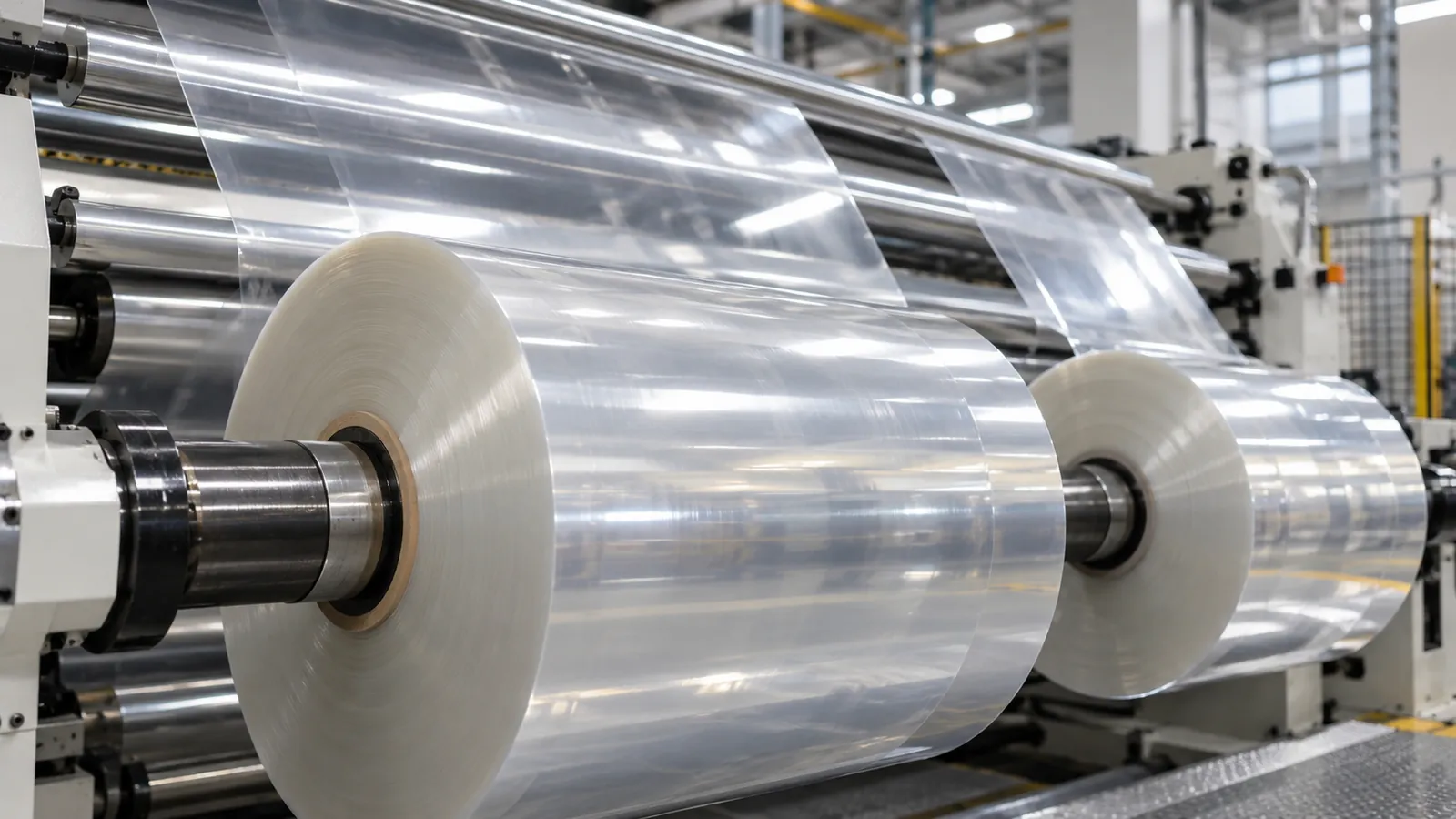
BOPP Film for Packaging: Types, Properties and Uses
BOPP packaging film explained: what biaxial orientation does, the main grades from clear to metallized, sealing options and typical uses.
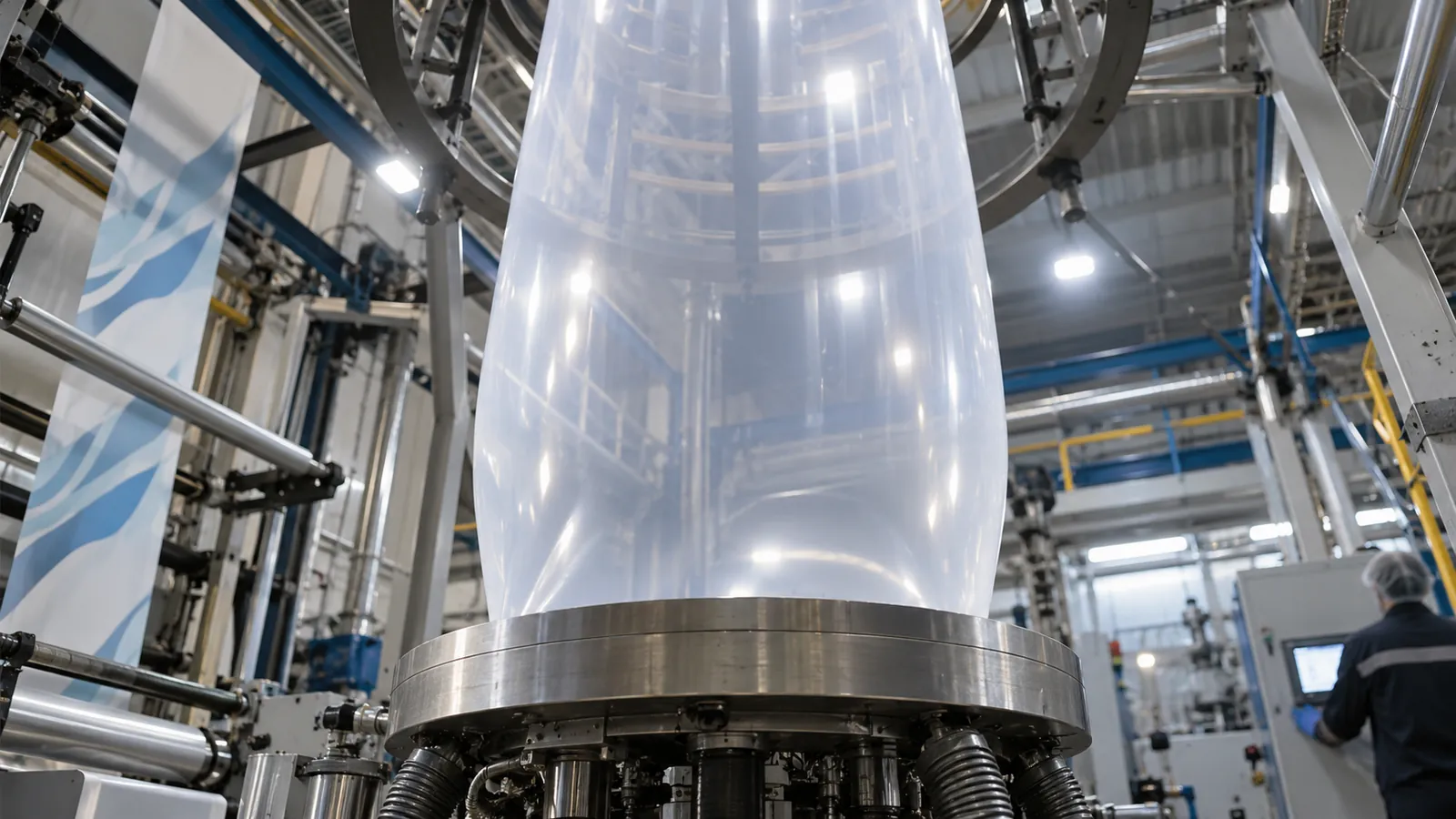
LDPE Packaging Film: Properties, Processing and Uses
LDPE packaging film explained: branching, processing roles, blend trials and the matched optics, mechanical and seal evidence needed to compare candidates.