
EVOH Barrier Film: How EVOH Works in Packaging
EVOH barrier film adds very high oxygen barrier when dry, but it needs protection from humidity. Learn structures, trade-offs and recycling issues.
Using dry-film oxygen data for a humid pack can overstate its protection. EVOH supplies oxygen barrier; PE or PP layers slow moisture ingress, while nylon principally supplies mechanical support.
This page covers humidity, grade choice and layer roles. See barrier film and high barrier film for the wider choices.
Scroll horizontally to view all columns if needed. ↔
| Decision | What to check |
|---|---|
| Humidity | OTR at the storage temperature and humidity, not dry data alone |
| Transparency | EVOH permits a clear structure; check the finished laminate’s optics |
| Heat treatment | Grade, layer stack and barrier after the actual hot-fill or retort cycle |
What EVOH is
EVOH is a copolymer of ethylene and vinyl alcohol. The vinyl alcohol part packs tightly and forms strong hydrogen bonds, which leaves little room for oxygen molecules to move through. The ethylene part makes the polymer easier to melt and process and less sensitive to water.
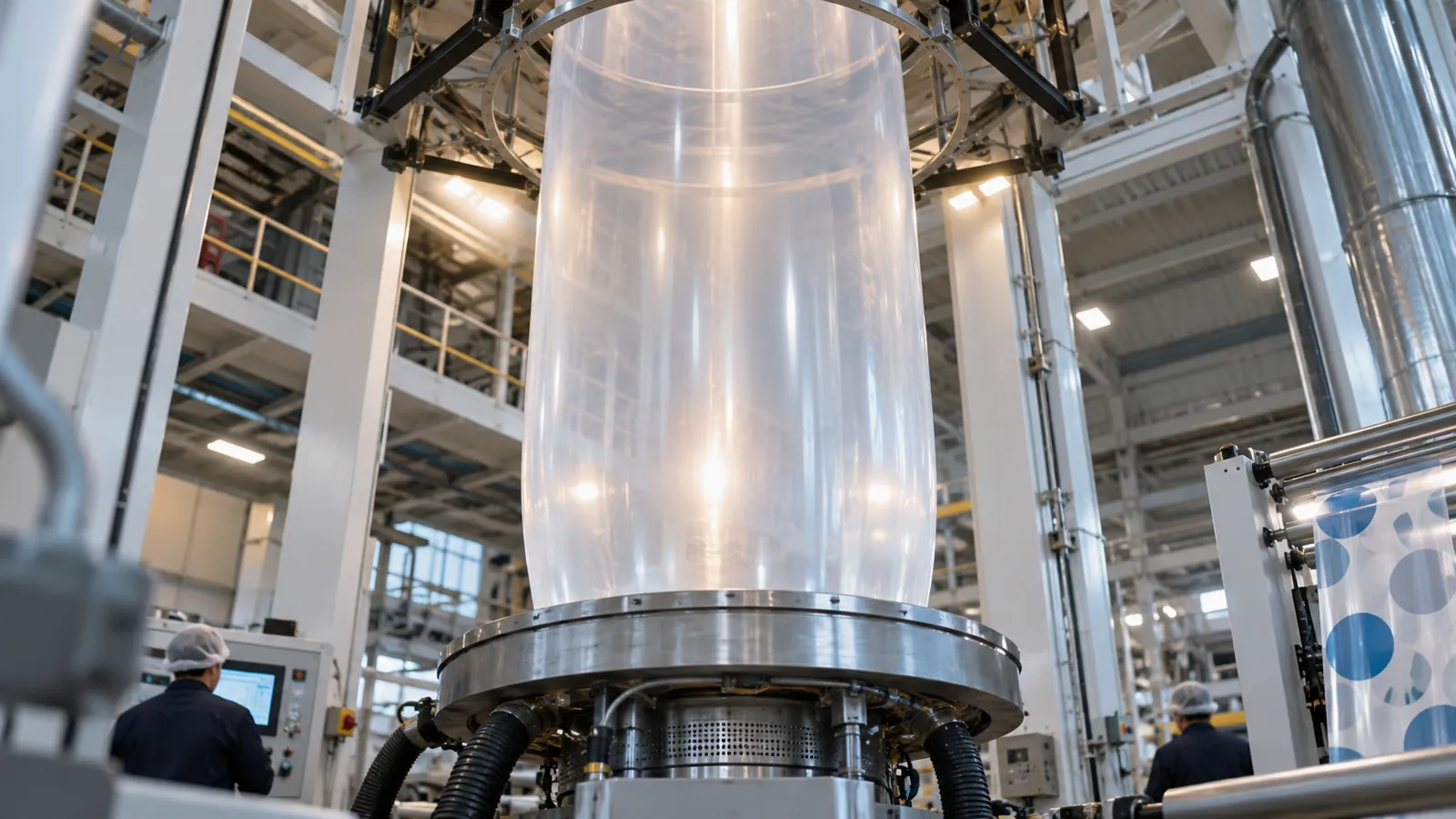
In packaging, EVOH film is rarely sold as a standalone web. It is a layer, often only a few microns thick, inside a coextruded film or occasionally a coating or laminated ply. The rest of the structure supplies sealing, strength and moisture protection.
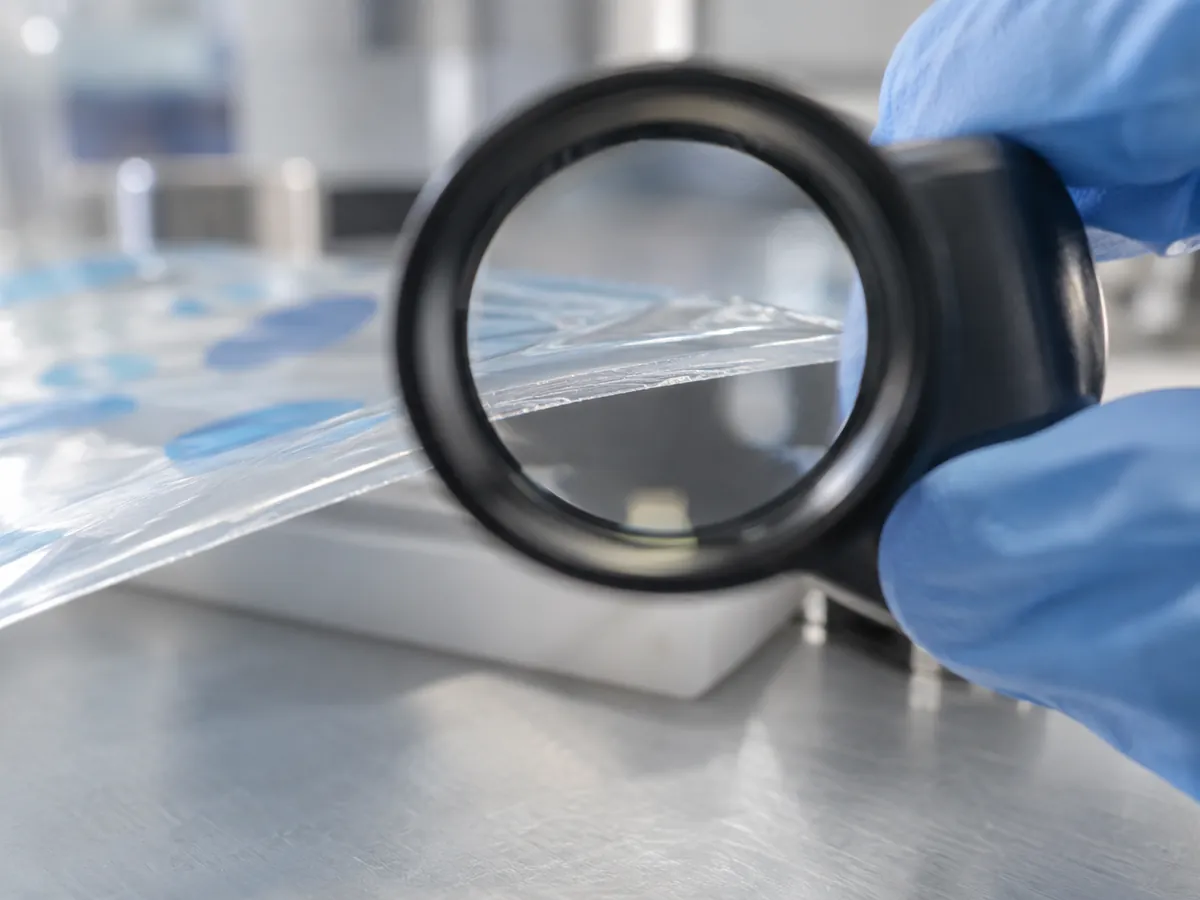
Why EVOH barrier is high, and why it depends on humidity
The same hydroxyl groups that give EVOH its barrier also attract water. As moisture is absorbed, the polymer swells and the chains move more freely, and oxygen passes more easily. Depending on grade and conditions, the barrier loss can be large. That is why an EVOH OTR figure means little without temperature and relative humidity.
In practice:
- A data sheet value at dry conditions is a best case.
- ASTM F1927-20 measures film oxygen transmission at controlled humidity. See OTR for how oxygen transmission is reported.
- ASTM F1307-20 covers oxygen transmission into dry packages; it is not a wet-food or retort validation method.
- Retort and hot-fill expose EVOH to heat and steam, which stresses the layer. Some grades and structures are designed for it, and the exact process should be validated.
Ethylene content and the barrier trade-off
Ethylene content changes oxygen barrier and processing behavior, but the humidity response is grade-dependent. A manufacturer’s public technical brochure shows humidity curves; lower ethylene content is not a universal ranking at every humidity.
These two public data sheets use the same cast-film conditions: 20°C, 65% RH, ISO 21309-2 Annex C. Their thickness-normalized units are cm³·20µm/(m²·day·atm), not a whole-pack transmission rate.
Scroll horizontally to view all columns if needed. ↔
| Public grade data | Ethylene content | Reported barrier value | Source |
|---|---|---|---|
| Lower-ethylene example | 32 mol% | 0.3 | Public data sheet A |
| Higher-ethylene example | 44 mol% | 1.9 | Public data sheet B |
Both sheets date their property data December 15, 2016. These are manufacturer typical values, not our tests or recommendations. They do not predict your finished pack or establish performance at other humidity levels.
Why EVOH is buried in coextrusions
PE and PP layers slow moisture ingress; PA (nylon) is not equivalent to those moisture-barrier layers. Nylon can add mechanical support, but its own water uptake must be considered. Tie layers provide adhesion where needed between incompatible polymers.
Layer-role schematic, outside to product: PE → tie → EVOH → tie → PE. The PE skins provide moisture resistance and a sealable surface; the ties bond the layers; EVOH supplies oxygen barrier. This is a schematic, not a measured cross-section or a thickness recipe.
The film may be blown or cast. See flexible packaging film for coextrusion and lamination.
Typical EVOH structures
A manufacturer’s public catalogue lists PE/PA/EVOH/PE for transparent sealable top film and PP/PA/EVOH/PP for retort applications. These are abbreviated constructions: request the complete stack, including ties and individual thicknesses. PA carries mechanical loads; the PE or PP skins provide moisture resistance and sealing.
The public technical brochure also compares OPA/EVOH/PE and OPP/EVOH/PE moisture uptake at 20°C and 100% RH. The oriented PA outer ply does not supply the same moisture protection as oriented PP. See nylon packaging film for PA’s role.
A catalogue’s retort designation is a candidate for validation, not proof that every pack made with that structure survives your process.
Uses of EVOH film
- Fresh and processed meat in vacuum and thermoformed packs. See meat packaging and vacuum pouch packaging.
- Cheese, where the barrier limits mold and oxidation. See cheese packaging.
- Modified atmosphere trays, as lidding and base films.
- Liquids and sauces in spouted and bag-in-box packs, depending on the structure; the spouted pouch page covers that format.
- Oxygen-sensitive food in pouches and some retort structures, when the design is validated.
- Rigid containers: EVOH is also used in bottles and trays, but this site focuses on flexible formats.
EVOH vs PVDC vs metallization
Scroll horizontally to view all columns if needed. ↔
| Feature | EVOH | PVDC | Metallized film |
|---|---|---|---|
| Oxygen barrier | Very high when dry, falls as humidity rises | High and less sensitive to humidity | Strong improvement over base film, depends on metal quality |
| Moisture barrier | Poor on its own | Good | Good to very good, depending on the base film |
| Light barrier | None (transparent) | None (transparent) | Yes, effectively opaque |
| Transparency | Clear | Clear | Opaque, metallic |
| Form | Buried coextrusion layer | Coating or coextruded layer | Vacuum-deposited metal on a film |
| Flex sensitivity | Moderate | Moderate | Can crack and lose barrier |
| Recyclability | Limited in some guidelines | Often problematic for recycling | Depends on the base film and design |
| Retort | Needs a suitable grade and design | Limited | Not typical for the metal layer alone |
Always compare at the same temperature and humidity. See metallized film for the metal route.
Recyclability and EVOH
Use the RecyClass natural PE film guideline, April 2026 for that European recycling stream; it assesses EVOH together with its share and tie-layer chemistry. It is not a PP-film or rigid-container rule. For US PE film, consult the APR PE flexible design guidance, updated May 15, 2026. Neither route alone proves local collection or recycling access.
Check the full package, including inks, adhesives and labels. See design for recycling and mono-PE packaging.
What to settle before choosing an EVOH structure
- State the oxygen target and shelf life, and the storage humidity.
- Ask for OTR at those humidity conditions as well as at dry conditions.
- Select the ethylene content with your supplier, in light of forming and flex needs.
- Protect the EVOH: check outer layers, tie layers and layer thicknesses.
- Confirm the process: thermoforming, hot-fill or retort and the temperature it brings.
- Test whole packs, including seals, and age them.
- Review recyclability early and check the current guideline.
Once you have quotes, how to compare film specifications shows a way to line them up.
Sources and method
Reviewed October 8, 2026. The manufacturer’s public technical brochure supports the moisture-shield distinction and humidity curves. Grade-sheet links above identify the matched conditions; the catalogue describes application examples. These sources are cited for technical scope, not supplier recommendations. ASTM links give public method scopes; full procedures and project acceptance criteria remain necessary.
Continue reading
Related articles
Alu-Alu Blister Packaging: When Full-Foil Blisters Make Sense
Alu alu blister packaging uses a cold-formed foil cavity and foil lid for near-total barrier. See when it is chosen and how it compares with PVC blisters.
Aluminum Foil Packaging: Foil Laminates, Gauges and Uses
Aluminum foil packaging explained: why foil gives near-complete barrier, layer thickness and temper, laminate structures, uses and recycling limits.
Barrier Film for Packaging: Oxygen, Moisture, Light and Aroma Barriers
Barrier film slows the passage of oxygen, water vapor, light and aroma through packaging. See which materials block what and how barrier is measured.