
Barrier Film for Packaging: Oxygen, Moisture, Light and Aroma Barriers
Barrier film slows the passage of oxygen, water vapor, light and aroma through packaging. See which materials block what and how barrier is measured.
Barrier film is packaging film designed to slow the movement of gases, water vapor, light or aroma between the product and the outside. No film is a perfect barrier, so the aim is to keep the rate low enough for the product’s shelf life. Different materials block different things, so barrier packaging film is usually a structure of several layers instead of one polymer.
This page explains what each barrier does, which materials provide it and how it is measured. The point where “barrier” becomes “high barrier” is covered in high barrier film.
What is barrier packaging?
Barrier packaging is packaging whose material is chosen to limit what passes through it, so the product inside keeps its quality for longer. The term covers the barrier film itself, the laminates built from it, and the finished packs: pouches, bags, flow wraps, lidding and blisters. What makes a pack “barrier” is not its shape but the layer, coating or material in its structure that slows a specific threat.
Which materials block what
Scroll horizontally to view all columns if needed. ↔
| Barrier need | Materials that provide it | Required check |
|---|---|---|
| Oxygen | EVOH, PVDC coatings, aluminum foil, metallized films, AlOx and SiOx coatings, nylon (moderate) | OTR at stated temperature/RH, then after converting |
| Moisture | PE, PP (CPP, BOPP), PVDC, foil, metallized films | WVTR at stated temperature and humidity gradient |
| Light | Foil, metallized film, white or pigmented layers, opaque inks | Light transmission; clear oxide coatings are not light blockers |
| Aroma | Foil, EVOH, PVDC, PET and nylon to some degree | Product-specific aroma retention and migration evaluation |
Compare the complete layer build. Use the fillable film specification comparison record to enter sample, thickness, units and identical test conditions.
Three words are often used loosely:
- Barrier film: a film or laminate with one or more layers that reduce oxygen, water vapor, light or aroma transfer.
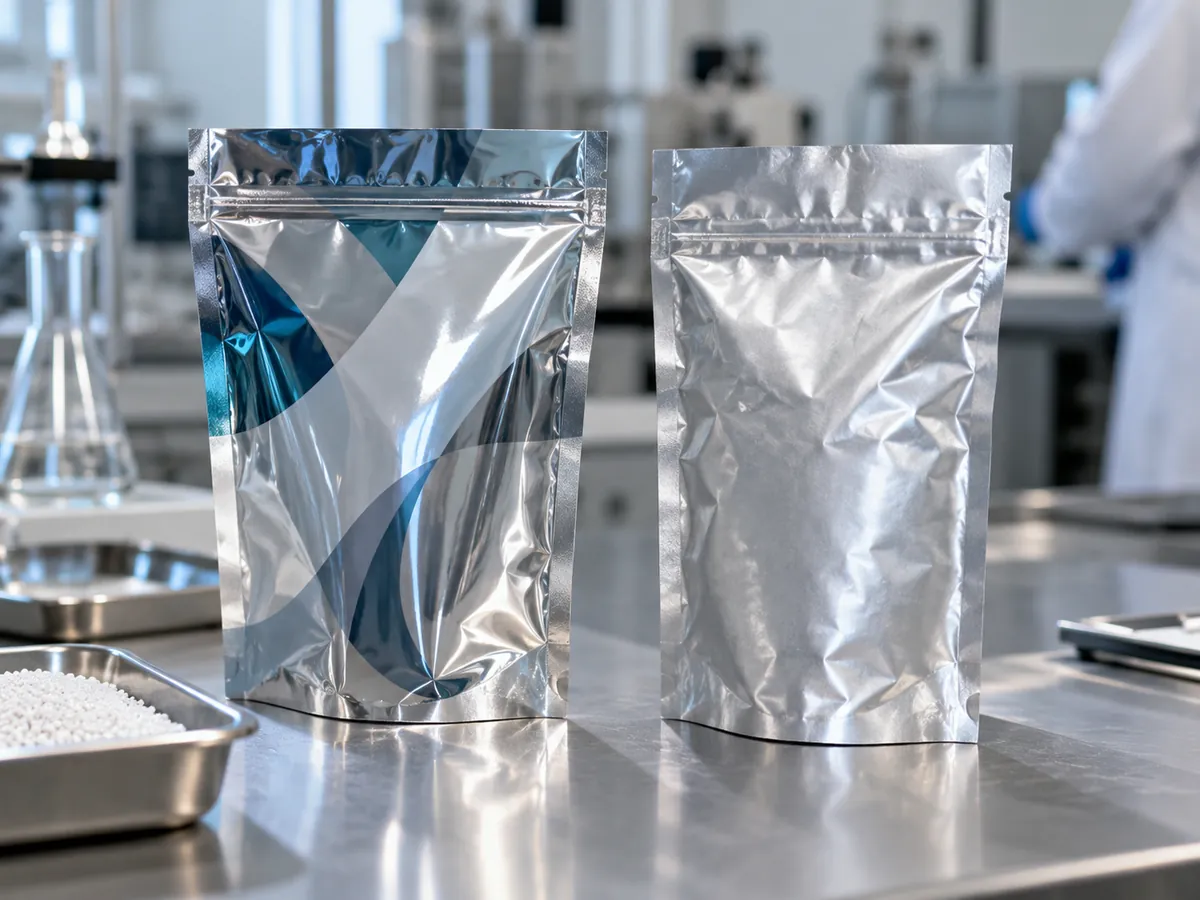
- Barrier bag or barrier pouch: a bag or pouch made from barrier film, sealed so that the seals and closure do not undo the protection of the material. Dry tea makes that split concrete: a brew-through bag has to pass water, and the storage pouch is the barrier. Tea packaging materials is the sheet for leaf form, atmosphere and the seal.
- Barrier packaging: the whole pack, including film, seals, closures and any valve or fitment.
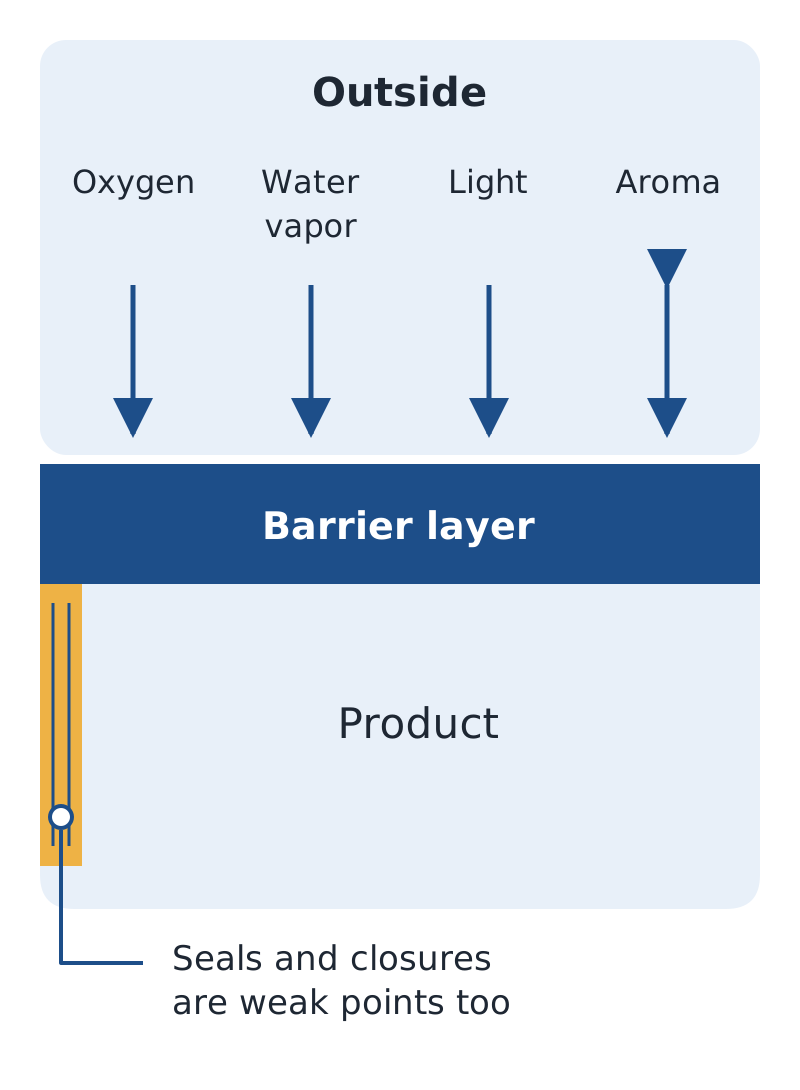
A barrier pack is only as good as its weakest path. A high-barrier laminate with a leaking zipper or a creased corner can let more oxygen or moisture in than a modest film with tight seals, which is why the later sections look at flexing and whole-package testing.
Barrier film vs non-barrier film
Every film resists some gases and vapors to a degree, so the difference is about purpose and level, not a strict line. A non-barrier film, such as a plain polyethylene film used for an overwrap or a bread bag, is chosen mainly for strength, sealability, clarity or cost; its oxygen barrier is low. A barrier film includes a layer selected because the product needs protection that the plain film cannot give within the target shelf life. Whether a given structure counts as enough barrier depends on the product and storage conditions, so compare measured transmission rates at stated conditions rather than relying on the label.
What barrier protects against
- Oxygen: causes oxidation, rancidity, color change and flavor loss in fats, coffee, meat, cheese and many dried foods. Oxygen can also encourage mold and aerobic spoilage.
- Moisture: water vapor moving in softens crisp products and clumps powders; moving out dries products and loses weight. Pharmaceuticals can degrade with humidity.
- Light: UV and visible light degrade fats, vitamins, colors and some drugs.
- Aroma and flavor: volatile compounds can escape from the product or be absorbed from outside, such as from printing inks or storage.
A product may need only one of these protections. Dry crackers need moisture and some oxygen protection. Fresh roasted coffee needs oxygen, aroma and light protection.
EVOH and humidity sensitivity
A 2017 primary study of EVOH hydration investigated a specified EVOH copolymer and relates water uptake to changes in oxygen barrier. Its findings support humidity sensitivity, not one universal deterioration factor for every EVOH grade.
Request OTR at the intended temperature and humidity, with layer thickness, conditioning and surrounding films identified. Moisture-resistant outer layers can help protect EVOH, but do not assume that they keep it dry through retort or humid storage. An EVOH data-sheet value without humidity is incomplete.
Metallized film vs foil
Both use aluminum, but they behave differently.
Scroll horizontally to view all columns if needed. ↔
| Feature | Metallized film | Aluminum foil |
|---|---|---|
| Thickness of metal | Vacuum-deposited layer, a very small fraction of a micron | Typically several microns |
| Barrier | Strong improvement over plain film but not complete | Near complete when pinhole-free |
| Weight and cost | Lighter and typically lower cost | Heavier and often costlier |
| Flex durability | Can crack and lose barrier with flexing | Can crack when folded or creased |
| Recyclability | Easier in some designs, depending on the base film | Hard to recycle in laminates |
Metallized PET and BOPP are common in snack and coffee packaging, while foil appears in demanding structures, as described in aluminum foil packaging and blister foil.
Oxide-coated films
AlOx and SiOx are transparent oxide coatings on a polymer substrate. Flex response depends on the coating, protective layers and converting history. A manufacturer’s public barrier-film guide claims flex resistance for its engineered grades; that does not establish identical durability for all oxide coatings. Request the flex protocol and OTR/WVTR before and after flexing for the actual laminate.
How barrier is measured
Use the method appropriate to the specimen, and record temperature, humidity, thickness and units.
Scroll horizontally to view all columns if needed. ↔
| Measurement | Public method scope | Specimen/conditions to record |
|---|---|---|
| Oxygen transmission | ASTM F1927-20, controlled-humidity coulometric measurement | Film/laminate, temperature and RH |
| Water vapor transmission | ASTM F1249-25, modulated infrared measurement | Flexible barrier material and humidity gradient |
| Package oxygen transmission | ASTM F1307-20, dry-package method | Completed package and dry-test applicability |
Film-area rates and package rates have different denominators; do not compare them as interchangeable values. The OTR, WVTR and film specification guide explain the comparison inputs.
Effects of flexing and converting
A film’s flat-sheet barrier is a best case. In real use:
- Folding, creasing and flexing can crack foil, metallized layers and oxide coatings.
- Printing, lamination and heat sealing can add stress or defects.
- Heat sterilization changes the humidity around EVOH and can stress other layers.
- Seals and closures are weak points, and a zipper or valve may leak more than the film.
- Pinholes in thin layers raise transmission.
ASTM F392/F392M-23 provides flex conditioning; follow it with the relevant defect or transmission measurement. Whole-package testing includes ingress paths omitted by a flat-film specimen, within the selected method’s conditions.
Choosing a barrier film step by step
- State the threat and the target shelf life.
- Decide the maximum allowed OTR and WVTR at your storage conditions.
- Select materials that match the barrier need, and think about humidity effects for EVOH.
- Check light protection separately, since not every gas barrier blocks light.
- Plan for flexing, converting and retort, and request post-flex or whole-package data.
- Confirm results with shelf-life testing, and check the recycling requirements and machine compatibility too.
Material names can mislead, so read the layer structure and the data. The materials hub maps the overall family.
Barrier packaging FAQ
What are barrier bags?
They are bags made from barrier material and closed to protect the product. A good flat-film OTR does not prove the bag will meet shelf-life targets: folds, seals, closures and fitments add ingress paths. Check the converted bag and its contents under intended storage conditions before accepting a film-only result.
Where can I buy barrier film?
Identify converters offering the required structure, then compare their grade-specific data sheets at the same conditions. Ask for converted-pack evidence where folds, valves or closures matter. The film specification record helps organize that comparison; this site provides technical reading rather than material sales.
Sources and method
Sources checked October 8, 2026. The linked primary study covers its stated EVOH composition; the oxide-film description is a manufacturer’s claim, not this site’s testing or a recommendation. ASTM links provide public method scopes; they do not supply product acceptance limits. The comparison record is a reader worksheet, not a test result.
Continue reading
Related articles
Metallized Film: Metallized PET, BOPP and CPP for Packaging
Metallized film has a thin vacuum-deposited aluminum layer that improves barrier and adds a foil-like look. See process, optical density, uses and limits.
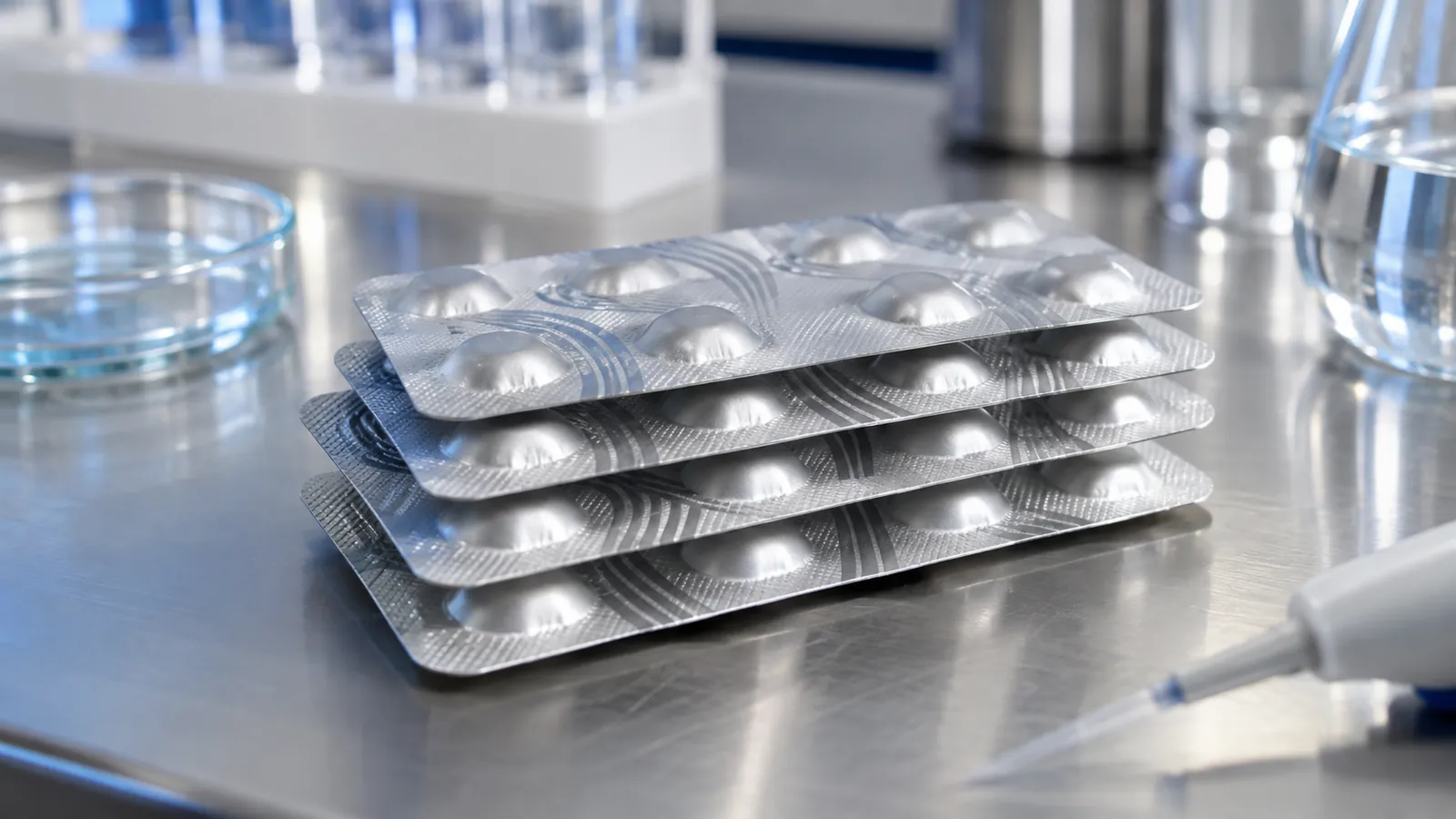
Alu-Alu Blister Packaging: When Full-Foil Blisters Make Sense
Alu alu blister packaging uses a cold-formed foil cavity and foil lid for near-total barrier. See when it is chosen and how it compares with PVC blisters.
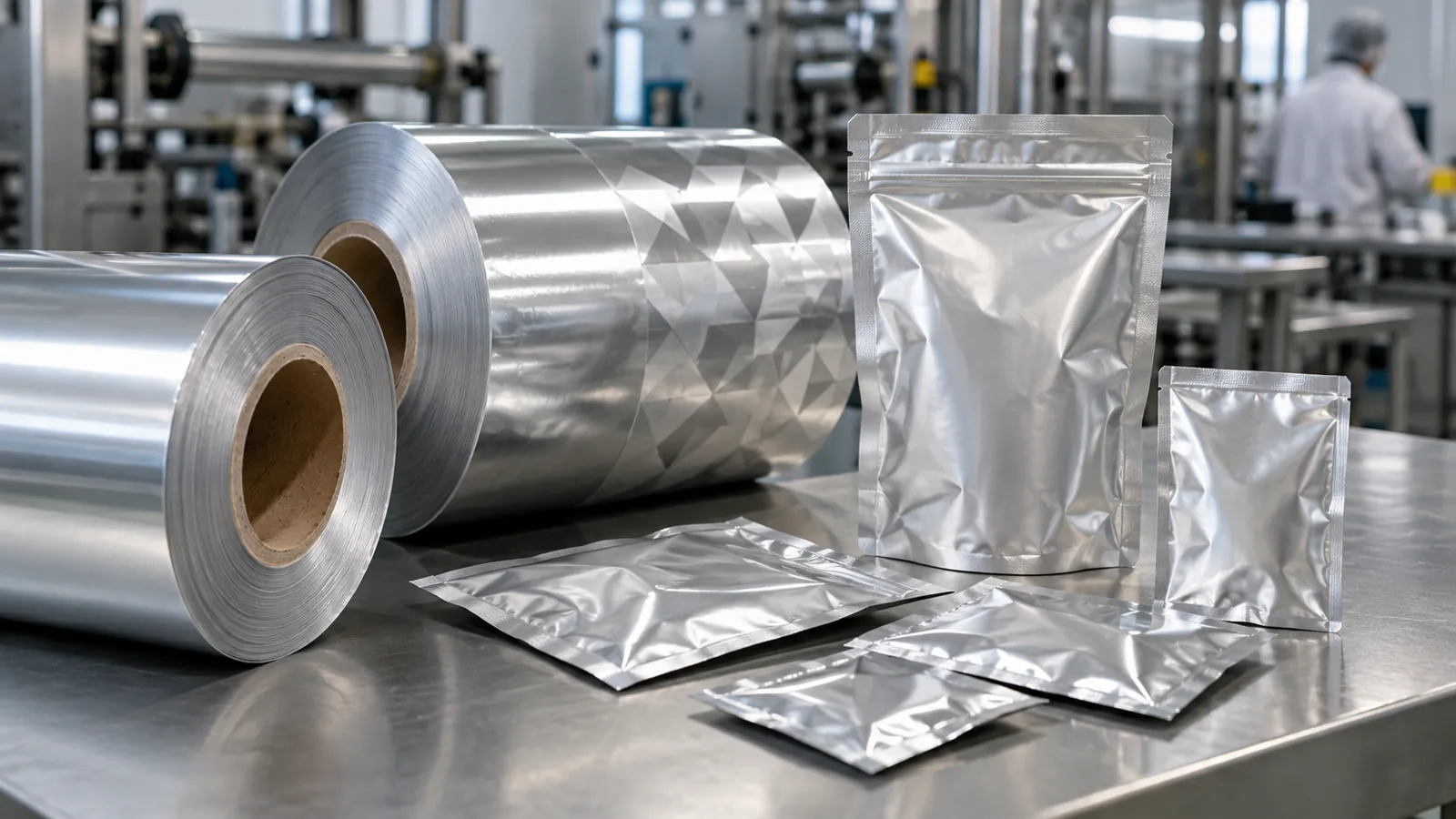
Aluminum Foil Packaging: Foil Laminates, Gauges and Uses
Aluminum foil packaging explained: why foil gives near-complete barrier, layer thickness and temper, laminate structures, uses and recycling limits.