
Topic hub
Sustainable Flexible Packaging: Mono-Materials, Recyclability and Recycled Content
Sustainable flexible packaging explained: mono-materials, downgauging, recycled content, paper and compostables, with their trade-offs on the line.
Choose a sustainability route only after defining product protection and the local recovery system. Reducing film weight while increasing product loss, or making a claim without supporting evidence, can defeat the purpose of a redesign. Mono-material, recycled-content, paper, compostable and downgauged options need different proof.
Choosing a sustainable packaging film
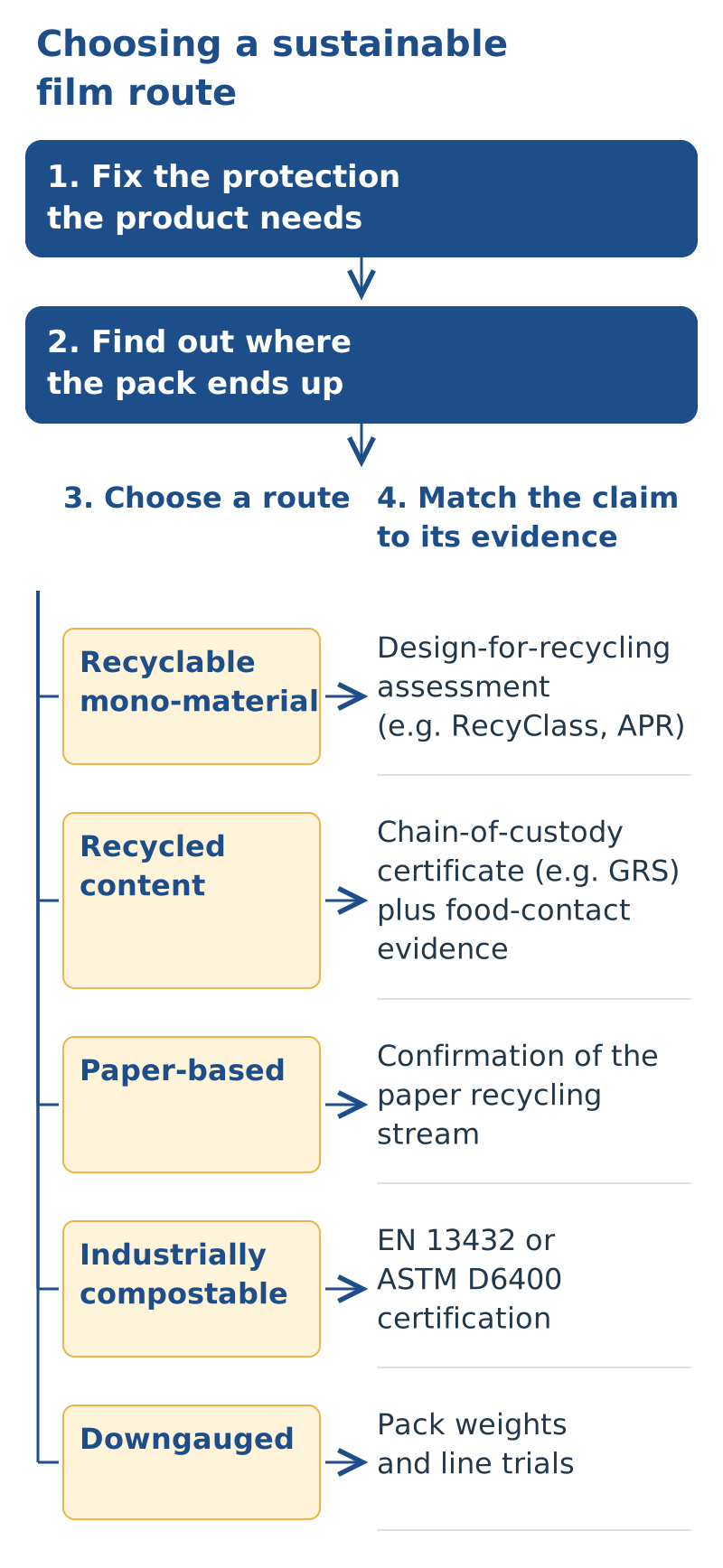
Work through the choice in this order:
- Fix the protection the product needs. Oxygen, moisture and light barrier, shelf life, and any hot fill or retort step limit which routes are realistic. A route that cuts packaging but loses product is not a gain.
- Find out where the pack ends up. Collection for film recycling, industrial composting and residual waste differ by market, and the right route follows the system that will actually receive the pack.
- Choose the route that fits both: a recyclable mono-material structure, recycled content, a paper-based structure, a certified compostable film, or a downgauged version of the current pack. The routes can be combined.
- Match the claim to its evidence and keep the documents on file.
Scroll horizontally to view all columns if needed. ↔
| Route | What the claim means | Evidence to ask for |
|---|---|---|
| Recyclable, often mono-PE or mono-PP | The pack is designed to be sorted and reprocessed in an existing stream | An assessment against a published design-for-recycling guideline, such as those from RecyClass or APR, for the full pack including inks, adhesives and closures |
| Recycled content | Part of the film is made from recycled material | A chain-of-custody certificate, such as the Global Recycled Standard (GRS), plus separate food-contact evidence where relevant |
| Industrially compostable | The pack breaks down in an industrial composting process | Certification to EN 13432 in Europe or ASTM D6400 in the United States |
| Paper-based | Most of the weight is paper fibre | Confirmation of which paper recycling stream accepts it, given its coating or plastic layer |
| Downgauged | Less material per pack | Pack weights before and after, and line trials showing seals and puncture resistance still hold |
No film earns every sustainability claim from its material name alone. Specify the intended recovery route and what the claim covers: design compatibility, actual local collection, recycled content or compostability. These are separate properties.
Takeaway: Match the route to product protection and a verified recovery system.
Why flexible packaging is hard to recycle
Most high-performance flexible packaging is a laminate: layers of different polymers, sometimes with foil or a metallized layer, bonded with adhesive. Each layer does a job. PET gives stiffness and print surface, a barrier layer holds out oxygen, and PE gives the seal. The result performs very well and uses little material, but mixed polymers are difficult to separate in a standard recycling stream. Thin films also tend to be light and flexible, which causes sorting and handling problems in recycling facilities, and collection of flexible packaging varies a great deal by region.
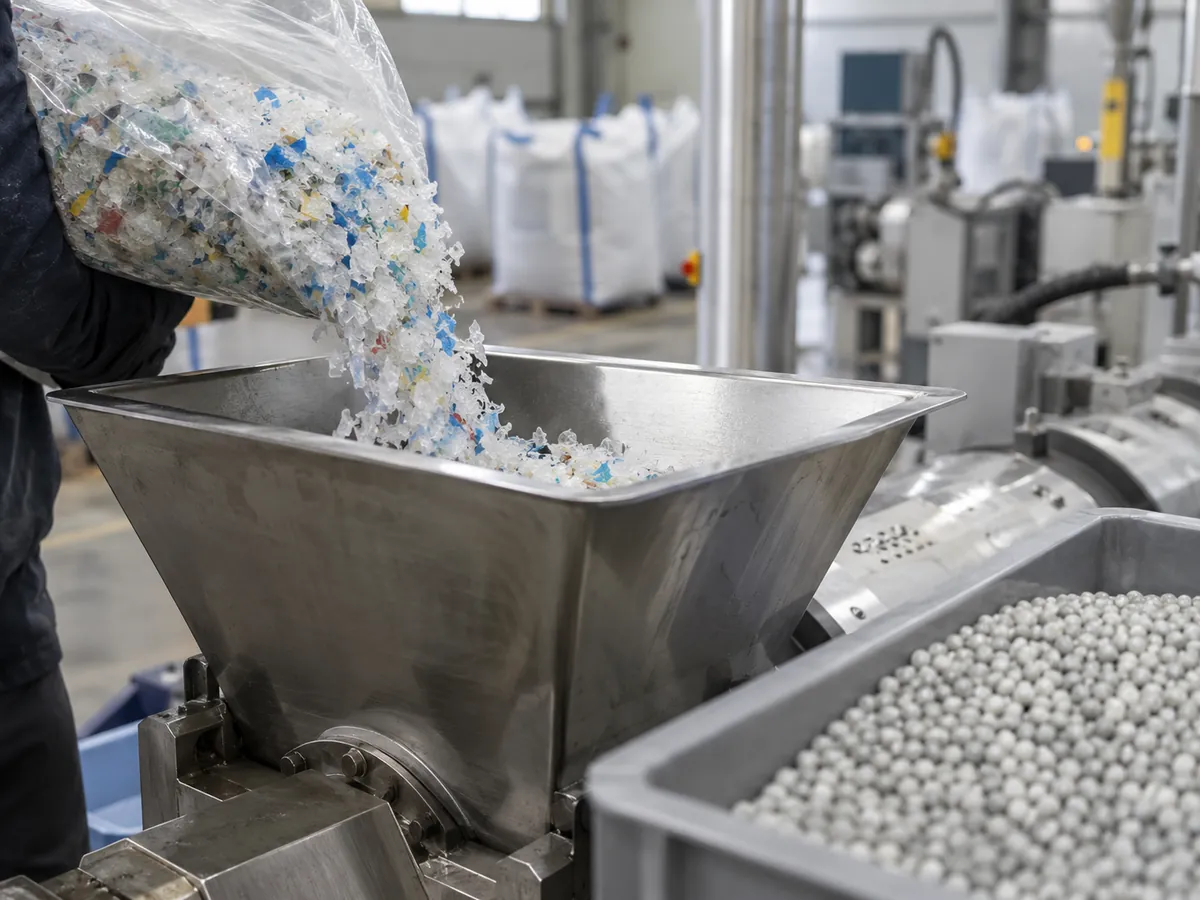
The main levers for sustainable packaging materials
Each approach has benefits and limits.
- Mono-material structures. Building around one polymer family, such as PE or PP, is a design route to assess against the destination stream’s guidance. Validate the actual barrier, heat resistance and complete pack, including minor components. See mono-material packaging for the overview, mono-PE packaging for all-polyethylene laminates and mono-PP packaging for polypropylene structures. If you are weighing one against a conventional laminate, mono PE vs multilayer film compares them on recyclability, barrier and seal window.
- Downgauging. Using thinner film cuts material per pack. The limits are puncture resistance, stiffness on the machine and seal strength, so it needs trials.
- Post-consumer recycled content. Including recycled resin in a layer can reduce virgin plastic use. Limits include contact with food, color and odor control, and supply of suitable food-grade material. Rules on recycled content in food contact differ by market. The PCR packaging page covers how recycled content film is made and how claims are verified.
- Paper-based flexible packaging. Paper structures can suit some dry products. They usually still need a barrier coating or a thin plastic layer, which affects recyclability and barrier, and heat sealing behavior differs from film. See paper-based flexible packaging.
- Compostable materials. Certified compostable films can make sense where industrial composting collection exists for the specific product. Require OTR and WVTR for the exact structure and thickness at the intended test conditions, followed by filled-pack shelf-life evidence; do not infer a performance ranking from a compostability certificate. Compostable flexible packaging covers the standards and limits.
These choices can be combined. A downgauged mono-PE pouch with a recycled content layer is one example, as long as each piece is validated.
Takeaway: Validate the claimed property separately for each route.
Recyclability depends on the whole pack
Using one polymer does not make a pouch recyclable. The pack has to be collected, sorted and reprocessed where it is sold, and every component counts: inks, adhesives, barrier coatings, closures and labels. Recyclable flexible packaging explains what has to be true in practice and how claims are verified. Design for recycling turns that into a checklist you can apply to a drawing before any film is ordered.
Takeaway: Assess closures, inks and adhesives alongside the film.
Comparing options
Claims that one pack is greener than another depend on what is counted. A thinner laminate may use less resin and energy but not be recyclable, while a mono-material pack may recycle but need more material to reach the same barrier. A flexible packaging LCA compares packs across their life cycle using a stated functional unit and system boundary. Read the assumptions before the result, and check that the comparison covers product loss as well as packaging, since a pack that fails to protect the contents can outweigh any material saving.
Takeaway: Compare the same product-protection function and stated recovery assumptions.
Effects on sealing, barrier and machines
Compare the actual outer layer and sealant grades, then run a temperature-dwell-pressure trial on the intended line. Record hot tack, final seal strength, leaks, friction and achievable speed. A mono-material name alone does not establish a narrower sealing window. Seal initiation temperature and machine compatibility explain the measurements and line checks.
For barrier, compare the candidate and current film at equal temperature and both-side humidity, with structure and thickness recorded; validate the filled pack against the product endpoint. Use snack packaging and coffee packaging to define application needs before making the comparison.
Takeaway: Approve each route against its own claim evidence and the same product-protection target.
Regulatory context in brief
Rules are changing and differ by market, so treat this as orientation only. The regulations hub gives the wider picture. In the European Union, the Packaging and Packaging Waste Regulation, Regulation (EU) 2025/40, entered into force on 11 February 2025 and applies generally from 12 August 2026. It includes requirements on recyclability and other packaging design topics; see EU PPWR for flexible packaging and PPWR recyclability requirements. In the United States, extended producer responsibility laws are in place in some states, and California’s SB 54 is one example that covers packaging. The packaging EPR page explains how producer fee schemes work. Requirements, deadlines and definitions differ, so confirm what applies to your products and markets, and with your own regulatory advisers, before making design or labeling decisions.
Where to start
A practical reading order:
- Read mono-material packaging for structure choices and their line effects.
- Read recyclable flexible packaging to understand what has to be true for a pack to be recycled in practice and how recyclability claims are handled.
- Define barrier needs with the barrier film guide and the performance data pages.
- Run line trials before committing, since a change that looks fine on paper can narrow the processing window on your machine.
Takeaway: Define protection needs before approving a material change.
Methods and sources
These sources define claim or assessment scope; they do not establish a universal material-performance ranking. Standards’ public summaries describe scope rather than the full test procedure. Checked 8 October 2026.
Scroll horizontally to view all columns if needed. ↔
| Source / version | What it establishes |
|---|---|
| GRS implementation manual v4.2, introduction and A3 | Products with at least 20% recycled material are within standard scope; that is not an unrestricted product-label threshold or a food-contact approval |
| GRS implementation manual v5.0, July 2026, pp. 2, 6 and A3.2b | Replaces v4.2 effective 31 December 2026; retains 20% scope and a separate 50% product-specific labeling threshold; does not address quality or legal compliance |
| EN 13432:2000 public scope | Biodegradation, disintegration, process effects and compost quality; mixed non-compostable components prevent a whole-pack claim unless readily separable as specified |
| ASTM D6400-23 public scope | Plastics and products for municipal or industrial aerobic composting under thermophilic conditions; not a home-compost claim |
| RecyClass design guidelines and APR design guide | Stream-specific design assessments; record the relevant material guideline and version used |
| PPWR, Regulation (EU) 2025/40, Articles 6-9 and 71 | Legal recyclability, content and compostability requirements with their own application dates |
Common mistake: Treating a recycled-content or compostability certificate as evidence that the finished pack is recyclable locally. Record each claim separately.
Sustainability
In this section

Compostable Flexible Packaging: Materials, Standards and Limits
Compostable flexible packaging breaks down under defined composting conditions. Learn the standards, common materials, barrier limits and when it makes sense.

Design for Recycling: A Checklist for Flexible Packaging
Design for recycling means building a pack to fit a recycling stream. Use this checklist for polymers, barriers, inks, adhesives, fitments and testing.

Flexible Packaging LCA: How Life Cycle Assessments Compare Packs
Flexible packaging LCA compares packs across their life cycle. Learn the ISO framework, functional unit, system boundaries and how to question the results.

Mono PE vs Multilayer Film: Recyclability vs Performance
Mono PE vs mixed-material multilayer film compared on recyclability, barrier, seal window, print and cost, with guidance on which structure suits your product and line.
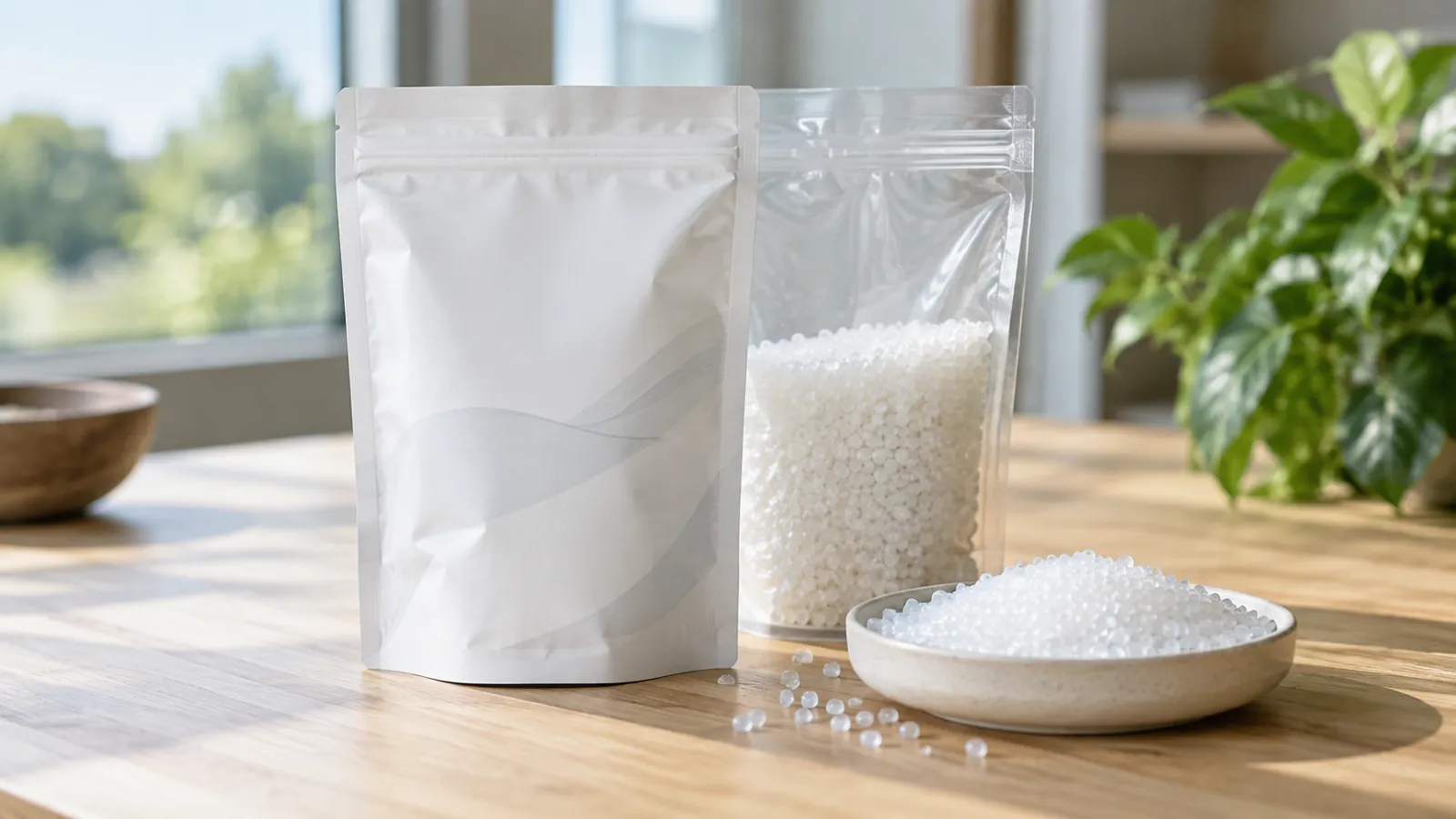
Mono-Material Packaging: Mono-PE and Mono-PP Flexible Structures
Mono material packaging explained: how mono-PE and mono-PP structures are built, their barrier limits, and what they change on the packaging line.
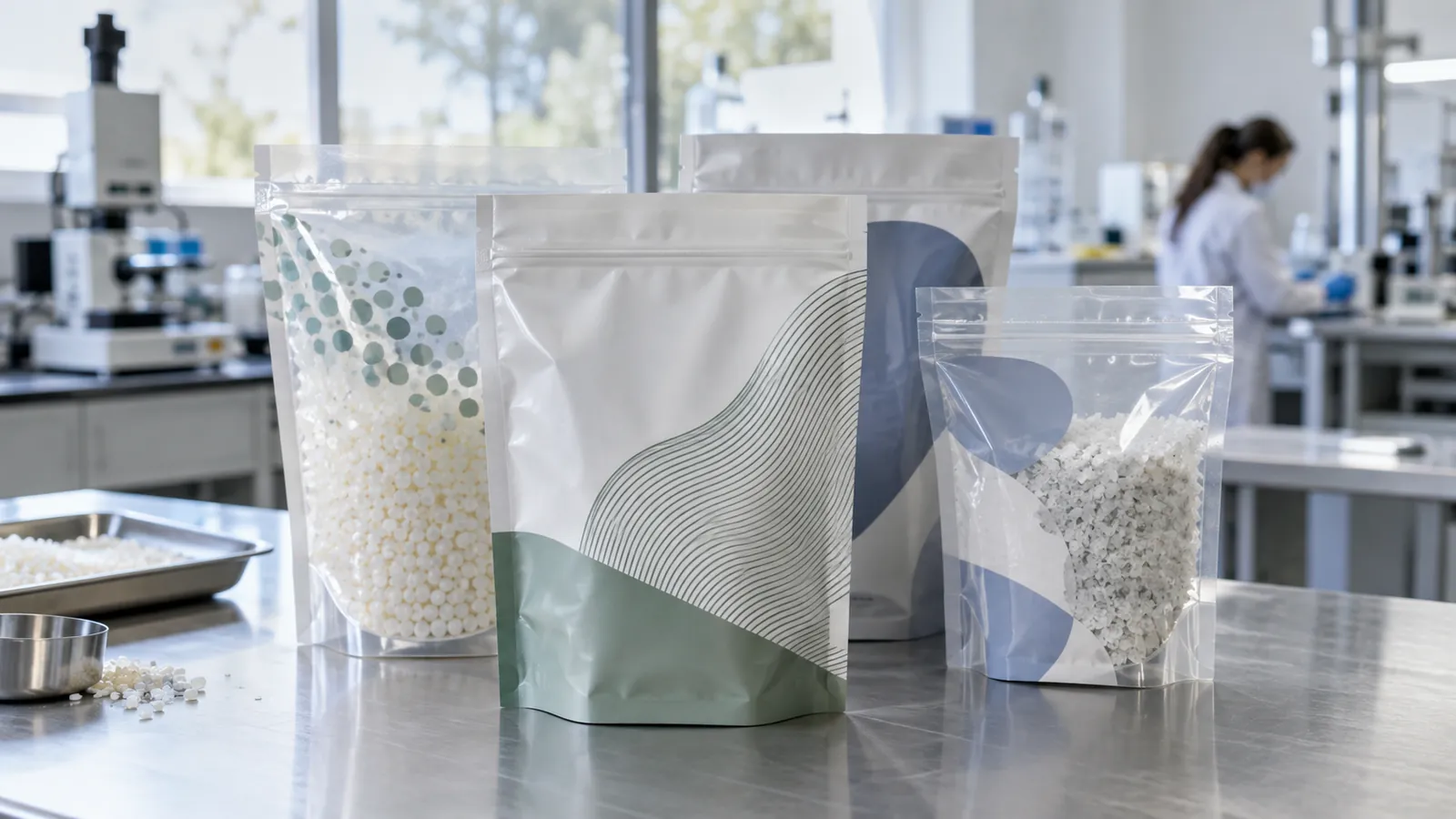
Mono-PE Packaging: Polyethylene-Based Pouches and Laminates
Mono PE packaging replaces PET/PE laminates with polyethylene-based films. See the outer webs, barrier options, seal window and machine changes involved.
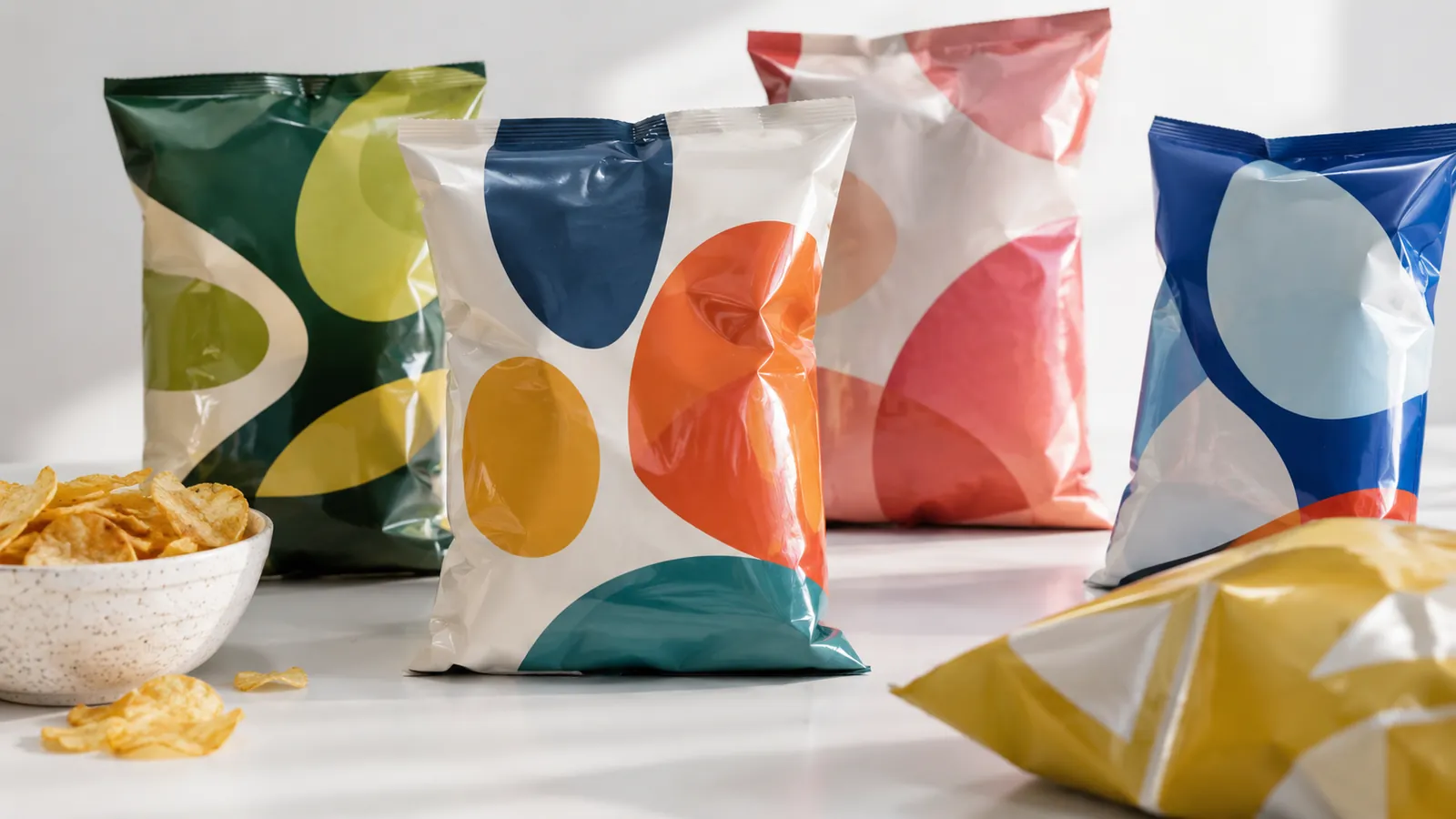
Mono-PP Packaging: Polypropylene-Based Structures
Mono-PP packaging uses a PP-dominant structure. Check outer and sealant grades, cold-use and retort evidence, barrier, and recycling-stream compatibility.

Paper-Based Flexible Packaging: Barrier Coatings and Machinability
Paper flexible packaging uses coated paper for pouches and wraps. See how barrier coatings, recyclability and machine behavior compare with plastic laminates.
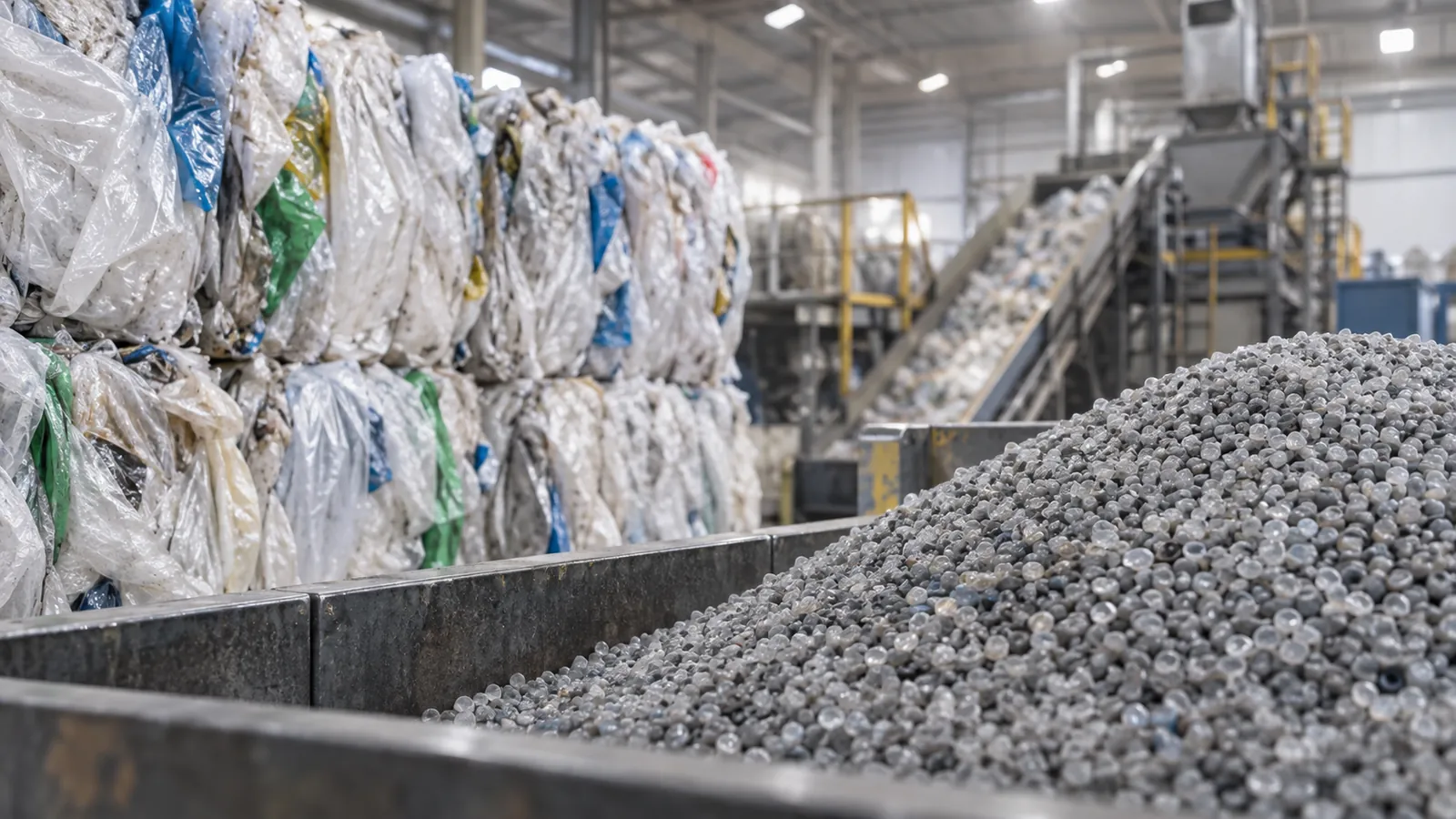
PCR Packaging: Using Recycled Content in Flexible Films
PCR packaging uses post-consumer recycled resin in films. Learn how recycled content film is made, where it fits, and how to specify and verify claims.
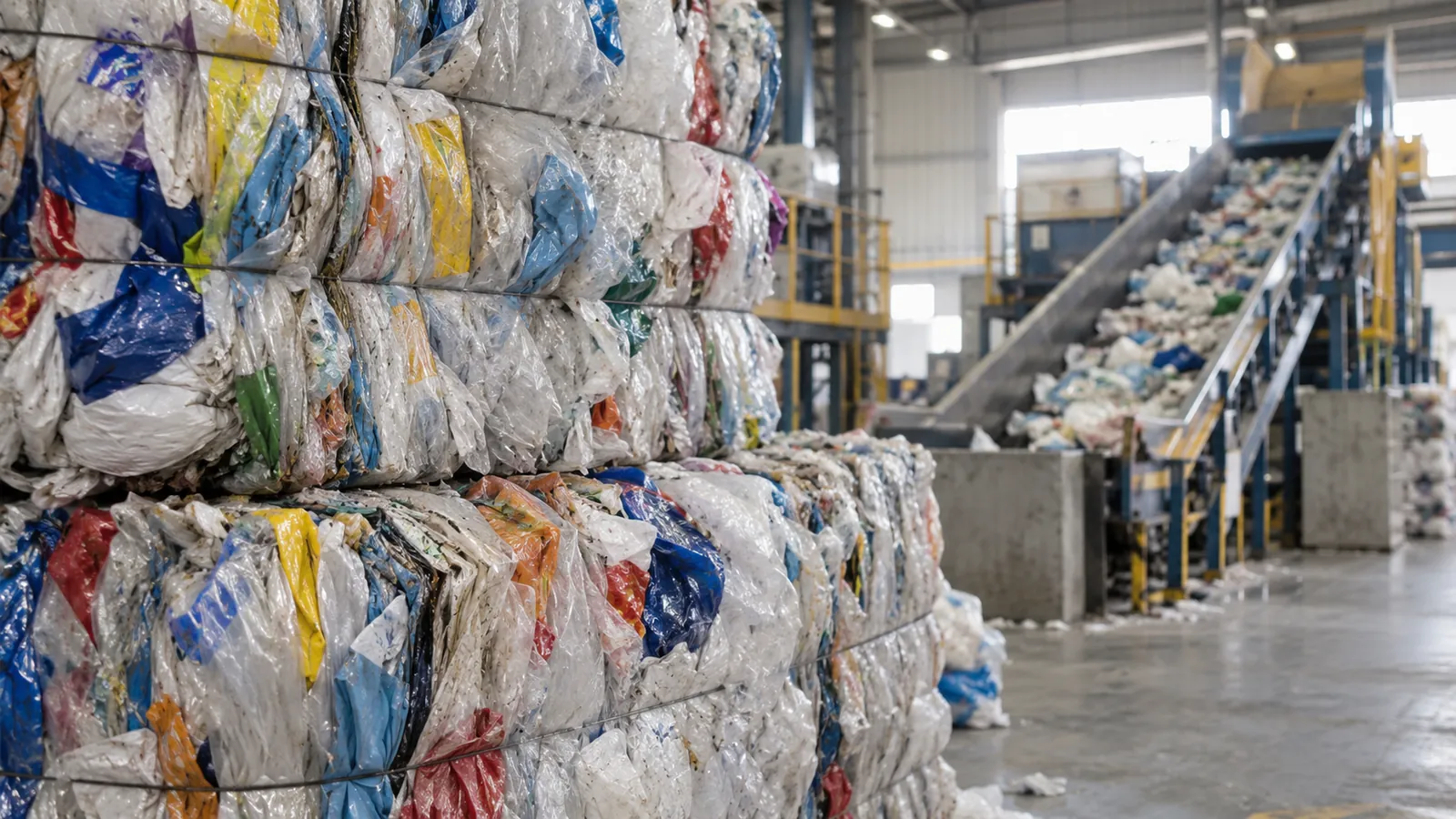
Recyclable Flexible Packaging: What Makes a Pouch Recyclable
Recyclable flexible packaging explained: design factors, collection reality, verification protocols, claim rules and a checklist for converting a laminate.