
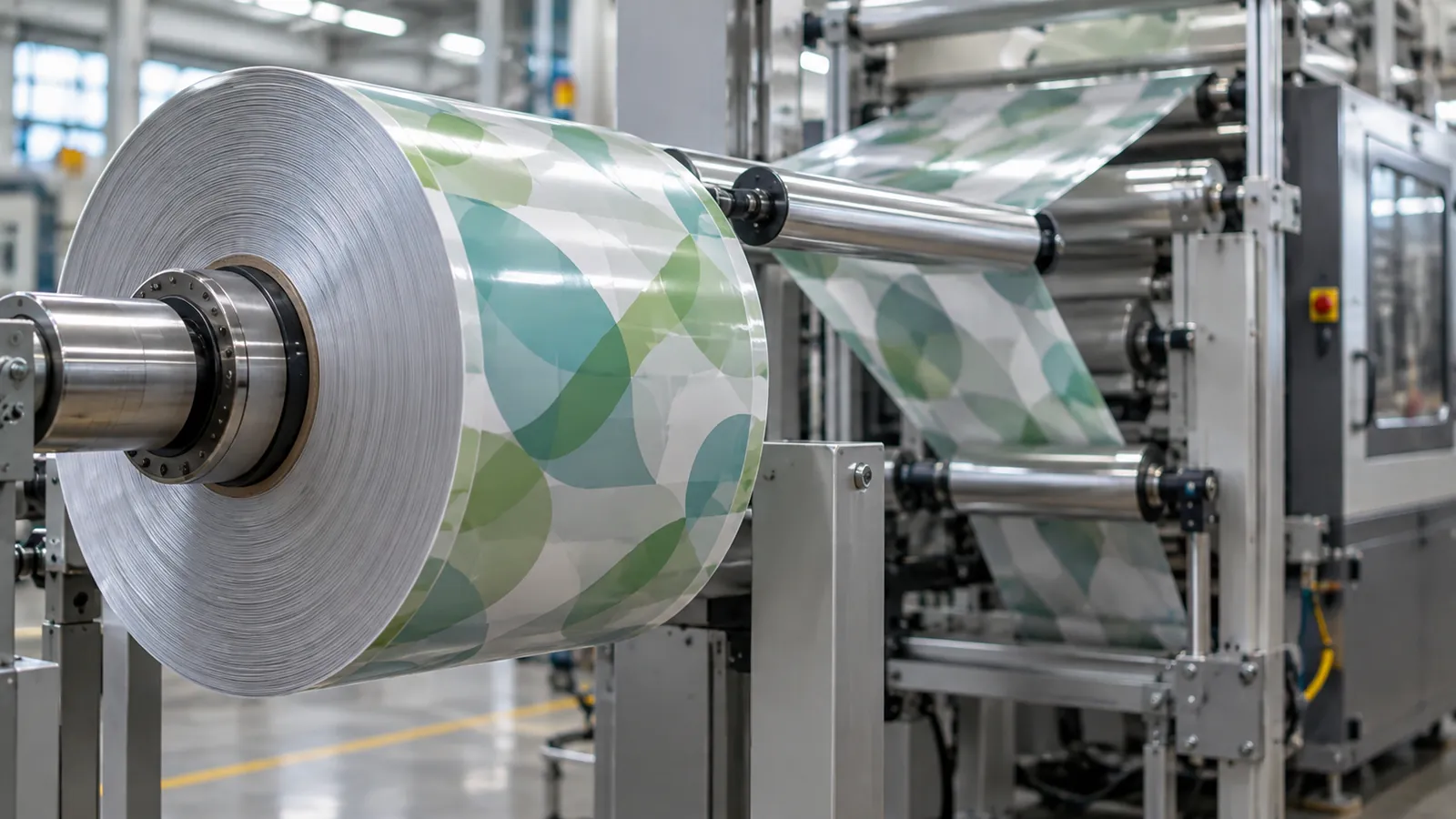
Topic hub
Packaging Film & Packaging Machine Compatibility Guide
Packaging film machine compatibility explained: which film properties matter on VFFS, flow wrap, pouch and shrink machines, plus roll specs and a trial checklist.
Film that drags through a forming set or makes weak seals wastes packs and line time. Match the film to the machine’s forming and sealing route, then verify tracking, seals and roll fit under the intended product and operating conditions.
Properties that matter by machine type
Scroll horizontally to view all columns if needed. ↔
| Machine route | First properties / structure to verify |
|---|---|
| Vertical form-fill-seal (VFFS) | COF film-to-metal and film-to-film, hot tack, seal window width, stiffness for tube forming, registration mark contrast, seal-through-contamination |
| Horizontal flow wrapper | COF on forming box and fin wheels, crimp seal window, stiffness, registration, cold seal adhesion where used |
| Horizontal pouch making from flat rollstock | Printed laminate or other approved flat web: folding, tracking, side/bottom and top seals; trial the actual pouch geometry |
| Thermoforming pack line | Formable lower web plus compatible upper web: forming depth, corner thinning, forming conditions and finished seal/leak results; ordinary flat-pouch film is not automatically formable |
| Stick pack machines | Narrow web width, COF, sealant that seals quickly on small jaws, stiffness for tight tube forming, powder contamination tolerance |
| Sachet machines | Seal window on small multi-lane jaws, COF, hot tack, sealant compatibility with the product, tear opening behavior |
| Premade pouch machines | Pouch dimensions and squareness, stiffness, opening behavior, sealant compatible with top-seal jaws, zipper opening where fitted, clean seal area |
| Shrink wrappers | Shrink force and free shrink at tunnel temperature, seal strength on the cut seal, slip, optical clarity, shrink tension |
Why a film that passes the lab can still run badly
A data sheet typically reports seal strength, coefficient of friction, thickness and barrier values measured on clean samples under controlled conditions. A machine adds variables the lab does not: a warm forming collar, a jaw that dwells for a fraction of a second, a product that falls onto a seal that has not cooled, a roll that unwinds from a core slightly out of round. Film machinability is the sum of these interactions. Two films with the same nominal structure can behave differently on the same line, which is why a trial on your own machine is worth more than any table.
Use the front-of-page matrix as an editorial trial-planning checklist, not a ranking of failure frequency or universal machine limits.
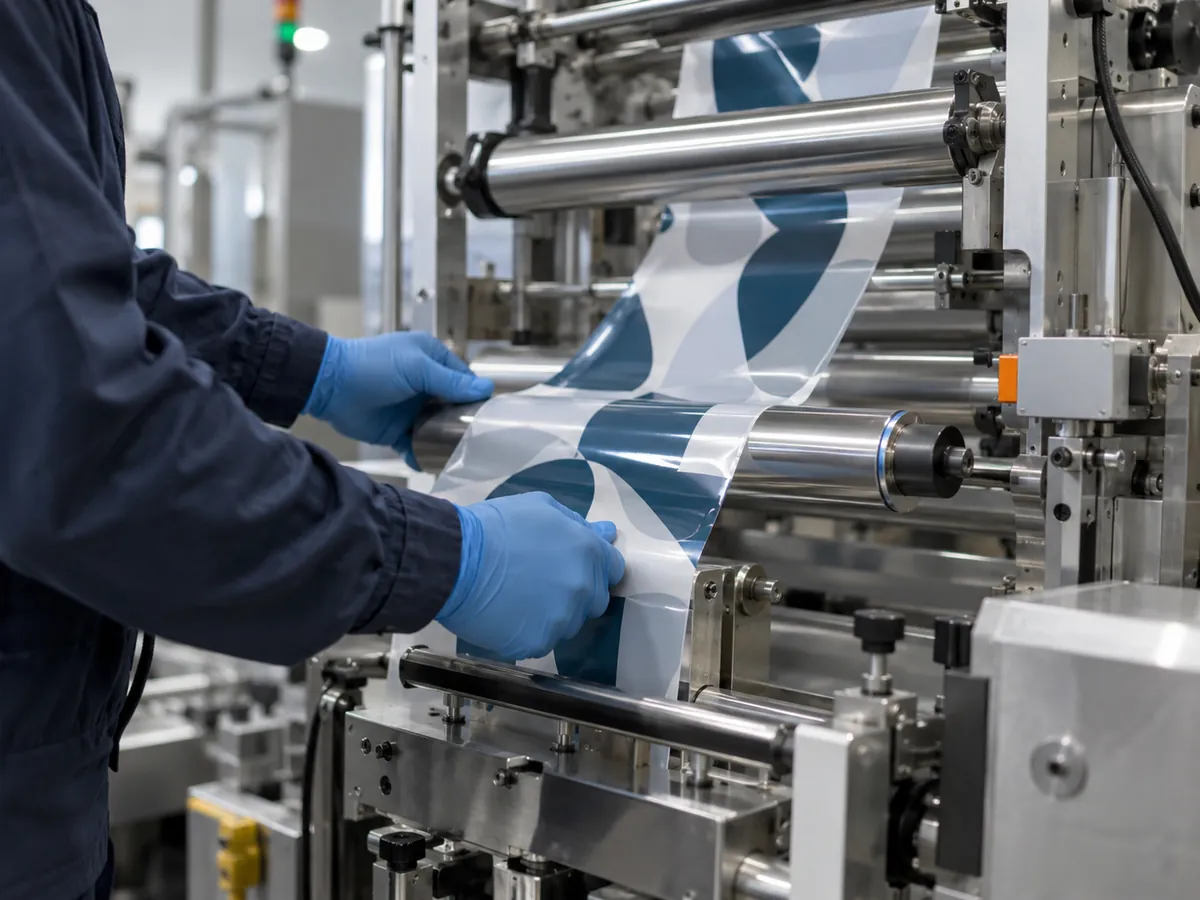
Each of these has its own page. The two roll-fed machines that account for most flexible packaging lines are covered in VFFS packaging film and flow wrap film for horizontal flow wrappers. Pouches that arrive already made are covered in premade pouch packaging materials.
Small single-serve packs have their own demands. Stick pack film covers narrow-web forming and the long, thin seals of a stick, and sachet film covers four-side and three-side sachets on multi-lane machines. For wrapping, shrink wrapping film explains how film behavior at the seal and in the tunnel affects the finished bundle, and shrink film covers the material itself.
Roll-fed machine or pouch filler
The machine usually follows from the format, and the format from the product. If you are weighing a roll-fed vertical machine against a pouch filler, VFFS vs premade pouch packaging compares the two on film requirements, changeover and seal risk. The commercial side of the same choice, including volume, unit cost and inventory, is in rollstock vs premade pouches. Together they tell you which film properties to specify before you ask for samples.
The properties in the table above are defined in the performance section, so a machine problem can usually be traced to a named test. Friction problems point to COF, and weak or leaking seals to seal strength and hot tack.
Roll specifications for any machine
Whatever the machine, the roll itself has to be specified. Ask for these items in writing before the first order and put them in the purchase specification.
- Core inside diameter: take it from the actual unwind shaft/chuck specification and confirm with a sample core; no universal core size is assumed here.
- Maximum outer diameter and roll weight: limited by the unwind arm, the shaft rating and what an operator can lift safely.
- Unwind and winding direction: specify print-out or print-in, and which way the print reads as it leaves the roll. A reversed roll is the classic first-run failure.
- Splice count and marking: state the maximum splices per roll and how each is flagged (tape color or a side marker) so the machine or operator can reject the splice.
- Registration and eye-mark position and contrast: mark width, length, distance from the edge, and contrast against the background must suit the photo eye. Dark-on-dark and metallized backgrounds need particular care.
- Film width tolerance and web edge quality: slit edges should be clean, and telescoping or dished rolls should be rejected.
Machine trial checklist
Use a sample quantity agreed for the project, long enough to check roll-start/end behavior, stops, restarts and the intended speed. Keep clean and product-contaminated seal checks separate. Copy this record for each trial condition.
Scroll horizontally to view all columns if needed. ↔
| Trial field | Fill in before running | Result / acceptance record |
|---|---|---|
| Material | Structure/version: ___; batch/roll: ___ | Sample IDs and report location: ___ |
| Machine / product | Model and forming tools: ___; product: ___ | Run date and owner: ___ |
| Conditions | Speed, temperature, dwell, pressure, tension: ___ | Actual readings; stop/restart conditions: ___ |
| Tracking / forming | Drawing or machine requirement: ___ | Registration, wrinkles, cavity/corner checks if thermoforming: ___ |
| Seal / leak / handling | Method, sample count and project criterion: ___ | Measured results: ___; accept/hold and approver: ___ |
If you are ordering a new pouch or rollstock for the first time, the first-order risk checklist covers what to confirm before committing volume. The other selection guides help with comparing data sheets and checking a supplier before the trial, and packaging film performance covers film behavior more broadly.
Method and sources
The matrix prioritizes checks by process; it does not certify a structure or reproduce machine limits. A manufacturer’s H180 public description documents horizontal roll-fed pouch making. A separate manufacturer’s thermoforming process example describes heating and forming a lower web before sealing to an upper web; its APET lower/PA-PE upper combination is one application, not a general requirement. Rovema’s VPI operator manual, Section 6 supports model-specific loading and threading checks. Accessed 8 October 2026.
Machine Compatibility
In this section
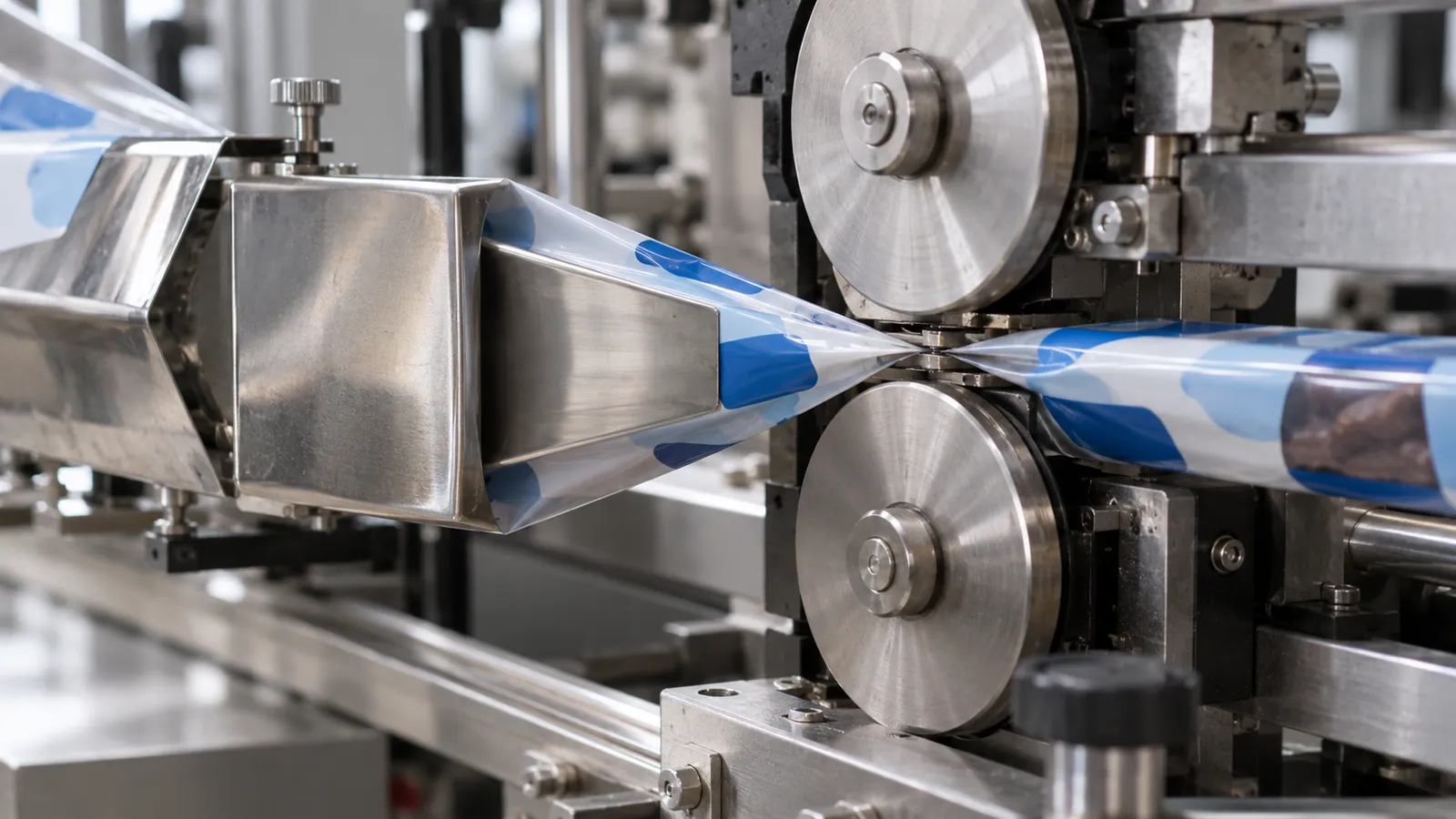
Flow Wrap Film: Choosing Film for Horizontal Flow Wrappers
Flow wrap film guide: common structures, cold seal vs heat seal, COF, sealing, registration, tracking and troubleshooting for horizontal flow wrappers.

Premade Pouch Packaging Materials: What Pouch Machines Need
Premade pouch packaging materials explained: tolerances, stiffness, sealants, zippers and the specs pouch machines need to open, fill and seal reliably.
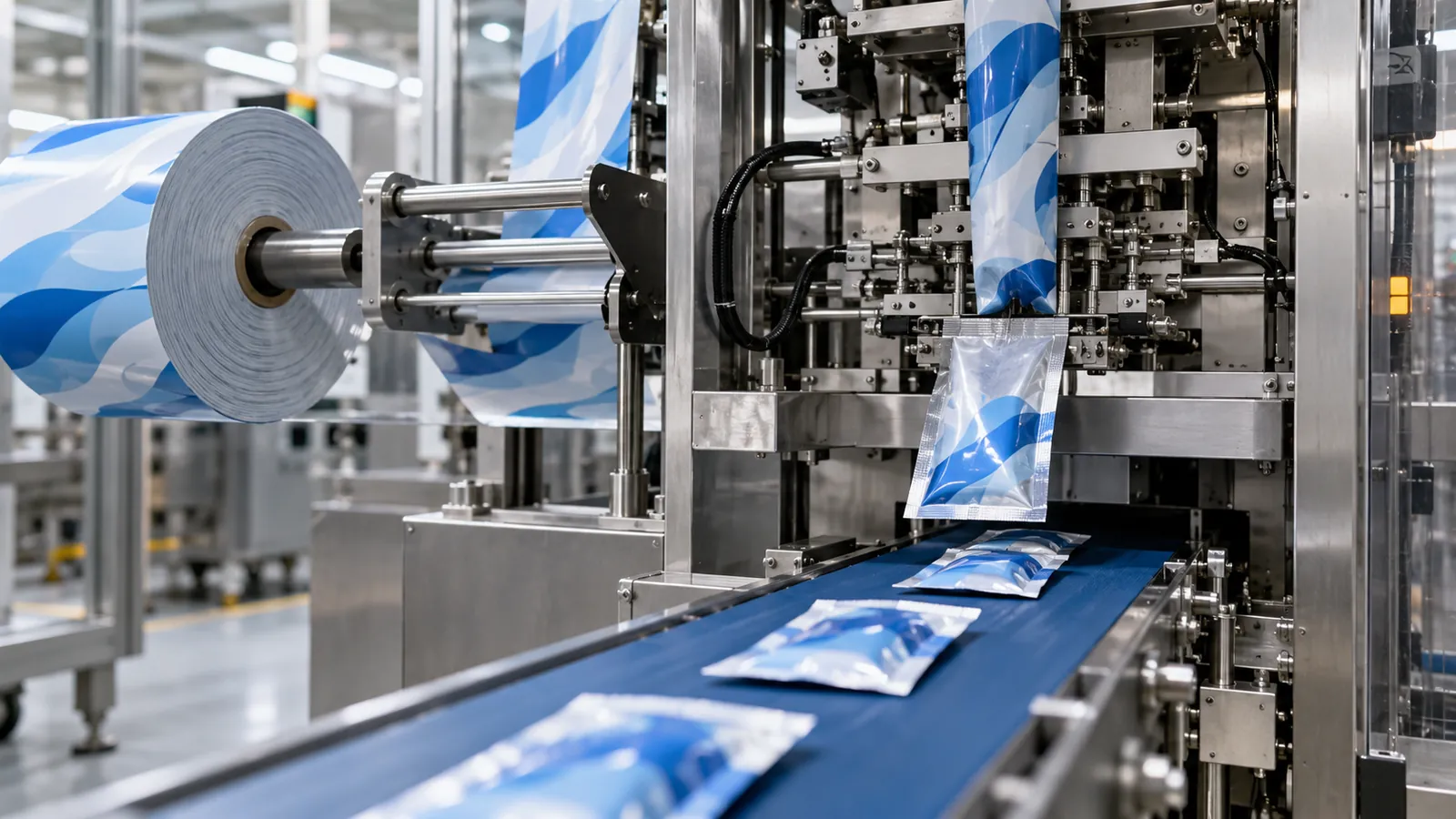
Sachet Film: Choosing Packaging Film for Sachet Machines
Sachet packaging film runs on 3-side and 4-side seal machines. Compare structures, sealing, tear notches and fixes for leaks and seal-through-contamination.

Shrink Wrapping Film: Matching Film to Shrink Wrapping Machines
Shrink wrapping film must suit the sealer and tunnel. See which films fit L-sealers, side sealers and bundlers, seal methods and how to fix common defects.

Stick Pack Film: Materials and Machine Requirements for Stick Packs
Stick pack film is narrow laminate rollstock formed into slim tubes. See structures, sealing, lane slitting, tear notches, COF and machine checks.

VFFS Packaging Film: Materials, Sealing and Machine Compatibility Guide
VFFS film guide: common structures, thickness, barrier, sealing, COF, tracking and troubleshooting for vertical form fill seal machines and rollstock.

VFFS vs Premade Pouch Packaging: Comparing the Two Machine Types
VFFS vs premade pouch packaging compared on pack styles, speed, footprint, changeover, operator skill and the film or pouch each machine requires.