
Shrink Wrapping Film: Matching Film to Shrink Wrapping Machines
Shrink wrapping film must suit the sealer and tunnel. See which films fit L-sealers, side sealers and bundlers, seal methods and how to fix common defects.
Match shrink film to the packaging route before setting the sealer or tunnel. Mixing overwrap, open-ended bundling and label sleeves can leave an unsealed pack or distort the product during shrinking. Film chemistry and shrink direction are covered in shrink film.
Scroll horizontally to view all columns if needed. ↔
| Route | Film and equipment to confirm | Acceptance focus |
|---|---|---|
| Enclosed overwrap | Grade approved for the L-sealer or side sealer and its tunnel | Closed seams, air escape and appearance after cooling |
| Open-ended bundling | Bundling-grade film and sleeve wrapper/tunnel; ends intentionally remain open | Bundle retention and shrink balance, not a hermetic enclosure |
| PETG sleeve label | Label-grade film, sleeve seam/applicator and specified shrink process | Container contour and label distortion; not an overwrap seal specification |
How shrink wrapping machines work
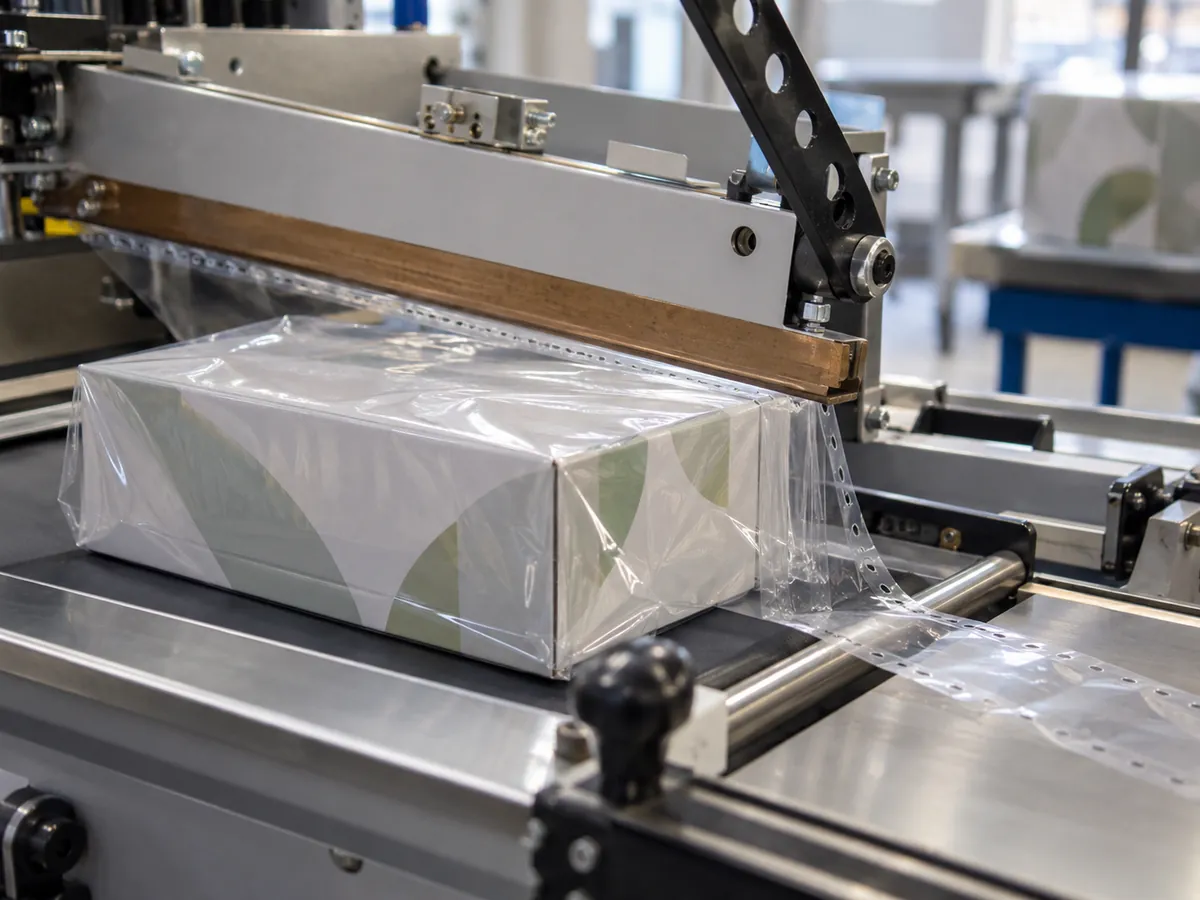
A shrink wrapping line has two stages: a sealer that encloses the product in a loose film, and a tunnel that applies heat so the film tightens. Film that is easy to seal can be difficult to shrink evenly, and vice versa, so the film and the equipment have to be matched.
L-sealers
The film is center-folded on a reel. The product is placed in the fold and an L-shaped sealing bar closes the side and trailing edge at once, trimming the scrap. The approved product envelope and output depend on the model. Confirm its cutting/sealing system and the film grade. If the wrap needs air escape, confirm the perforation arrangement on the approved pack drawing.
Side sealers
A continuous sealing bar or wheel closes the side seam of the film as products travel in a line, with end cuts made across the web. Their output depends on product spacing, machine configuration and the approved film. Seal quality at speed depends on film that seals quickly and has enough hot tack.
Sleeve wrappers and bundlers
Sleeve wrappers form a tube of film around a product or a group, with open ends. Beverage and multipack bundling lines use these, usually with thicker or heavier film. Tension and tracking matter because the film wraps a heavy, moving group. The tunnel then shrinks the sleeve onto the pack.
Shrink tunnels: air flow, temperature and speed
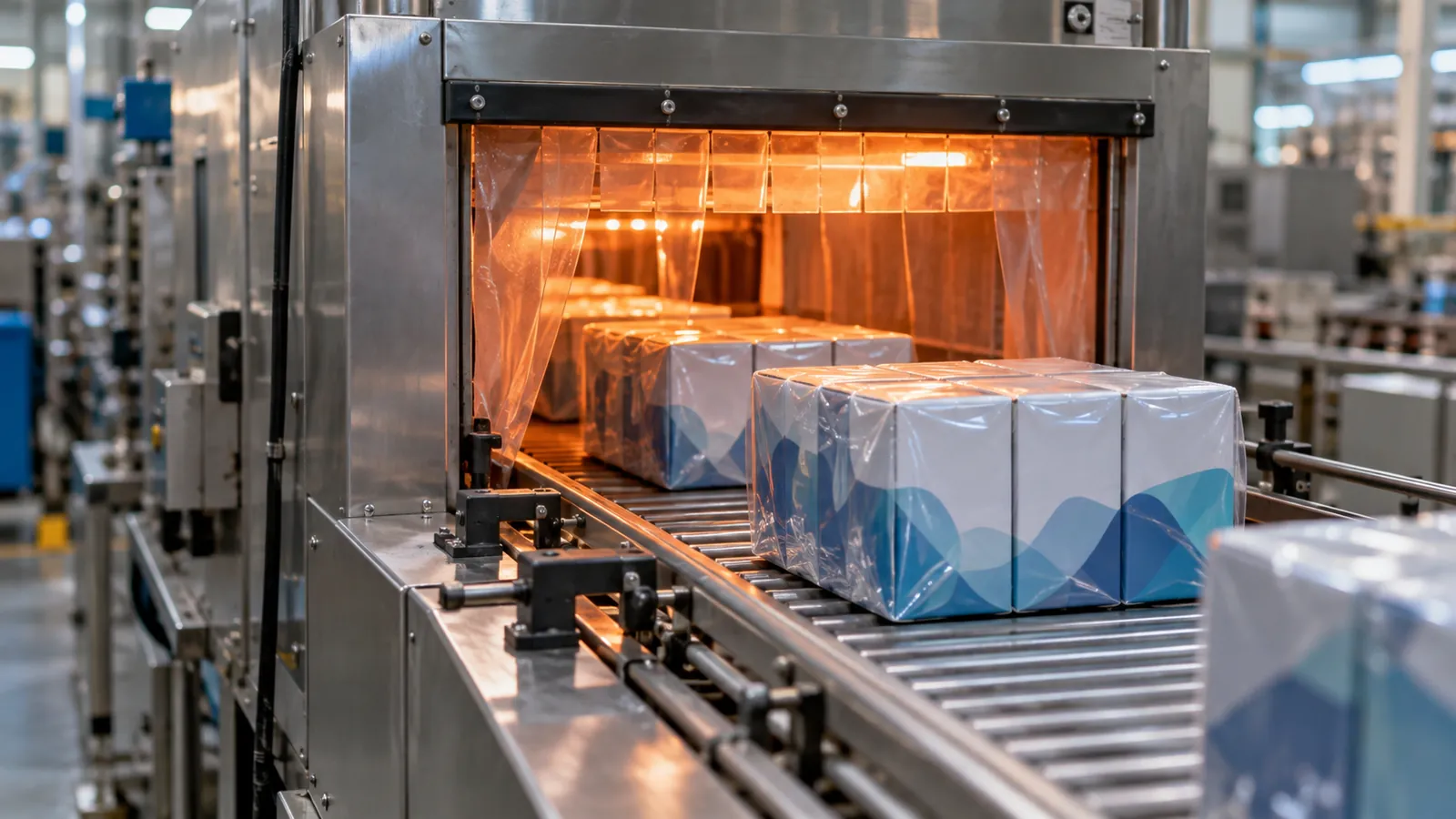
The tunnel does the shrinking, and three settings interact.
- Temperature: too low gives loose, wrinkled packs. Too high gives burn-through, sagging, holes or distorted products. Each film type has its own shrink onset and window, so a setting that suits one may ruin another.
- Air flow: strong air movement carries heat evenly around the pack but can blow light or loose film around before it shrinks. Uneven air flow gives uneven shrinkage.
- Conveyor speed: this sets dwell time. Slower belts give more heat to the film, faster ones less. Dwell has to be balanced with temperature, since a hot, fast tunnel can behave like a cooler, slow one.
The product matters too. Dense or metal products absorb heat, and heat-sensitive products need a trial within their permitted exposure and the actual film grade’s processing window. Support the pack on a conveyor that allows air to circulate beneath, for example with a rod or mesh belt.
Which films suit which machines
Scroll horizontally to view all columns if needed. ↔
| Film | Route to verify | Evidence needed |
|---|---|---|
| PVC shrink film | Overwrap only on equipment approved for that grade | Current grade SDS, sealing instructions and machine operating limits |
| POF shrink film | Overwrap on compatible L-sealers or side sealers | Grade technical sheet and model-specific seal/tunnel trial |
| PETG shrink film | Sleeve labels on a compatible applicator and shrink system | Label-film technical data, shrink direction and container trial |
| PE shrink film | Bundling or overwrap where the model supports the grade | Load retention, film gauge and machine approval |
A manufacturer’s public HS-series specification lists polyolefin, PE and PP films; its T452H tunnel separately lists PVC, polyolefins and PE. Those lists describe those configurations, not approval for every sealer or every resin grade. The shrink-film materials guide provides the material comparison.
For PVC, obtain the current grade SDS and the machine’s ventilation/extraction instructions before processing. The historical manufacturer-issued MSDS cited below lists hazardous thermal decomposition products, but does not establish normal operating emissions or an extraction rate. Do not derive a universal tunnel temperature or ventilation setting from it.
Seal methods
Confirm whether the installed machine cuts/seals with a hot knife, wire or an impulse cycle. Record the approved film grade, sealing settings and cooling conditions from its technical sheet and the equipment manual; a material name alone does not set these values.
ASTM F88/F88M measures the force required to separate a specimen containing a seal. It does not prescribe a shrink-film temperature or a post-shrink acceptance limit. As an editorial trial check, compare equivalent seam samples before shrinking and after shrinking/cooling under recorded conditions, then inspect whole packs for opened seams. Agree the specimen method and acceptance criteria for the project.
Common defects and likely causes
Scroll horizontally to view all columns if needed. ↔
| Defect | Likely causes |
|---|---|
| Dog ears (loose corner flaps) | Film too large for the pack, uneven air flow, low temperature, insufficient shrink in one direction |
| Fish eyes (small bubbles or distorted spots) | Trapped air, poor perforation, gels or contamination in the film, wrong seal temperature |
| Burn-through (holes) | Tunnel too hot, belt too slow, hot knife too hot, film too thin |
| Weak or opened seals | Seal temperature or pressure too low, dirty or worn blade, film unsuited to the sealer |
| Wrinkles | Temperature too low, uneven air, film too large, too much film overlap, wrong shrink balance |
| Pack bulging | Air not escaping, perforation missing or blocked |
| Distorted product | Too much shrink force for light packs, too much heat |
What to check in a shrink wrapping trial
Record product/pack drawing, film grade and batch, roll dimensions, machine/sealer/tunnel model, and the applicable technical-sheet/manual revision. Start within their approved operating limits. Change one variable per run; retain the baseline and wait for stable conditions before sampling.
Scroll horizontally to view all columns if needed. ↔
| Run | Variable changed | Seal setting | Tunnel temperature | Airflow/flap setting | Belt speed | Cooled-pack result / seam result | Accept/reject and evidence |
|---|---|---|---|---|---|---|---|
| Baseline ___ | None | ___ | ___ | ___ | ___ | ___ | ___ |
| Trial ___ | Temperature, airflow OR speed: ___ | ___ | ___ | ___ | ___ | ___ | ___ |
Log sample count, dog ears, wrinkles, holes, opened seams and product distortion against the agreed limit. Repeat the selected setup after a cold start and inspect cooled packs under the planned handling conditions. This is an editable trial record, not a temperature recipe.
The pack format is covered under shrink wrap packaging, and general pairing under packaging film and machine compatibility.
Sources and method
Checked 8 October 2026. Manufacturer documents describe their own products; the trial record and before/after comparison are editorial checks, not this site’s test results.
- SMIPACK HS series and T452H technical specification: configuration-specific film lists and separately adjustable tunnel temperature, conveyor speed and airflow flaps. Obtain the operating manual for the installed model.
- BENISON PVC shrinkable-film MSDS, revised 20 January 2016: manufacturer-issued document hosted by a distributor; Section 10 supports the thermal-decomposition caution only. It is not a current grade-specific ventilation instruction.
- Eastman Embrace copolyester technical product information: a manufacturer’s public example of contour shrink-label material, not a universal PETG processing recipe.
- ASTM F88/F88M-23 scope: seal-specimen strength method; no universal post-shrink pass value.
Continue reading
Related articles
Flow Wrap Film: Choosing Film for Horizontal Flow Wrappers
Flow wrap film guide: common structures, cold seal vs heat seal, COF, sealing, registration, tracking and troubleshooting for horizontal flow wrappers.
Premade Pouch Packaging Materials: What Pouch Machines Need
Premade pouch packaging materials explained: tolerances, stiffness, sealants, zippers and the specs pouch machines need to open, fill and seal reliably.
Sachet Film: Choosing Packaging Film for Sachet Machines
Sachet packaging film runs on 3-side and 4-side seal machines. Compare structures, sealing, tear notches and fixes for leaks and seal-through-contamination.