
PVC Shrink Film: Properties, Applications and Limitations
PVC shrink film for sleeves and overwraps: assess heated-process controls, grade-specific seals, cold handling and replacement trials against POF or PETG.
Changing shrink film without checking the heated process can introduce fumes, open seals or rejected packs. Keep a PVC candidate only if its formulation, pack route and operating trial meet the application and destination requirements. PVC shrink film is an oriented polyvinyl chloride film that contracts when heated, used for overwraps, tamper bands and sleeves. Separate sleeve grades from heat-sealed overwrap grades; cold handling, seal strength and shrink onset need data for the actual formulation.
Scroll horizontally to view all columns if needed. ↔
| Check | Evidence required | Alternative route |
|---|---|---|
| Heated-processing risk | Exact film SDS, temperature, dwell and exposure assessment | POF also needs process controls |
| Seal and cold handling | Conditioned pack trials at actual gauge | Compare with a qualified POF grade |
| Sleeve contour | TD/MD curve, seam and tunnel results | Compare with a PETG sleeve grade |
| Market and end of life | Applicable policy and complete-pack evidence | Assess the intended recycling stream |
Properties of PVC heat shrink film
- Clarity and gloss: PVC film is typically very clear with a high-gloss finish, which gives products a bright, “glass-like” retail look.
- Shrink onset: obtain the actual curve with medium, temperature and exposure time. Do not assume the PVC name establishes a lower product heat exposure than another grade.
- Conformability: it pulls neatly around simple geometric shapes such as boxes, cartons, cans and cases.
- Stiffness: the film is relatively stiff and handles well on hand or semi-automatic wrapping equipment.
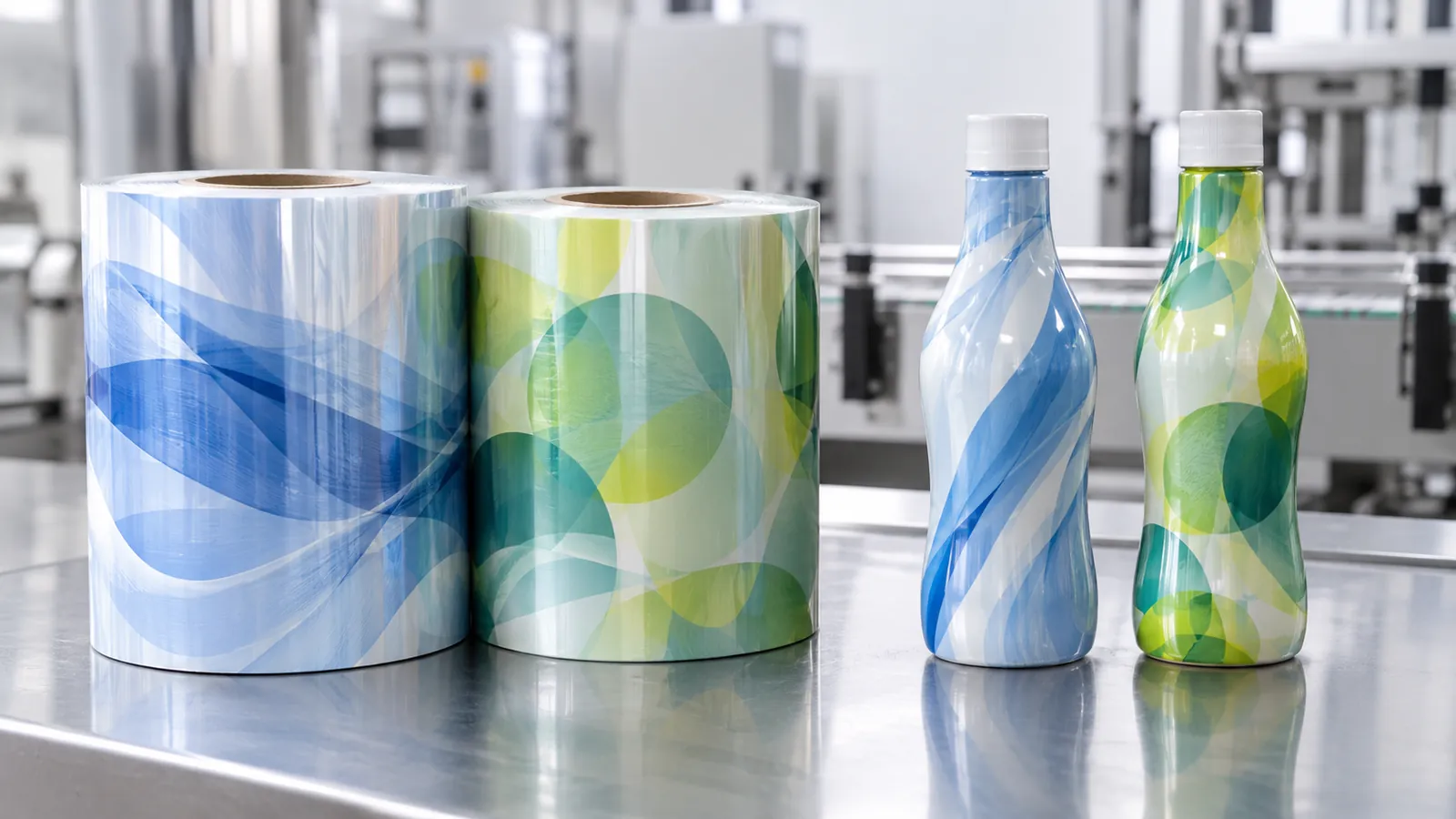
- Printability: PVC sleeves take reverse and surface print well, and the film has been used widely for sleeve labels and bands.
These properties are typical, not guaranteed. Plasticizer content, gauge and orientation all change the numbers, so confirm free shrink, shrink tension and seal data on the supplier’s data sheet for the exact grade.
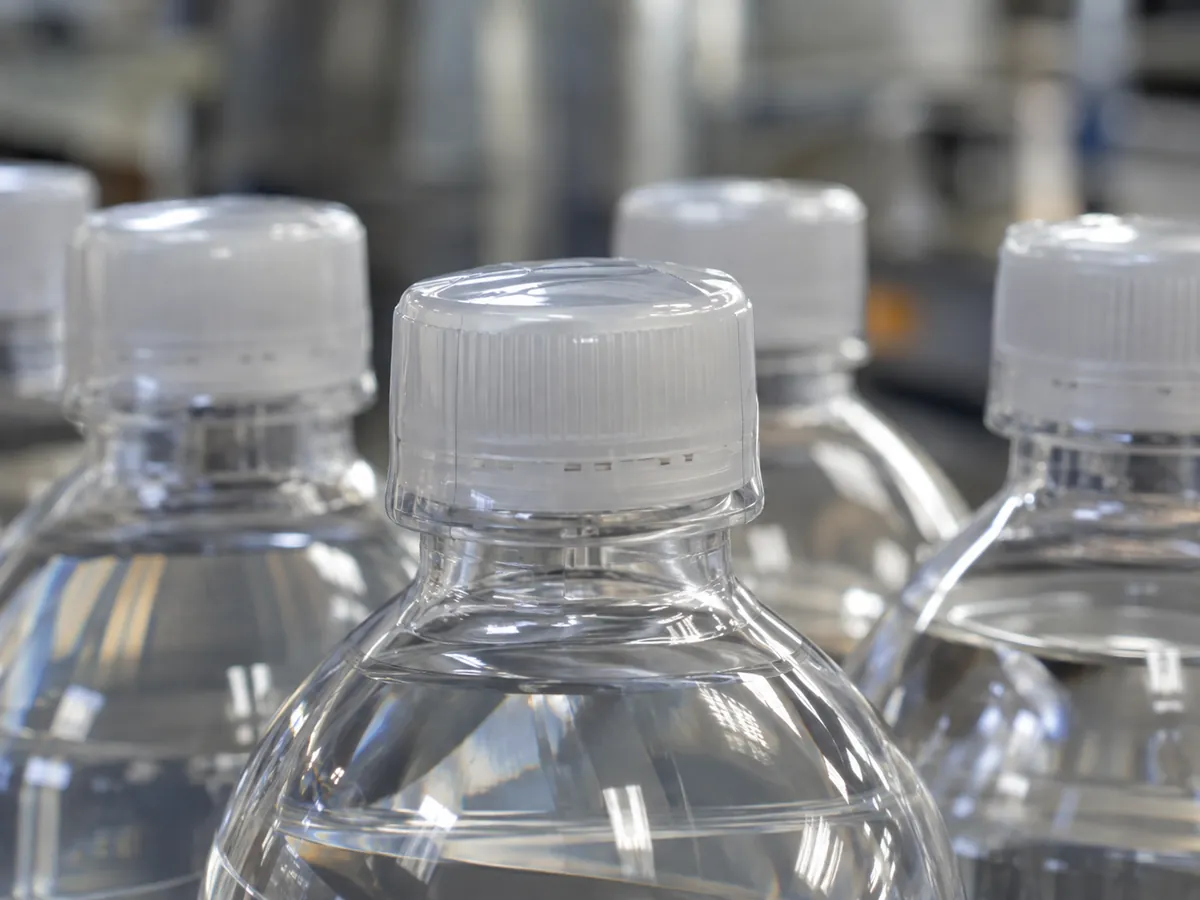
Applications of PVC shrink wrap
PVC shrink wrap is found in a few recognizable roles:
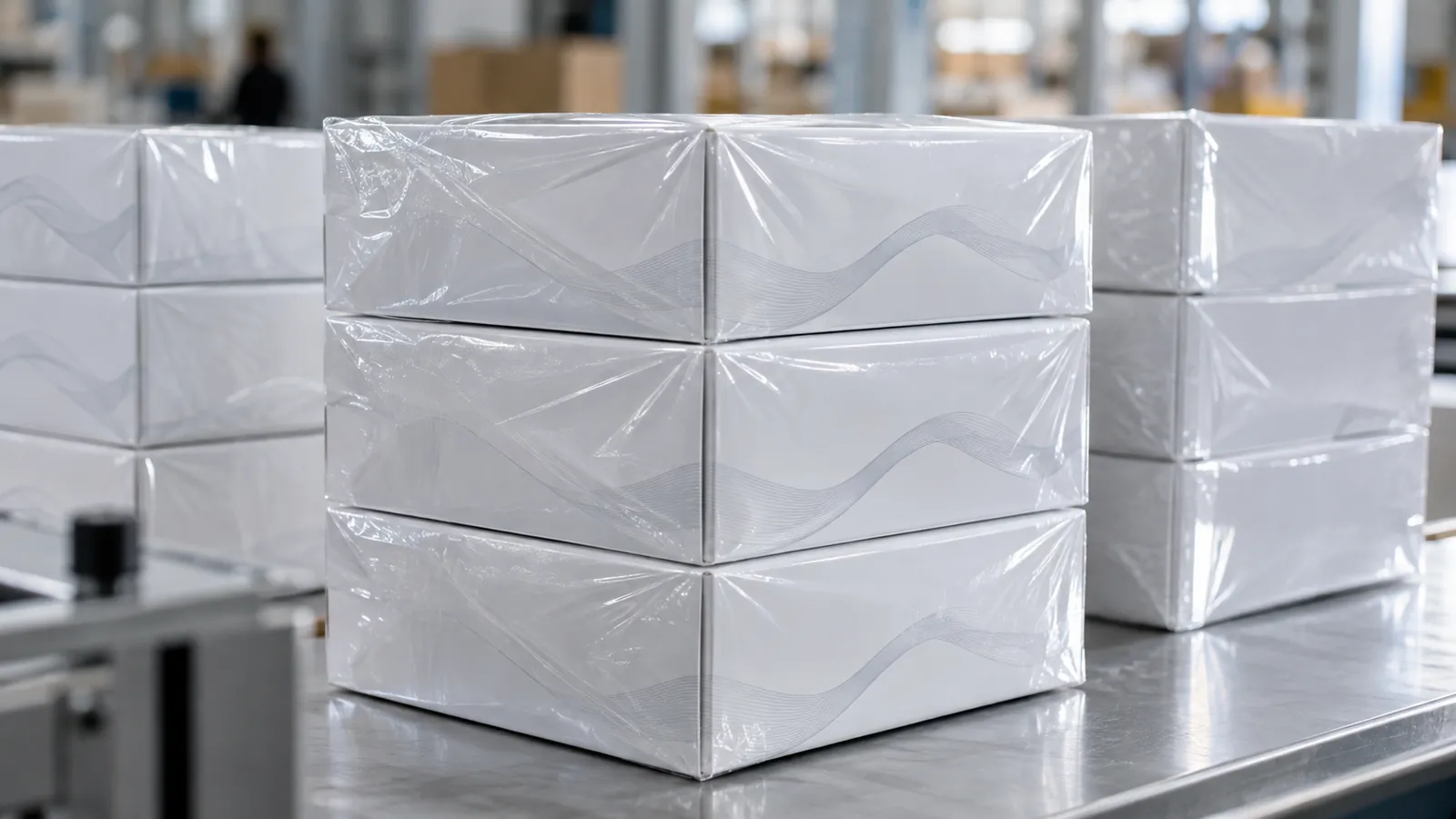
- Retail overwraps on boxed goods such as board games, media cases, cosmetics and stationery
- Shrink bands and neck seals over bottle closures, often as tamper-evident features
- PVC shrink sleeve labels on containers with straightforward profiles
- Bundling of light items such as multipacks of small cartons or cups
For a heavy bundle, compare load retention and seals against a selected PE film rather than inferring capacity from the polymer name.
Limitations of PVC
Fumes during heated processing
HSE PPIS13 (revision 1) lists hydrogen chloride among fumes from PVC heated above its recommended upper processing temperature. Its controls consider material, temperature and residence time, including sealing heads where film sticks and overheats. This is heated-plastics guidance, not a universal emission measurement for every shrink-wrap cycle.
Obtain the SDS for the exact formulation and compare normal running, stoppages and cleaning with its recommended conditions. Assess ventilation and local extraction at the actual seal station and tunnel; no generic safe PVC temperature is specified here.
Cold handling and seal strength
Use conditioned finished-pack trials to check corners, fold lines and seals after the intended cold storage and transport. Without matched grades, gauges and conditions, neither a PVC-versus-POF cold-brittleness ranking nor a seal-strength ranking is established.
For measured seal strength, ASTM F88/F88M-23 describes the test scope; ASTM F2029-16(2021) covers laboratory heat-seal preparation. Match temperature, dwell, pressure and test support method.
Destination requirements
Check the actual retailer policy and destination rules for the pack category, with a dated copy of each requirement. This page does not establish a general phase-out trend or a uniform PVC prohibition. A required material change needs its own equipment and finished-pack qualification.
Recycling concerns
The APR PET rigid design guide identifies PVC label material as incompatible with PET recycling. Its scope is North American PET rigid packaging, not every flexible-film collection route. Check the full pack in the intended stream before making a claim; recyclable flexible packaging explains that distinction.
Takeaway: validate process controls and destination requirements before approving PVC for the pack.
PVC vs POF shrink film
Compare overwrap grades on the same product, rather than mixing sleeve and overwrap results. The POF guide covers its grade groups.
Scroll horizontally to view all columns if needed. ↔
| Trial dimension | PVC candidate | POF candidate |
|---|---|---|
| Shrink and distortion | Curve, gauge and filled-product trial | Curve, gauge and filled-product trial |
| Seal strength | Actual seal method and conditions | Actual seal method and conditions |
| Cold handling | Conditioned seals and corner damage | Conditioned seals and corner damage |
| Process fumes | Exact SDS and exposure assessment | Exact SDS and exposure assessment |
| Cost | Current quote, area yield and accepted packs | Current quote, area yield and accepted packs |
Do not treat switching as a drop-in change. Record the new tunnel, seal and air-release settings in a trial before approving the replacement.
For full-body sleeves, compare a PETG sleeve grade rather than an overwrap. The shrink film guide maps the routes, and PVC vs PETG compares sleeve decisions.
Choosing between PVC and alternatives
- Define the pack: product shape, weight and whether the film sees cold storage.
- Check the market: retailer requirements and local rules on PVC for your destination.
- Check the equipment: ventilation at the seal station, tunnel capability and sealing method.
- Test seals under real stress: drop, stack and temperature cycling.
- Check end of life: is the pack meant to be recycled, and in which stream?
- Compare total cost. Include scrap, seal failures, line speed and gauge as well as price per kilogram. A cheaper film can cost more once these show up.
What to put in a PVC shrink film specification
Keep a record for the existing grade and each replacement trial.
Scroll horizontally to view all columns if needed. ↔
| Field | Current / candidate record |
|---|---|
| Formulation / grade / route / gauge | ____ |
| TD/MD curve / medium / exposure time | ____ |
| Tunnel zones / air or steam / conveyor dwell | ____ |
| Seal method / temperature / dwell / pressure / result | ____ |
| SDS revision / exposure assessment / extraction check | ____ |
| Cold conditioning / corners / fold and seal damage | ____ |
| Wrinkles / holes / scrap / accepted output | ____ |
| Dated market policy / contact declaration / recycling evidence | ____ |
Use the total-cost guide to compare accepted packs rather than mass price alone.
Common questions
Is PVC shrink wrap food safe?
The polymer name alone does not establish suitability for contact with your food. FDA’s food-contact material assessment guidance considers the components and intended conditions of use. Obtain documentation for the exact film, food type and contact temperature; the food-contact packaging guide explains what to record.
Sources and method
HSE’s linked guidance and the public ASTM scopes support the process and test checks; APR covers the PET-bottle label boundary. Checked October 9, 2026. No grade-matched cold or seal ranking and no general market-exit trend are claimed.
Continue reading
Related articles
OPS Shrink Film: Oriented Polystyrene Shrink Sleeves
OPS shrink film is oriented polystyrene used mainly for shrink sleeve labels. See its properties, trade-offs vs PETG and PVC, recycling and storage.
POF Shrink Film: Polyolefin Shrink Wrap Explained
Polyolefin shrink film (POF) is a coextruded, biaxially oriented chlorine-free wrap. Learn cross-linked vs non-cross-linked grades, machines and POF vs PVC.
PVC vs PETG Shrink Film: Clarity, Shrink and Recycling Compared
PVC vs PETG shrink film compared on clarity, shrink behavior, sealing, cold handling, recycling and cost, with guidance on which sleeve film to choose.