
OPS Shrink Film: Oriented Polystyrene Shrink Sleeves
OPS shrink film is oriented polystyrene used mainly for shrink sleeve labels. See its properties, trade-offs vs PETG and PVC, recycling and storage.
Cold-stock edge cracks or an unsuitable shrink profile can cause sleeve rejects and rework. OPS is oriented polystyrene for shrink sleeve labels; select the grade against container geometry, handling conditions and tunnel trials.
- Sleeve use: establish circumference fit, seam and required MD/TD behavior.
- Controlled handling: inspect slit edges and test unwinding and application on actual stock.
- Cold stock: if chilled samples split, confirm conditioning and storage requirements before running.
This page covers material selection. See the shrink film overview for the broader mechanics.
OPS vs PETG vs PVC
This qualitative comparison identifies trial questions, not a ranking of every grade.
Scroll horizontally to view all columns if needed. ↔
| Factor | OPS | PETG | PVC |
|---|---|---|---|
| Sleeve fit | Check the selected TD shrink profile | Check the selected profile on contours | Check the selected shrink profile |
| Handling | Inspect nicked edges and conditioned stock | Verify toughness on the supplied film | Verify handling at storage temperature |
| Printing and seam | Confirm ink, print face and seam system | Confirm ink, print face and seam system | Confirm ink, print face and seam system |
| Recycling | Check complete sleeve and bottle | Check complete sleeve and bottle | Check complete sleeve and bottle |
The PETG shrink film, PVC shrink film and PETG vs OPS comparison cover the alternatives. A material name does not settle shrink onset, contour fit or recycling acceptance.
Where oriented polystyrene shrink film is used
OPS is used for sleeves. A printed film is cut, formed into a tube with a seam, dropped over a container and shrunk in a tunnel. Application candidates include:
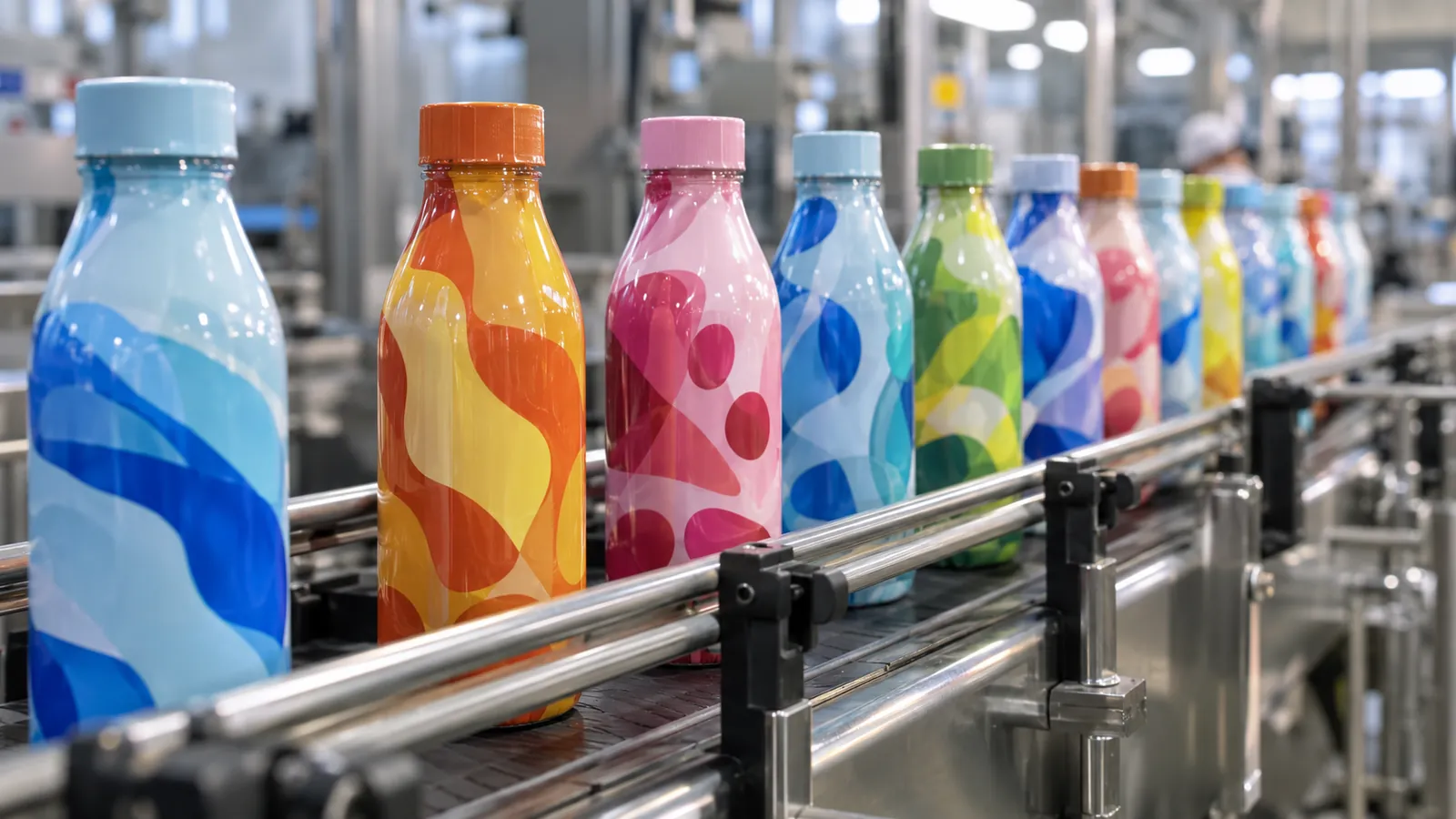
- Beverage bottles and cans, including contoured shapes
- Dairy, personal care and household product containers
- Promotional or limited-run packs where a full-surface graphic matters
- Tamper bands and partial sleeves over caps and necks
OPS is a sleeve film, not an overwrap film. You will rarely see it wrapping boxes or bundling multipacks, where POF shrink film or PE types dominate. The shrink wrap packaging page covers sleeving and wrapping at the pack level.
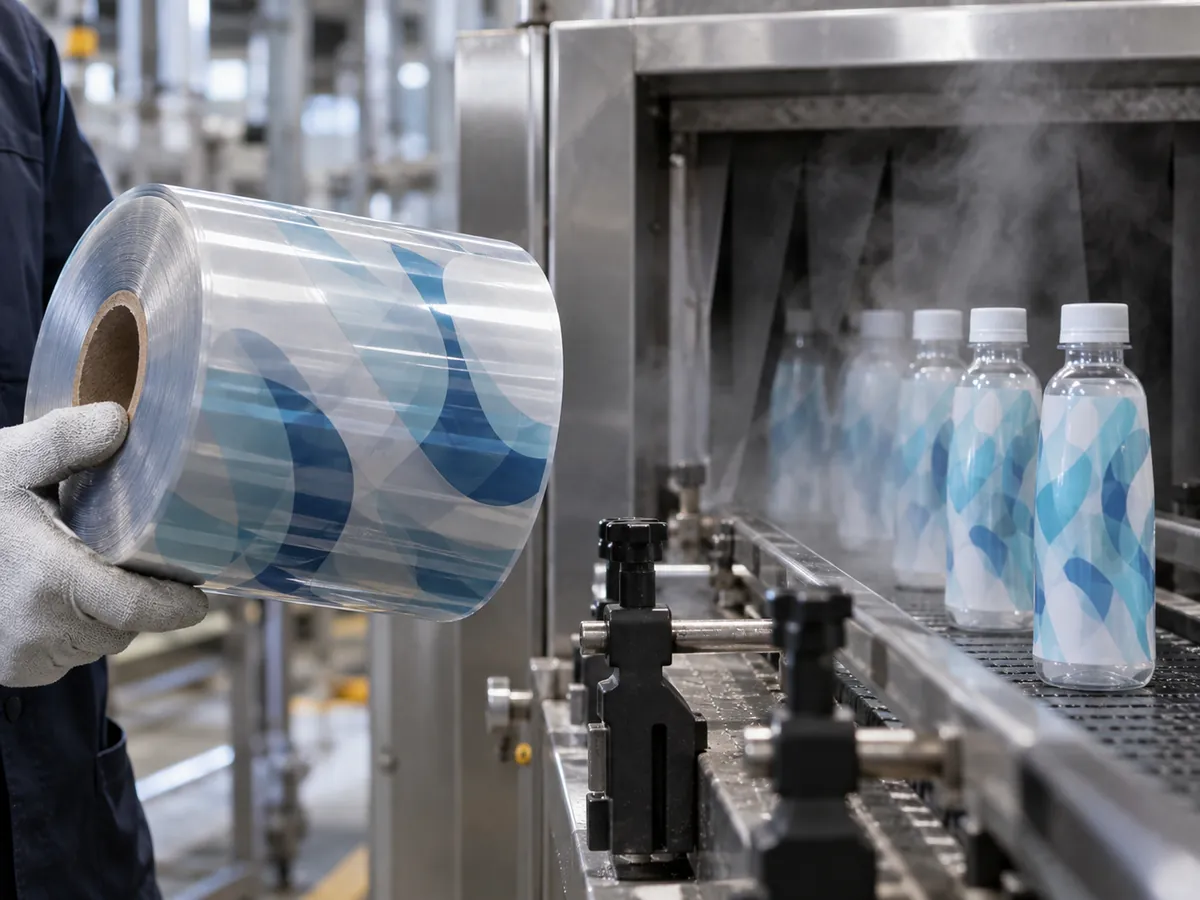
OPS shrink film properties
Record grade, gauge, orientation and the finished sleeve’s print and seam system. A supplier’s free-shrink curve is a starting point; compare curves with the same heating medium, temperature and exposure time.
For a TD-oriented sleeve, the direction mapping is TD around the container circumference; MD along the sleeve height. This conceptual mapping assumes the intended film layout; verify it on the reel and artwork. It is not a shrink-rate measurement or a numerical curve.
Shrink behavior: request MD and TD data at named temperatures and exposure times, then check fit, lift and distortion in the actual tunnel. Do not assume that every OPS grade has the same onset temperature or negligible MD movement.
Stiffness and handling: observe sleeve opening, feeding, cutting and edge integrity. If nicking, cold handling or creasing causes splits, compare conditioned samples and agree storage limits with the film supplier.
Print quality: approve the converted sleeve, including ink adhesion, gloss, seam and appearance after shrinking, rather than inferring print performance from clear stock.
Density: request the finished printed sleeve’s density and separation evidence. A manufacturer’s published water-separation demonstration shows an OPS sample sinking; a comparatively low density does not mean it floats or is compatible with bottle recycling.
Recycling sleeves on PET or HDPE bottles
Assess the bottle, sleeve, ink and seam together. Density separation alone does not prove the package can be sorted and recycled.
For US PET bottles, use the APR PET rigid design guidance, updated May 15, 2026. It assesses labels and sleeves within the full bottle design; consumer removal instructions do not substitute for that assessment. For European clear/light-blue PET bottles, use the RecyClass guideline, April 2026, including sleeve recognition, density and inks. Do not apply PET-bottle criteria to HDPE bottles.
For EU-bound packaging, Regulation (EU) 2025/40 applies on a phased basis from August 12, 2026, as explained by the European Commission. The general application date is not a claim that every recyclability obligation starts then, or that an OPS sleeve passes them.
Use design for recycling and recyclable flexible packaging for the wider process. Bottle-specific design guidance is the appropriate reference; a PET-film sheet is not a bottle recycling rule.
Storage sensitivity
Shrink film wants to shrink. That makes storage conditions part of the specification.
- Heat: sustained warm storage, hot trucks and sunlit warehouses can start shrinkage early. Rolls telescope, sleeves print off register, or the film no longer fits the same tunnel setting. Keep rolls cool and away from heaters.
- Cold: inspect chilled samples for splits during slitting, unwinding and sleeve opening. Agree conditioning with the supplier and record stock temperature before trials.
- Time: shrink properties can drift with age. Use a first-in, first-out system and ask the supplier for a recommended shelf life and temperature range.
- Handling: avoid dropped cores, dented edges and rough stacking. A nick in the film edge can tear during sleeving.
Choosing and specifying OPS sleeves
- Confirm the container shape, finish and the shrink ratio the design demands.
- Check the tunnel: steam, hot air and infrared heat differently, and confirm the intended heating medium with the selected film supplier.
- Compare print quality, perforation needs and seam method with your decoration supplier.
- Evaluate handling risk, including cold storage, slitting and transport.
- Review recycling goals against current APR, RecyClass and regional guidance, and request the film’s density and ink information.
- Trial on your own line. Tunnel settings that work on a supplier’s test unit may not match yours.
Copy this trial record for each grade and tunnel setting.
Scroll horizontally to view all columns if needed. ↔
| Trial field | Input to fill | Observed result to fill |
|---|---|---|
| Film and container | Grade, gauge, bottle resin, shape and circumference: ___ | Sample/batch and fit: ___ |
| Free shrink | MD/TD, heating medium, temperature and time: ___ | MD/TD shrink and method: ___ |
| Tunnel | Zone settings, speed and residence time: ___ | Fit, wrinkles, lift and bottle distortion: ___ |
| Storage and handling | Time, temperature, conditioning and edge condition: ___ | Splits, feeding or premature shrink: ___ |
| Print, seam and removal | Ink, seam method and perforation: ___ | Adhesion, seam and removal result: ___ |
| Recycling | Market, bottle stream, density and guideline version: ___ | Sorting/separation evidence: ___ |
For the machine side, see shrink wrapping film.
Sources and method
Reviewed October 8, 2026. A manufacturer’s public density-separation demonstration, December 1, 2021, illustrates sinking OPS versus floating polyolefin film; it is not a measurement for all OPS grades. A manufacturer’s public OPS sleeve description identifies transverse-shrink candidates, not a universal shrink profile. APR and RecyClass links above identify the bottle-specific scope and revision dates. The European Commission supports the PPWR timing; the linked legal text is the controlling reference. Handling and shrink entries are sample-verification requirements, not universal density, brittleness or shrink-rate specifications.
Continue reading
Related articles
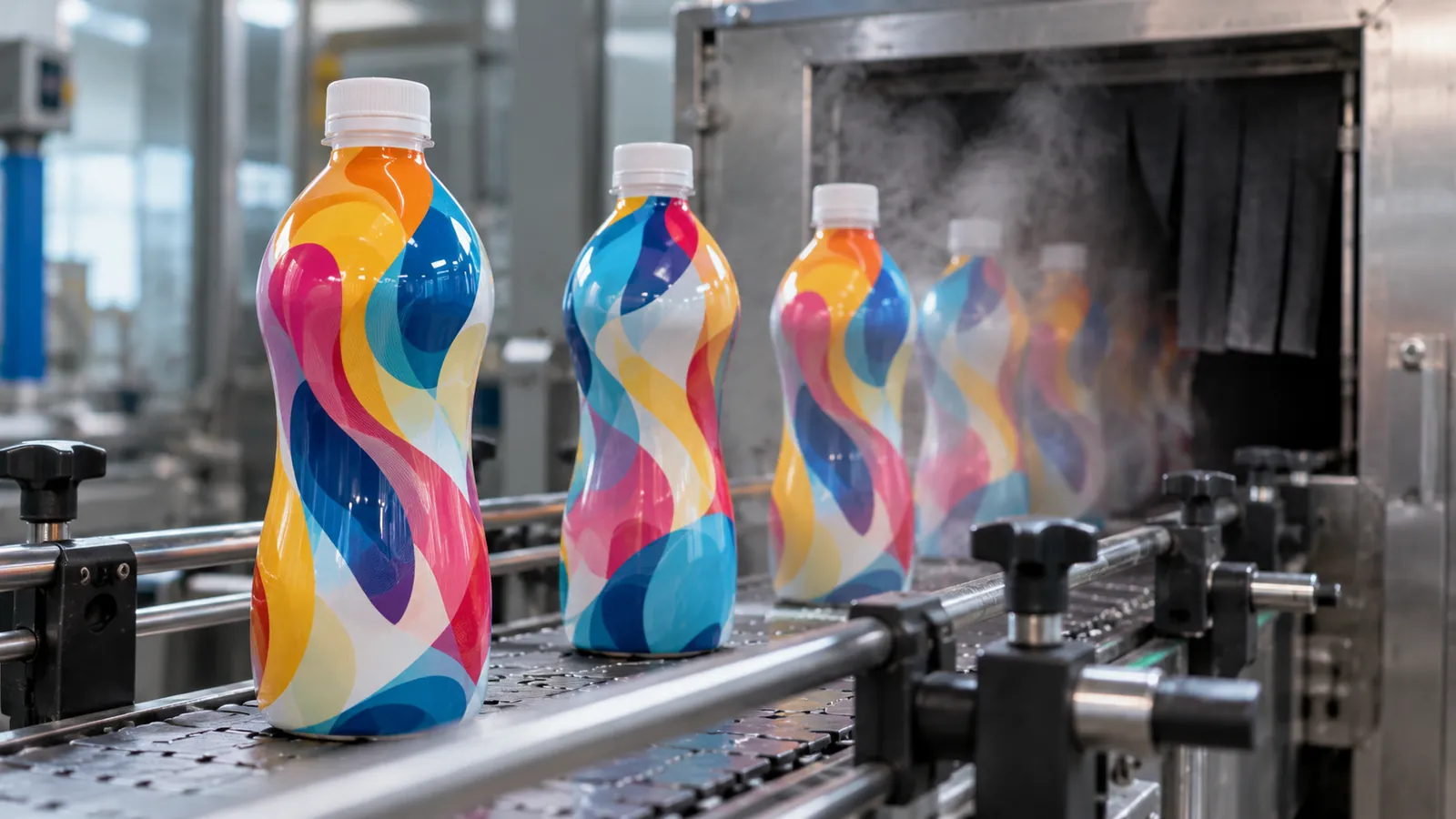
PETG Shrink Film: Shrink Sleeves, Properties and Uses
PETG shrink film is a high-shrink, transverse-oriented film used for sleeve labels on bottles and contoured containers. See properties, uses and recycling.
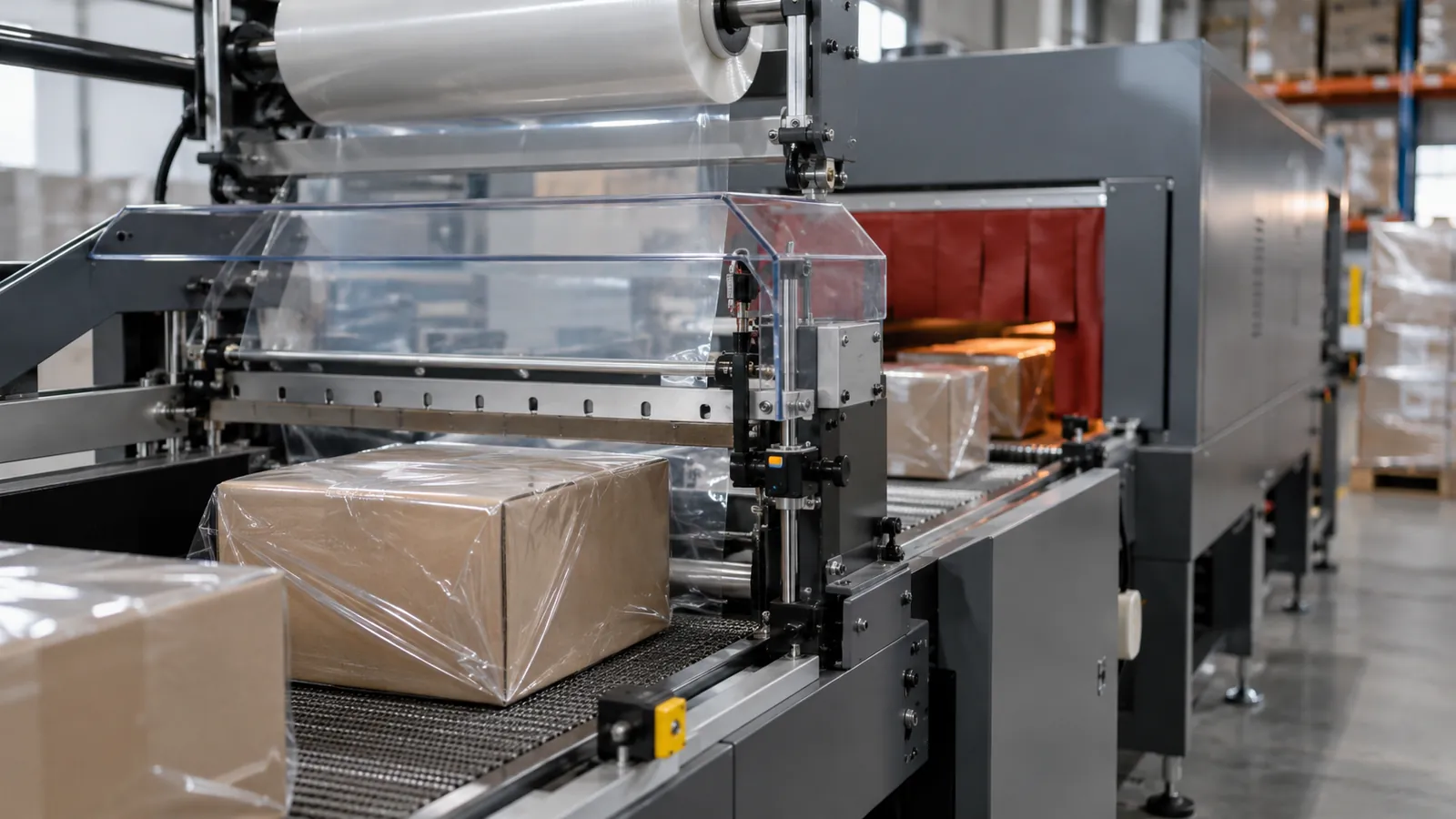
POF Shrink Film: Polyolefin Shrink Wrap Explained
Polyolefin shrink film (POF) is a coextruded, biaxially oriented chlorine-free wrap. Learn cross-linked vs non-cross-linked grades, machines and POF vs PVC.
PVC Shrink Film: Properties, Applications and Limitations
PVC shrink film for sleeves and overwraps: assess heated-process controls, grade-specific seals, cold handling and replacement trials against POF or PETG.