

Topic hub
Flexible Packaging Selection Guides
Practical guides for comparing packaging films, evaluating flexible packaging suppliers and controlling first orders of printed pouches and rollstock.
The technical sections of this site explain materials, formats and machine compatibility one topic at a time. The selection guides cover the decisions that cut across them: how to find a supplier you can trust, how to compare film specifications on a like-for-like basis, how to control a first order of printed pouches or rollstock, and how to judge whether a cheaper film really saves money. They are written as working checklists. Use them alongside the material and performance pages linked from each article, and confirm the details for your product with supplier data sheets and your own trials.
When a pack or roll develops a defect, use the flexible packaging film troubleshooting guide to separate curl, interlayer separation, barrier damage and seal symptoms before arranging the next test.
Where the guides fit in a project
A packaging project usually moves through the same stages, and each guide is most useful at a different point.
At the start of substrate planning, how to choose flexible packaging film walks through the end-to-end selection flow: product barrier risk, packaging format and line speed, monolayer versus laminate structures, and trial verification protocols.
Early in supplier contact, before you request quotes in earnest, read how to evaluate a flexible packaging supplier. It covers printing process and tooling costs, lamination and curing, pouch-making capability, food-contact documentation and how to use samples. It helps you decide who deserves a quotation and what to ask for in writing.
When two or three suppliers send specifications, how to compare flexible packaging film specifications shows how to put them on one basis: one unit for thickness, test conditions next to every barrier value, sealant and seal window, friction, roll data and recyclability claims. It also shows how to mark unknowns so that a gap does not turn into an assumption.
The first-order risk checklist for printed pouches and rollstock is for the point where you commit money. It covers payment terms, artwork and color approval, overrun and underrun, roll and pouch specifications, retained samples and the machine trial before the full order is released.
Once material is on the line, when cheaper packaging film costs more helps you judge the commercial choice by cost per good pack, including speed, scrap, downtime and leakers. It also gives a simple trial protocol you can repeat when you consider a new film or supplier later.
You do not have to read them in order. A line manager considering a film change may start with the cost guide, while a brand owner approaching a first supplier will begin with evaluation and return to the checklist later.

How the guides connect to the comparison pages
Most selection questions come down to a choice between two options, and the site has pages that compare them directly. The guides tell you how to decide, and the comparison pages give the technical background.
- When the question is the outer web of a laminate, PET vs BOPP film explains the differences in stiffness, heat resistance and print surface that a specification comparison will show.
- When the question is format, rollstock vs premade pouch helps you decide how film is bought and which supplier capabilities matter in an evaluation.
- When the question is the packing machine, VFFS vs premade pouch explains how the two machine types treat film, which feeds directly into the trial design in the first-order and cost guides.
- When the question is sustainability, mono PE vs multilayer film shows what is traded between recyclability and performance, and why a recyclability claim needs to be checked in the same way as a barrier claim.
Read the two together: the comparison page tells you what the options are, and the guide tells you what evidence to ask for.
Technical sections behind the guides
Each guide links to deeper pages when a term needs explaining. If you are unsure what a property means or how it is tested, start with these sections.
- Performance covers barrier, sealing and mechanical properties, including film thickness, seal strength and hot tack, which come up in almost every specification comparison.
- Materials explains the films, foils and laminates that appear on a supplier’s structure sheet, from packaging film types to barrier film.
- Machine compatibility shows what film or pouch has to do on a VFFS, flow wrap or premade pouch machine, which is the basis for a meaningful trial.
- Formats describes pouch and wrap styles, so you can specify features such as zippers, gussets and notches precisely.
- Sustainability and regulations explain recyclability, recycled content and food-contact rules that affect both structure choice and documentation. Confirm the requirements for your destination market, because they differ by region.
Habits that make the guides work
Write down hard requirements before you contact suppliers, and keep them separate from preferences. Ask for documents and physical samples rather than relying on catalog language. Record the test conditions for every number you compare. Run trials on your own equipment with a clear pass or fail rule, and keep retained samples from every first order. Finally, compare options by cost per good pack, not price per kilogram.
None of this replaces a supplier’s data sheet or your own validation. The point is that the decision you make can be explained and, if something goes wrong, traced back to what was agreed.
Selection Guides
In this section

First-Order Risk Checklist for Printed Pouches and Rollstock
A compact checklist for controlling specification, payment, quality and shipment risk on a first order of printed pouches or rollstock.
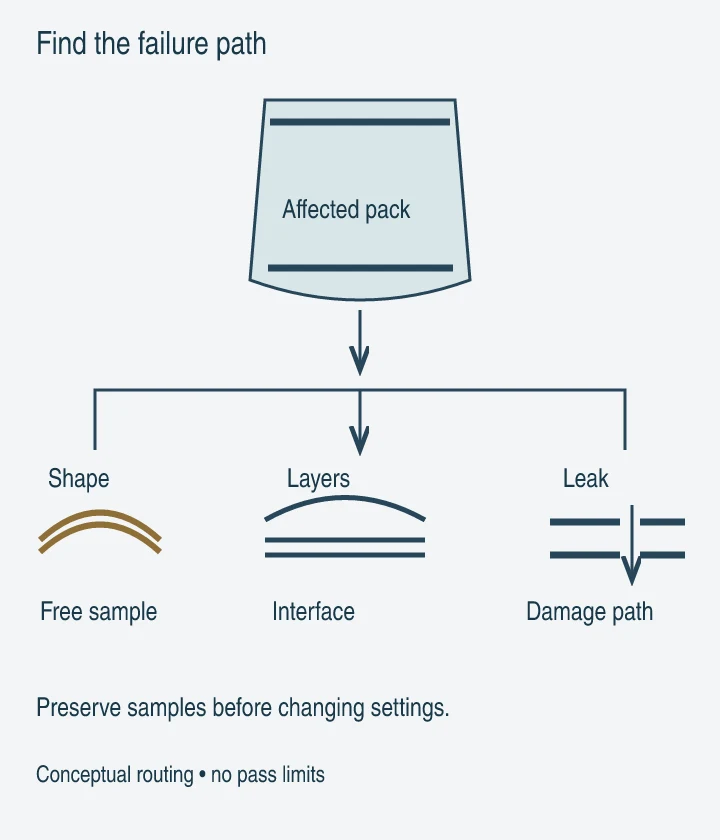
Flexible Packaging Film Problems: A Troubleshooting Guide
Film defects can cause scrap, leaks and repeat downtime. Locate the failure and preserve comparison samples before choosing a test or changing materials.
How to Choose Flexible Packaging Film: A Step-by-Step Selection Guide
An end-to-end engineering guide to selecting flexible packaging films: product barrier risks, machine kinematics, substrate structures, and trial verification protocols.

How to Compare Flexible Packaging Film Specifications
Separate hard requirements from preferences, normalize units and test conditions, and compare the full package before choosing a film.
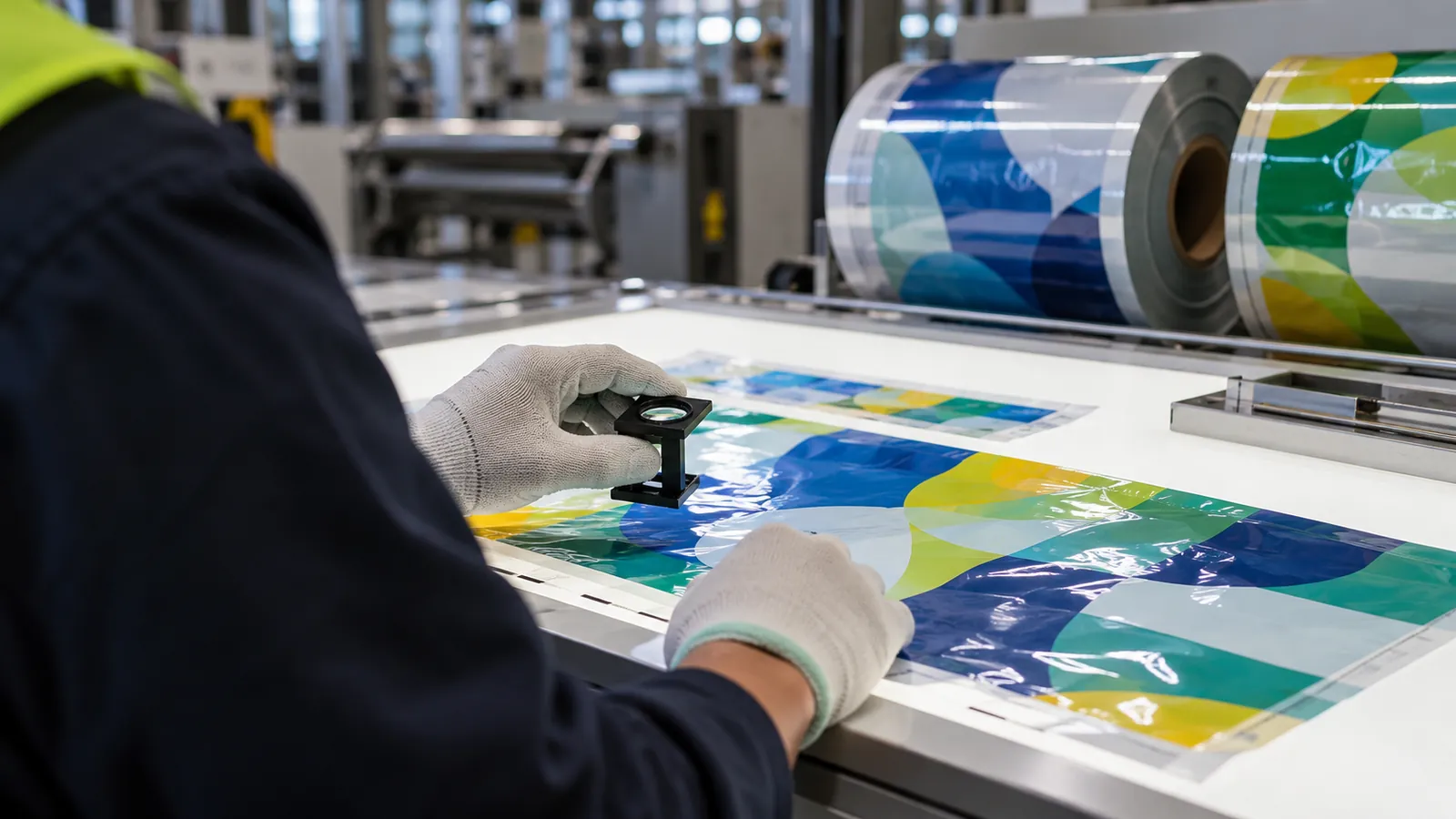
How to Evaluate a Flexible Packaging Supplier Before a First Order
Check printing process, in-house converting, documentation and communication before you place a first order for printed film or pouches.

When Cheaper Packaging Film Costs More on the Line
Compare cost per good finished pack, not price per kg, because a cheaper film can cost more through slow speeds, leakers and downtime.