
VFFS vs Premade Pouch Packaging: Comparing the Two Machine Types
VFFS vs premade pouch packaging compared on pack styles, speed, footprint, changeover, operator skill and the film or pouch each machine requires.
A vertical form fill seal (VFFS) machine makes bags from rollstock; a premade pouch machine feeds finished pouches, opens, fills and seals them. Choose between actual configurations at the same product, dose, bag dimensions and acceptance criteria. Stand-up and zipper features do not automatically exclude VFFS. Compare accepted output, changeover losses and consumed material cost before choosing a route; an unsuitable configuration can waste packs and halt production.
This page compares the machines. The supply and material decision is covered in rollstock vs premade pouches, and detailed film and pouch requirements are in VFFS film and premade pouch materials.
VFFS vs premade pouch machine at a glance
Scroll horizontally to view all columns if needed. ↔
| Factor | VFFS | Premade pouch machine |
|---|---|---|
| What it consumes | Rollstock film | Finished pouches in a magazine |
| How the pack forms | Film pulled over a forming collar into a tube, back seal, cross seals | Pouch exists; grippers take it, suction opens it, jaws seal the top |
| Pack styles | Pillow/gusseted bags; flat-bottom, stand-up and zipper formats on equipped models | Only the pouch shapes/closures supported by that feeding, opening and filling configuration |
| Speed | Measure accepted packs/time with actual filler and film | Measure accepted packs/time with actual filler and pouches |
| Footprint | Installed layout including filler, access and conveyors | Installed layout including magazine, filler, access and conveyors |
| Changeover | Film change, and a collar and tube change for a new bag width | Pouch size change with gripper adjustment, plus fill change |
| Operator skill | Setup of sealing, tracking and registration | Setup of grippers, opening, closure handling and final seal |
| Film or pouch sensitivity | Friction, tracking, hot tack, seal window | Pouch tolerance, stiffness, static, zipper area sealing |
| Product fit | Dosing and tube geometry must suit the product | Filling access and closure arrangement must suit the product |
Manufacturer examples below illustrate configurations, not a matched performance trial or a universal cost ranking.

How each machine works
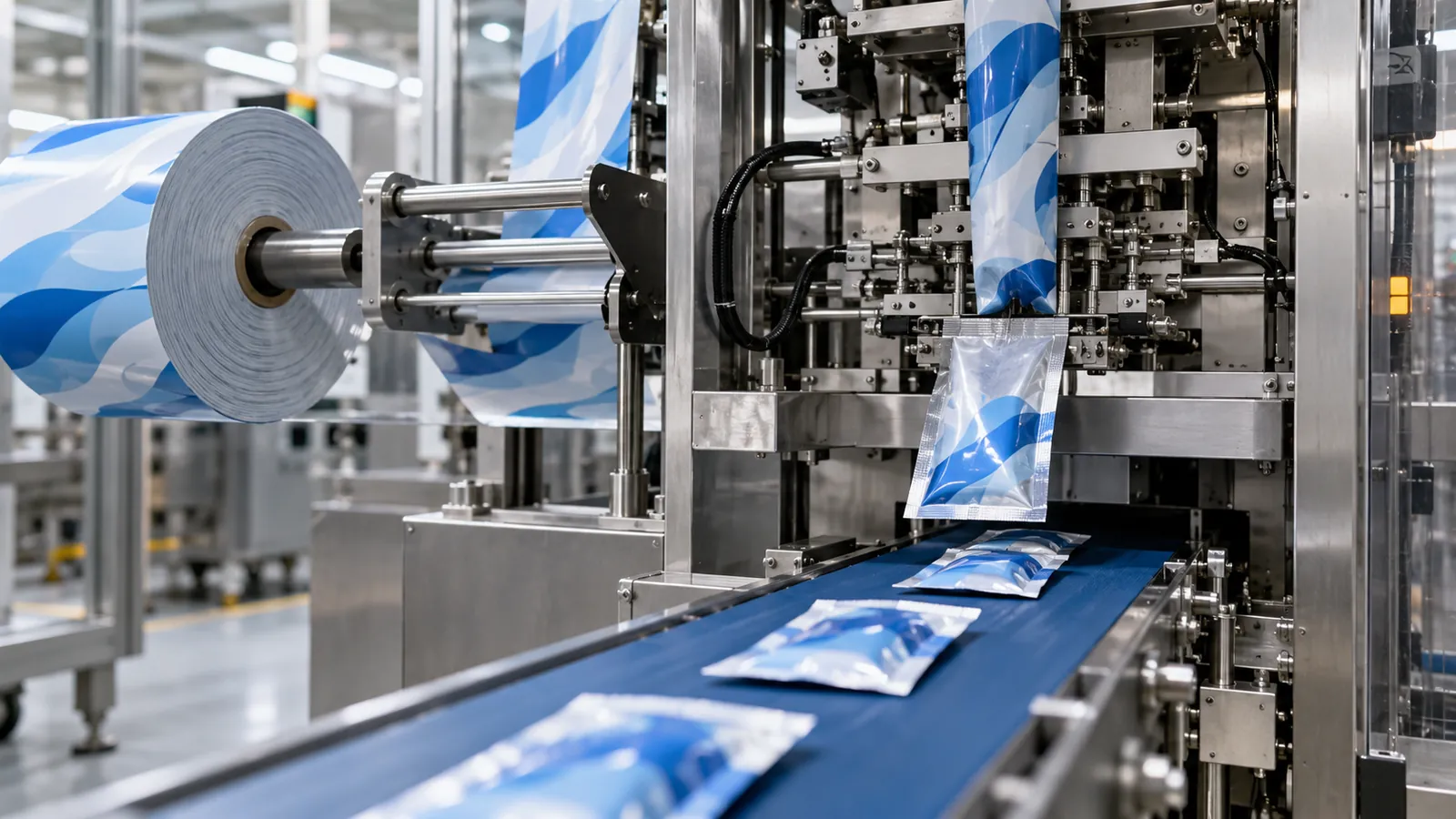
On a VFFS machine, film unwinds from a roll, passes over a forming collar and wraps around a vertical fill tube. A vertical seal joins the edges. Cross-sealing jaws make the bottom seal, the product drops through the tube, and the jaws close again to seal the top of that bag and the bottom of the next while cutting between them. The film has to slide over metal, seal fast and track straight.
On a premade pouch machine, the sequence is mechanical: pouches are fed from a magazine, a gripper picks up the front panel, suction cups open the pouch, the product is dosed in, and heated jaws seal the top, sometimes in two passes followed by cooling. For zippered pouches an opening station handles the zipper. The pouch is handled many times a minute, so shape, stiffness and static matter.
Pack styles each machine can make
VFFS handles pillow bags and gusseted bags well, and some machines make flat-bottom or quad-seal formats (see pillow bag packaging and quad seal bag). The forming tools and film width limit the range.
Equipped VFFS models can also make stand-up-style bags with zippers, as the public configuration below shows. Premade fillers require matching grippers, opening stations and dosing access; they cannot accept every converter design. Zipper pouches need closure handling, and spouted pouches need confirmed fitment, filling and closure equipment rather than a generic top-seal filler.
Speed and throughput
Compare accepted packs per scheduled production time at the same product, dose, bag size and seal/leak criteria. Include stops, rejects and changeovers. A catalogue maximum or dry-cycle figure omits some of those losses and cannot establish which route is faster for your product.
Footprint and layout
A VFFS machine stacks the film unwind, forming section and filling above the jaws, so it needs headroom and a weigher or auger above. A rotary or linear premade line includes a magazine, filling/sealing stations and discharge equipment. Check floor space, ceiling height and how the filler connects to the machine before choosing.
Changeover and operator skill
For VFFS, a different bag width usually means a different forming collar and tube, plus film and registration setup. Record film-only changes separately from forming-tool changes. Operators need to handle sealing, tracking and the print mark sensor, and much of the day-to-day work is film handling and splices.
For premade machines, a different pouch size is typically a gripper and magazine adjustment plus a new fill setup, whose elapsed time needs recording from the last accepted pack to the first accepted pack of the next run. The skill is in keeping the pouch feeding, opening and hanging square. Common problems include pouches not opening, double picks and zipper area leaks, and these often come from the pouch or from static as much as from the machine.
Film and pouch requirements
VFFS film needs controlled coefficient of friction against the collar and belts, a seal window and hot tack that suit the speed, and consistent roll specifications. Background is in hot tack and seal initiation temperature.
Premade pouches need written dimensional tolerances, consistent stiffness, a sealant that works at the jaw temperature, clean seal areas, and zipper or spout specifications that match the opening station. Each machine model differs, so confirm with the builder.
Sealant behavior differs between the two, so a film that runs on a VFFS machine may not suit a premade filler.
When to choose a VFFS machine
- The required bag style is supported by the proposed forming tools and options.
- Product drops or doses through a tube: snacks, granules, powders, frozen food.
- The rollstock trial meets the required accepted output and total consumed-material cost.
- You can manage film handling, tracking and registration.
When to choose a premade pouch machine
- The required pouch/closure has a verified feeding and filling configuration; compare any equipped VFFS option too.
- Recorded size-change losses fit your SKU mix and run lengths.
- The required finished appearance passes the pouch handling and sealing trial.
- You can control pouch quality with the supplier and handle static and feeding issues.
Selection record
Use the same product, dose, bag size/features, test criteria and production schedule for both columns. If a feature is unavailable on one configuration, record that gap before comparing cost.
Scroll horizontally to view all columns if needed. ↔
| Input / measured result | VFFS configuration | Premade configuration |
|---|---|---|
| Model, filler, bag/closure and material version | ___ | ___ |
| Accepted packs / scheduled time; rejects and stops | ___ | ___ |
| Changeovers per shift; minutes per change | ___ | ___ |
| Film/pouches consumed, startup scrap and rejected packs | ___ | ___ |
| Consumed-material cost / accepted pack, same currency and scope | ___ | ___ |
| Installed footprint, access and loading height | ___ | ___ |
| Operator requirements, evidence and decision | ___ | ___ |
The film cost worksheet explains how to include waste once.
Public configuration examples and method
Checked 8 October 2026. These manufacturers’ public documents describe their own configurations. They do not provide a same-product, same-bag trial or comparable material prices; no speed, space, changeover-time or cost winner follows from them.
Scroll horizontally to view all columns if needed. ↔
| Primary source | What it demonstrates |
|---|---|
| Syntegon vertical packaging configuration | SVE 3220 DZ lists Doy-style bags with/without zipper: these features alone do not exclude VFFS |
| Viking Masek M250 specification | VFFS example with no-tool changeover, optional zipper applicator and filler/conveyor integration; no matched changeover time |
| Viking Masek 4SC-235 specification | Rotary premade example with dry-cycle speed, stored gripper/fill settings and optional zipper handling; not accepted output or a universal pouch capability |

Continue reading
Related articles

VFFS Packaging Film: Materials, Sealing and Machine Compatibility Guide
VFFS film guide: common structures, thickness, barrier, sealing, COF, tracking and troubleshooting for vertical form fill seal machines and rollstock.

Premade Pouch Packaging Materials: What Pouch Machines Need
Premade pouch packaging materials explained: tolerances, stiffness, sealants, zippers and the specs pouch machines need to open, fill and seal reliably.
Sachet Film: Choosing Packaging Film for Sachet Machines
Sachet packaging film runs on 3-side and 4-side seal machines. Compare structures, sealing, tear notches and fixes for leaks and seal-through-contamination.