
Quad Seal Bag: Four Corner Seals and When to Use Them
A quad seal bag has four vertical corner seals that give a squared, stable shape. Learn how it is made, where it is used and how it compares to side gusset.
Specifying quad seal on a line without matching corner-seal tooling can leave the intended bag unformable. A quad seal bag is a bag with four vertical seals, one at each corner, that form a squared, block-like shape when filled. It is also called a quad seal pouch or four corner seal bag. The four seals divide the film into four panels, with defined front, back and side areas; stability and usable print area need a matched comparison. It is used for pet food, coffee and larger snack bags.
How the four corner seals form the bag
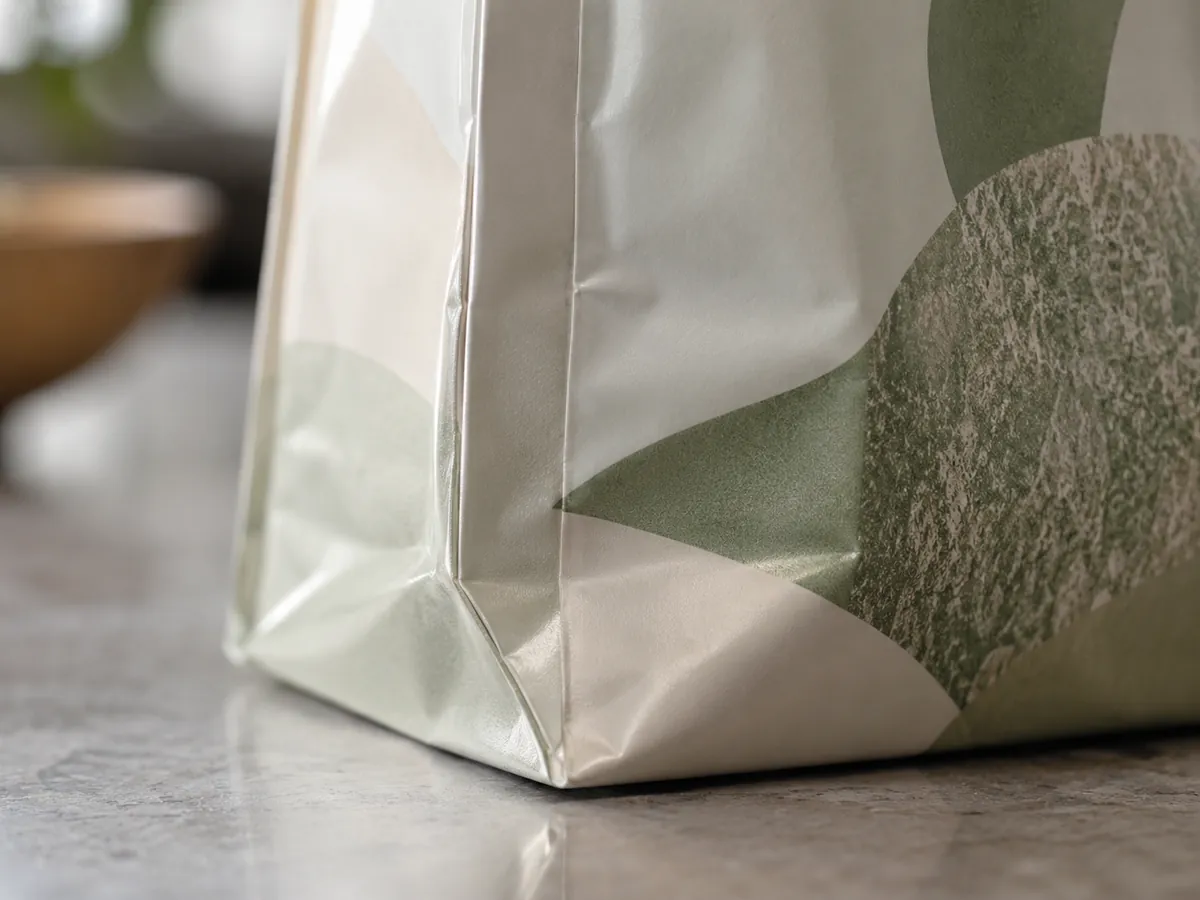
Four vertical corner seals define the bag’s edges, but they do not necessarily replace the longitudinal join that closes the tube. An equipment maker’s public quad-seal anatomy example includes an optional offset vertical seal. Its setup guide separately addresses horizontal and vertical seals before the corner-seal system. This is a documented example, not the route for all quad-seal bags.
- Locate four corner seals on the approved drawing and record how the tube’s longitudinal edges join.
- Mark top and bottom closures and their crossings with the corner seals.
- Confirm whether the base is folded or block-bottom, and where any zipper or tie is fitted.
- Do not infer four separate webs from four corner seals; require the converter’s actual web and fold drawing.
A filled rectangular profile can be supported by the corner seals, folds and contents.
Takeaway: Verify standing and case fit at the intended fill and remaining-fill condition.
How quad seal bags are made
There are two common ways.
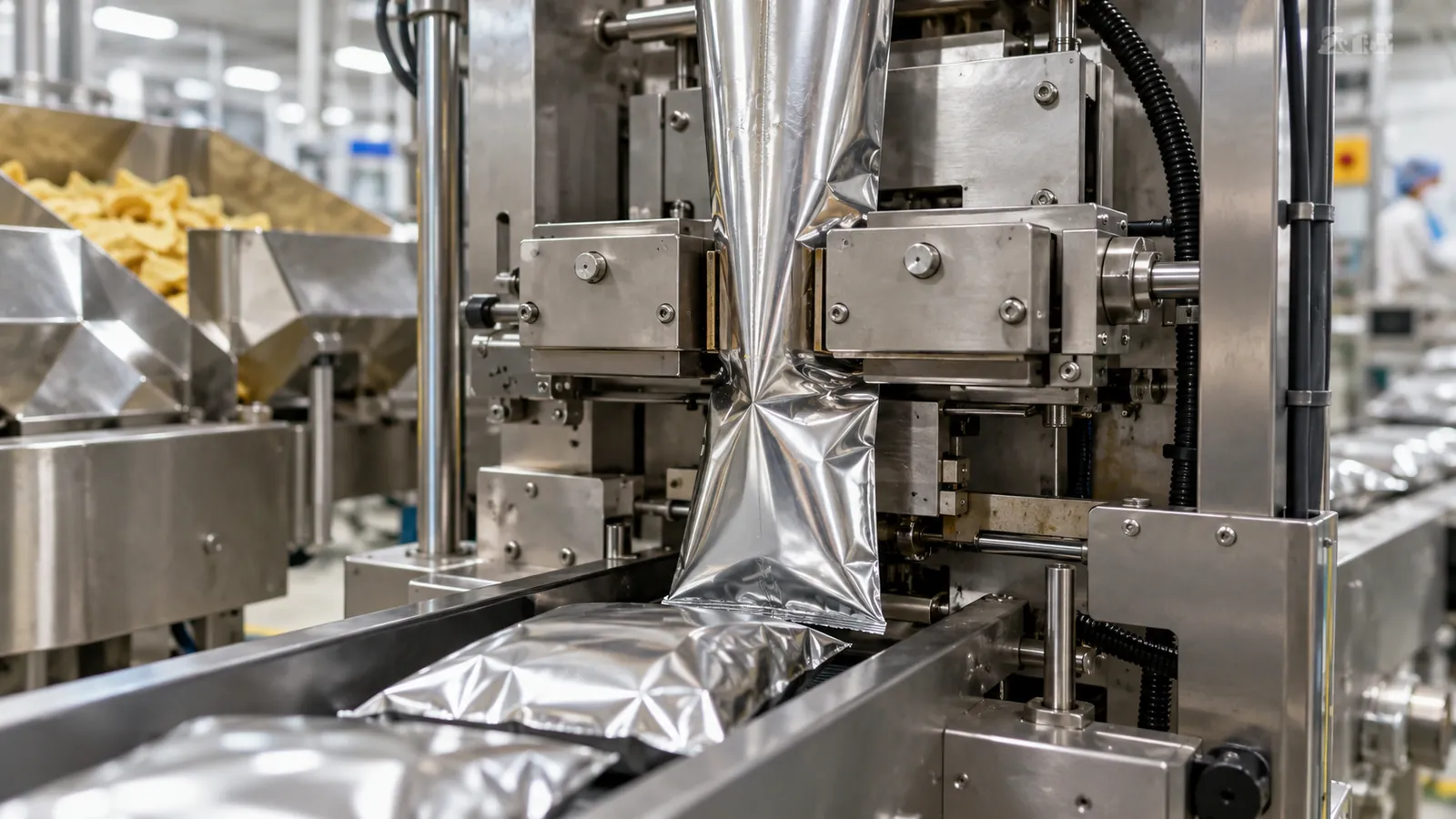
On a VFFS machine with a quad seal attachment, a vertical form-fill-seal machine forms film around a tube, and a quad seal kit uses a four-corner forming tube or a set of formers that fold the film into four panels. The machine seals four vertical corners and the horizontal top and bottom seals. This is usually done on dedicated machines or with a conversion kit, and the film has to run well through the more complex forming set. The VFFS film page covers how film runs on forming tubes and jaws.
The other route is premade bags. A converter makes quad seal bags and ships them flat to be opened and filled. This suits brands that want more shape variety, a zipper, a valve or finishing that is hard on a VFFS machine.
Takeaway: Premade pouch packaging materials covers the film side.
Where quad seal bags are used
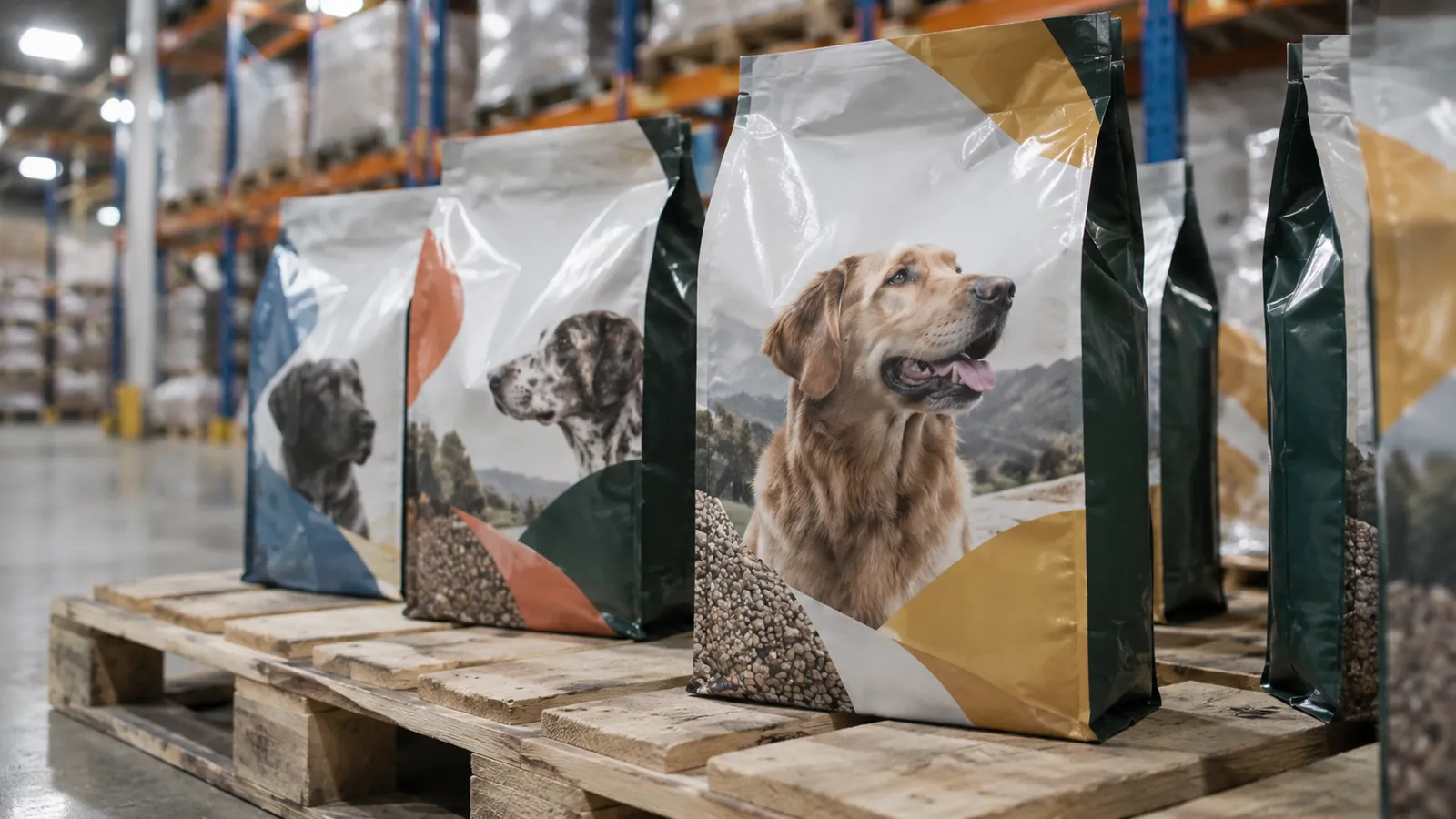
- Pet food. Larger bags hold shape, take a heavy fill and show a large printed area. Puncture resistance and fat resistance matter most; see pet food packaging.
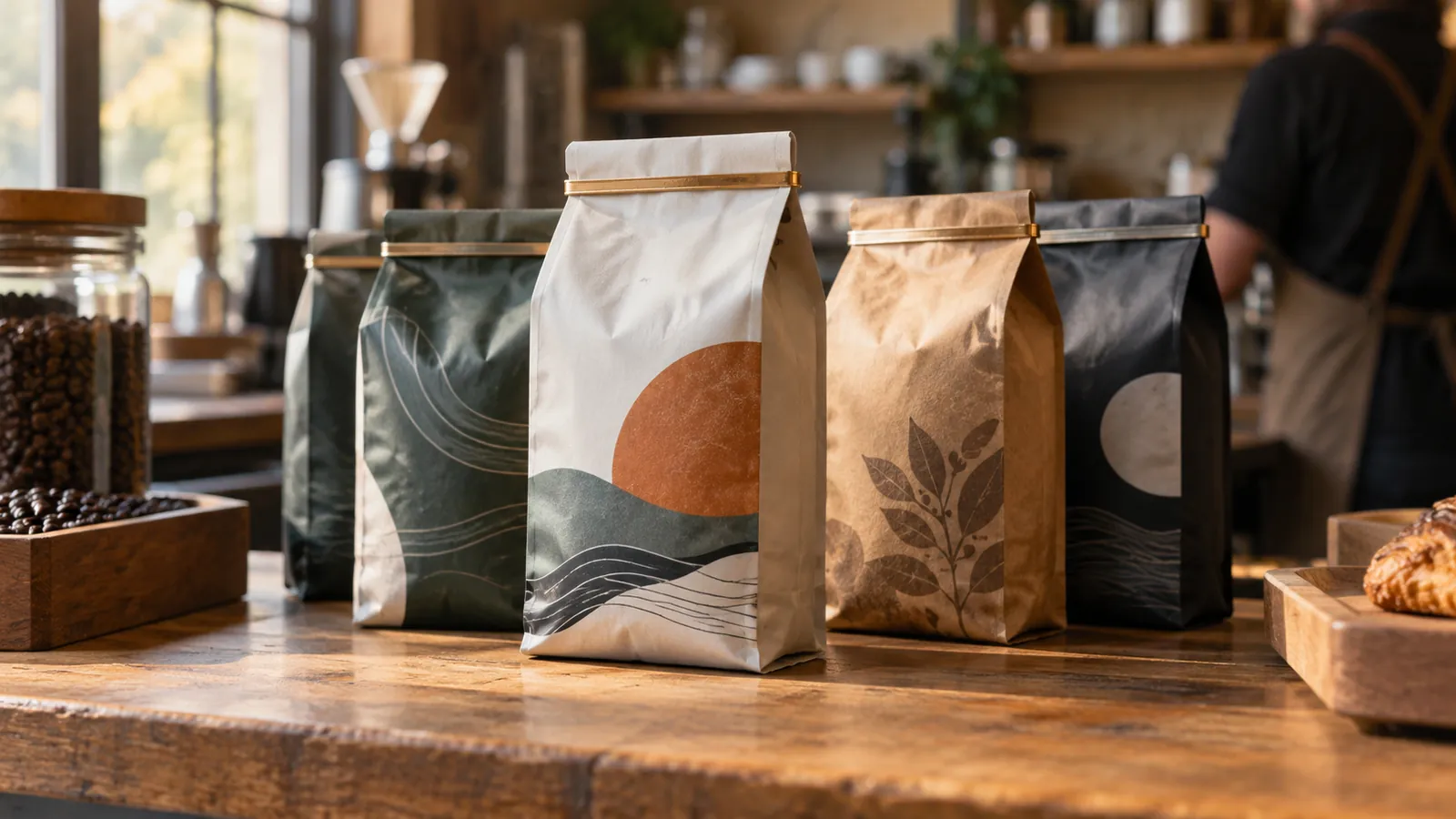
- Coffee. The squared pack looks premium and holds a valve and a zipper. Barrier needs are described in coffee packaging materials.
- Larger snack bags. Family-size or bulk snack packs use the format for shelf presence; see snack packaging film.
- Granola, nuts, rice, frozen vegetables and similar dry or frozen products where a stable, upright pack helps.
Strengths
Defined corner edges can provide separate print panels and a squared filled profile. Their useful area and standing behaviour depend on seal widths, gussets, base design and fill. One converter’s public premade example uses a fold-over base and warns that stability changes as contents are removed; other designs differ.
Compare at the same effective volume, product and material performance.
Takeaway: A squared outline alone does not prove more printable area, less film or better transport performance.
Trade-offs
- The forming set is more complex than for a pillow bag, with more adjustment points, and changeovers can take longer.
- Four vertical seals plus top and bottom seals mean more seals that must be made correctly, and more chances for leaks.
- Where the vertical seals overlap the bottom and top seals, the sections are thicker, so sealant, temperature and pressure need tuning. Seal initiation temperature explains the sealant behavior that sets the window.
- Record developed film width, repeat, seal allowances and trim per accepted pack rather than assuming more or less film per volume.
- Record usable output on the configured machine at the actual fill and film; no comparable public data support a universal output ranking here.
- Printed film must be registered across four panels, which asks more of the print and the machine.
Quad seal vs side gusset
Scroll horizontally to view all columns if needed. ↔
| Quad seal bag | Side gusset bag | |
|---|---|---|
| Seals | Four corner seals plus the specified longitudinal join and end closures | Specified back seal, folds and end closures |
| Shape when filled | Squared, held by corner seals | Brick-like, formed by gusset folds |
| Printable panels | Four distinct panels | Front, back and gusset folds |
| Stand stability | Record base and filled-pack result | Record base and filled-pack result |
| Machine | VFFS with quad seal kit, or premade | VFFS with gusset plates, or premade |
| Seal complexity | Higher | Lower |
Quad seal suits a product that needs a firm, squared pack and strong shelf presence. Evaluate a side gusset pouch on the same effective volume, material, fill state and machine configuration; record cost, output, film consumption and case result rather than assuming a ranking.
Takeaway: A premade pack with a flat base is covered under flat bottom pouch.
Materials
Film structure follows the product. Coffee needs high barrier, often with foil or a metallized layer. Pet food needs puncture resistance and fat resistance, with nylon or thicker layers. Snacks need moisture and light protection. The outer layer is commonly PET or BOPP, and the sealant is usually PE. PE film covers sealant grades and barrier film covers barrier options.
Takeaway: The film must also be stiff enough to run through the forming set without wrinkling, so check stiffness and coefficient of friction with the machine supplier.
Steps for specifying a quad seal bag
- Define the product, fill weight and whether the pack must stand.
- Decide between VFFS formed and premade bags based on volume and features.
- Check that the machine has a quad seal forming set for your bag size.
- Specify the film with the machine supplier: stiffness, slip and sealant.
- Set barrier needs and test with any valve or zipper in place.
- Run a trial and inspect the corner seals, including drop tests on filled cased bags.
Trial record for corners and case packing
Scroll horizontally to view all columns if needed. ↔
| Check | Conditions to record | Result / disposition |
|---|---|---|
| Corner and longitudinal seals | Drawing, film grade, jaw settings and sample ID | Strength, integrity and defect location |
| Top/bottom crossing points | Fold alignment and thickness transition | Channels, wrinkles or incomplete fusion |
| Filled-pack drop | Product, mass, conditioning and agreed drop sequence | Damage and repeat integrity result |
| Case packing | Effective volume, orientation, case and transport conditions | Fit, slump and abrasion |
| Route comparison | Same material performance, fill and machine configuration | Accepted output, film use and changeover |
Takeaway: Use the first-order risk checklist to retain approved drawings and lot samples, and the seal-strength guide to record test conditions separately from integrity checks.
Sources and method
- Equipment manufacturer, quad-seal bag anatomy and quad-seal setup guide: manufacturer corner/longitudinal seal distinction.
- Pouch converter, flat-bottom and quad-seal pouches: converter fold-over-base example and fill-dependent stability.
Accessed 8 October 2026. These are specific manufacturer examples, not site test results. No matched public speed or film-consumption data were found; those rankings have been replaced by trial variables.
Continue reading
Related articles
Side Gusset Pouch: Structure, Uses and Features
A side gusset pouch has fold-in side panels that expand when filled. Learn back seal options, uses, tin ties, valves and how it compares to flat bottom.
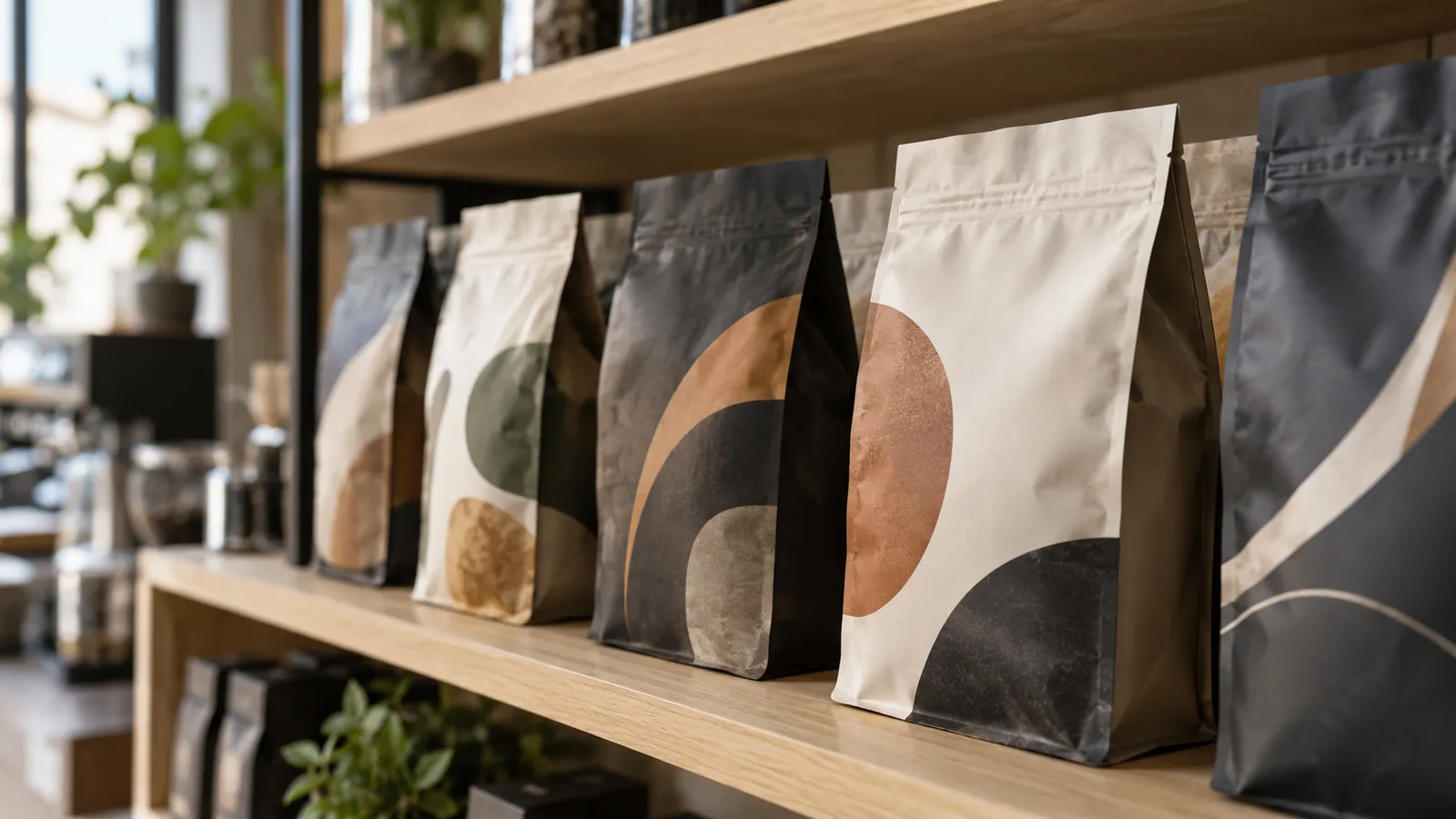
Flat Bottom Pouch: Box-Style Pouches Explained
A flat bottom pouch has a rectangular base and two side gussets that make a boxlike, self-standing pack. See construction, features and how it compares.
Pillow Bag Packaging: The Basic Form Fill Seal Bag
Pillow bag packaging is the simplest bag made on a vertical form fill seal machine: one back seal, two end seals, and a pillow-shaped pack.