
Side Gusset Pouch: Structure, Uses and Features
A side gusset pouch has fold-in side panels that expand when filled. Learn back seal options, uses, tin ties, valves and how it compares to flat bottom.
Mistaking a reclosure for an initial protective seal can leave a high-barrier product exposed. A side gusset pouch is a bag with two side panels folded inward between the front and back panels. When the bag is filled, the folds open and give it a brick-like shape. It is also called a side gusset bag or gusseted bag, and it is a classic format for coffee, tea, flour, sugar and pet food. Specify the longitudinal seam and any corner reinforcement separately. For barrier-sensitive coffee, validate the initial sealed pack; a folded top or tin tie is a handling reclosure, not evidence of restored airtightness.
Construction of a side gusset pouch
Start with a flat tube of film. The two sides are tucked inward in a “W” or “M” shape when seen from the top, so the bag lies flat when empty. Each fold is a gusset.
- The front and back panels carry the main graphics. When filled, the gussets and the product push them apart.
- Each side gusset is a fold of film between the front and back panel. The gusset depth sets how much the bag can expand, and so the volume.
- The bottom seal is a straight heat seal across the bottom, through all layers including the gusset folds. Some bags have a block bottom that is folded and glued or sealed into a flat base.
- The back seal is a vertical seal along the back panel that joins the film into a tube. Its type affects appearance, barrier and sealing.
- The filling opening is closed after filling; specify the initial protective seal separately from any reclosure.
Because the gussets fold in, the bag is stored and shipped flat, which is compact compared with a formed rigid container.
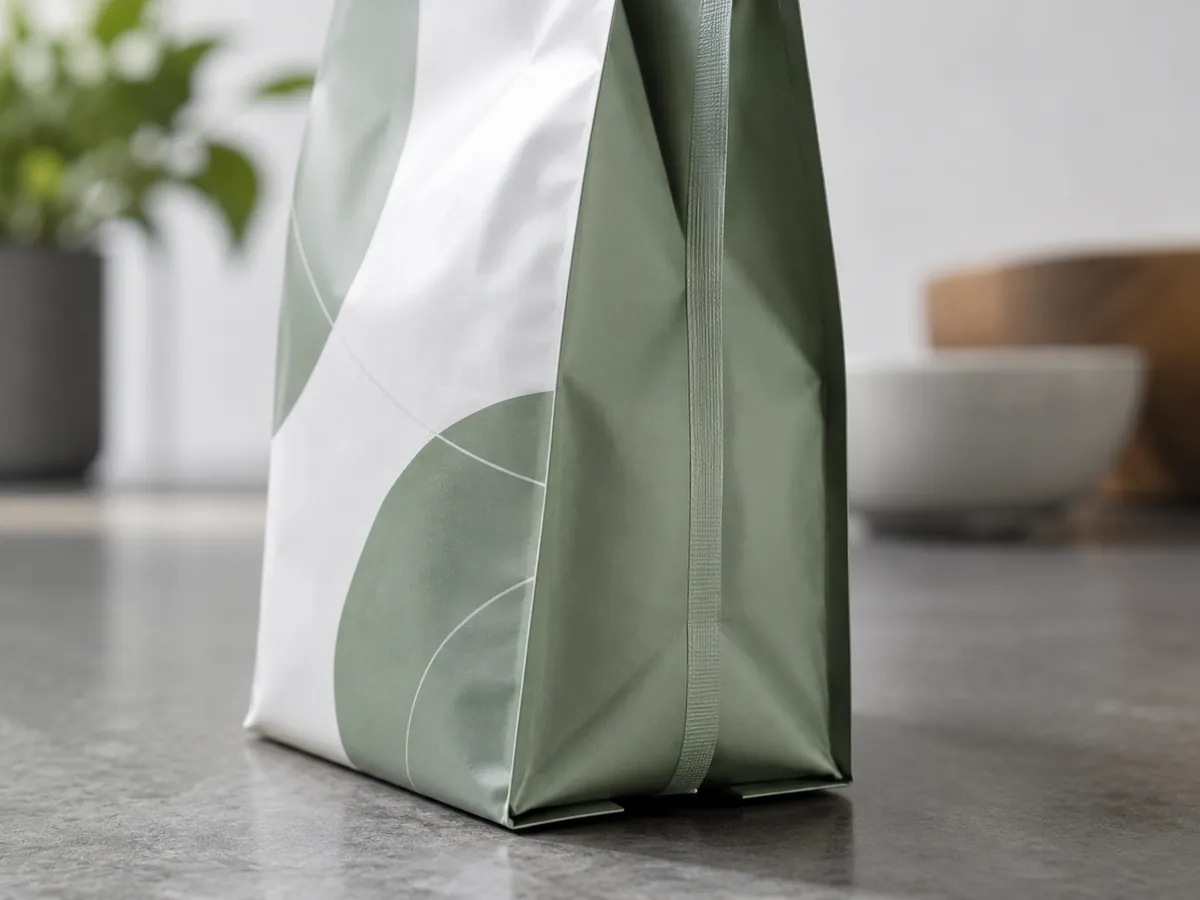
Back seal options: fin, lap and quad
Fin and lap describe the longitudinal seam. Quad describes four vertical corner reinforcement seals, a separate structural dimension; it does not by itself tell you where the tube-closing seam lies. A manufacturer’s public structural illustration shows corner seals added to a block-bottom construction. Request a drawing showing both gusset folds and every seam.
Scroll horizontally to view all columns if needed. ↔
| Longitudinal seam | Geometry to confirm |
|---|---|
| Fin | Inner sealant faces join; seam projects from the panel |
| Lap | One outer edge overlaps the other; verify outer-to-inner seal compatibility |
A four-corner design can retain gussets and a tube-closing seam. See quad seal bag for the related format; confirm the seam layout on the actual supplier drawing. VFFS film covers tooling and seal compatibility.
Common uses
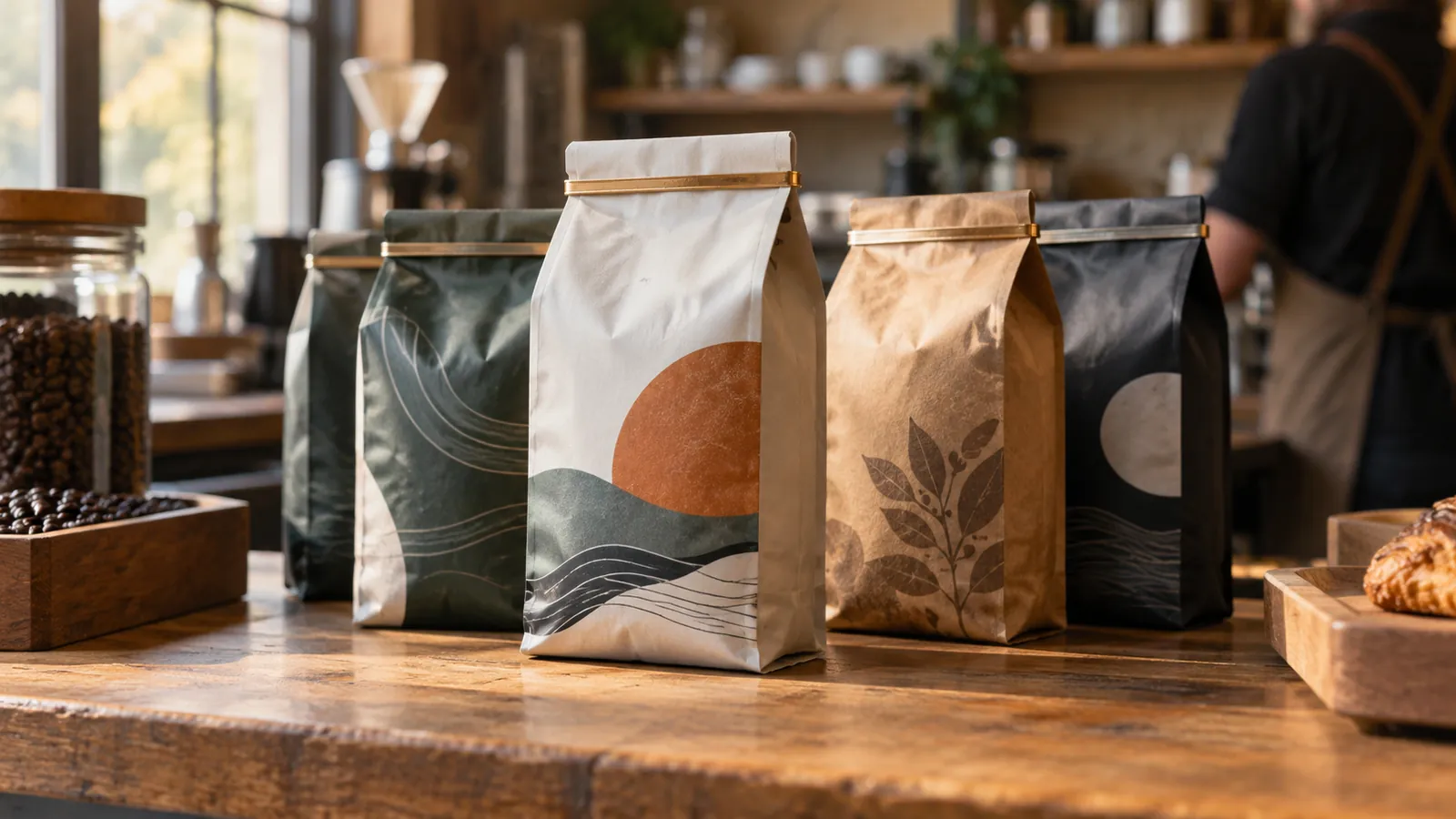
- Coffee: roasted whole bean and ground coffee are packed in side gusset bags, often with a one-way degassing valve and a tin tie or zipper for reclosing. The structure usually includes a foil or high-barrier layer; see coffee packaging materials.
- Tea: loose-leaf tea in a gusseted bag benefits from a moisture and aroma barrier.
- Flour, sugar and baking mixes: these dry staples use the format for its flat storage and good fill capacity.
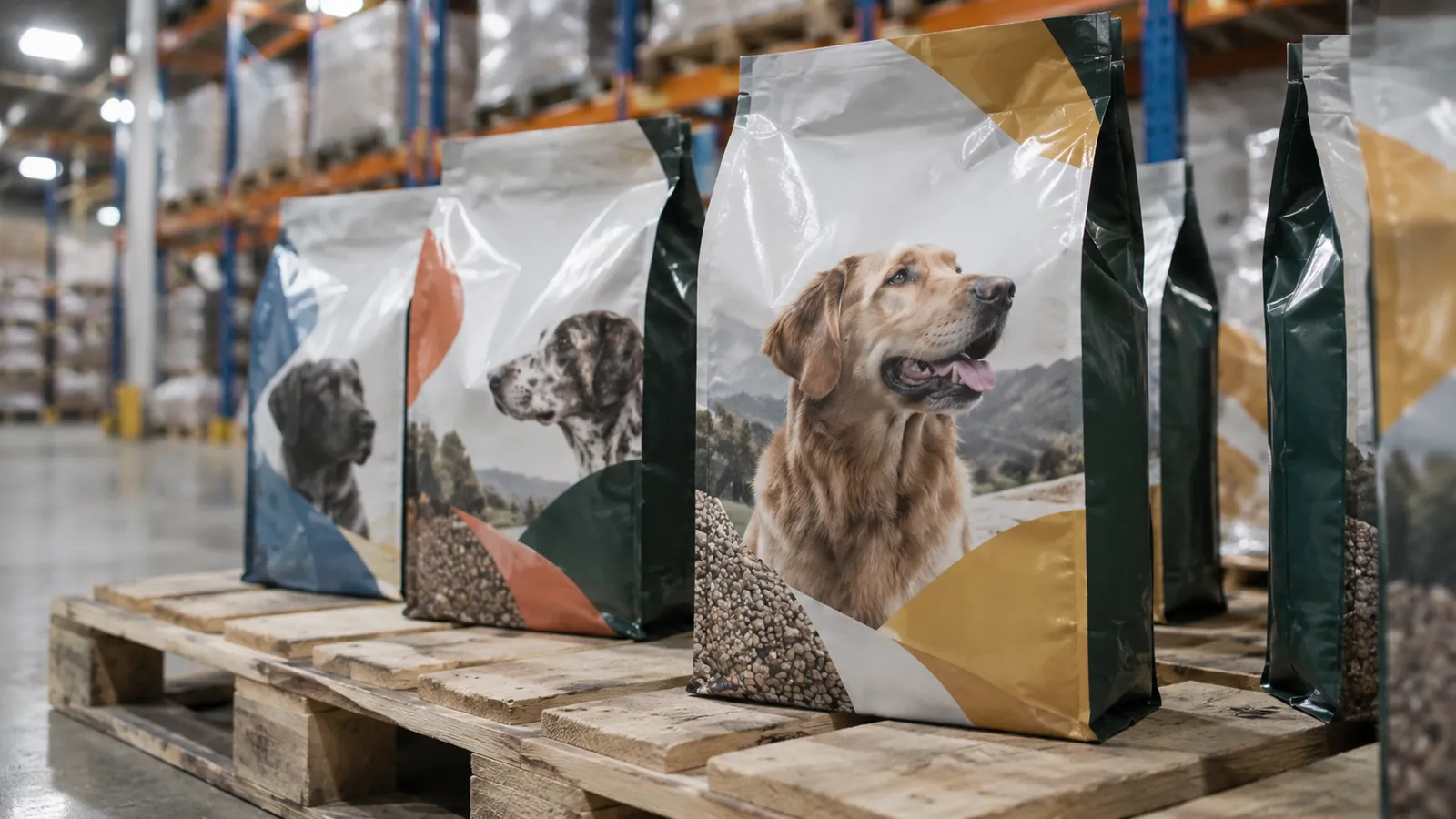
- Pet food and treats: larger side gusset bags carry heavier fills, and pet food packaging covers the demands on puncture and fat resistance.
- Bakery and snack products: bread, nuts and larger snack packs sometimes use the bag with a fold-over top.
Closing and reclosing
- A heat seal top is the simplest option: a straight seal across the top, often with a tear notch for opening.
- Fold-over and tape: a folded top can be held with tape or a label; do not assign airtight barrier performance from this closure alone.
- A tin tie is a thin metal wire in a paper or plastic strip, fixed to the bag and used to roll and secure the top. Record its role as a reclosure and evaluate the metal component against recycling and detection requirements.
- Press-to-close zippers can be added to a side gusset bag, though positioning and sealing across the gusset need care (zipper pouch packaging).
- A degassing valve is a small one-way valve that lets gas escape from fresh roasted coffee. It is applied to the film before or after forming, and the seal around it must be tight.
Filling and sealing
Side gusset bags are made either on a VFFS machine with gusset forming attachments or as premade bags filled on a separate line.
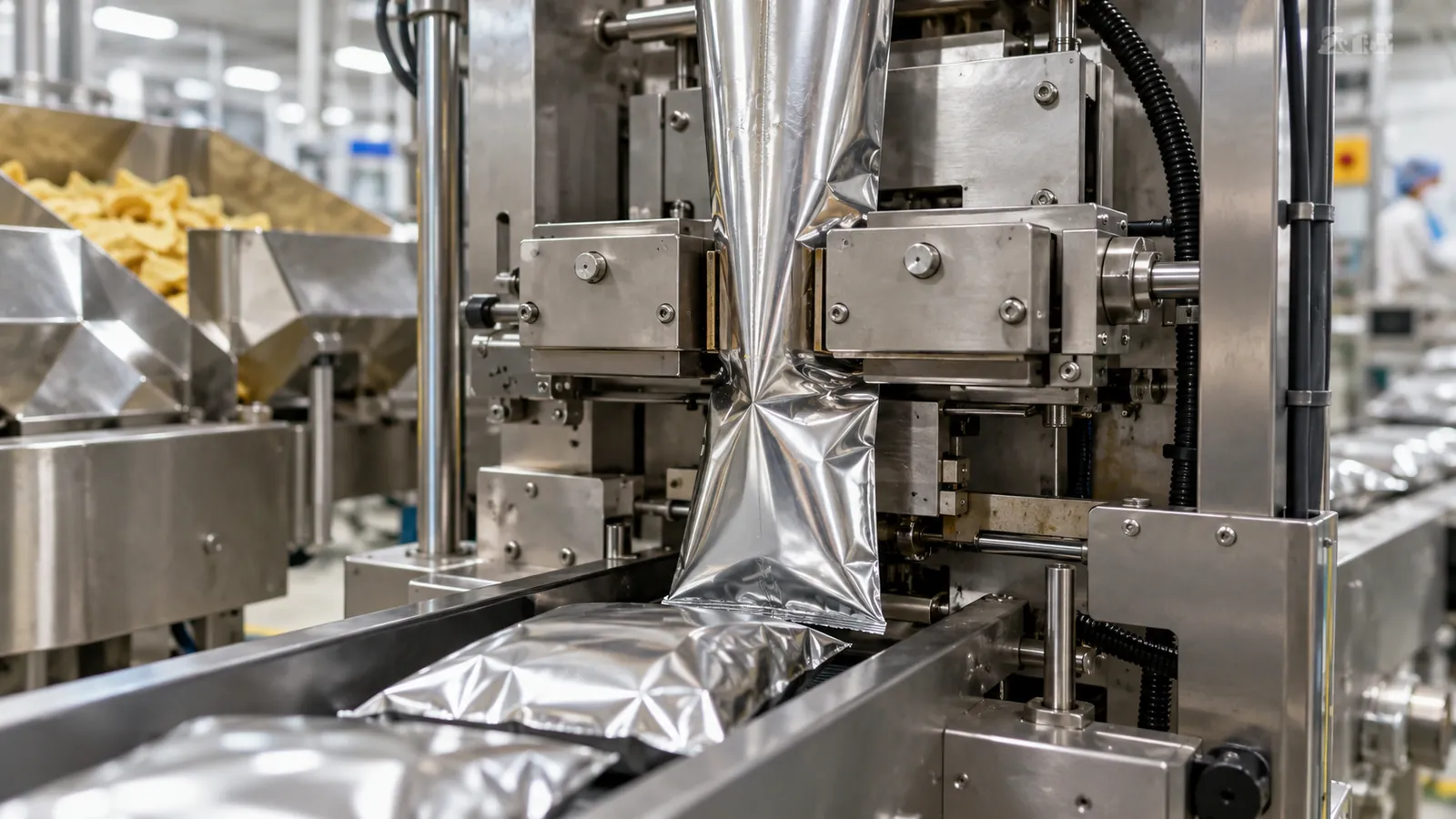
- On VFFS, the film is formed around a tube, the gussets are folded in with plates, and the back seal is made. The bottom is sealed, product drops in, and the top is sealed to make the next bottom. Gusset plates, film tension and registration of printed film all affect results.
- Premade bags are opened and filled, then closed on a top sealer or folder. Gusset bags are less common on automatic pouch fillers than flat bottom or stand-up pouches, so check compatibility with the filler.
- Where the seal passes through the gussets there are more layers. Jaw pressure, temperature and dwell may need adjustment, and the sealant should tolerate thickness changes. Seal initiation temperature explains seal temperature behavior.
- Control flour or powder in the seal area; validate seal width and integrity on contaminated and clean trial samples.
- A bag with too much air looks pillowy, and one with too little is hard to square. Settling and tamping help.
Side gusset vs flat bottom
Scroll horizontally to view all columns if needed. ↔
| Side gusset | Flat bottom | |
|---|---|---|
| Base | Folded flat; becomes a brick when filled | Preformed flat rectangular base |
| Standing | Often needs support; stands if filled firmly and tapped | Verify standing on filled samples |
| Printable panels | Front, back and the gusset area | Five panels |
| Typical production | VFFS or premade | Mostly premade |
| Cost | Enter actual cost per good pack | Enter actual cost per good pack |
| Closure | Tin tie, fold-over, heat seal, zipper | Zipper, pocket zipper, heat seal |
Compare filled-pack standing and case fit with a flat bottom pouch before selecting the base.
Materials
Laminates are chosen for barrier, stiffness and sealability. A common construction is a printed PET or BOPP outer layer, a barrier layer, and a PE sealant. For coffee, foil or a metallized layer is often present. PE film covers sealant properties and barrier film covers barrier options. Paper outer layers are also used for some side gusset bags, which affects barrier and sealing.
What to decide when specifying a side gusset pouch
Use the first-order risk checklist with this record. Identify sample/lot, machine, conditioning and agreed limits before testing.
Scroll horizontally to view all columns if needed. ↔
| Check | Record |
|---|---|
| Dimensions and capacity | W ___; g ___; height ___; usable volume ___ |
| Fill | Mass ___; measured bulk density ___; settled level ___ |
| Seal intersections | Seam drawing ___; jaw settings ___; leak/strength result ___ |
| Initial seal and reclosure | Initial seal result ___; opening/reclosing observations ___ |
| Valve, if fitted | Position ___; function and attachment leak result ___ |
| Transport | Drop/vibration conditions ___; case fit and failure location ___ |
Seal strength testing helps separate a strength measurement from whole-pack leakage. Do not calculate usable volume from outside dimensions alone.
Method and sources
A manufacturer’s public package-stability article illustrates four corner reinforcement seals added to a block-bottom bag; its description distinguishes reinforcement from package-closing seals. The geometry drawing here is an editorial idealization, not a volume rating. ASTM F88/F88M-23 covers separation strength, and F2096-11(2019) covers gross-leak detection. Those scopes do not establish a tin tie’s airtightness. Manufacturer source URL and reviewed structural illustration are retained in the evidence record, reviewed October 8, 2026.
Continue reading
Related articles
Quad Seal Bag: Four Corner Seals and When to Use Them
A quad seal bag has four vertical corner seals that give a squared, stable shape. Learn how it is made, where it is used and how it compares to side gusset.
Flat Bottom Pouch: Box-Style Pouches Explained
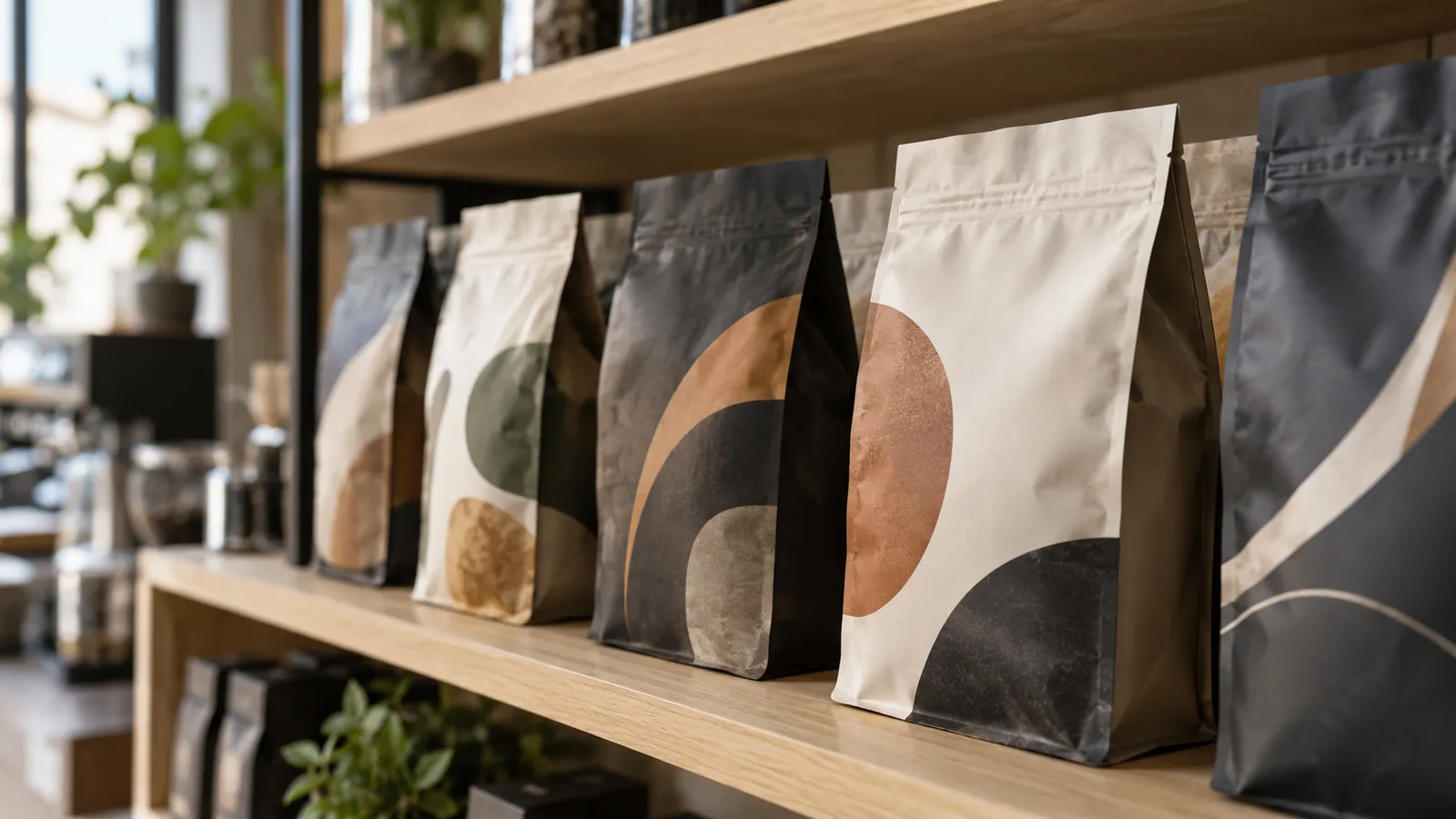
A flat bottom pouch has a rectangular base and two side gussets that make a boxlike, self-standing pack. See construction, features and how it compares.
Pillow Bag Packaging: The Basic Form Fill Seal Bag
Pillow bag packaging is the simplest bag made on a vertical form fill seal machine: one back seal, two end seals, and a pillow-shaped pack.