
PVC vs PETG Shrink Film: Clarity, Shrink and Recycling Compared
PVC vs PETG shrink film compared on clarity, shrink behavior, sealing, cold handling, recycling and cost, with guidance on which sleeve film to choose.
Switching sleeve material without qualifying the seam and tunnel can produce splits or distorted graphics. Keep a PETG candidate when a chlorine-free sleeve is required and its contour trial passes; keep a PVC candidate only when the formulation meets the destination requirements and its process trial passes. Do not assume either has a fixed price, shrink or cold-handling advantage.
This is a public-document selection comparison, not this site’s testing. Details are on the PVC and PETG pages; the shrink film overview separates sleeve and overwrap routes.
PVC vs PETG at a glance
Specify the pack route and exact grade first. PVC sleeve and overwrap formulations are not interchangeable, and plasticized PVC does not define every sleeve grade.
Scroll horizontally to view all columns if needed. ↔
| Input | PVC candidate | PETG candidate |
|---|---|---|
| Formulation and pack route | Sleeve or overwrap; additives declared | Sleeve grade; formulation declared |
| Shrink | TD/MD curve, medium, time and gauge | TD/MD curve, medium, time and gauge |
| Seam / seal | Route-specific compatibility and test | Route-specific compatibility and test |
| Cold handling | Same conditioning and finished-pack trial | Same conditioning and finished-pack trial |
| Cost | Dated quote, usable area and rejects | Dated quote, usable area and rejects |
Clarity and appearance
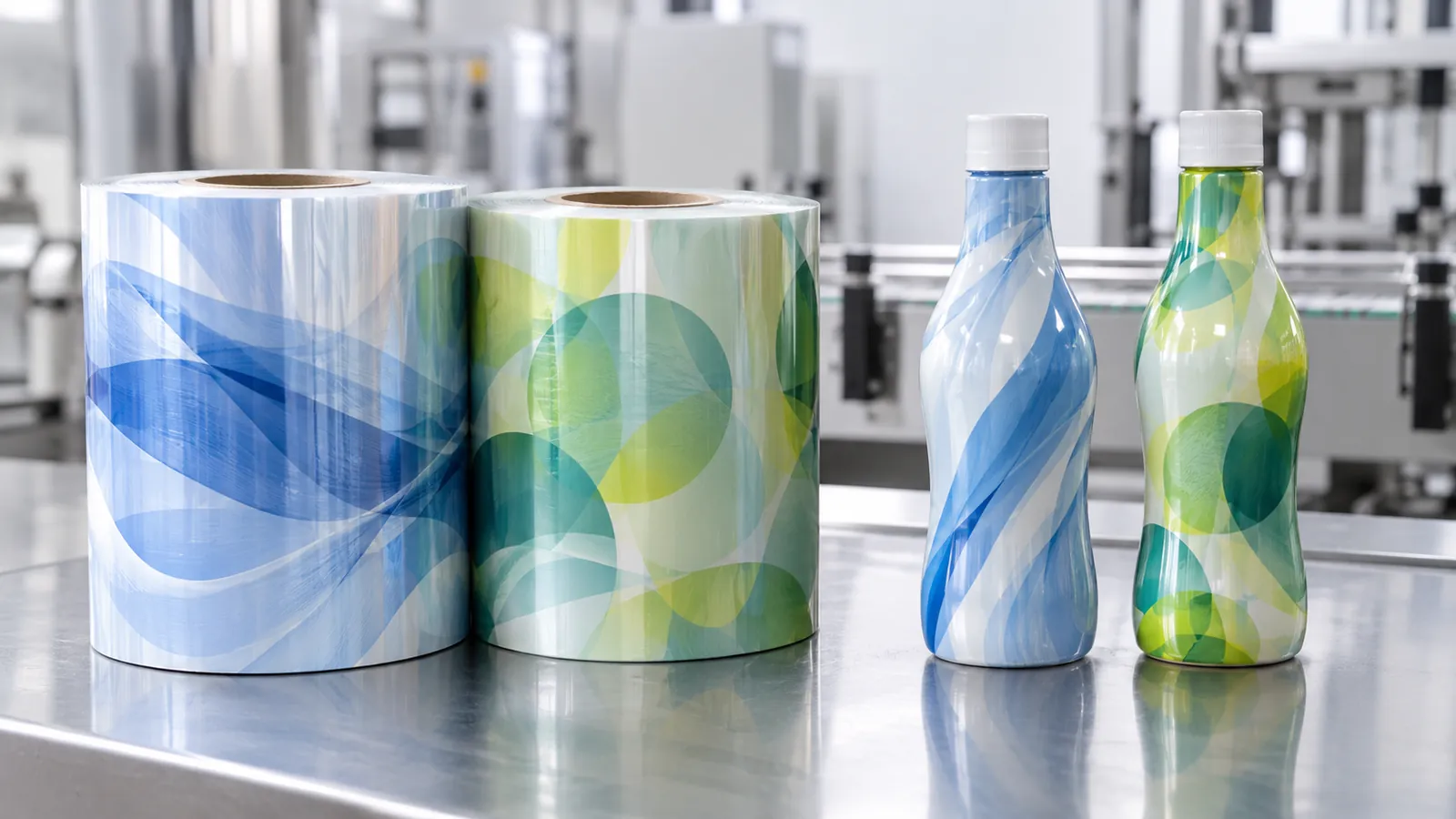
Both films are clear and print well, and both are commonly reverse-printed for sleeves. PVC is usually described as having a very bright, glassy gloss. PETG is also clear and glossy and holds fine graphics, so for most consumer packs the difference is small. If the look decides it, put printed samples from both on the actual container and compare them under store lighting.
Shrink behavior
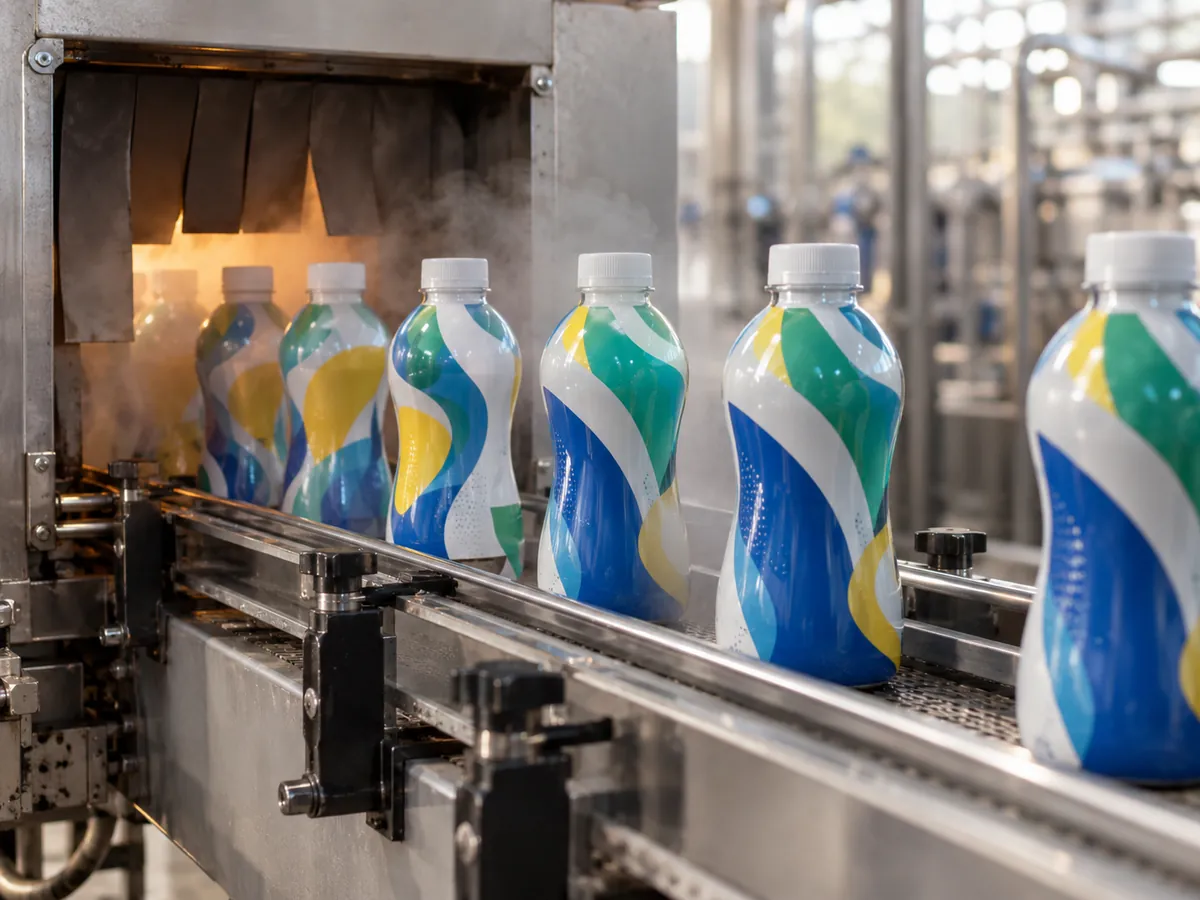
Match TD and MD curves to the actual contour and height requirement. Use the same test temperature, medium, time and gauge basis before comparing grades; a headline endpoint does not establish the best film for a neck or shoulder.
Changing material requires a tunnel trial on filled containers. Record zone temperatures, steam or air conditions, line speed, seam loading and graphics position. Do not assume PVC always starts shrinking sooner or PETG always fits deeper contours.
Sealing, seaming and handling
Separate these illustrative routes; neither sequence prescribes a solvent, temperature or formulation.
Scroll horizontally to view all columns if needed. ↔
| Route | Process sequence | Validate |
|---|---|---|
| Solvent-seamed sleeve | Printed flat web → overlap bond → tube → applicator → tunnel | Solvent compatibility, cure, seam width and post-shrink bond |
| Heat-sealed overwrap | Flat or folded film → seal around product → tunnel | Seal window, corner stress and post-shrink seal strength |
For heated PVC, HSE PPIS13 (revision 1) identifies hydrogen chloride when material is overheated. Apply the exact SDS and exposure assessment to the process. A solvent seam is a different exposure route; chlorine-free PETG does not remove the need to assess solvent or heat-processing hazards.
For both candidates, record stiffness at the actual gauge and check slit edges, folds and seams after the same cold conditioning. No grade-matched data here establish universal PVC/PETG seal-strength or cold-handling rankings.
Takeaway: qualify the seam or seal route before comparing tunnel settings.
Machinability
Trial the selected grades on the installed applicator and tunnel. Record tube opening, cutting, sleeve placement, heat profile and rejected packs; a polymer name does not establish a forgiving setup or a higher line speed. The shrink-wrapping film guide connects those inputs with equipment, and shrink-wrap packaging covers pack formats.
Recyclability
For North American PET bottles, the APR PET rigid design guide, checked October 9, 2026, separates label sorting from material compatibility. PVC labels are incompatible with this stream; a PETG sleeve requires its own finished-label evidence.
Perforation helps removal only if the sleeve is actually removed. Partial coverage can improve bottle recognition but does not change material compatibility. Replacing the sleeve with a floating polyolefin is a material change, requiring printed-label, ink and adhesive checks. None of these is an automatic compatibility guarantee for ordinary PETG.
Use design for recycling to record the market and complete structure; recyclable flexible packaging covers collection boundaries.
Cost drivers
Compare dated quotes on the same delivery and conversion basis; no routine PVC/PETG mass-price order is assumed.
- Gauge: whether each film can run at a thinner gauge for the same sleeve.
- Scrap and rework: splits, seam failures and wrinkling during shrink.
- Line speed: tunnel capacity and setup time.
- Compliance and retailer rules: a restricted material may force a late switch and requalification.
- Handling losses: cold-brittleness damage in distribution.
The reasoning behind this is in the guide on when cheaper film costs more.
When to choose PVC
Keep the candidate if the required shrink curve and seam or seal route pass, the exact formulation is accepted for the destination, and the conditioned pack meets the handling requirements. A low tunnel setpoint or quoted mass price alone is insufficient.
When to choose PETG
Keep the candidate if a chlorine-free sleeve is required and its contour, seam and conditioned handling trials pass. Where a recycling claim is required, obtain applicable whole-label evidence instead of relying on perforation.
Other sleeve and wrap options
Overwraps on boxes and bundles are usually handled by POF shrink film, and oriented polystyrene is another sleeve option, covered in PETG vs OPS shrink film.
Deciding between PVC and PETG
- Map the container: shape, deepest contour and whether the sleeve is full-body or partial.
- Check retailer and market rules on PVC for each destination.
- Decide the recycling approach and the guidance you will follow.
- Match the tunnel and trial both films on your line.
- Compare total cost, including scrap and handling.
- Request food-contact documentation if relevant, and confirm the rules for the destination market.
Record grade and gauge, seam or seal settings, TD/MD curve conditions, tunnel zones, cold conditioning, removal observations and rejected output for each candidate. Align those records with the film specification comparison guide.
Sources and method
The linked HSE guidance applies to heated-plastics controls, and APR to North American PET rigid packaging. Checked October 9, 2026. This checklist does not supply a universal shrink curve, cold-performance ranking or cost order for PVC and PETG.
Continue reading
Related articles
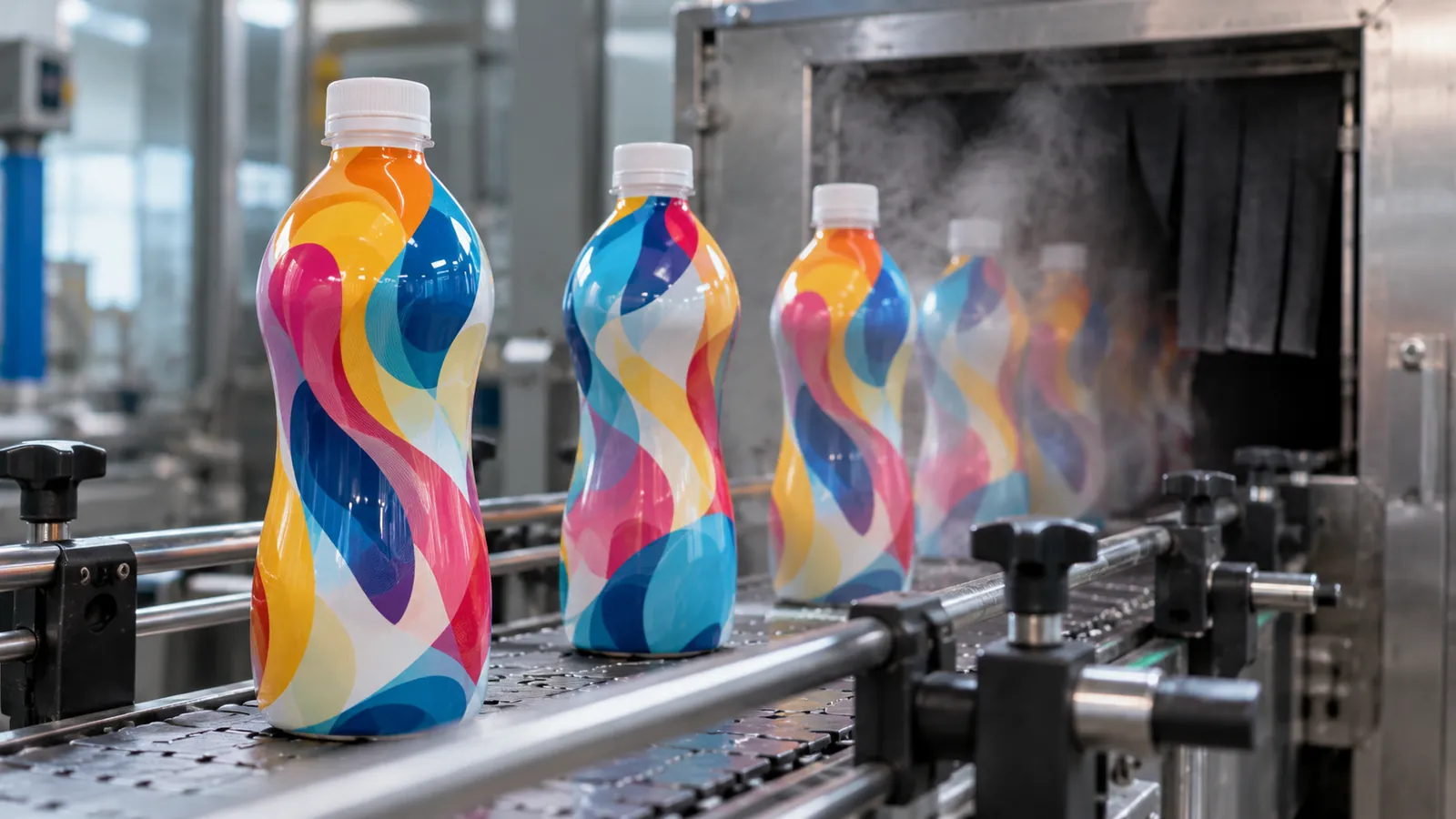
PETG Shrink Film: Shrink Sleeves, Properties and Uses
PETG shrink film is a high-shrink, transverse-oriented film used for sleeve labels on bottles and contoured containers. See properties, uses and recycling.

PETG vs OPS Shrink Film: Choosing a Shrink Sleeve Material
PETG vs OPS shrink film compared on shrink, toughness, stiffness, print, recycling and storage, with advice on choosing a shrink sleeve material.
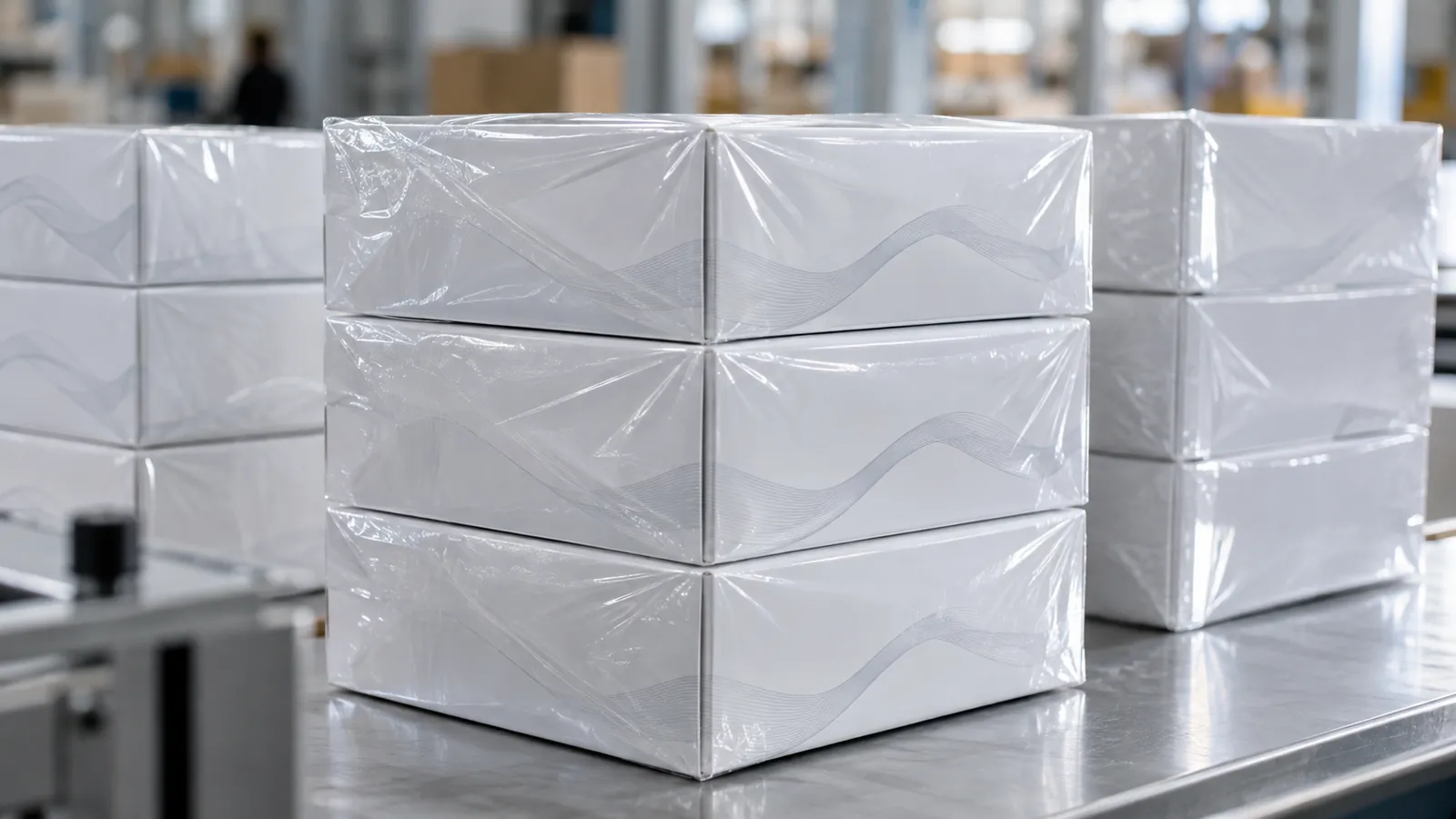
PVC Shrink Film: Properties, Applications and Limitations
PVC shrink film for sleeves and overwraps: assess heated-process controls, grade-specific seals, cold handling and replacement trials against POF or PETG.