
Blister Foil: Lidding Foils for Pharmaceutical Blister Packs
Blister foil is aluminum-based lidding for pharmaceutical blister packs. Learn lidding types, lacquers, sealing variables and checks.
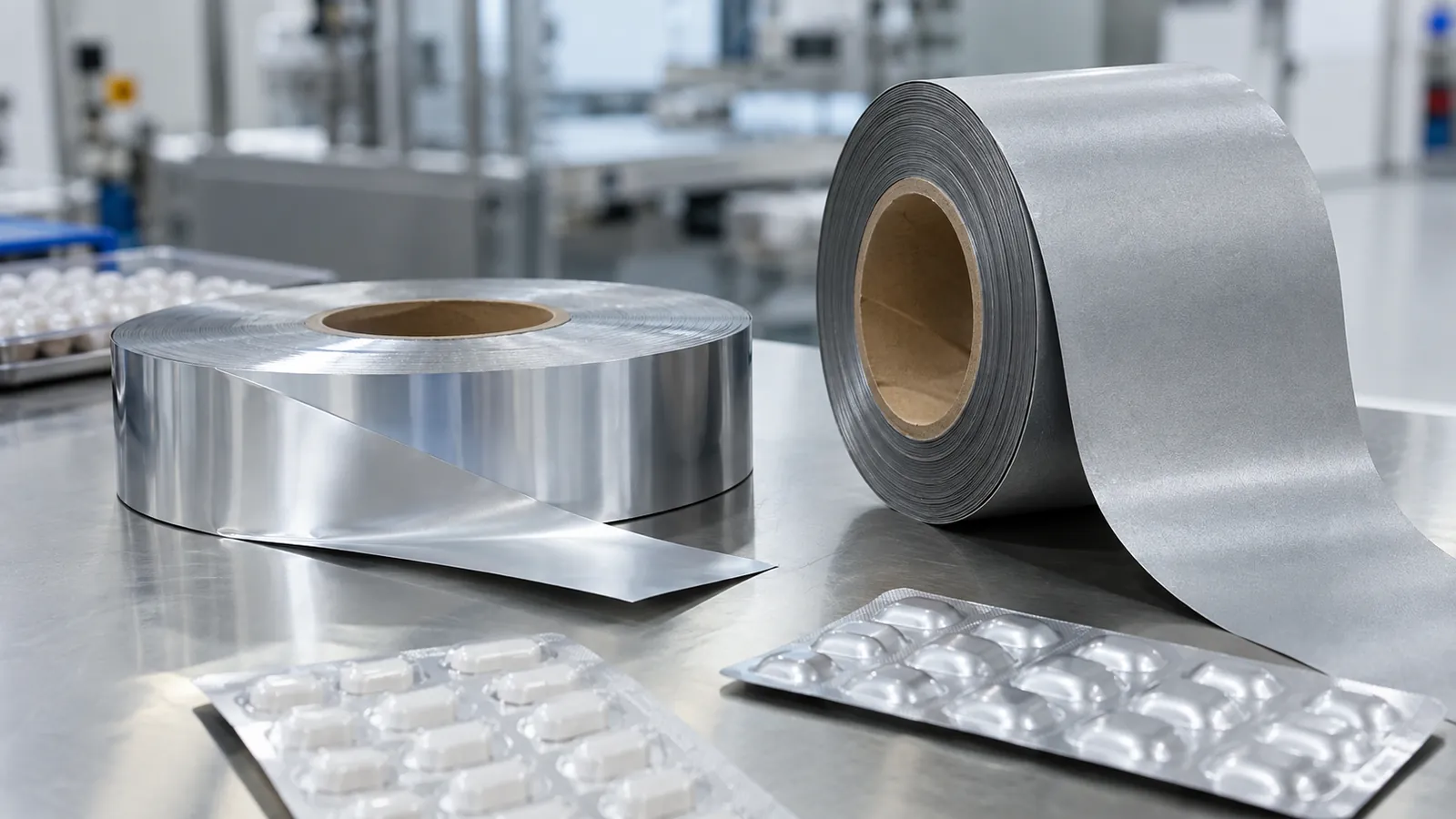
A lacquer matched to the wrong forming web can leave a weak or leaking seal. Blister foil is the lidding material heat-sealed over a formed blister cavity to close and protect tablets, capsules and similar doses. The classic version is a hard-temper aluminum foil, printed on the outside and coated on the inside with a heat-seal lacquer, so a patient can press a tablet through the foil. Variants add paper and PET layers for peel-push opening or make the lid peelable; child resistance needs finished-pack validation.
This page covers the lid. General foil properties are in aluminum foil packaging, and the pharmaceutical packaging foil guide helps you choose among all pharma foil types.
Lidding types at a glance
Scroll horizontally to view all columns if needed. ↔
| Lidding type | Construction (typical) | Use |
|---|---|---|
| Push-through foil | Hard-temper foil, primer outside, heat-seal lacquer inside | Push-through designs |
| Peelable foil | Foil laminate with peel-optimized lacquer | Packs opened by peeling, some child-resistant designs |
| Peel-push child-resistant | Paper/PET/foil laminate with heat-seal layer | Packs needing child-resistant access |
| Lidding for cold-form | Foil-based lid with lacquer matched to the cavity inner film | Alu-alu blisters |
Push-through blister lidding foil
Push-through designs frequently use hard foil. A manufacturer’s November 2022 foil-lidding overview also describes soft-temper alternatives, so neither a fixed gauge nor hard temper defines every lid. Specify the aluminum thickness separately from print, lacquer and any additional films; validate opening force on the finished blister.
The two faces do different jobs:
- Outer (printed) side: carries a primer or protective lacquer so inks adhere and survive handling. Printing carries product and batch information.
- Inner (sealing) side: carries a heat-seal lacquer that bonds to the forming web when heat and pressure are applied.
Matching the lacquer to the forming web
The heat-seal lacquer must be chosen for the material it will seal to. A lacquer that seals well to one web may give a weak or inconsistent seal on another. Common forming webs include:
Scroll horizontally to view all columns if needed. ↔
| Forming web | Surface and lacquer evidence to record |
|---|---|
| PVC | PVC sealing face and approved lacquer grade |
| PVDC-coated PVC | Which face/coating contacts the lid; approved pairing |
| PP | Exact PP surface grade and PP-compatible lacquer |
| PCTFE laminate | Identify the exposed sealing layer |
| Cold-form laminate | Inner film and lid lacquer as an approved pair |
Lacquer type, coat weight and sealing window are specified per web, and the supplier should state which webs a lacquer is validated for. Changing the forming film without re-checking the lacquer is a common source of seal problems. Higher-barrier webs (see high barrier film) still depend on the lid and seal for overall protection.

Scroll horizontally to view all columns if needed. ↔
| Lid position, outside to product | Function |
|---|---|
| Print and protective coating | Information and print protection |
| Aluminum foil | Lid barrier and selected opening behavior |
| Heat-seal lacquer | Bonds to the validated forming-web surface |
This is a schematic sequence for coated foil; composite lids add layers.
Peelable and child-resistant blister lidding
Peelable blister foil uses a lacquer and structure designed to separate cleanly at the seal when the user pulls the lid back. Validate peel force and seal integrity together on the intended structure.
Peel-push child-resistant lidding laminates add layers, typically paper and PET bonded to foil. The user first peels back a layer to expose the foil, then pushes the tablet through. The opening sequence alone does not prove child resistance or adult accessibility. Confirm destination-market requirements and test the finished pack. For US special packaging, CPSC’s PPPA FAQ identifies 16 CFR §1700.20, January 1, 2025 edition as the test protocol; confirm applicability to the product rather than certifying a lid from its layer names.
Blister foil vs cold form foil
Blister lidding is the lid; temper follows the opening design. Cold-form foil is a thick, soft, formable laminate that becomes the cavity itself, whose finished-pack barrier depends on forming and sealing integrity. A common construction is oriented polyamide, aluminum and PVC. The pharma foil guide covers cold-form webs. In cold-form packs the lid is still a lidding foil of the type described here. A longer comparison is in blister foil vs cold form foil.
Sealing on blister machines
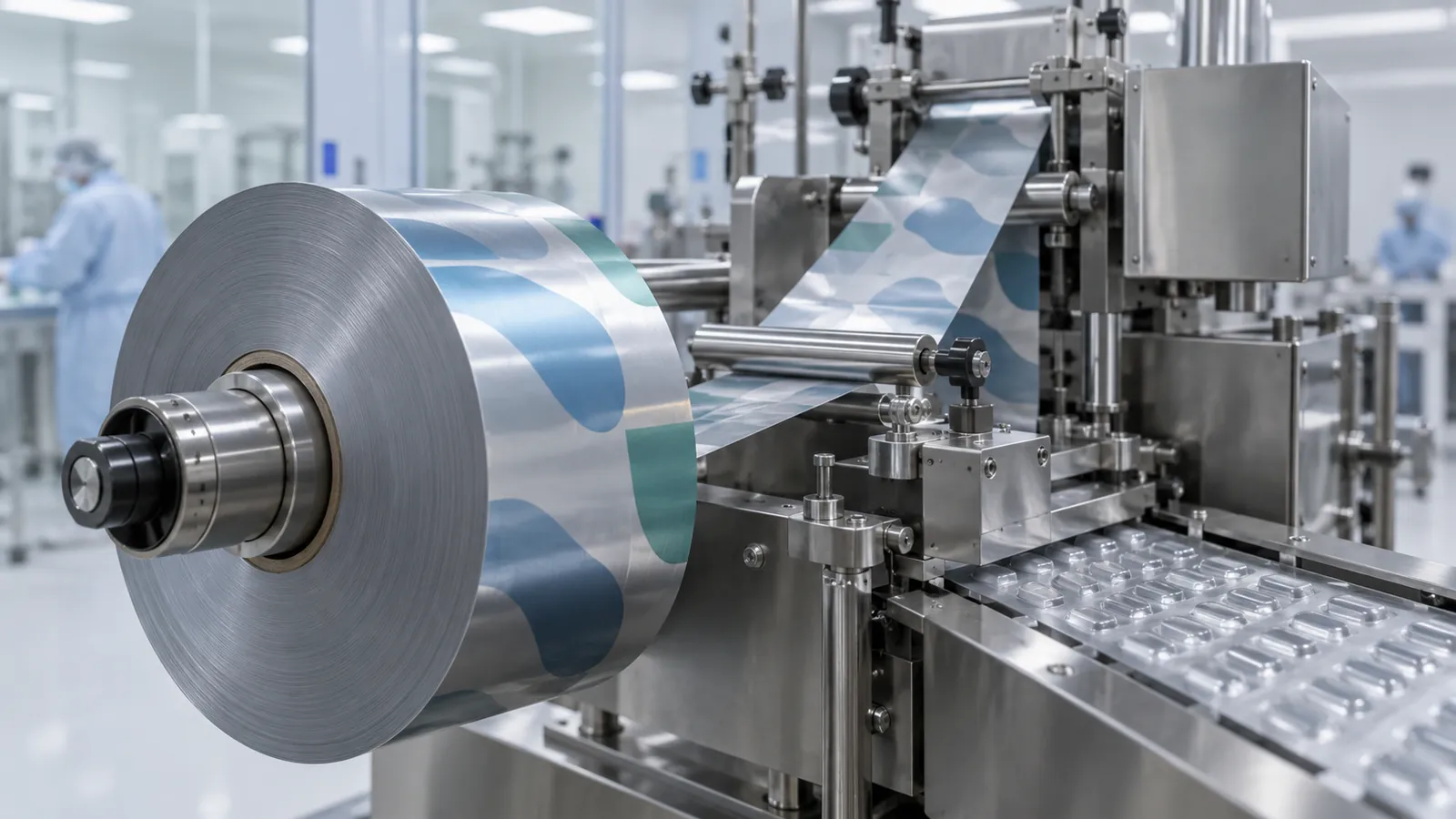
A heated tool seals the lid to the forming web. Check four variables:
- Temperature: too low gives incomplete bonding, too high can damage lacquer, distort the web or cause print and blister defects.
- Pressure: must be even across the sealing area; uneven pressure leaves weak spots.
- Dwell time: the seal needs time to form, which links machine speed to temperature.
- Tool condition: worn or contaminated sealing surfaces and embossed grids affect results.
Two sealing styles are widely used. Flat-plate sealing presses the whole blister card at once and is often seen on intermittent-motion machines. Rotary sealing runs the web between heated rollers and suits continuous, higher-speed operation. Rotary seals have less dwell time for a given speed, so temperature and pressure windows differ. Qualify supplier starting settings on your line.
How heat-seal behavior is described is covered in seal initiation temperature.
Quality checks
Scroll horizontally to view all columns if needed. ↔
| Check | What it looks for | Typical method |
|---|---|---|
| Pinholes | Holes in the foil that break the barrier | Light-table inspection, supplier statements on pinhole limits |
| Seal integrity | Complete seal around every cavity, no channels | Visual, dye or vacuum leak tests |
| Seal strength | Adequate bond; for peelable foil, controlled peel force | ASTM F88/F88M-23 for seal strength |
| Print quality | Legibility and adhesion of print | Visual and abrasion checks |
| Codes and verification | Batch, expiry and any serialization marks readable and correct | Inline vision or code-reading systems |
| Push-through force | Tablet can be released without crumbling or foil flaking | Functional tests on finished packs |
Validate finished-pack seals as well as the laminate.
What to put in a blister foil specification
Copy this record when comparing a proposed lid and forming web.
Scroll horizontally to view all columns if needed. ↔
| Input | Proposed specification / evidence | Trial result / acceptance reference |
|---|---|---|
| Foil thickness, temper, defects | Grade and tolerance: ___ | Inspection: ___ |
| Lacquer and forming surface | Approved pair and coating: ___ | Strength/integrity: ___ |
| Printing and registration | Layout and protective coating: ___ | Legibility/abrasion: ___ |
| Seal window | Temperature, pressure, dwell: ___ | Line settings and range: ___ |
| Opening mode | Push/peel design and method: ___ | Functional test: ___ |
| Child resistance, if applicable | Market protocol and finished-pack report: ___ | Applicability/result: ___ |
| Compliance and changes | Supporting documents and change notice: ___ | Review reference: ___ |
The pharmaceutical packaging overview places lidding among other formats. Use the film specification comparison record to keep conditions consistent before changing the lid or web.
Sources and method
The linked manufacturer overview describes constructions, not a recommendation or this site’s testing. ASTM F88/F88M-23 measures seal strength, which is separate from leak and user-opening performance. CPSC’s FAQ links US special-packaging requirements and testing. Sources checked October 8, 2026; material construction alone proves no child-resistance claim.

Continue reading
Related articles

Alu-Alu Blister Packaging: When Full-Foil Blisters Make Sense
Alu alu blister packaging uses a cold-formed foil cavity and foil lid for near-total barrier. See when it is chosen and how it compares with PVC blisters.
Blister Foil vs Cold Form Foil: Lidding vs Forming Foil Compared
Blister foil vs cold form foil: one is the thin lidding foil, the other the formable laminate that becomes the cavity. See how they differ and work together.
Cold Form Foil: Laminates for Alu-Alu Blisters
Cold form foil is a soft aluminum laminate pressed into blister cavities without heat. Learn the OPA/Al/PVC build, forming limits, defects and checks.