
LDPE vs LLDPE Packaging Film: Differences and Blends
Compare LDPE and LLDPE at the same gauge, fabrication route and test method. A fixed clarity or toughness ranking can fail the pack, because neither resin name alone establishes optics, puncture or hot tack.
This is a comparison based on public material guidance, not our tests. LDPE/LLDPE blends are formulation options, without a claimed market share. The LDPE, LLDPE and polyethylene overview pages cover each resin’s roles.
LDPE vs LLDPE at a glance
Use the empty fields for matched specimens. A value from a different process or gauge is not a substitute.
Scroll horizontally to view all columns if needed. ↔
| Dimension | LDPE candidate | LLDPE candidate |
|---|---|---|
| Branch schematic | Short + long side branches | Conventional grades: short side branches |
| Density, g/cm³ and method | Grade-sheet value: ___ | Grade-sheet value: ___ |
| Fabrication and thickness | Blown/cast/coated, gauge: ___ | Same route and gauge: ___ |
| Haze and gloss | Matched method result: unknown | Matched method result: unknown |
| Puncture and tear | Matched result; MD/TD where applicable: unknown | Matched result; MD/TD where applicable: unknown |
| Cooled seal strength | Same jaw settings and aging: unknown | Same jaw settings and aging: unknown |
| Hot tack | Same delay, dwell and loading: unknown | Same delay, dwell and loading: unknown |
| Processing | Actual output, pressure and gauge variation: ___ | Actual output, pressure and gauge variation: ___ |
Density is a grade property, not proof of a toughness ranking. The public extrusion guide lists ASTM D1505 or D792 for density; record the method and the grade-sheet value actually used. This page does not publish a family density range or a grade ranking.
Structure and why it matters
LDPE’s short and long branches differ from the short-side-branch structure of conventional LLDPE. The public extrusion guide explains branching, crystallinity and processing. Specialized grades may depart from the simplified description.
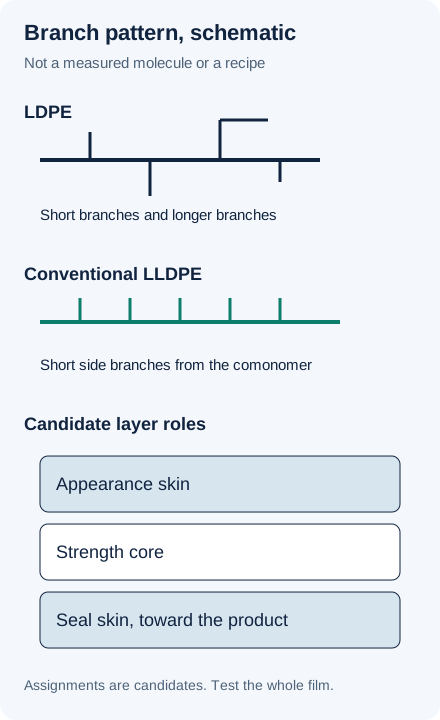
LLDPE uses an alpha-olefin comonomer such as butene, hexene or octene; see the LLDPE page. Grade chemistry, molecular weight distribution and processing all belong in the comparison.
Strength, puncture and downgauging
Use measured strength as the reason to reduce thickness, rather than assuming all LLDPE outperforms all LDPE. Compare the same gauge, route and conditioning, and record MD/TD where applicable. ASTM D1709-24 covers dart impact and D882-26a tensile properties; neither replaces a product-specific puncture challenge. See puncture resistance.
A grade substitution changes more than the resin family. Keep thickness reduction as a separate trial so the effect of resin and the effect of gauge can be distinguished.
Clarity and feel
Haze, gloss and feel depend on grade, additives, cooling and blown or cast processing. An LDPE film is not automatically clearer than an LLDPE film. Compare equal-gauge samples using the same haze/gloss methods, and inspect printing and appearance after conversion.
An LDPE-rich skin over an LLDPE core is a candidate to test, not a guarantee of both clarity and strength. Record which surface is measured and which additives it contains.
Sealing
Compare cooled seal strength and hot tack separately. ASTM F88/F88M-23 measures seal-strip force and failure mode; F1921/F1921M-12(2023) measures hot-seal strength. F2029-16(2021) prepares laboratory seals, not production-line validation.
Match temperature, pressure, dwell, specimen geometry and hot-tack delay. If the seal may contact powder, fat or moisture, record the contaminant and challenge amount, then check integrity. A metallocene designation does not establish a contamination advantage for every grade. See seal strength, hot tack and seal initiation temperature.
Processing
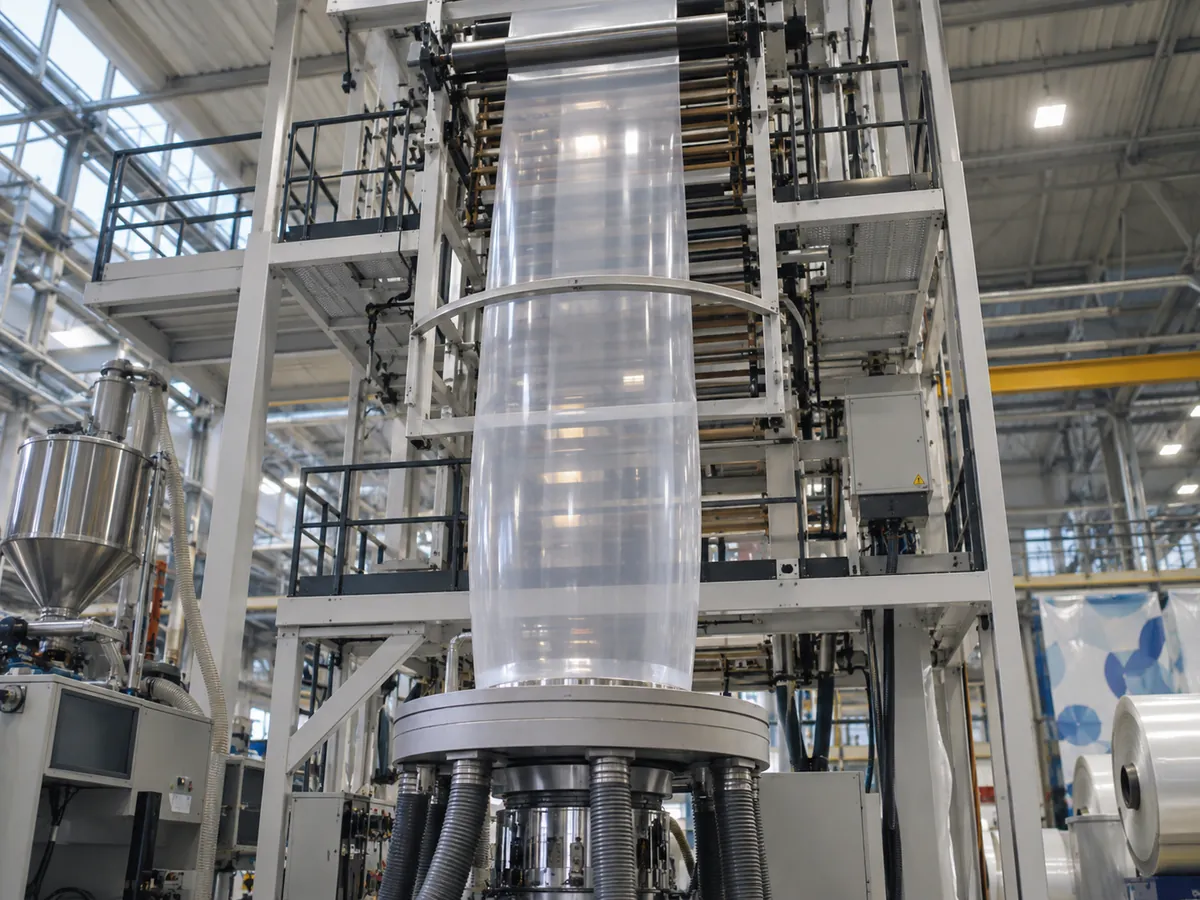
Check resin suitability for the actual equipment. LDPE melt strength may help a blown-film formulation, but pressure, motor load and attainable output require a line trial. Compare the same die, output, cooling and gauge-control criterion. A coating grade should be evaluated on a coater, not ranked using a blown-film result.
Barrier
Compare moisture transmission for the actual films at the same gauge, temperature and humidity; the resin name does not establish that HDPE beats either candidate. If oxygen protection matters, evaluate a layer from the barrier film family. Compare WVTR and OTR only at matching test conditions.
Machinability
On form-fill-seal lines, film stiffness, slip and seal behavior drive performance. A soft LDPE film can stretch or wander on a machine that needs a stiffer web, while LLDPE-based coextrusions with a tough core and a good sealant run widely on VFFS machines. Slip and antiblock additives change the coefficient of friction and seal quality, so specify the COF range. See coefficient of friction for the surfaces and conditions to record.
Recyclability
Both are polyethylene, so a mono-PE pack with PE skins, core and sealant is the usual route to a recyclable PE film. Blends of LDPE and LLDPE stay in the same polymer family. Recyclability still depends on inks, adhesives, barrier layers and local collection, and rules vary by market. See mono-PE packaging and recyclable flexible packaging.
Cost drivers
- Compare the quoted price of the actual LDPE, LLDPE or metallocene grade.
- Count downgauging savings only after the thinner film passes the required tests.
- Credit an output advantage only when demonstrated on the same line.
- The LDPE fraction in a blend changes both processing and properties.
- Seal failures and scrap on the line also add cost, which is why a cheaper film can cost more.
When LDPE is the better fit
Consider an LDPE candidate for extrusion coating, a soft bag or a skin formulation when its process and appearance results meet the project. Confirm mechanical and sealing limits before choosing it for those roles.
When LLDPE is the better fit
Consider an LLDPE candidate for stretch, sacks or a seal layer when its measured puncture, tear or hot-tack performance meets the project. Confirm processing capacity and cold or contaminated-seal behavior on samples.
LDPE and LLDPE blends
Layer-role schematic, outside to product: appearance skin → strength core → seal skin. An LDPE-rich skin, LLDPE core and selected PE seal blend are candidate assignments, not a fixed recipe. Flexible packaging film explains coextruded versus monolayer construction.
Steps for choosing between LDPE and LLDPE
- State the role: bag, liner, sealant, stretch film or coating resin.
- Set mechanical targets with named test methods.
- Define sealing needs, including contamination and hot tack.
- Decide optics and gauge tolerance.
- Confirm food-contact status and recycling claims for your market.
Use the film specification comparison record to separate matched measurements from missing data. Blend limits belong to the agreed formulation and test results, not the LDPE/LLDPE label.
Sources and method
Reviewed October 8, 2026. A manufacturer’s public extrusion guide supports branch structure, density methods and fabrication variables. The branch schematic added 11 October 2026 illustrates that description; it is not a measured structure. The linked ASTM public scopes identify the measurements, without providing project pass limits. Numerical family density ranges and universal performance rankings are not used. The empty comparison fields explicitly mark where matching sample data is needed; no supplier recommendation or independent experiment is implied.
Continue reading
Related articles
BOPP Film for Packaging: Types, Properties and Uses
BOPP packaging film explained: what biaxial orientation does, the main grades from clear to metallized, sealing options and typical uses.
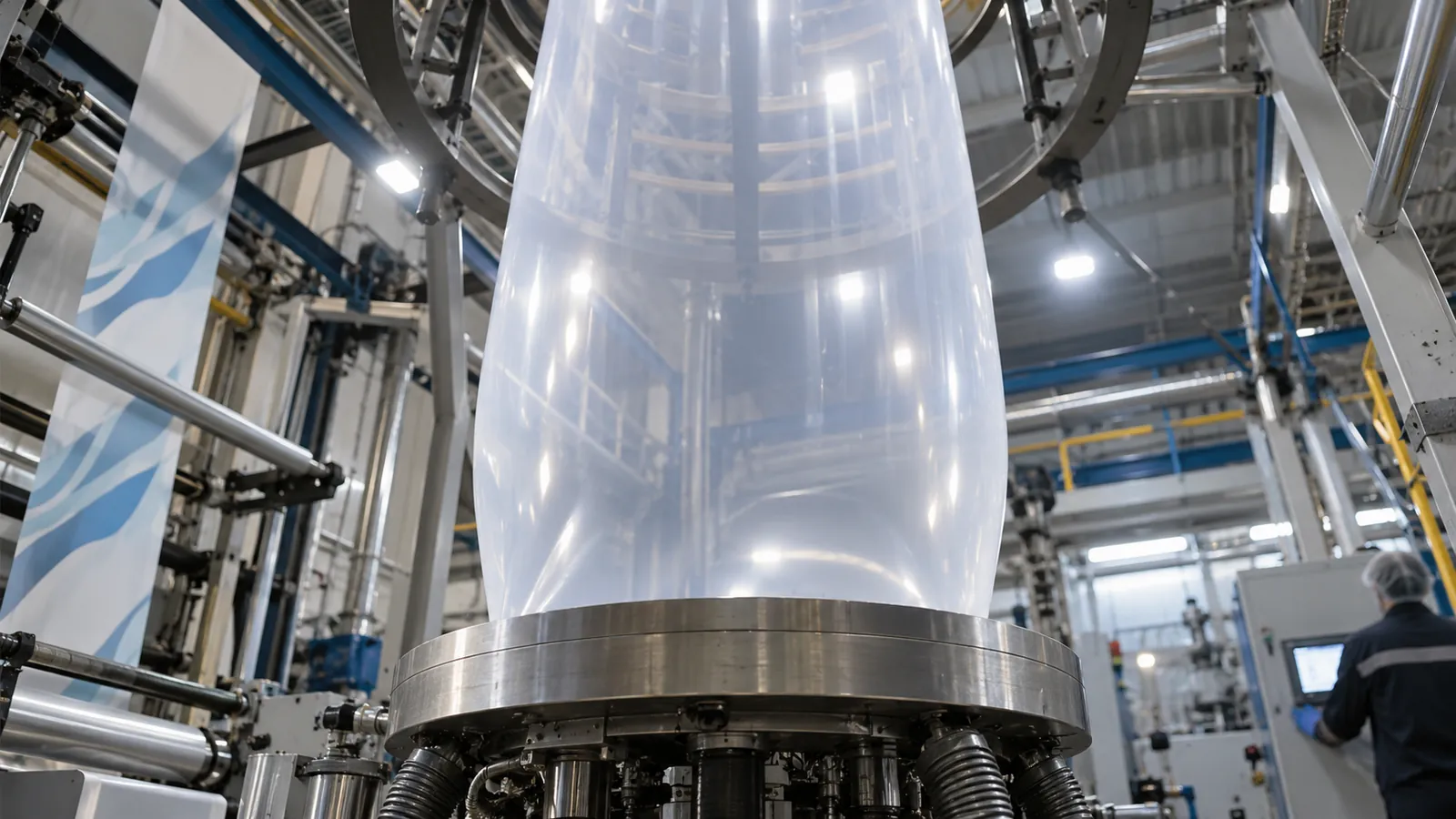
LDPE Packaging Film: Properties, Processing and Uses
LDPE packaging film explained: branching, processing roles, blend trials and the matched optics, mechanical and seal evidence needed to compare candidates.
OPS Shrink Film: Oriented Polystyrene Shrink Sleeves
OPS shrink film is oriented polystyrene used mainly for shrink sleeve labels. See its properties, trade-offs vs PETG and PVC, recycling and storage.