
LLDPE Packaging Film: Toughness, Sealing and Uses
LLDPE packaging film explained: grade choice, comonomers, hot tack, contaminated-seal testing and the evidence needed for sealants, stretch film and sacks.
Treating seal-through-contamination as automatic protection can leave leaking packs undetected. LLDPE is a candidate for sealant webs, stretch film and sacks, but grade selection needs measured strength, sealing and processing evidence.
This page covers LLDPE grades; see the polyethylene film overview for the wider family.
Scroll horizontally to view all columns if needed. ↔
| Decision | What to establish |
|---|---|
| Use | Seal layer, stretch film or sack; candidate grade and gauge |
| Seal contamination | Actual contaminant and integrity checks after sealing |
| Processing capacity | Blown/cast route, stable output and gauge control |
What makes LLDPE film different
LLDPE is made by copolymerizing ethylene with an alpha-olefin comonomer. The comonomer creates short side branches along an otherwise linear chain. This describes conventional LLDPE; specialized grades may differ. Record density in g/cm³ with the selected grade’s method; a family-wide range does not establish a film specification.
In film, that means:
- Tensile strength and elongation to confirm against the LDPE candidate.
- Puncture and tear resistance to verify before downgauging.
- Heat-seal strength and hot tack to measure separately.
- Good low-temperature performance for frozen food and cold-chain use. See frozen food packaging.
Processing must be checked alongside strength. Record bubble stability, extrusion pressure and motor load for the selected grade rather than assuming a fixed disadvantage against LDPE. An LDPE blend is one option to trial, as covered on the LDPE film page. For a direct comparison of the two resins, see LDPE vs LLDPE film.
Comonomer types: butene, hexene and octene
Comonomer identity changes side-branch structure; it does not by itself rank film toughness or sealing.
Scroll horizontally to view all columns if needed. ↔
| Comonomer family | Comparison requirement |
|---|---|
| Butene | Specific grade, density, molecular characteristics and matched film process |
| Hexene | The same thickness and named impact, puncture and tear methods |
| Octene | Matching seal conditions as well as mechanical tests |
Short side branches are attached to a polymer backbone. IUPAC defines a tie molecule as a molecule connecting different crystals; a short side branch is not that connecting molecule. Branching can affect crystallization, but comonomer names are not a substitute for measured grade data.
Use ASTM D1709-24 for dart impact and D882-26a for tensile properties; specify the actual puncture method separately.
Metallocene LLDPE (mLLDPE)
A metallocene designation identifies a resin route, not a guaranteed seal or extractables result. Request the specific grade’s data and compare its density, melt index, molecular characteristics and additive package with the alternative.
- Downgauging needs impact, puncture and handling results at the proposed gauge.
- Lower sealing temperature needs a measured seal initiation temperature under named conditions.
- Hot tack needs a measured temperature window with fixed test delay, not cooled peel strength.
- Contamination tolerance needs tests with the actual powder, fat or moisture followed by leak checks.
- Low extractables, taste or odor suitability needs applicable grade documentation and finished-pack assessment; it cannot be inferred from catalyst type alone.
Check extrusion pressure, bubble stability and attainable output on the intended equipment before changing resin or blend.
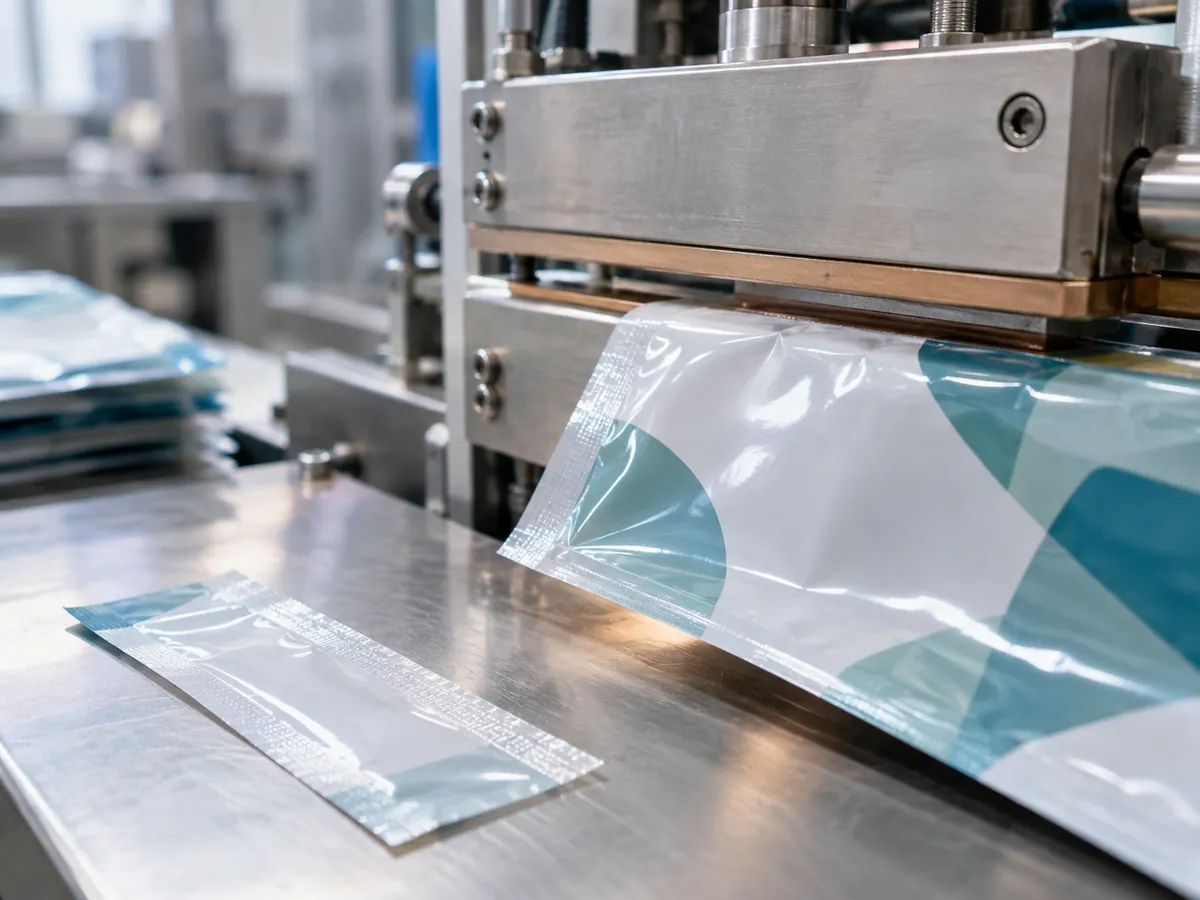
Choosing LLDPE as a laminate sealant
In a laminate, the seal layer faces the product, while outer webs such as PET supply other functions. LLDPE or an LLDPE blend is one sealant option; select it by its actual sealing window, not a claim that it is the default for every laminate.
Hot-tack sequence, schematic: form seal → allow a specified delay → apply opening load → record hot-seal force and failure. ASTM F1921/F1921M-12(2023) distinguishes methods using cooling curves or fixed delay. This sequence is not a numerical performance curve.
ASTM F2029-16(2021) prepares laboratory seals; F88/F88M-23 measures cooled seal-strip strength. These are separate from hot tack and whole-pack leak testing.
For heat-treated packs, check the complete stack and process. Polypropylene film describes another sealant route, not an automatic retort approval.
Stretch film, sacks and other uses
LLDPE is the main resin in several non-laminate products.
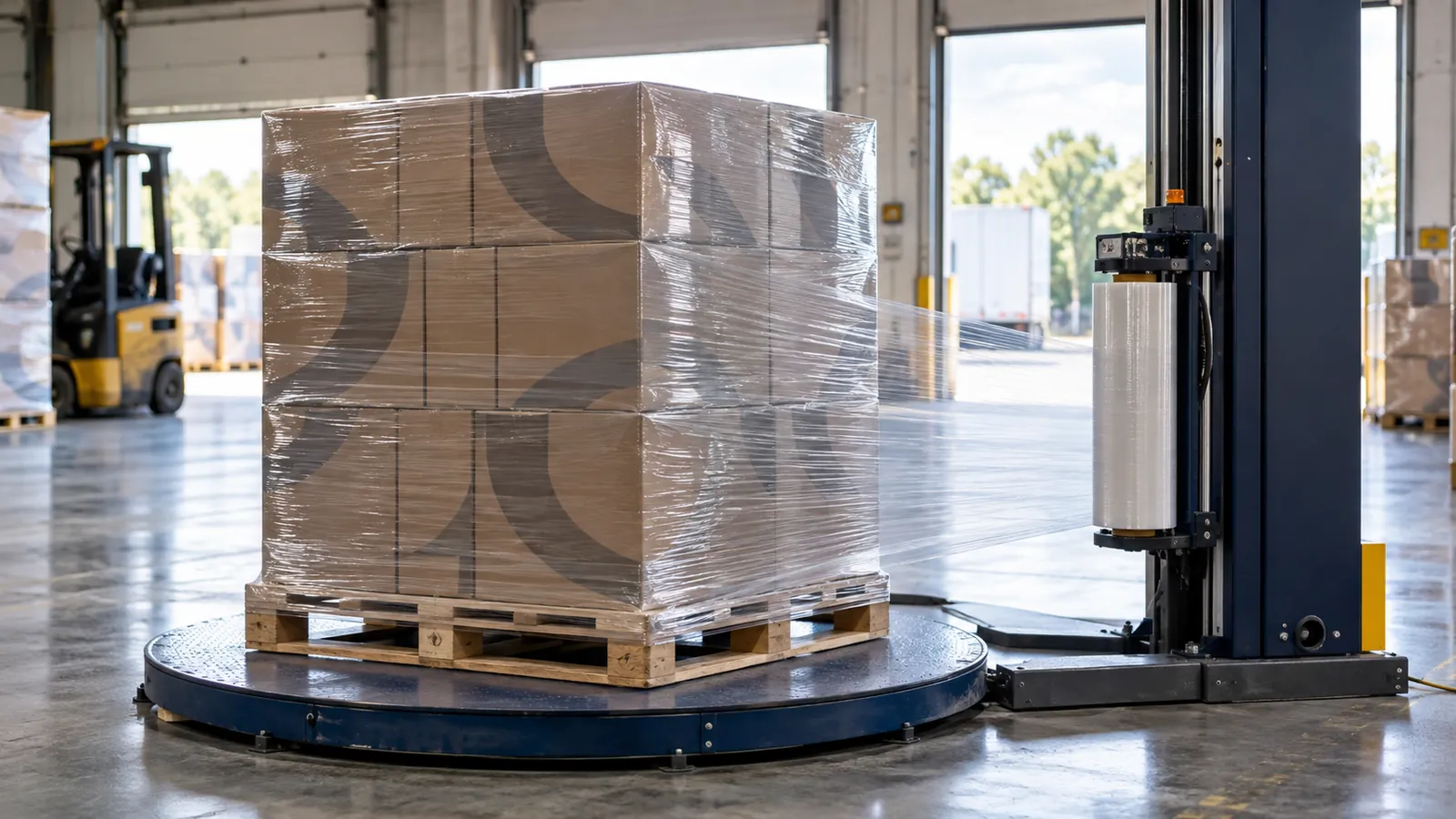
- Stretch film: pallet wrap and hand wrap rely on LLDPE’s elongation and puncture resistance. Hexene and octene grades are common, and cling is often built in through layer design or additives.
- Heavy-duty sacks and bags: industrial sacks for resin, fertilizer and construction products use LLDPE blends for drop and puncture resistance.
- Liners and bags: bulk liners, garbage bags and produce bags use LLDPE to hold thin gauges.
- Form-fill-seal film: coextruded PE and PE-based laminates run on VFFS machines for powders, liquids and frozen food.
- Agricultural and construction film: thicker gauges, in which toughness and weatherability additives matter.
Processing notes
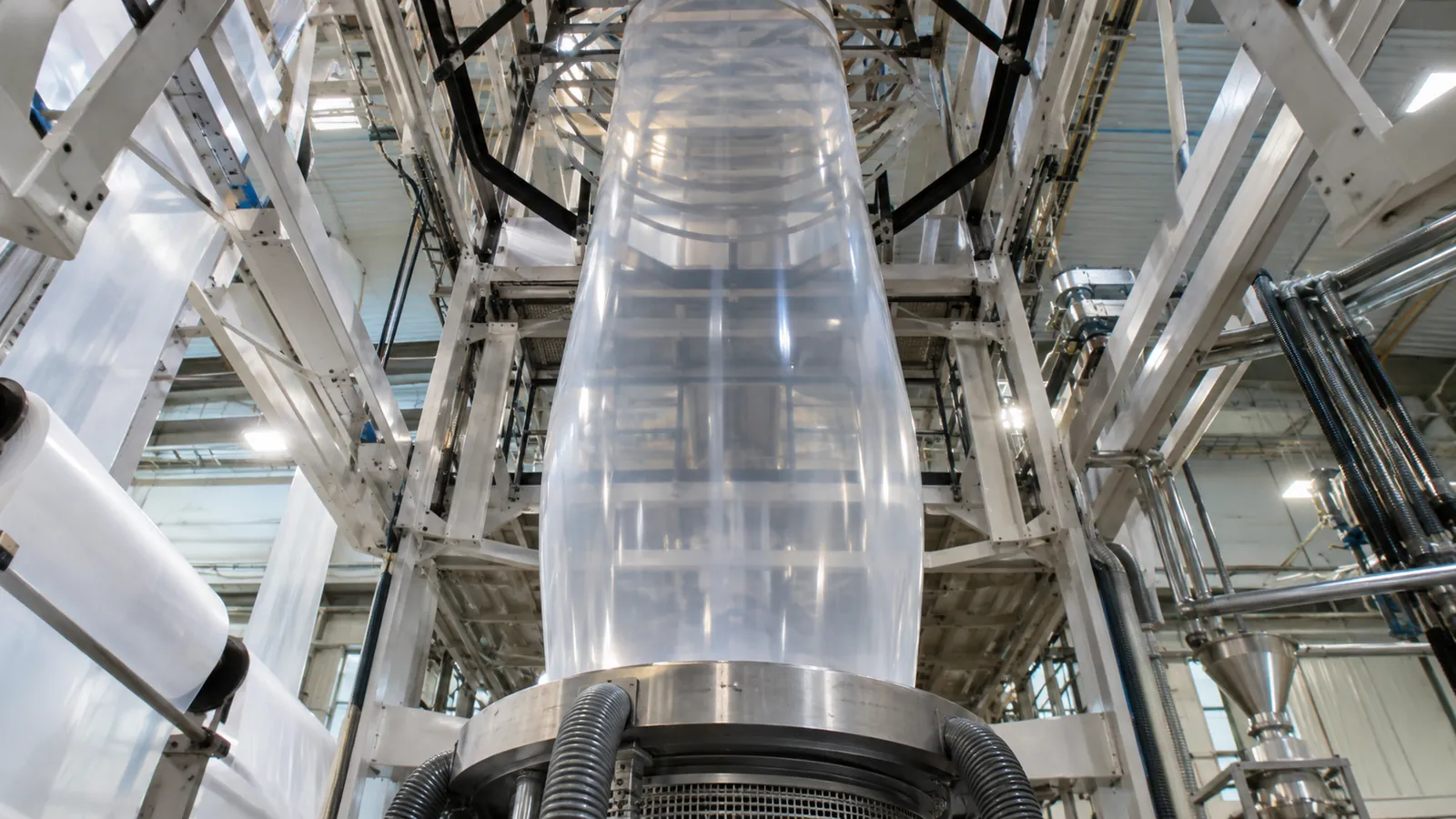
- Blown film: confirm die configuration, cooling, pressure and stable output with the actual resin or blend.
- Cast film: measure optics and gauge control for the actual route instead of assuming superiority over blown film. It is common for sealant webs for lamination.
- Coextrusion: a common structure puts mLLDPE or a plastomer blend on the inside for sealing, a tough LLDPE in the core, and an LDPE-rich or HDPE-rich skin outside for stiffness or print.
- Slip and antiblock: additive choice affects coefficient of friction and seal quality. See coefficient of friction for how COF is specified.
Limits of LLDPE film
- Haze: compare optics at equal gauge and the same route; the resin name alone cannot rank clarity.
- Stiffness: lower modulus than HDPE or oriented films, so it can stretch on machines that need a rigid web.
- Oxygen barrier is poor, so pair it with a barrier layer where oxidation matters.
- Cost: compare actual resin price, gauge and line losses rather than assuming a catalyst-based price ranking.
- Processing: confirm the usable window on the intended equipment.
What to put in an LLDPE film specification
Copy this record for each candidate. Do not compare measurements from unmatched gauges or processing routes.
Scroll horizontally to view all columns if needed. ↔
| Comparison field | Conditions to fill | Result to fill |
|---|---|---|
| Grade and film | Comonomer, density/method, gauge and blown/cast route: ___ | Matched comparator: ___ |
| Mechanical performance | Dart, tear MD/TD and named puncture method: ___ | Force/energy and failure: ___ |
| Clean seal | Temperature, pressure, dwell and seal aging: ___ | Strength, failure mode and leaks: ___ |
| Contaminated seal | Contaminant, amount, distribution and same jaw settings: ___ | Strength and integrity after challenge: ___ |
| Hot tack | Temperature series, dwell, delay and test speed/load: ___ | Usable window and failure mode: ___ |
| Processing | Output, pressure, cooling and gauge tolerance: ___ | Stability, scrap and decision: ___ |
| Compliance | Destination market, product and exposure: ___ | Grade/pack documentation: ___ |
Use puncture resistance to distinguish relevant tests, then the film specification comparison guide to line up the evidence.
Sources and method
Reviewed October 8, 2026. A manufacturer’s public extrusion guide describes LLDPE structure and processing; it does not establish a universal comonomer ranking. A public hexene-LLDPE data sheet identifies a cast stretch-film grade and grade-specific density by ASTM D792; it is not a contaminated-seal or extractables study. ASTM links above give public test scopes. No matched grade evidence for lower extractables or a universal contamination advantage is presented; confirm those claims for the project.
Continue reading
Related articles
Polyethylene (PE) Packaging Film: LDPE, LLDPE, HDPE and mLLDPE
Polyethylene packaging film explained: how LDPE, LLDPE, mLLDPE and HDPE differ, sealing and COF checks, and how to specify a grade.

Blister Foil: Lidding Foils for Pharmaceutical Blister Packs
Blister foil is aluminum-based lidding for pharmaceutical blister packs. Learn lidding types, lacquers, sealing variables and checks.
BOPP Film for Packaging: Types, Properties and Uses
BOPP packaging film explained: what biaxial orientation does, the main grades from clear to metallized, sealing options and typical uses.