
Polypropylene Packaging Film: BOPP, CPP and Blown PP Compared
Polypropylene packaging film explained: PP resin types, and how BOPP, CPP and blown PP films differ in properties, sealing and place in a structure.
Using a non-sealable print web as the sealing surface can leave a PP pack open. Select the outer web and sealing surface separately, then validate the finished structure. Polypropylene packaging film is any flexible film made from polypropylene, sold mainly in three forms: biaxially oriented (BOPP), cast (CPP) and blown PP. The manufacturing route does not establish a seal-temperature or toughness ranking: resin, skin formulation, gauge and process conditions matter.
This page is the family overview. For depth on the two biggest members, see BOPP film and CPP film.
Three film routes compared
Scroll horizontally to view all columns if needed. ↔
| Route | Candidate role | Check before use |
|---|---|---|
| BOPP, biaxially oriented | Print web or sealable single web | Non-sealable vs sealable skin; actual seal window |
| CPP, cast | Inner sealant or selected standalone film | Grade, sealing face and post-process results |
| Blown PP, ring-die film | Bag or selected laminate web | Cooling route, MD/TD toughness and seals |
The table assigns roles rather than fixed performance grades. Thickness, resin, coextrusion layout and the line used change the results. For the two biggest members head to head, see BOPP vs CPP film.
BOPP
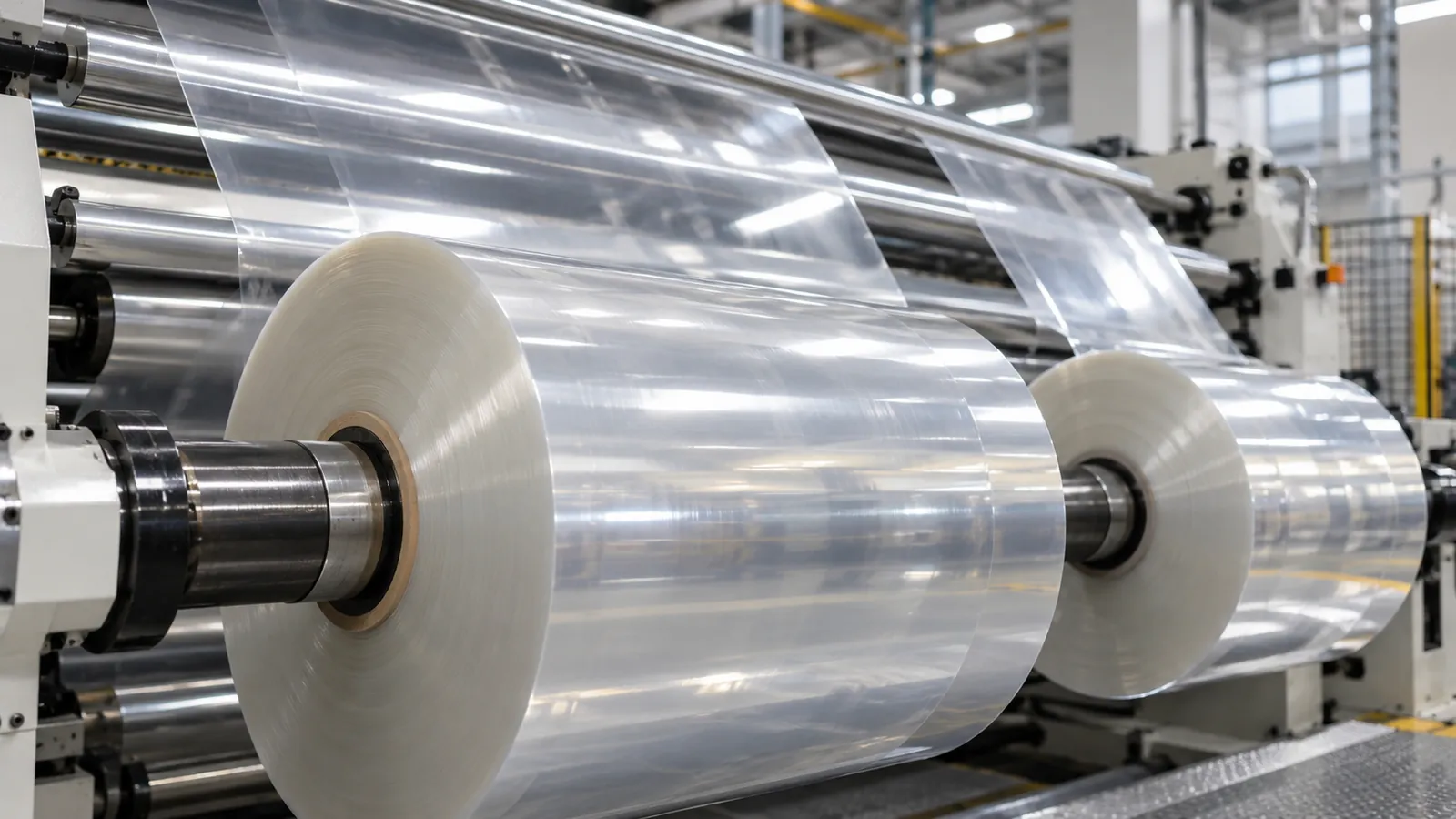
Stretching in both directions aligns the chains and gives a thin, stiff, clear film with good moisture resistance. Grades include clear, matte, white cavitated, metallized and coated. Non-sealable films are used outside, while heat-sealable and cold-seal grades are used for wraps. The BOPP page covers grades and sealing in detail.
CPP
CPP is not stretched. The quench on chilled rolls keeps crystals small, so the film is clear, soft and flexible, and its seal behavior depends on the sealing resin and skin. Compare it with a specified sealable BOPP grade, not an unspecified BOPP core. It is the common PP sealant in laminates, including retort and hot-fill structures, because the polymer tolerates higher temperatures than PE. See the CPP page for specifics.
Blown PP
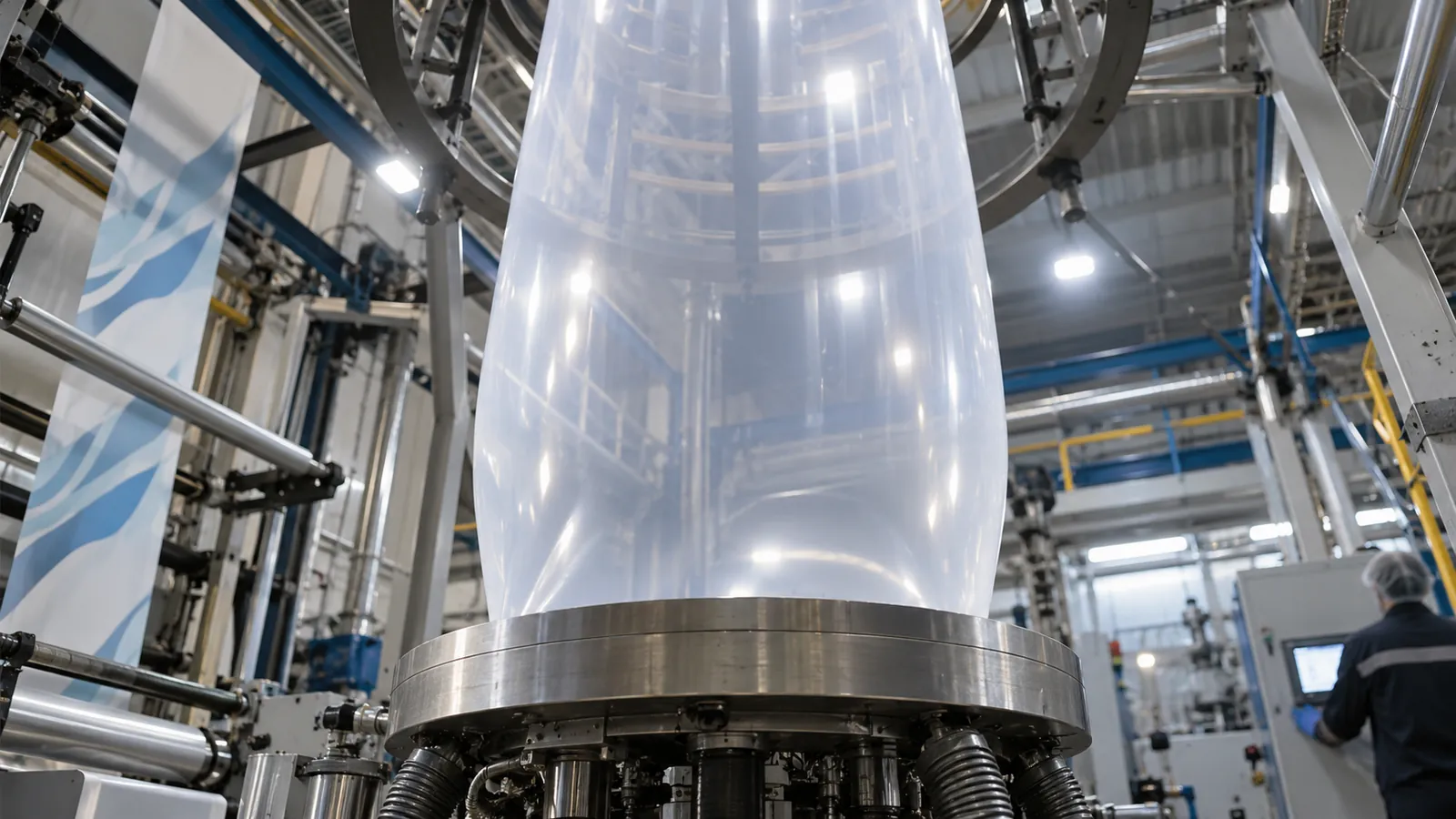
Blown PP is made like blown PE film, but PP’s lower melt strength makes the bubble harder to control, and cooling is critical for clarity. Do not assume it is tougher than CPP or BOPP. Compare MD/TD tear, puncture and impact at the proposed gauge and conditioning, then run trial rolls.
Where each film sits in a structure
Illustrative routes, outside → product: BOPP print web → adhesive → CPP sealant; or a sealable BOPP skin → oriented core → opposite skin for a single web. These text schematics are not to scale and do not prescribe a formulation.
- BOPP outside: printed outer web for stiffness, gloss and print quality. In a snack-bag structure, it is often a metallized BOPP for barrier.
- CPP inside: the sealant layer facing the product, in laminates that need a PP-based seal or higher heat resistance.
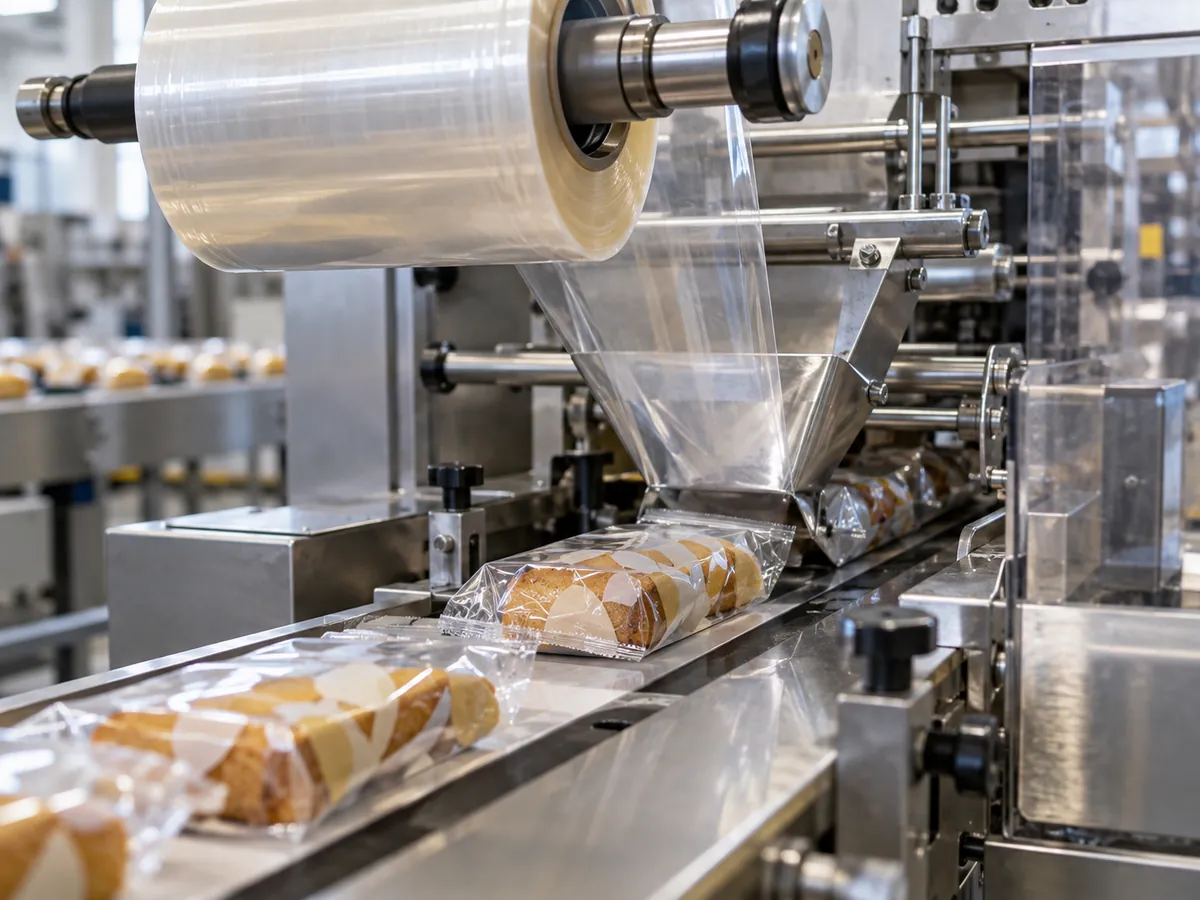
- BOPP with sealable skins: single-web flow wraps for confectionery and bakery. See flow wrapper film.
- Blown PP in bags or as a mono-PP web: bread bags, produce bags and some sealant webs.
- Combinations: a printed BOPP laminated to CPP, or a three-layer structure with a metallized layer between them.
Polypropylene resin types in brief
Film grades come from three broad families of PP resin. Suppliers use their own names, so treat these as a rough map.
- Homopolymer PP: propylene only. It has high crystallinity, stiffness and melting point. It is the core of BOPP and the stiff layer in many PP films. As a sealant it is limited because it seals at high temperature.
- Random copolymer PP: propylene with a small amount of ethylene spread randomly along the chain. Crystallinity and melting point drop, so the film is clearer, softer and seals at lower temperatures. This is the typical resin for CPP and for sealable skin layers on BOPP.
- Impact copolymer PP: a homopolymer matrix with a rubbery ethylene-propylene phase dispersed through it. It is tougher, especially in the cold, but hazier. In film it appears in CPP for retort and tough pouch applications and in some blown PP, and it is chosen where toughness matters more than clarity.
Ethylene-propylene-butene terpolymers and PP-based plastomers are also used in seal layers to push the seal temperature lower still. Grade details vary, so rely on supplier data sheets.
Heat resistance versus PE
Do not turn a generic resin melting range into a jaw setting. Request grade-specific thermal data with its method and edition, and validate shrink, sticking and seal results for the actual structure.
In practice this changes the following:
- Hot-fill and retort: PP-based structures are widely used where the pack sees higher temperature. CPP-based pouches are a standard choice for retort pouches, subject to the full structure and process validation.
- Outer heat exposure: check whether the BOPP web stays stable while the PE sealant forms the seal under the intended dwell and pressure.
- Seal window: measure initiation, strength and distortion for both candidates under the same settings. See seal initiation temperature.
- Lower toughness at cold temperatures for homopolymer grades, which is one reason impact copolymers exist.
PP versus PE in the same pack
Compare selected films, not fixed PP/PE scores. Use the same gauge basis, test direction and conditioning for stiffness, tear and puncture. For sealing, specify the actual skin and mating surface; for barrier, state temperature and humidity. The PE overview covers its blends and COF records.
All-PP mono-material structures
An all-PP structure uses BOPP for the printed outer web and a PP sealant such as CPP or a PP-based sealant, so the whole pack is polypropylene. A thin metallized or coated layer can supply barrier. The aim is a pack that fits PP recycling streams.
Points to plan for:
- Sealant: a PP sealant must seal well under the jaws without distorting the BOPP web.
- Barrier: metallization or a high-barrier coating adds oxygen and light protection while keeping the pack mostly PP. Check how the recycling guidance treats such layers.
- Inks and adhesives: these affect recyclability and migration, so specify them deliberately.
- Collection and acceptance: whether PP flexible packs are collected varies by region. Verify with the guidance that applies in your market.
See mono-PP packaging for the design approach and mono-material packaging for the general principles.
Choosing between BOPP, CPP and blown PP
- Define the role: print web, sealant or single-web bag.
- Set the heat conditions: filling temperature, hot-fill or retort need, and sealing method.
- Decide stiffness needs: machine web handling, print registration and pack stand-up.
- Check sealing: seal initiation temperature, hot tack and seal strength, using ASTM F88/F88M-23 for seal strength and ASTM F1921/F1921M-12(2023) for hot tack.
- State barrier needs with the test temperature and humidity.
- Check toughness: impact, puncture and tear, especially for cold storage or heavy products.
- Confirm compliance and recycling claims for your destination market.
Scroll horizontally to view all columns if needed. ↔
| Layer-selection field | Your record |
|---|---|
| Outer / inner grades / route / gauge | ____ |
| Sealable skin / mating surface / seal method | ____ |
| Jaw temperature / dwell / pressure / seal result | ____ |
| MD/TD shrink / sticking / print register | ____ |
| Mechanical method / direction / conditioning | ____ |
| Barrier conditions / post-process results / market | ____ |
Takeaway: identify the sealing surface before comparing CPP with BOPP or blown PP.
To compare supplier numbers, use the guide on how to compare film specifications.
Sources and method
A manufacturer’s April 2026 film portfolio distinguishes non-sealable and heat-sealable PP grades. This is grade-specific source evidence, not a recommendation or this site’s testing. Checked October 9, 2026. Generic PP/PE melting ranges and a blown-PP toughness ranking are not used as selection evidence.
Continue reading
Related articles
BOPP Film for Packaging: Types, Properties and Uses
BOPP packaging film explained: what biaxial orientation does, the main grades from clear to metallized, sealing options and typical uses.
LDPE Packaging Film: Properties, Processing and Uses
LDPE packaging film explained: branching, processing roles, blend trials and the matched optics, mechanical and seal evidence needed to compare candidates.
LDPE vs LLDPE Packaging Film: Differences and Blends
LDPE vs LLDPE packaging film compared on structure, toughness, clarity, sealing, processing, recycling and cost, plus how LDPE and LLDPE blends are used.