
CPP Film for Packaging: Cast Polypropylene Explained
CPP film packaging uses cast polypropylene for clear, soft, heat-sealable layers. Learn the grades, uses and how CPP compares with LLDPE sealant.
Ordinary bag-grade CPP is not a qualified retort inner layer. CPP film is cast polypropylene film: polypropylene melted, extruded through a flat die and cooled quickly on a chill roll, with no stretching afterward. The result is a clear, soft, easy-to-seal film that is most often used as the inner sealant layer of a laminate. When you choose CPP, you need to settle the grade, the seal range and what it will be laminated to.
CPP is part of the wider polypropylene family. For the stretched version used mainly as a printable outer web, see BOPP film. For the family overview, see polypropylene packaging film. The BOPP vs CPP film comparison puts the stretched and cast versions side by side.
Choose the CPP route first
Scroll horizontally to view all columns if needed. ↔
| Route | Intended role | Evidence required |
|---|---|---|
| Ordinary bag/laminate | Standalone bag or sealant | Grade-specific sealing and line trial |
| Metallized CPP | Coated web in a barrier laminate | Metal adhesion and converted-pack barrier |
| Retort CPP | Inner layer in a heat-processed structure | Qualified grade, laminate/adhesive and full process validation |
How cast polypropylene film is made
In the cast process, resin pellets are melted in an extruder and pushed through a slot die as a thin, wide sheet. The sheet drops onto a polished, chilled roll and solidifies on cooling. Fast cooling keeps the polypropylene crystals small, which is why cast film is clearer and softer than slowly cooled film.
Most CPP is coextruded. A typical three-layer film has a core of homopolymer or copolymer polypropylene, a sealing layer of a lower-melting copolymer or terpolymer, and an outer layer chosen for printing, lamination or slip. Because each layer can be tuned separately, one film can combine stiffness in the core with a low seal initiation temperature in the skin.
After casting the film is trimmed, and one side is usually corona treated so inks, adhesives or metal will wet and bond to it.
Properties of CPP film
Typical properties, which you should confirm against supplier data sheets:
- Clarity and gloss are commonly very good, because the cast process gives low haze.
- CPP is less stiff than BOPP and has a softer hand, which many bags and wrappers want.
- The sealing layer starts to seal at a lower temperature than the film’s core melts, which gives a usable sealing window. See seal initiation temperature.
- Thermal suitability depends on the grade and complete structure. Do not qualify hot-fill or steam exposure from the name CPP.
- Moisture barrier is good, as with other polyolefins.
- Oxygen barrier is poor. CPP does not protect oxygen-sensitive products without a barrier layer or a metallized surface.
- It is not oriented, so it does not shrink under heat the way a stretched film does, but it can stretch and distort if run under high tension.
Metallized CPP needs a surface and grade intended for that coating process. See metallized film.
CPP grades
General-purpose CPP
General-purpose CPP is the workhorse for bags, wrappers and laminates. It is usually corona treated on one side and may be sold with a slip and antiblock package. Common uses are the sealant layer of BOPP/CPP laminates and the film for simple clear bags.
Metallized CPP
Metallized CPP has a thin layer of aluminum vacuum-deposited on the treated side. It improves oxygen, moisture and light barrier over clear CPP and gives a bright, foil-like look. It is used as the inner web in some snack and confectionery laminates. Barrier values depend on the metal layer quality, the base film and the test conditions.
Retort CPP
Retort CPP is made for pouches that are heat-processed in a retort, where the package sees pressurized steam or water at sterilization temperatures. The resin and the sealing layer are chosen to resist those temperatures, and the laminate typically adds a barrier layer. Retort-grade CPP does not make a pouch retortable by itself, because the whole structure and adhesive must be validated for the process. The format is covered under retort pouch. For US thermally processed low-acid foods in hermetically sealed containers, 21 CFR Part 113, April 1, 2025 edition addresses the food/process category, not a CPP material certification. Confirm the current applicable rules and destination-market requirements.
Other special grades include high-slip, low-odor, peelable and heat-resistant seal variants. Ask the supplier which grades are available.
Where CPP film is used
- BOPP/CPP and PET/CPP are common two-ply structures for dry foods, with CPP as the sealant facing the product.
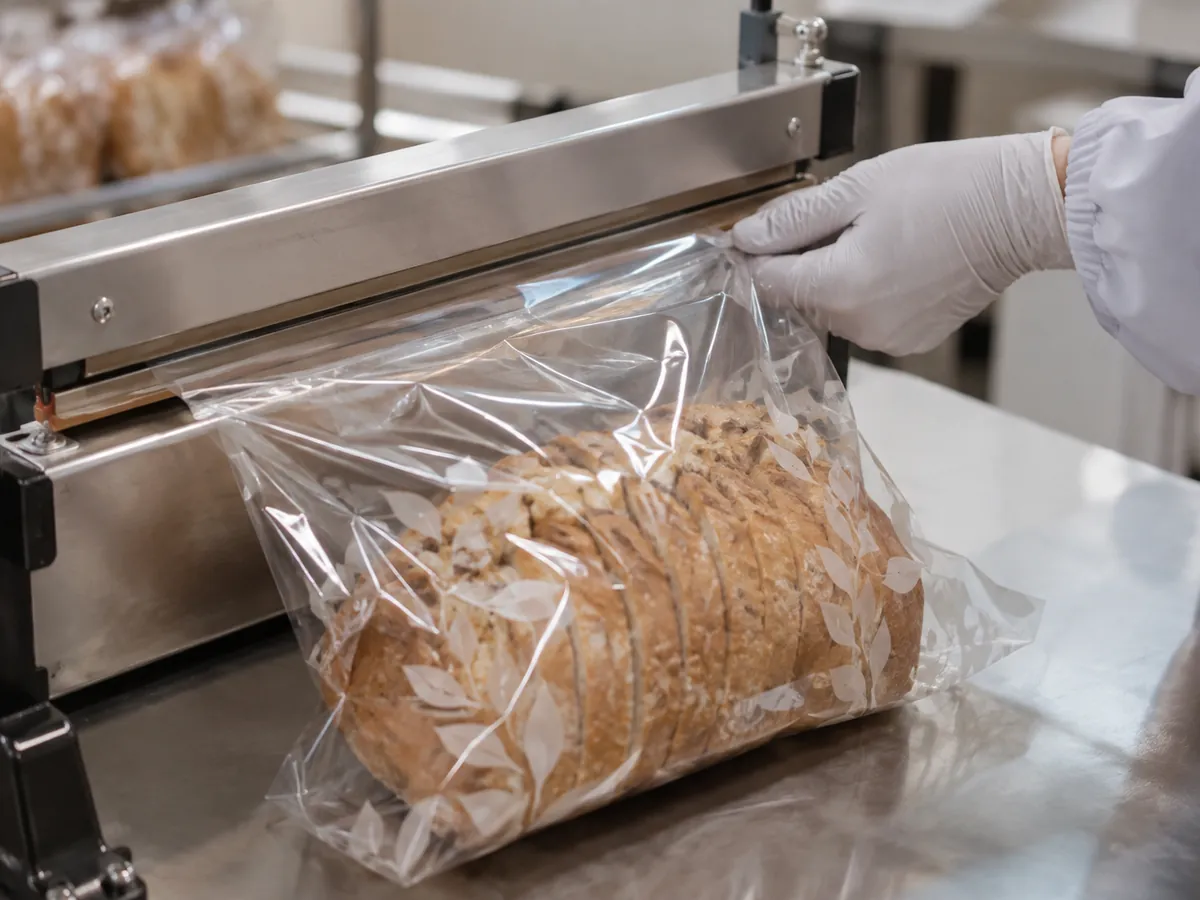
- Clear, glossy, soft CPP bags hold bread, baked goods, garments and similar items. See bakery packaging.
- Metallized CPP is used as a sealant web in snack, candy and dry-mix packs.
- Retort CPP is the food-contact layer in high-temperature structures.
- CPP appears in laminates for flow-wrap and pillow packs on horizontal machines; flow wrap film covers the film side of those machines.
CPP vs LLDPE as a sealant
Both can provide a sealing layer, but polymer names do not establish a matched performance ranking. Compare proposed grades on the same structure, thickness, conditioning and machine settings.
Scroll horizontally to view all columns if needed. ↔
| Decision | CPP evidence | LLDPE evidence |
|---|---|---|
| Seal window | Skin/grade and measured curve | Resin/blend and measured curve |
| Contamination tolerance | Challenge with actual product | Same product/challenge |
| Cold impact | Finished pack at intended temperature | Same temperature and load |
| Thermal process | Qualified grade and full laminate | Qualified grade and full laminate |
| Handling and clarity | Measured finished-web properties | Same methods and thickness basis |
| Recovery goal | PP-stream assessment | PE-stream assessment |
No paired CPP/LLDPE trial is presented here. LLDPE film and PE film provide context; they do not replace candidate-grade data.
Mono-material considerations
A BOPP/CPP laminate is all polypropylene, which makes it a starting point for a mono-PP design. Whether it is recyclable in practice depends on the inks, adhesive, any metallization or barrier coating, and local collection and sorting. Check recycling guidelines from bodies such as RecyClass and APR and the rules in your market. See mono-material packaging.
CPP trial and specification record
Record grade, layer order, thickness/tolerance, treated face, slip/COF and intended process before trialing. Keep pass/fail limits tied to the product and machine.
Scroll horizontally to view all columns if needed. ↔
| Trial | Input conditions | Result | Acceptance reference |
|---|---|---|---|
| Sealing | Grade, faces, jaw temperature, pressure, dwell: ___ | Strength/hot tack, wrinkles: ___ | Agreed window/limits: ___ |
| Contamination | Product, amount and location: ___ | Strength and leakage: ___ | Challenge criterion: ___ |
| Cold impact | Filled pack, conditioning, load: ___ | Damage and integrity: ___ | Distribution requirement: ___ |
| Heat treatment | Whole laminate, adhesive, full cycle: ___ | Post-process seals/barrier and aging: ___ | Qualified process: ___ |
ASTM F88/F88M-23 measures seal strength; ASTM F2029-16(2021) prepares laboratory heat seals. ASTM D1894-24 measures film/sheet friction under stated conditions. Record the edition and protocol used; laboratory results do not automatically validate production.
Keep dimensions consistent using film thickness, then compare evidence in the film specification guide.
Sources and method
A manufacturer’s public cast-film guide distinguishes ordinary bag films from retort sealants. A manufacturer’s public retort-film description applies to its specified retort film, not all CPP. ASTM F88/F88M-23 and ASTM F2029-16(2021) distinguish strength testing from laboratory seal preparation. The official CFR link supplies the dated US process-rule text. Sources checked October 8, 2026; public grade descriptions are not this site’s testing or recommendations.
Continue reading
Related articles
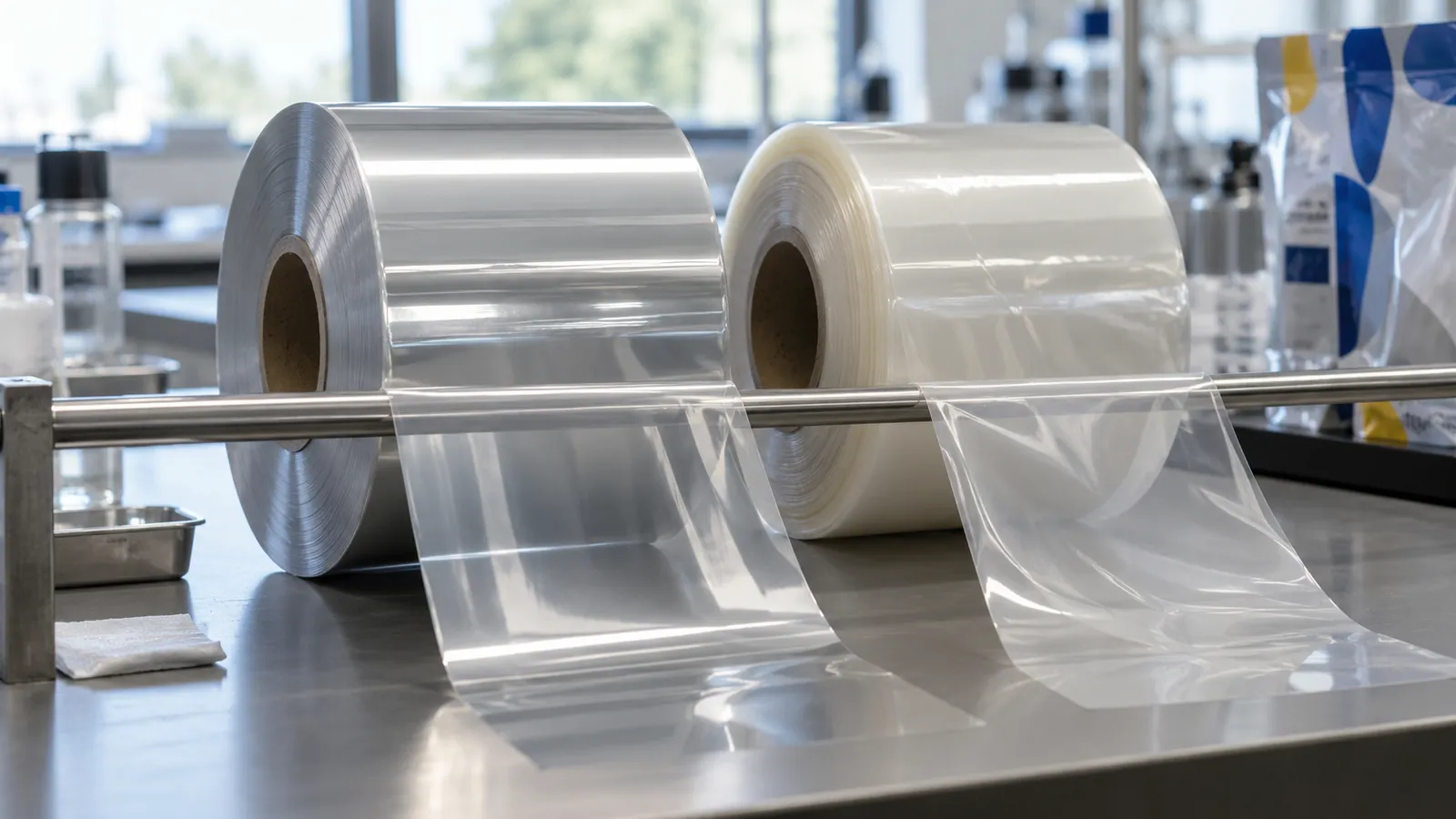
BOPP vs CPP: Oriented vs Cast Polypropylene Film
BOPP vs CPP compared: oriented versus cast polypropylene film on stiffness, clarity, sealing, heat resistance, barrier, recyclability and where each is used.

Blister Foil: Lidding Foils for Pharmaceutical Blister Packs
Blister foil is aluminum-based lidding for pharmaceutical blister packs. Learn lidding types, lacquers, sealing variables and checks.
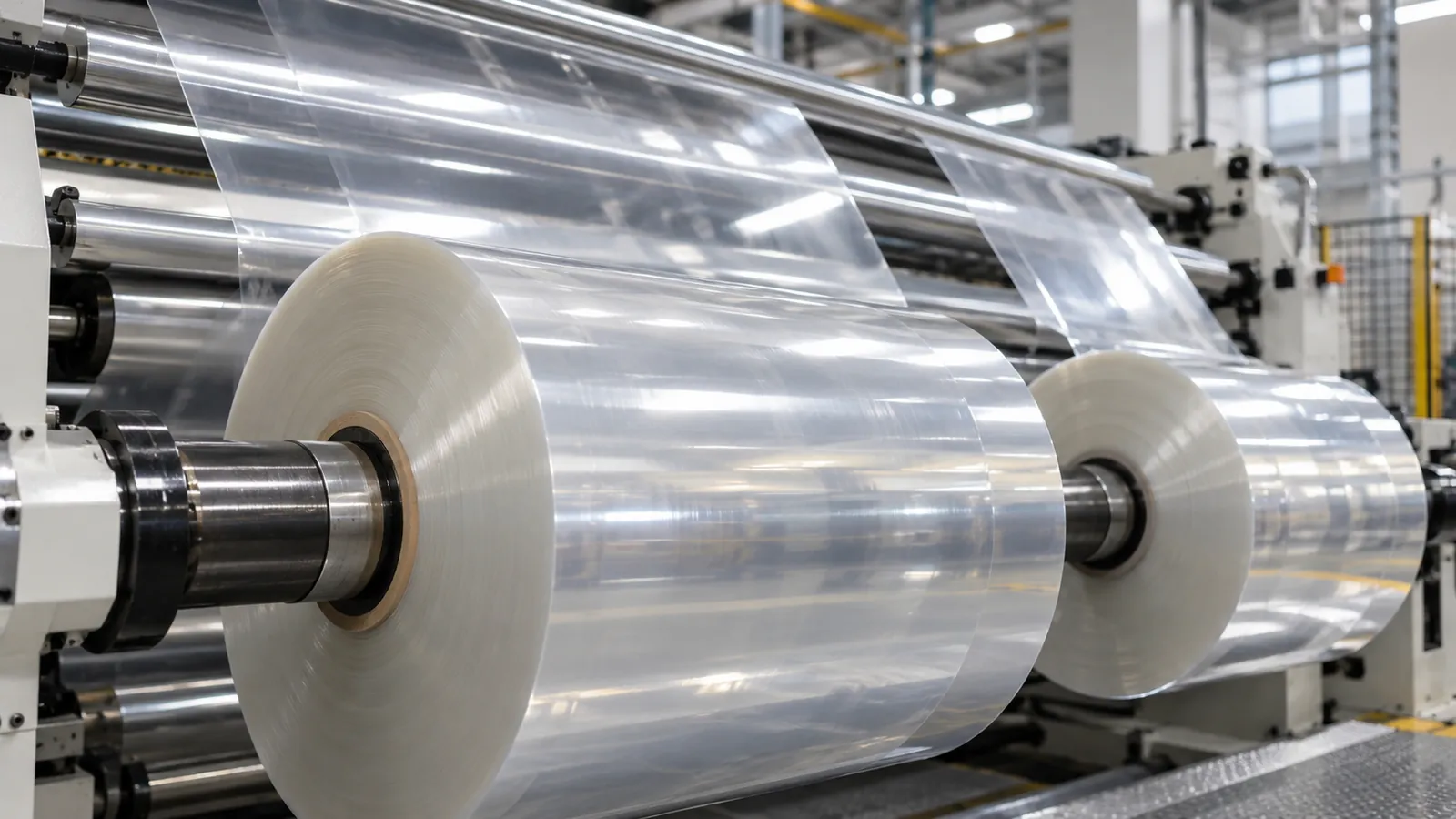
BOPP Film for Packaging: Types, Properties and Uses
BOPP packaging film explained: what biaxial orientation does, the main grades from clear to metallized, sealing options and typical uses.