
Bakery Packaging Film: Keeping Bread and Cakes Fresh
Bakery packaging film explained: how staling, moisture loss and mold shape film choice for bread, cakes, cookies and tortillas, plus formats and machines.
A pack that retains moisture can soften a crisp crust; a breathable pack can dry a soft loaf. Choose the moisture direction first, then verify texture, condensation and mold separately.
Scroll horizontally to view all columns if needed. ↔
| Product | Moisture direction / candidate film | Validation priority |
|---|---|---|
| Soft bread | Retain water; PE bag candidate | Weight loss, crumb firmness, closure and mold |
| Crusty bread | Allow moisture escape; perforated film or paper-window candidate | Crust crispness versus drying |
| Cookies / biscuits | Limit moisture entry; sealable or metallized BOPP candidate | Crunch, WVTR and seal leaks |
| Cakes / muffins | Retain moisture; anti-fog film or laminate candidate | Visibility, texture and mold separately |
| Longer-life products with MAP | Gas-barrier structure selected for the product | Residual oxygen, leaks and storage trial |
What goes wrong with baked goods
Freshness in bakery products is several problems at once, and a package that fixes one can make another worse.
- Staling: in bread, starch recrystallizes over days and the crumb turns firm. Film can limit drying, but retained moisture does not establish that the crumb will stay soft. A published bread experiment links firming with starch retrogradation and water mobility (source below).
- Moisture loss: crusts and crumbs dry out in open air. A moisture barrier slows this and keeps soft products soft.
- Mold: trapped moisture in a sealed pack can help mold grow, especially in humid markets. A tight pack around a warm product traps condensation, so cool the product before packing.
- Moisture gain: crisp products such as cookies, crackers and biscuits take up moisture and lose crunch. They need a good water vapor barrier.
- Fogging: warm, moist product inside a clear film creates condensation that blurs the view. Anti-fog changes how condensed water spreads on the film; it does not remove the water or demonstrate mold control.
- Fat migration and odor: cakes and pastries with fat can affect seals, and baked goods can pick up odors from other products.
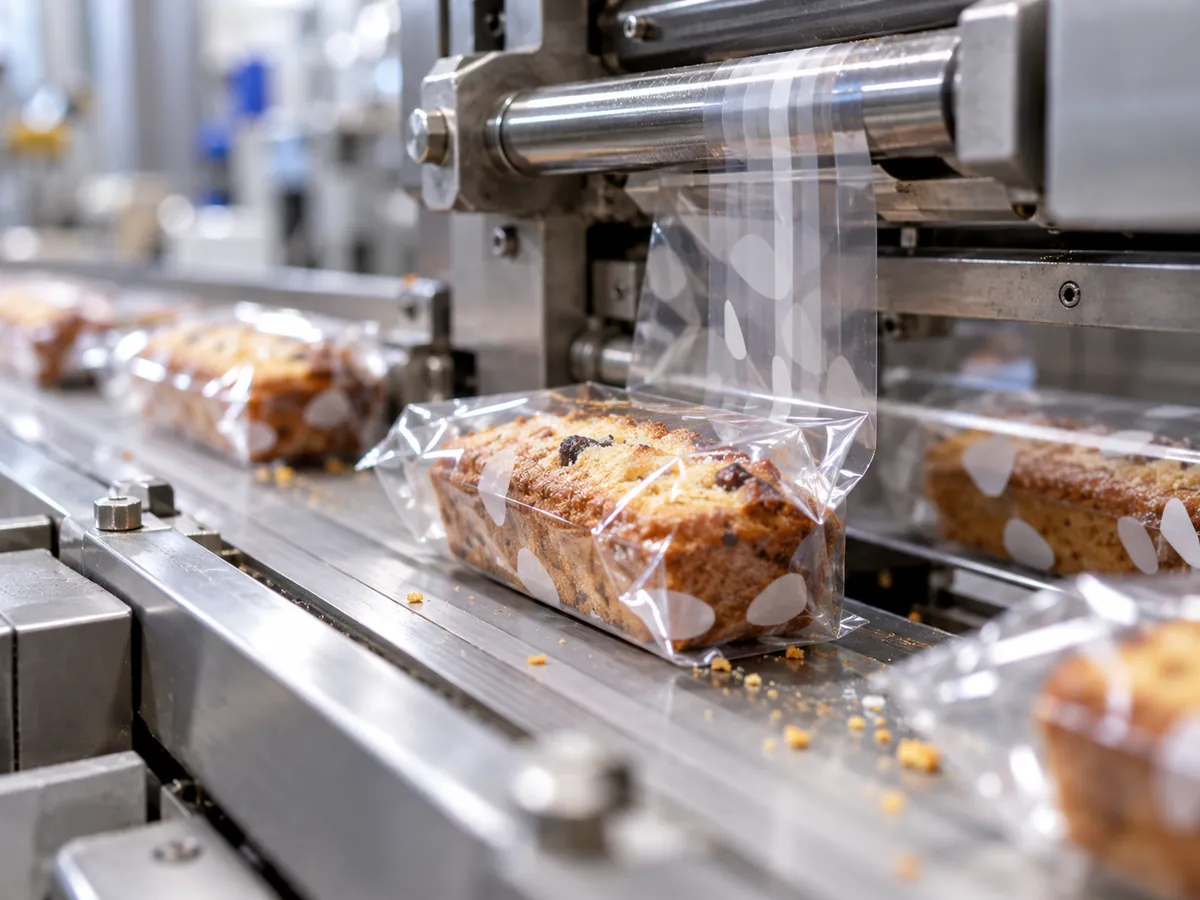
Bakery packaging materials: typical structures
The opening table gives candidates for trials, not approved structures. Compare PE film, BOPP film and CPP film against the product’s moisture goal. Request WVTR and OTR with temperature, humidity and film thickness stated.
Breathable versus barrier
A crusty product may need moisture to escape, while a soft loaf needs to limit moisture loss. Avoid the label “low barrier” without naming the gas: oxygen transmission and water-vapor transmission are different specification inputs. Confirm both against the intended storage trial.
Anti-fog
An additive manufacturer’s public guidance explains that anti-fog spreads condensed water into a clear layer rather than droplets. Test visibility at actual packing and storage temperatures. A clear window does not show that mold has been controlled.
Modified atmosphere packaging for longer life
A gas supplier’s public bakery guidance describes carbon dioxide as inhibiting microbial growth and nitrogen as displacing oxygen. The blend depends on the product and formulation; no blend or shelf-life duration is prescribed here. Film barrier, residual oxygen and leaks need checking alongside the food-safety team’s storage trial.
Takeaway: Treat MAP performance and anti-fog visibility as separate trial results.
Bakery packaging formats
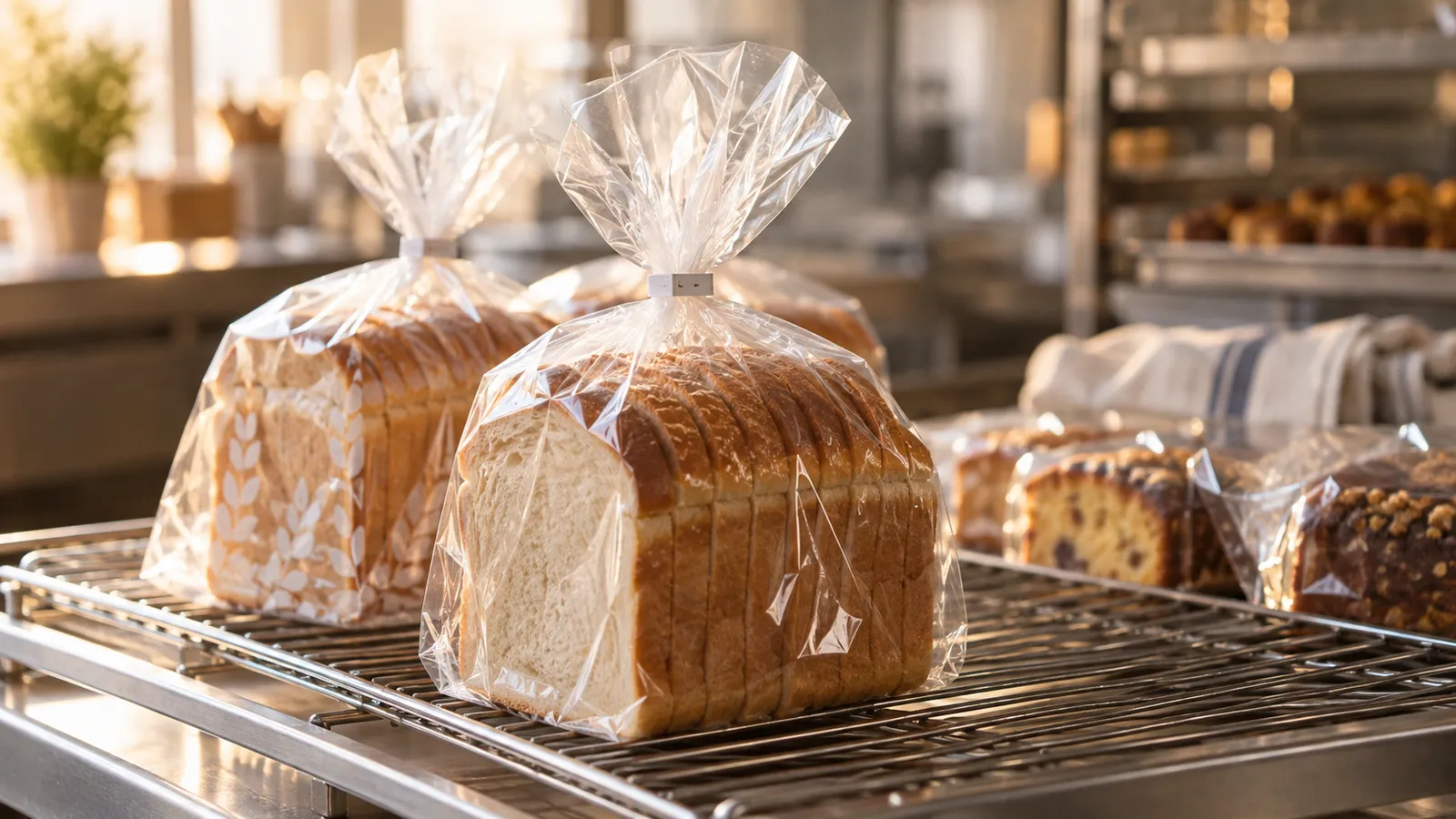
- Bread bags are open-mouth bags closed with a tie, clip or adhesive tape, often with a gusset. Many are filled on bagging machines rather than form-fill-seal lines.
- Horizontal flow wraps suit cakes, biscuits, bars and individual pastries.
- Pillow bags are vertical bags for cookies and small goods.
- Stand-up and zipper pouches are used for tortillas, granola and premium cookies.
Machines for bakery packaging
Cakes, biscuits and individual pastries go through horizontal flow wrappers, where the film has to feed cleanly, make fin and end seals, and cope with crumbs and fat in the seal area. Crumbs are a common cause of leaking seals, so a sealant that tolerates contamination helps. Friction and stiffness decide how well the film runs at speed. The flow wrapper film page lists the checks.
Bread bags are often closed by dedicated bagging and clipping machines, and small bakery items may run on vertical machines, covered in the VFFS film guide.
Sustainability
Single-layer PE bread bags are mono-material in principle, but print inks and closures still affect recycling. BOPP and CPP based flow wraps can be designed as mono-PP. Confirm the recycling guideline and collection in the destination market. See mono-material packaging.
Steps to specify a bakery film
Scroll horizontally to view all columns if needed. ↔
| Check | Record for each sample / time point | Result / action |
|---|---|---|
| Product and goal | Recipe / batch; retain, exclude or release water | Set texture and weight criteria before trial |
| Storage / MAP | Temperature, humidity, duration, gas process and residual oxygen | Record trial condition |
| Cooling / fog | Product temperature at packing; condensation and visibility over time | Adjust cooling or anti-fog trial |
| Film / line | Structure, grade, thickness; WVTR / OTR conditions; machine settings | Check clean and crumb/fat-contaminated seals |
| Shelf-life observations | Weight, crumb firmness or crunch, mold and leak observations | Hold approval when criteria fail |
Method and sources
The matrix reorganizes the existing candidate routes; the record is a reader worksheet, not a food-safety protocol. Sources checked 2026-10-08; the worksheet contains no observed storage results.
Continue reading
Related articles
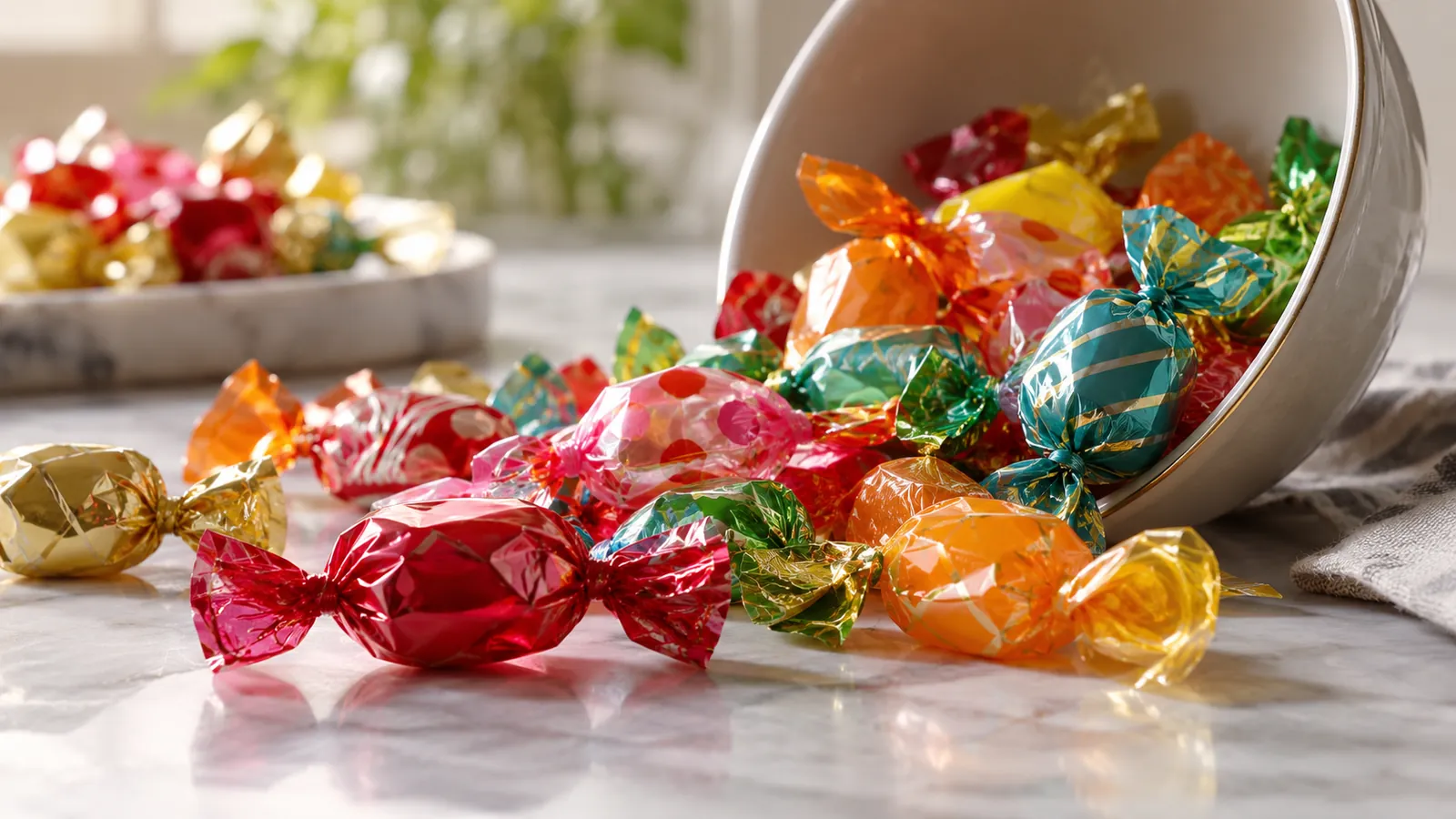
Candy Packaging Film: Twist Wraps, Flow Wraps and Cold Seal
Candy packaging film explained: twist-wrap and flow-wrap structures, cold seal for chocolate, moisture and aroma barrier, metallized and white BOPP.
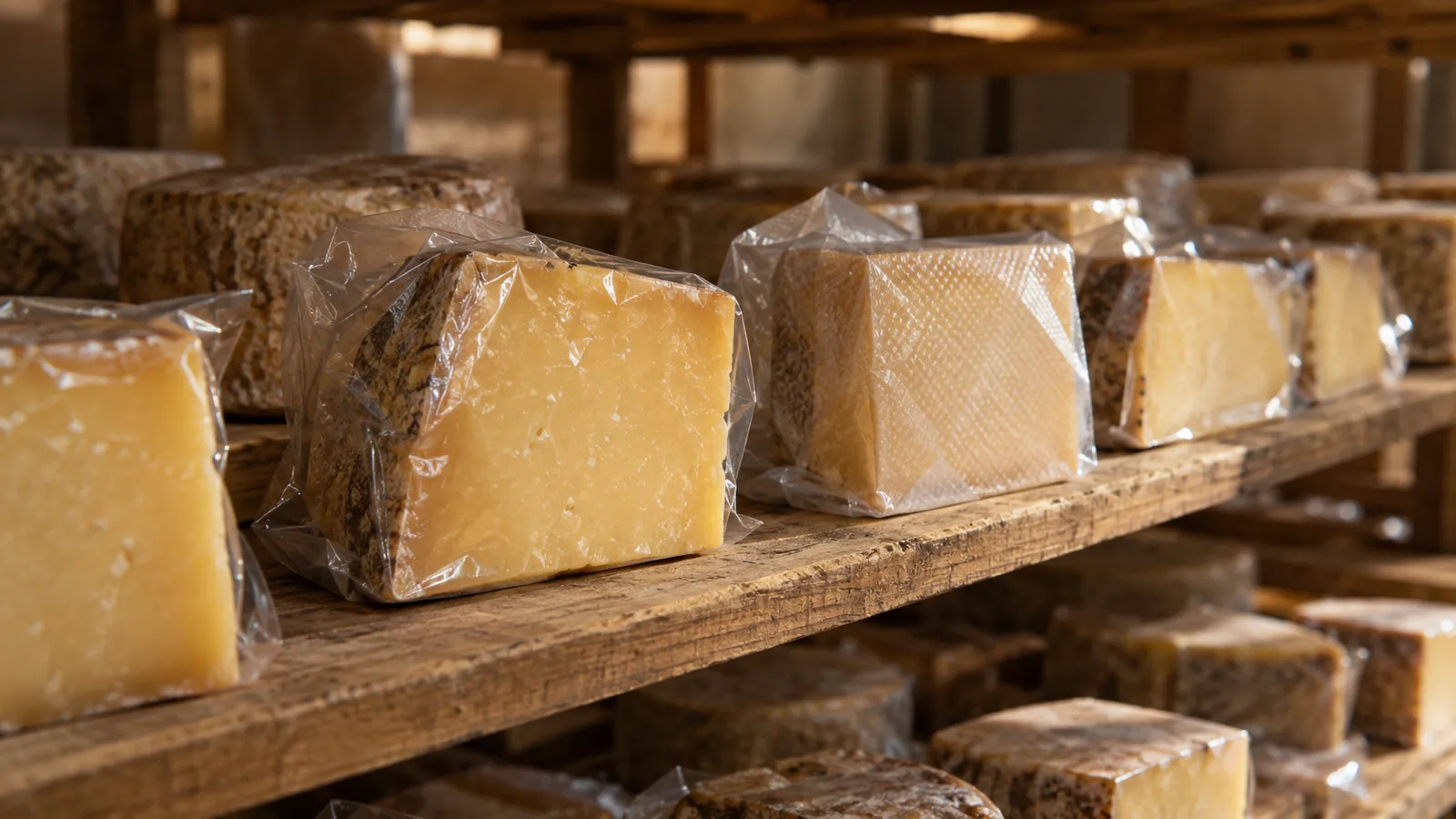
Cheese Packaging Film: Ripening, Vacuum and MAP
Cheese packaging film explained: gas-permeable ripening films, vacuum bags for blocks, MAP for sliced and shredded cheese, reclosable packs and structures.
Coffee Packaging Materials: Barrier, Valves and Pouch Formats
Coffee packaging materials explained: oxygen and aroma barrier, one-way degassing valves, nitrogen flushing, pouch formats and machine fit.