
Flow Wrap Packaging: How It Works and What It Suits
Flow wrap packaging forms a film tube around the product with a fin or lap seal and two end seals. See variants, suitable products and trade-offs.
A fin/lap material mismatch can leave the longitudinal seal unbonded. In flow wrap packaging, a continuous film is formed into a tube around the product, sealed along its length with a fin or lap seal, then crimped and cut at both ends. The result is the familiar pillow-shaped pack used for bars, biscuits and many medical devices. Flow wrapping uses horizontal machines, with the product travelling through in a straight line.
How flow wrapping works
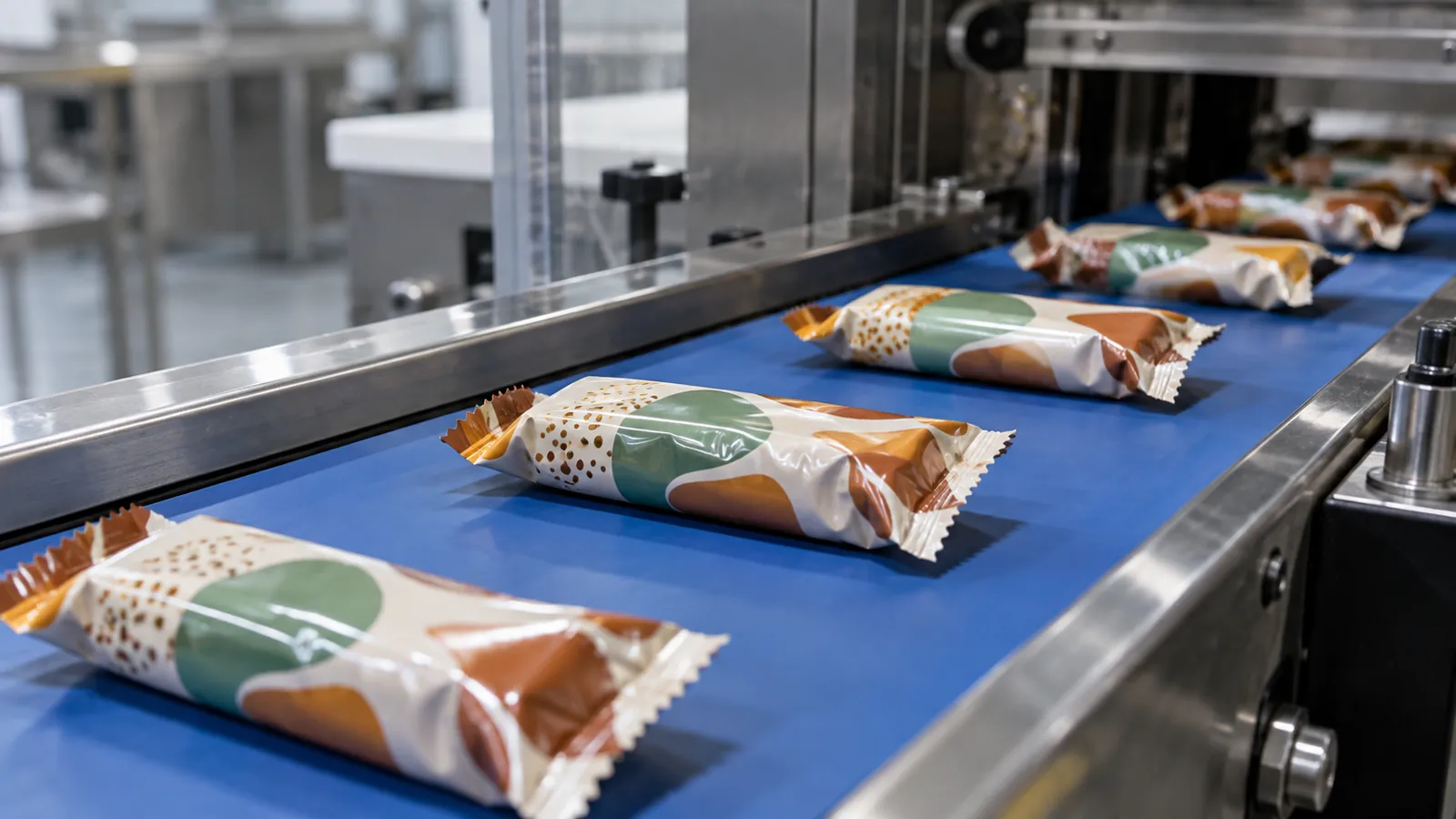
A horizontal flow wrapper takes film from a reel and a product from an infeed conveyor. Spacing lugs or a product detector place each item at a fixed pitch. The film passes over a forming box, which folds it around the product into a tube. A longitudinal sealer joins the film edges, then end-seal jaws crimp the tube between products and a knife cuts the packs apart.
The longitudinal seal comes in two forms:
- A fin seal brings the inner surfaces of the film edges together and seals them face to face, leaving a fin that stands up from the back of the pack. It is the most common and works with heat-sealable sealants on the inside of the film.
- A lap seal overlaps one edge over the other, so the outside surface seals to the inside surface. It lies flatter and uses less film, but it needs a sealant on both faces or a compatible surface, which limits film choice.
The end seals are made by crimping jaws. Their pattern, temperature, dwell time and pressure decide whether the seal is clean and leak-tight, particularly where it crosses the longitudinal seal.
Takeaway: The film side is covered in flow wrap film for horizontal flow wrappers.
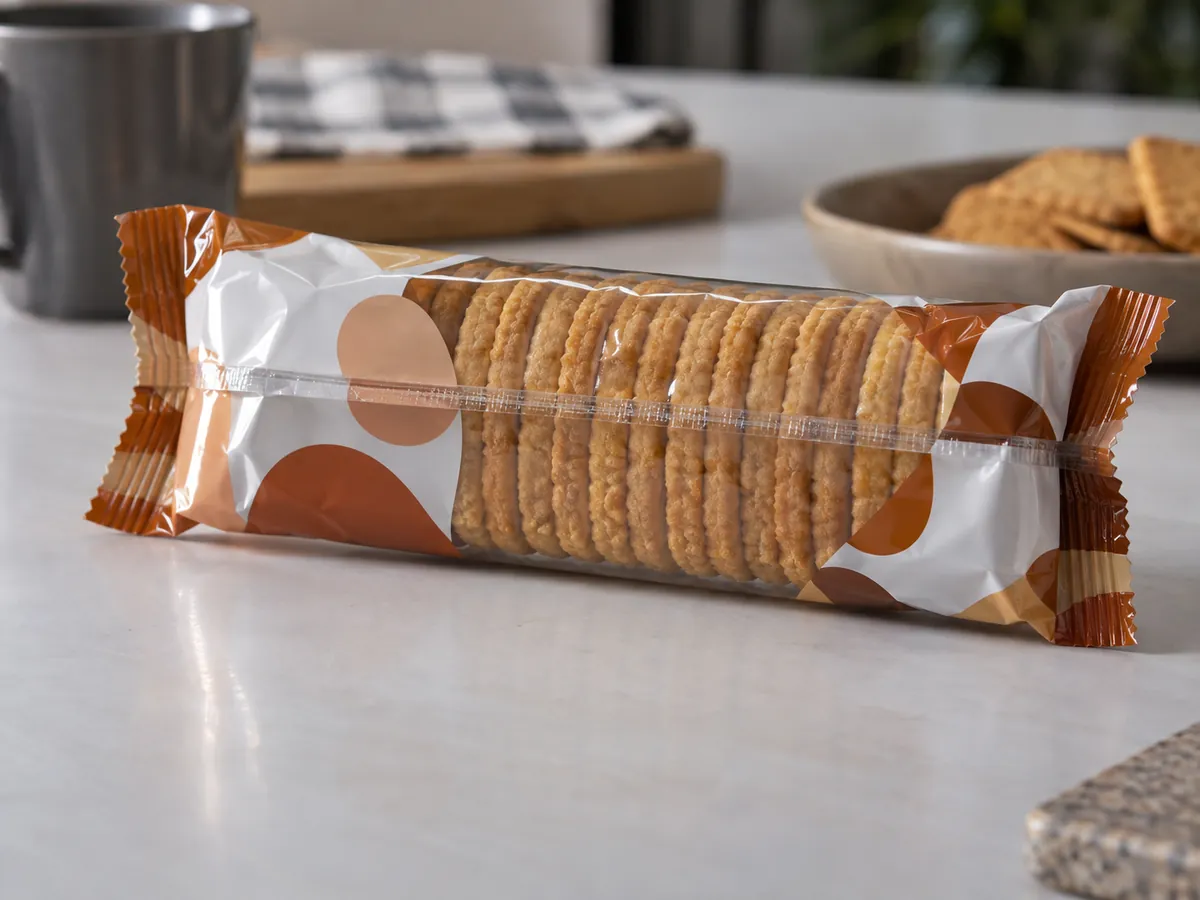
Products flow wrap suits
Flow wrap works best for solid, relatively uniform items that can be fed in a line:
- Cereal and snack bars
- Biscuits, cookies and wafers
- Bakery items such as rolls and buns (see bakery packaging)
- Confectionery and chocolate bars (see candy packaging)
- Fresh produce such as cucumbers, peppers and sprouts, often with micro-perforated film
- Medical devices: only treat a pack as a sterile barrier after validating its material, sterilization route, seals and finished-package performance
- Multipacks, where several small packs are wrapped into one outer pack
Loose, powdery or very fragile products usually do better in another format. Hard-edged biscuits can also pierce the end seals, so item geometry matters as much as product type.
For terminally sterilized medical devices, ISO 11607-1 covers materials and sterile-barrier/packaging systems; ISO 11607-2 covers forming, sealing and assembly validation. FDA’s sterilization-process guidance calls for evidence that the chosen process does not impair package performance. Record the sterilization method (for example ethylene oxide, radiation or steam), material compatibility, and package results after sterilization, distribution and storage.
Takeaway: A peelable seal or flow-wrap shape alone proves none of these.
Variants and options
- Modified atmosphere: bakery packs may use gas flushing with a barrier structure and validated seals. Respiring fresh produce needs a different approach: permeability, sometimes microperforation, matched to product respiration, fill and storage temperature. MULTIVAC’s public produce brochure explains this equilibrium-atmosphere principle; neither shelf-life improvement nor one high-barrier solution is automatic.
- Gusseted ends: tucking the film at the ends gives a squarer, fuller pack for bulkier items.
- Reclosable labels: a label over the opening lets consumers reseal a multi-serve pack, for example a pack of wipes or cookies. The line applies it, not the film.
- Inverted or bottom-reel wrappers: the film is fed from below and the tube is formed beneath the product. This suits loose, unstable or tall products that would tip on a standard top-reel machine.
- Rotary or box-motion end-seal jaws: selection depends on the configured machine, film, dwell and product feed. Public rotary equipment documentation gives a particular package-length range; box-motion documentation describes MAP applications. Those examples do not establish a universal speed or changeover advantage. Retain the machine-specific range and trial record.
Flow wrap compared with other formats
Scroll horizontally to view all columns if needed. ↔
| Flow wrap | Pillow bag (VFFS) | Shrink wrap | Carton | |
|---|---|---|---|---|
| Product orientation | Horizontal, solid items | Vertical drop, free-flowing or loose | Wrapped around item or group | Item placed in a box |
| Best for | Bars, biscuits, devices | Chips, granules, frozen veg | Multipacks, irregular shapes | Premium or protective packaging |
| Output record | Confirm product feed and seals | Confirm filling and seals | Confirm wrapper and tunnel | Confirm loading and closure |
| Barrier options | Good with laminates | Good with laminates | Limited | Depends on inner liner |
| Reclosing | Label or none | Zipper possible | Rarely | Often inherent |
| Material use | Record web width, repeat and rejects | Record web width, repeat and rejects | Record film and rejects | Record board and inner liner |
| Main limit | Product must be stable and fed in line | Not suited to fragile solids | Low barrier, heat on product | Higher material and storage cost |
VFFS packaging film covers the pillow-bag route, and shrink film covers the other wrapping approach.
Takeaway: The two wrapping approaches are compared directly in flow wrap vs shrink wrap.
Flow wrap film structures
Typical flow wrap structures are laminates or coextrusions with a sealant on the inside, a printable outer layer and, where needed, a barrier layer. Common outer layers include BOPP and PET (BOPP film describes how that polymer behaves). The properties that matter on the line are seal window, hot tack, coefficient of friction and stiffness.
Takeaway: Confirm values with the film supplier’s data sheet and verify them on your own machine, since the same film can behave differently at another speed or jaw design.
Strengths and limits
Flow wrap can fit a film envelope around a feedable item and provide printable surfaces and a chosen barrier structure. Confirm handling damage, seal quality and usable output with the actual product.
On the other side, the product must be reasonably stable and easy to feed in a single line, changing pack length may need new tooling or setup time, and loose or irregular items are harder to handle.
Takeaway: The fin seal can also become a leak point if seal quality drifts.
What to put in a flow wrap specification
- Product dimensions, weight and fragility, including sharp edges
- Target speed in packs per minute and pack length range
- Fin or lap seal, and whether the sealant can seal to the outside face
- Shelf life, barrier needs and whether modified atmosphere is used
- End-seal jaw type and pattern on the existing machine
- Film width, core size, reel diameter and unwind direction
- Sealing requirements, such as peelable for medical use or hermetic for gas flushing
- Run-in trials on your own line before committing to volume
Use the seal-strength guide to identify the strip-test conditions, then the first-order risk checklist to retain film grade, fin/lap contact faces, jaw settings, crossing-point inspection and whole-pack integrity results.
Takeaway: For sterile use, add the sterilization and package-validation records.
Sources and method
- MULTIVAC, Fresh Produce brochure: manufacturer respiration/permeability explanation.
- ISO 11607-1 scope via FDA’s recognized-standards record and ISO 11607-2 scope: terminally sterilized device packaging and forming/sealing validation. Verify applicable editions and amendments for the project.
- FDA Sterilization Process Controls: evidence of product/package performance after the selected sterilization process.
- Equipment manufacturer, flow-wrapper brochure, and another equipment manufacturer, box-motion flow-wrapper page: manufacturer-specific seal mechanisms.
- Equipment manufacturer, shrink flow-wrapper brochure: manufacturer lap-seal example.
Accessed 8 October 2026. The seal schematic is explanatory; it is not proof of hermeticity or sterility.
Continue reading
Related articles
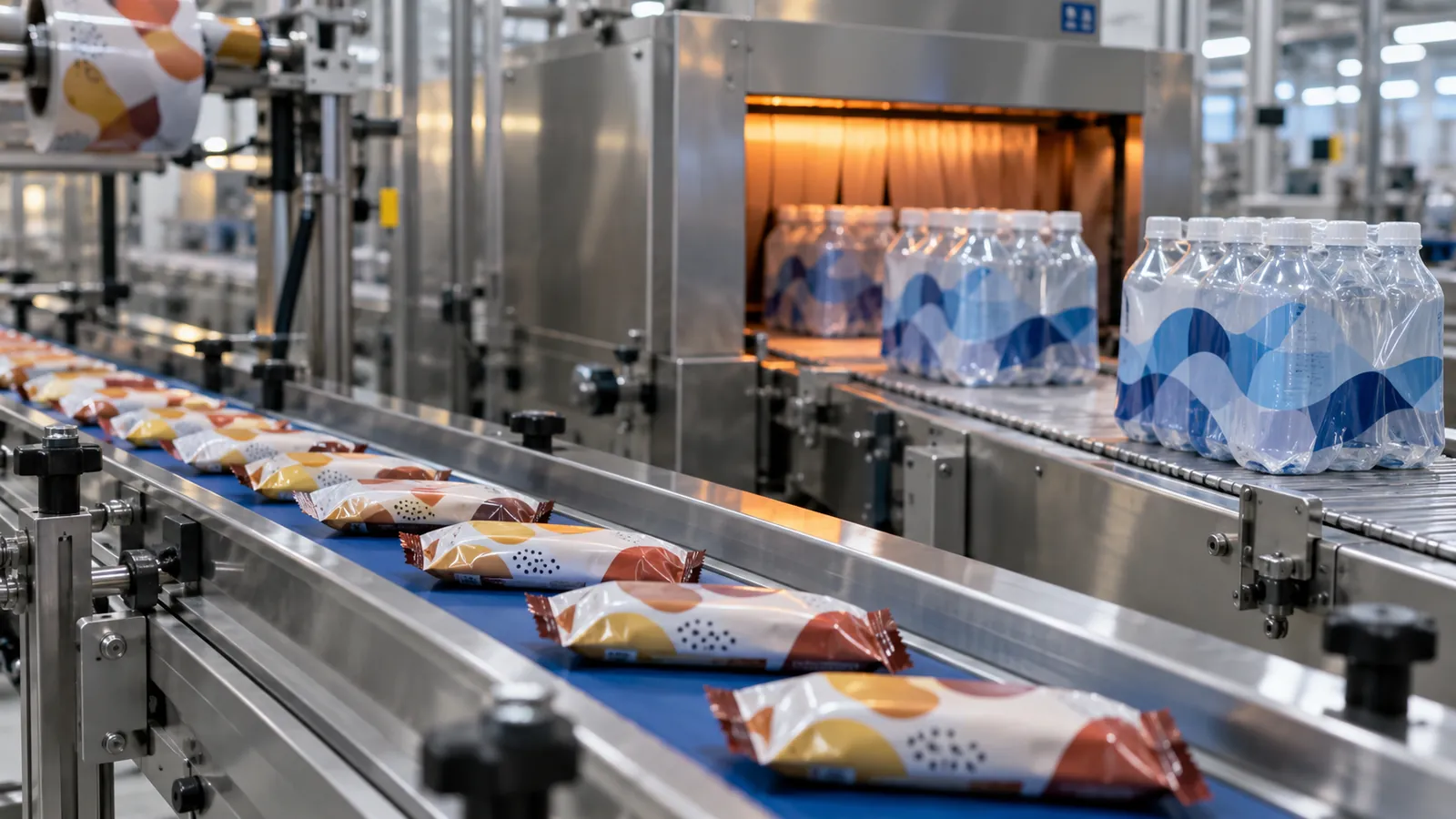
Flow Wrap vs Shrink Wrap: Choosing a Wrapping Format
Flow wrap vs shrink wrap compared on product fit, barrier, seals, print, heat and machines, with a checklist to choose the right wrapping format.
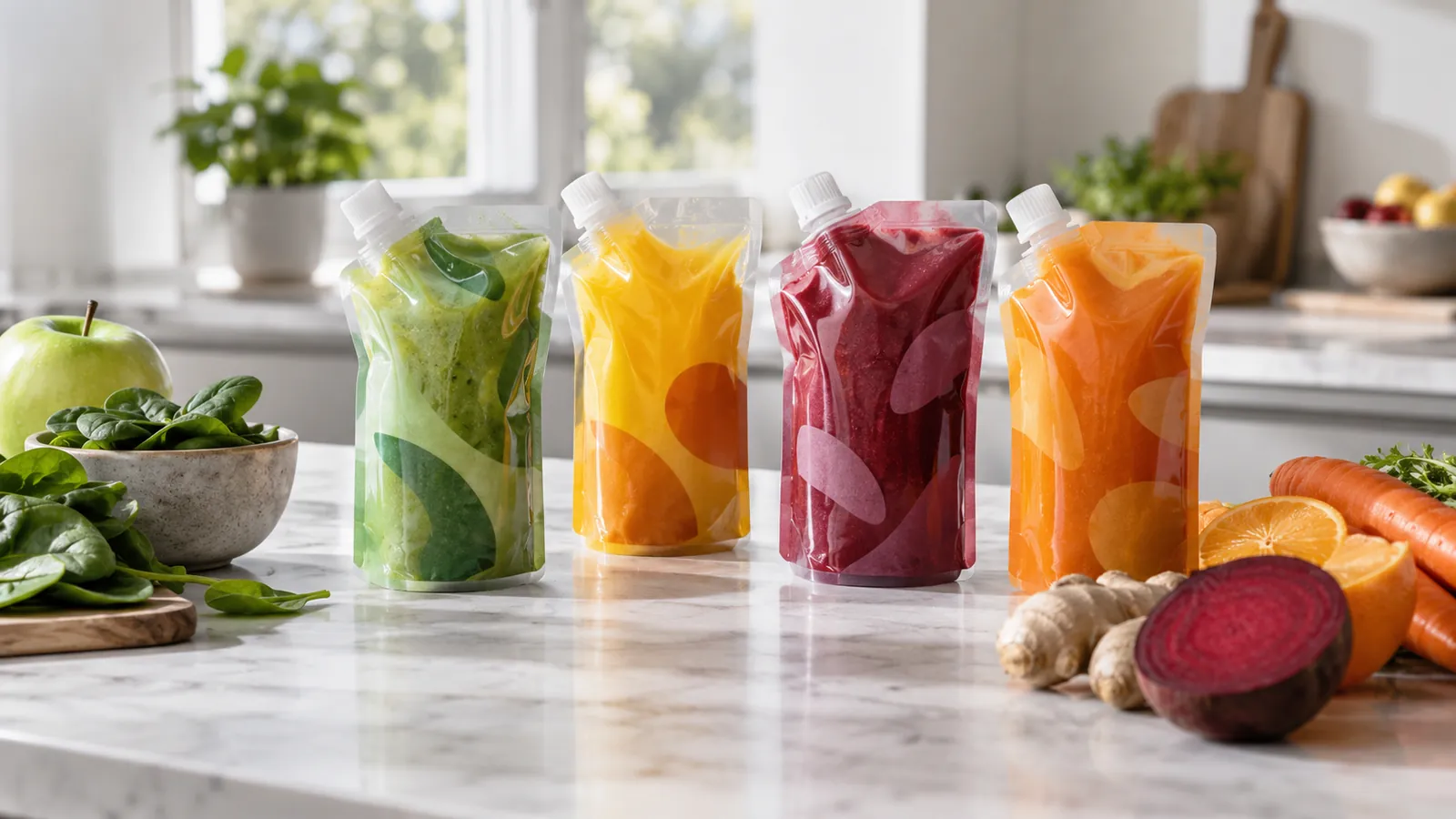
Spouted Pouch: Spout Types, Materials and Filling
A spouted pouch is a flexible pouch with a plastic spout fitment for pouring or squeezing. Compare spout and cap types, structures, filling and recycling.
Stand-Up Pouch: Types, Materials and Features
A stand up pouch has a bottom gusset that lets it stand on shelf. Learn gusset styles, closures, laminate structures and filling considerations.