
Flow Wrap vs Shrink Wrap: Choosing a Wrapping Format
Flow wrap vs shrink wrap compared on product fit, barrier, seals, print, heat and machines, with a checklist to choose the right wrapping format.
Choosing tunnel shrinking for a heat-sensitive item can damage the product. Heat-sealed flow wrap forms a film tube around a product, seals it along the back with a fin or lap seal, then crimps and cuts the ends to make a sealed pillow-shaped pack. Shrink wrap places a heat-shrinkable film loosely around a product or group, then heats it so the film contracts tightly. Choose flow wrap when you need a printed, sealed single-item pack with real barrier options, as for bars, biscuits and medical devices. Choose shrink wrap when you need a clear, tight skin, a multipack bundle, a sleeve or tamper evidence, and the product can take the heat.
This comparison concerns heat-sealed flow wrap and tunnel shrink wrapping, based on public equipment documentation rather than our tests. Cold-seal flow wrap is an exception: one equipment maker explicitly lists rotary cold sealing for heat-sensitive products. Each format has its own page: flow wrap packaging and shrink wrap packaging.
Flow wrap vs shrink wrap at a glance
Scroll horizontally to view all columns if needed. ↔
| Feature | Flow wrap | Shrink wrap |
|---|---|---|
| How the pack is made | Film formed into a tube, fin or lap seal, crimped end seals | Film wrapped or sleeved loosely, sealed, then shrunk by heat |
| Fit | Snug pillow-shaped pack, some air space possible | Tight, conforming to the product |
| Typical products | Bars, biscuits, bakery items, confectionery, produce, medical devices | Boxed goods, bottles, cans, multipacks, contoured containers |
| Typical film | Laminates or coextrusions (BOPP, PET outer, sealant inside) | POF, PVC, PETG, OPS, PE, depending on the format |
| Barrier | Good with laminates; modified atmosphere possible | Limited for most shrink films; barrier shrink bags exist |
| Printed film with registration mark | Overwraps rely on carton art; full-body sleeves give 360-degree print | |
| Heat exposure in this scope | Local heat at longitudinal and end sealers; product exposure needs checking | Whole pack exposed in a tunnel; recipe needs checking |
| Seal type | Target hermetic or peelable performance requires validation | Seal and shrink performance depend on structure and settings |
| Machine | Horizontal flow wrapper | Wrapper or sleeve applicator plus shrink tunnel |
| Main limit | Product must be stable and fed in a line | Heat tolerance and tunnel setup |
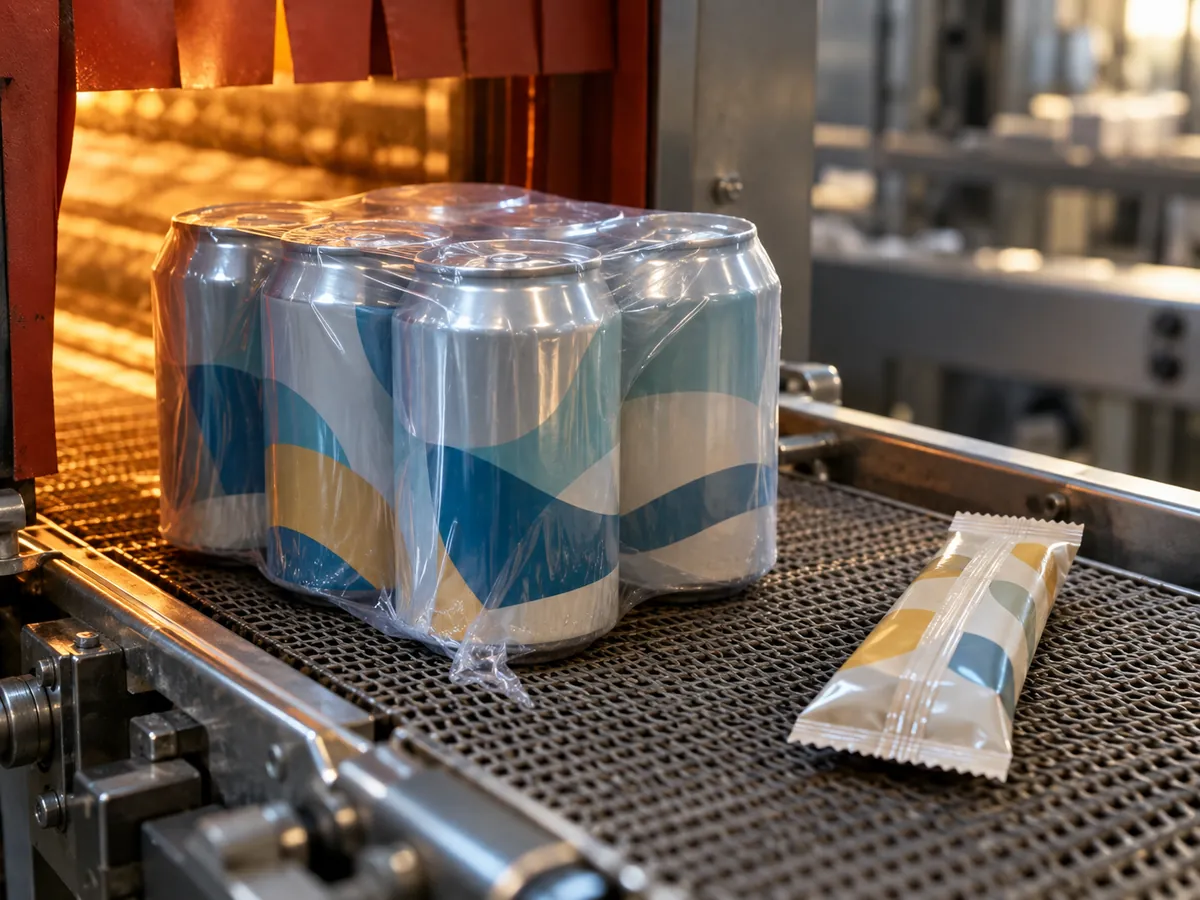
What each format is for
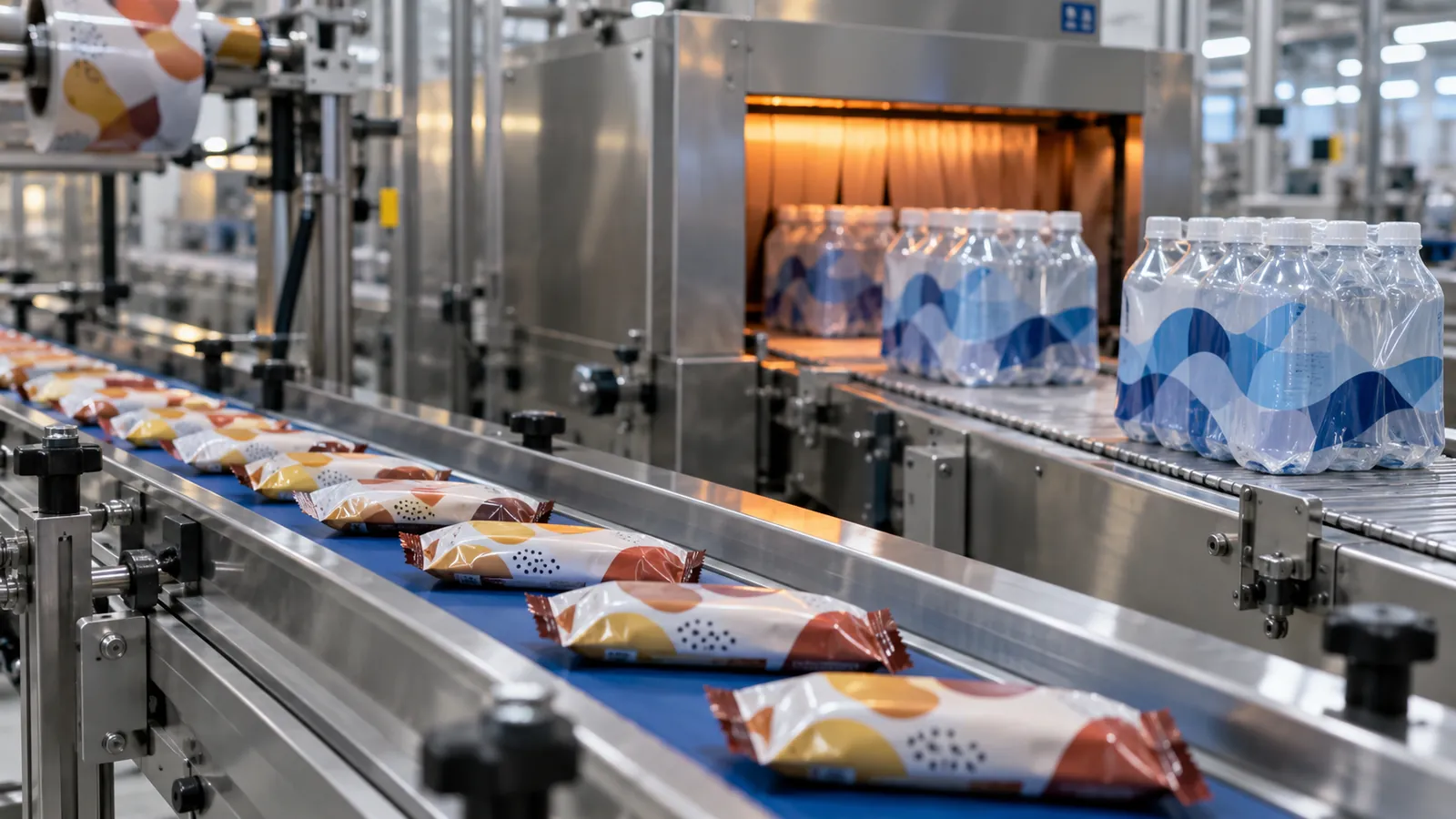
Flow wrap is a single-item (or small multipack) format with a sealed film envelope. The film is the pack: it carries the brand print, provides the barrier and forms the opening seal. It runs on horizontal machines where the product travels in a straight line. The film side is covered in flow wrap film.
Shrink wrap is more often used for grouping, presentation and protection. A POF overwrap on a carton, a film-only bundle of cans, or a full-body sleeve on a bottle all use the same principle of pre-stretched film pulling back when heated. The film is usually not the primary barrier.
Takeaway: The material and machine sides are covered in shrink film and shrink wrapping film.
Product fit and shape
Flow wrap suits solid, reasonably uniform items that can be spaced and fed in a line. Loose, powdery or very fragile products usually belong in another format, and sharp edges can pierce the end seals, so item geometry matters.
Shrink wrap handles irregular shapes better, because the film conforms as it shrinks. The amount of shrink needed depends on the product: a flat box needs little, a bottle with a shoulder needs a lot.
Takeaway: Heavy or unstable groups may need a tray or pad for stability.
Barrier and shelf life
If the product needs protection from oxygen or moisture, flow wrap has the advantage. A laminate with validated seals and optional gas flushing can be evaluated for suitable bakery products. Respiring fruit and vegetables need permeability matched to respiration and storage conditions; do not transfer a high-barrier bakery specification to all fresh produce. Set barrier requirements by product and shelf life, and check them against data at stated test conditions (see oxygen barrier packaging).
Most shrink films are not designed for oxygen or moisture protection. They protect against dust and scuffs, show tampering, hold a group together and present the product.
Takeaway: If you need barrier plus shrink, ask about shrink bags with barrier layers, which are a different structure from retail overwrap.
Heat and the product
Both routes compared here use heat; flow wrapping as a whole also includes cold-seal systems with a compatible coating. In flow wrap, heat is limited to the seal jaws and, for the fin seal, a sealing wheel or pair of rollers. In shrink wrap, the whole pack passes through a heat tunnel or sees a heat gun. Heat-sensitive products such as chocolate or some medical devices may need a short dwell time or a different format.
Takeaway: Shrink appearance also depends on tunnel temperature, belt speed and airflow, and poor settings produce dog ears, burn holes, webbing or loose wraps.
Print, appearance and tamper evidence
Flow wrap has a large printed surface on the film and a sealed pack. The fin seal stands up from the back, which some designs treat as a feature and others hide.
Shrink wrap gives a clear glossy skin that shows the product. Full-body sleeves are the exception for print: they cover a bottle with reverse-printed graphics.
Takeaway: Tamper bands and overwraps provide visible evidence of opening at low cost, but whether a given band meets tamper-evident requirements depends on the product and destination market, so confirm the rules that apply to you.
Machines, changeover and speed
Seal mechanism alone does not establish speed, pack-length range or changeover time. A manufacturer’s flow-wrapper brochure lists rotary crimpers and a 40–565 mm package-length range for that configuration. Its range is evidence for that machine, not a “narrow range” rule for rotary jaws.
Another maker’s box-motion flow-wrapper documentation specifies a box-motion head for MAP-oriented fresh-food packs, but the consulted page gives no numerical bag-length range. Obtain that range for the selected configuration and film. Record seal dwell, product feeding, usable output and actual changeover at the required pack sizes; no generic faster/slower ranking is justified.
Shrink systems add the wrapping or sleeving step and a tunnel recipe.
Takeaway: Compare the complete routes at the same product, pack size and acceptable seal or shrink result.
Sustainability
Flow wrap laminates are often multi-material, which makes recycling hard, though mono-material designs exist. Shrink film choice affects sortability. A full-body sleeve on a PET bottle can cause sorting problems if its density or opacity differs from the bottle. Bundling film-only uses less material than tray-and-film.
Takeaway: Check local guidance in each case.
When to choose flow wrap
- The product is a solid item that can be fed in a line.
- You need a sealed, printed single-item pack with barrier or gas flushing.
- A peelable or hermetic seal is part of the requirement, as in medical packaging.
- The product can tolerate only heat at the seals.
When to choose shrink wrap
- You need to bundle units into a multipack without a carton.
- The product has an irregular shape or needs a tight, clear skin.
- You want a full-body sleeve with 360-degree print or a tamper band.
- The product tolerates tunnel heat and barrier needs are low.
Decision route before choosing
- Single pack or group? A sealed unit suggests flow-wrap evaluation; a bundle or sleeve suggests shrink evaluation. Some flow wrappers also group items, so check feeding.
- Barrier needed? Specify finished-pack protection and shelf life. For respiring produce, record the required gas exchange rather than assuming maximum barrier.
- Heat acceptable? If tunnel exposure is unsuitable, evaluate localized heat sealing or a documented cold-seal route with the right coating. Neither removes the need for a product trial.
- How will it feed? Record item spacing, support and grouping on the chosen infeed before comparing output or changeover.
Takeaway: Keep product size, film/coating, seal settings, tunnel recipe where used, and the trial result with the first-order checklist.
Sources and method
- Equipment manufacturer, horizontal flow-wrapper page: manufacturer hot/cold sealing options.
- Equipment manufacturer, flow-wrapper brochure: rotary crimper and configuration-specific length range.
- Equipment manufacturer, box-motion flow-wrapper page: box-motion/MAP description; no numerical length range published on the consulted page.
- Equipment manufacturer, shrink flow-wrapper brochure: manufacturer sealing-to-tunnel sequence.
- MULTIVAC, Fresh Produce brochure: manufacturer respiration/permeability guidance.
Accessed 8 October 2026. This is a public-document comparison, not a throughput, changeover or product-temperature test.
Continue reading
Related articles
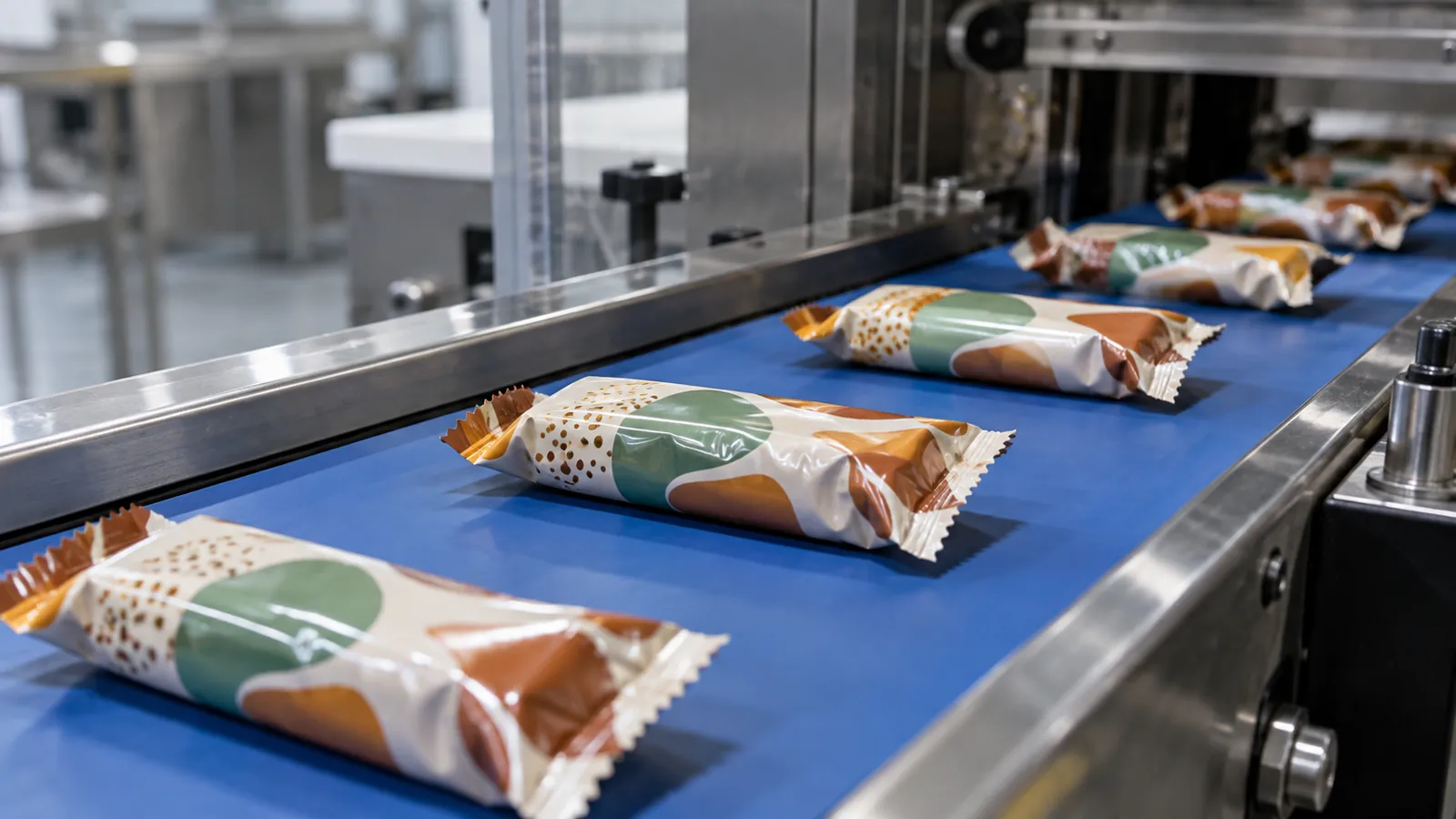
Flow Wrap Packaging: How It Works and What It Suits
Flow wrap packaging forms a film tube around the product with a fin or lap seal and two end seals. See variants, suitable products and trade-offs.
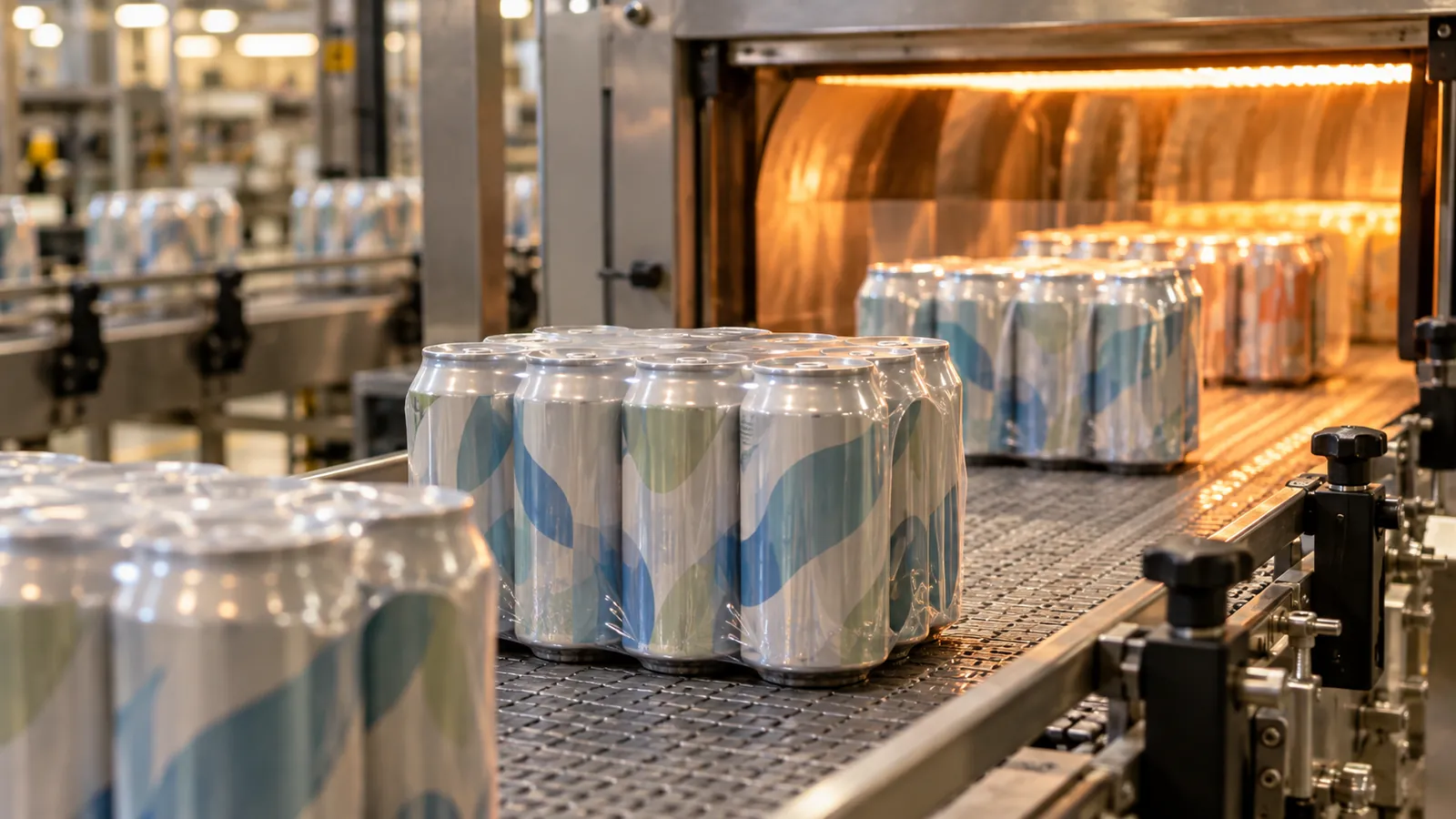
Shrink Wrap Packaging: Overwraps, Bundles and Sleeves
Shrink wrap packaging uses heat-shrinkable film to wrap a product or group of products tightly; here are the main formats and what each suits.
Flat Bottom Pouch: Box-Style Pouches Explained
A flat bottom pouch has a rectangular base and two side gussets that make a boxlike, self-standing pack. See construction, features and how it compares.