
Kelpi and Bower paper sachet: material questions after the trial
Review the Kelpi and Bower coated-paper sachet trial through material, liquid-contact, sealing and US recycling questions before planning a change.
Replacing a liquid sachet on the strength of a paper label can leave the coating and seams without supporting evidence. Kelpi and Bower Collective announced a coated-paper hand-wash sample format in September 2026; the material decision is to investigate that specific use, rather than assume it validates every liquid or paper-recycling route.
The Kelpi and Bower Collective sachet is a reported limited-edition hand-wash trial, not a published material specification for a US packaging change. Kelpi describes a seaweed-derived coating and use on an existing contract filling line. For packaging developers, the useful increment is a comparison file that identifies the coating, the liquid-contact conditions, the sealed sachet and the intended disposal route. This review keeps those questions separate from the companies’ performance and environmental claims.
- Kelpi’s announcement is dated September 17, 2026.
- Bower’s September 18 account describes hand-wash samples in 5 ml sachets.
- Existing-line use is a supplier statement about the described trial.
- The announcement supplies no public process window, package test results or US collection assessment.
What was announced, and what was actually trialled?
Kelpi’s original announcement describes paper sachets coated with its proprietary seaweed-derived biomaterial. Bower’s own account describes a limited-edition trial with hand-wash samples and says the coating combines seaweed-derived sugars with plant oils. Both are accounts from participants, rather than independent test reports.
Bower identifies 5 ml sachets in its September 18, 2026 blog post. Keep that volume attached to the reported sample application; it is not a validated range for another brand’s product. Kelpi says the sachets were made and filled by Guardpack using existing sachet-filling lines without equipment changes. That statement does not disclose the model, settings or operating results.
Scroll horizontally to view all columns if needed. ↔
| Date | What the source records | Evidence type |
|---|---|---|
| September 17, 2026 | Kelpi announces the coated-paper hand-wash sachet collaboration | Material supplier announcement |
| September 18, 2026 | Bower describes its limited-edition customer sample trial | Participating brand’s account |
| October 8, 2026 | This review identifies material and use boundaries | Editorial review of those accounts |
The materials directory explains where coatings sit within a wider material choice. The sachet format guide describes the small-pack context without identifying the construction used in this trial.
Takeaway: Begin with the reported hand-wash sample application and keep every material claim tied to that scope.
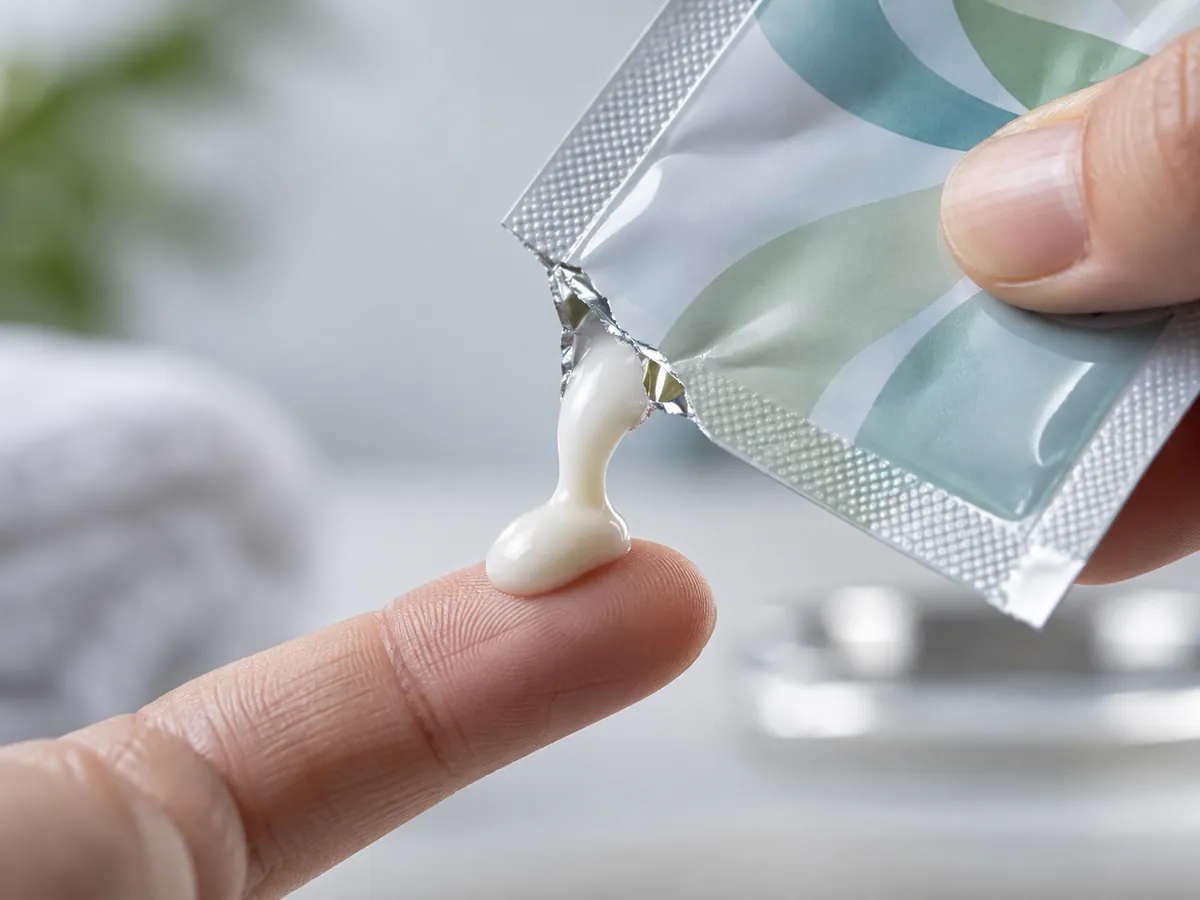
Who is affected by the coated-paper trial?
The news is relevant to teams examining liquid sample packaging, particularly those who need to connect a material claim to a filled sachet. It gives them a reason to request a more detailed evidence file. It does not give a purchasing deadline or a reason to release an untested substitution.
Scroll horizontally to view all columns if needed. ↔
| Reader | Practical implication | Evidence behind the implication |
|---|---|---|
| Personal-care packaging developer | Define the intended liquid and contact conditions before comparing materials | The reported trial uses hand wash |
| Material buyer | Request the offered coated-paper specification rather than ordering by appearance | Layer and coating details are not supplied |
| Contract packer | Identify the sample construction and documented filling context | Kelpi describes one contract producer’s existing lines |
| Sustainability reviewer | Separate material origin from collection and recovery claims | The participants make environmental claims without a US route assessment |
For product scoping, the cosmetic packaging guide provides related questions. The household-products packaging guide is useful when defining another intended liquid, but its wider category is not evidence that this coating has been validated for it.
Record the purpose of a sample request. “Understand the construction” and “approve our formulation” are different tasks. The first can begin with a specification; the second needs evidence that matches the intended use.
Takeaway: Let the announcement trigger a defined material enquiry rather than a broad substitution decision.
How should the coating be compared with a laminate?
Compare the complete proposed sachet with an identified existing pack, not seaweed origin with an unspecified plastic. This is an editorial comparison checklist. It asks for equivalent evidence fields without assuming the new coating’s formulation, thickness, sealing method or performance from the public announcement.
Scroll horizontally to view all columns if needed. ↔
| Comparison field | Existing sachet record | Coated-paper evidence to request |
|---|---|---|
| Construction | Identified layers and product-contact surface | Paper and coating specification with revision |
| Liquid exposure | Intended formulation and storage conditions | Compatibility evidence for the same formulation and use |
| Seam | Actual sealing arrangement and acceptance criteria | Applicable sealing description and sealed-sachet results |
| Coating integrity after liquid contact | Current structure and intended formulation | Coated-paper report identifying contact conditions, duration and endpoint |
| Filled-pack leakage | Results for the current seams and use | Results for the proposed filled sachet and sealing arrangement |
| Use-relevant gas or water-vapour barrier | Results only for properties the storage task requires | Matched sample, method and environmental conditions for each relevant property |
| Disposal claim | Destination and basis for the current statement | Assessment for the complete coated-paper sachet |
The paper packaging guide helps frame the complete structure. The laminate construction guide helps identify the comparator’s layers. Neither page gives a result for this coating. Leave the proposed material’s cells open until its supplier supplies documents covering them.
Kelpi claims water-barrier performance sufficient to hold the liquid and broadly compares its coating with fossil-fuel plastic performance. The public account supplies no identified plastic comparator, method, conditions or numerical results. Liquid containment, coating integrity after contact and seam leakage are separate questions. Request oxygen or water-vapour transmission evidence only if the target formulation and storage task require it; holding a liquid does not answer those questions.
Common mistake: Comparing a new material’s feedstock description with an existing pack’s measured performance. First align the questions and sample identities.
Takeaway: A comparison becomes useful when both columns describe identifiable constructions and the same intended use.
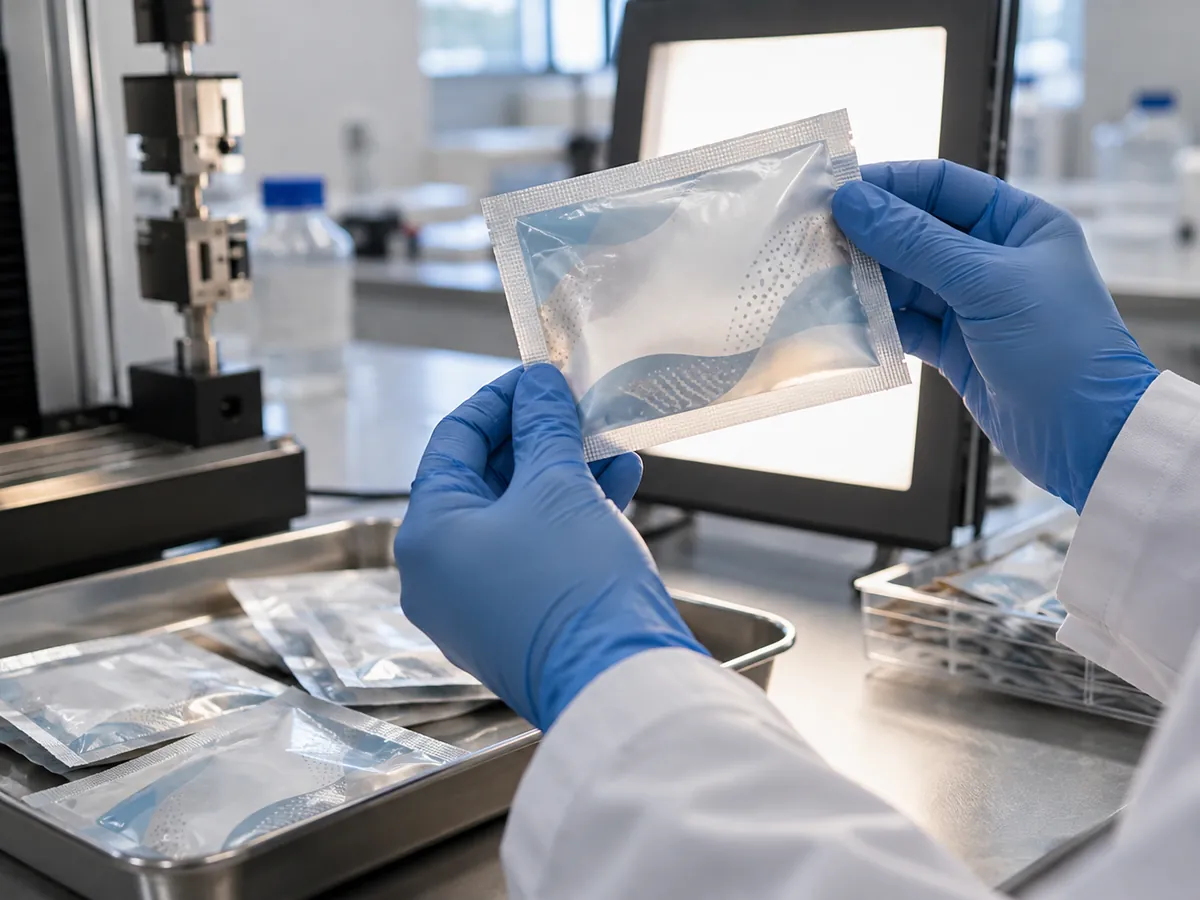
When should a US material team move forward?
Move from observation to evaluation when a supplier can identify an available sample, its specification and its intended use. Neither reviewed account provides a commercial supply date for other brands or the US market. Keep those dates open and use document availability as the next decision trigger.
Scroll horizontally to view all columns if needed. ↔
| Trigger | Sensible next action | What stays open |
|---|---|---|
| September 2026 announcement | Record the trial and the intended application | Wider supply and use scope |
| Supplier offers an identified sample | Ask for the material and coating documents | Suitability for the buyer’s formulation |
| Use-specific evidence is available | Agree the project evaluation questions | Approved settings and acceptance criteria |
| Destination-market claim is proposed | Obtain a local collection and recovery assessment | Validity of that particular claim |
The sachet-film compatibility guide gives the variables to record with a converting or filling evaluation. It does not validate Kelpi material on another machine. Kelpi’s no-equipment-change statement concerns the described Guardpack activity; it is not a universal process window or proof that no settings were adjusted.
Use the first pouch order checklist to record sample identity, drawings and unresolved acceptance points before a first order. If those documents are unavailable, the useful output is a monitored candidate material, with an owner for the next supplier enquiry.
Takeaway: Advance the project when identifiable samples and documents arrive, not when a general availability date is guessed.
What still needs a named document?
Material function and environmental claims require different files. The reviewed sources describe liquid containment, existing-line use and household paper recycling, but they do not publish the measurements or local acceptance documents needed to conclude a US project review. List who can provide each missing record and which decision it would support.
Scroll horizontally to view all columns if needed. ↔
| Open question | Who can answer? | Document or evidence to request |
|---|---|---|
| What exactly is being supplied? | Material supplier | Identified coated-paper specification |
| Does it suit the intended liquid? | Supplier and product quality team | Formulation-specific contact and filled-pack evaluation |
| Which sealing arrangement was used? | Converter or contract packer | Trial record and relevant process description |
| What supports the water-barrier and plastic-performance comparison? | Material supplier; packaging and quality reviewers | Identified coated paper and comparator, method, contact or environmental conditions, duration, endpoints and full results |
| What supports the disposal wording? | Supplier and destination-market reviewer | Complete-pack recovery assessment for that location |
| What supports biodegradation wording? | Supplier | Applicable report, conditions and claim scope |
| Can another brand obtain it in the US? | Supplier’s commercial team | Sample and supply terms for the project |
The recyclable packaging guide helps separate a design statement from a destination claim. The compostable packaging guide is a related reading path for end-of-life terminology; this trial announcement establishes no compostability certification.
The supplier’s wording about a fossil-fuel-derived plastic lining should not be shortened to an unqualified “plastic-free” statement. Ask for the material description and the intended claim wording. The distinction belongs in the evidence record even when the public image looks like paper.
Takeaway: Request separate documents for contact performance, conversion and each environmental claim.
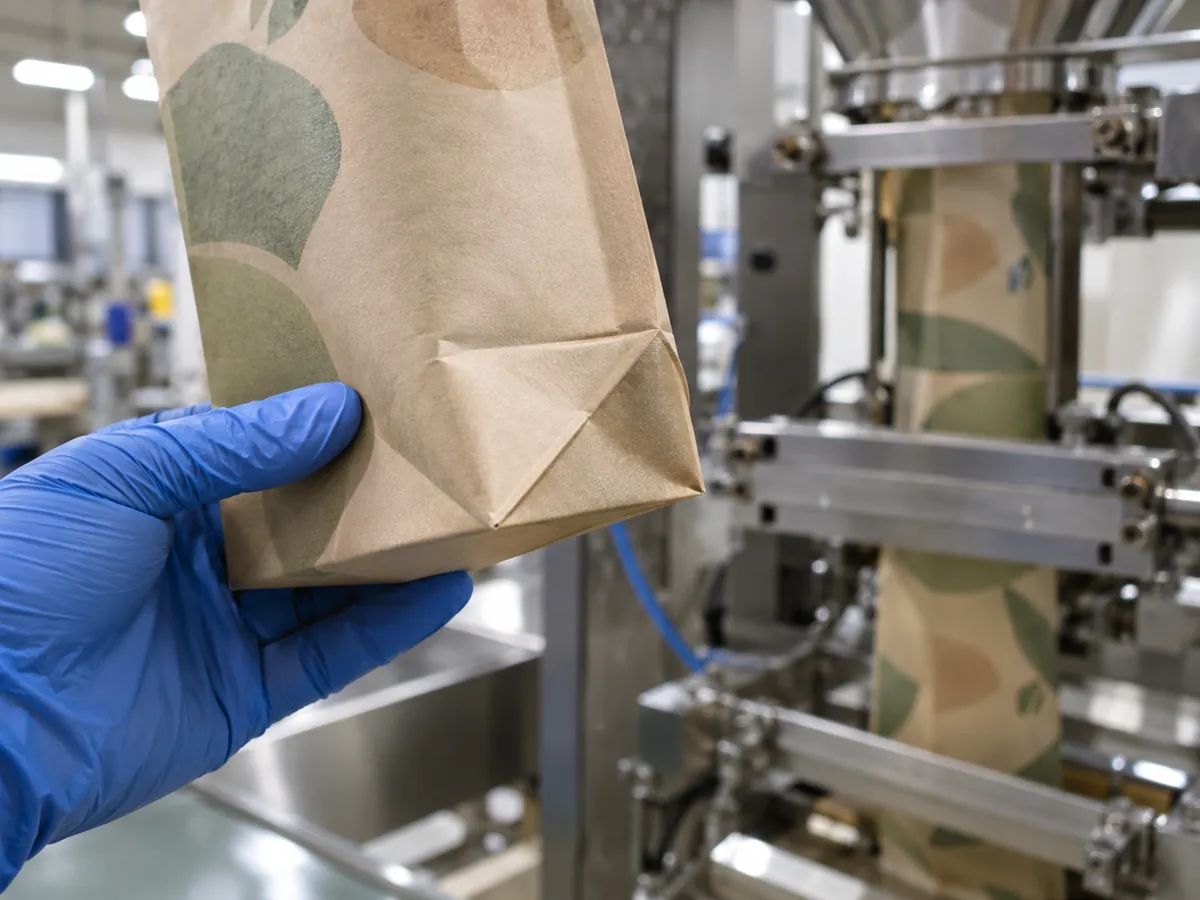
When this does not apply
This review does not establish a sealing temperature, line speed, acceptable leakage rate or shelf life. It cannot extend the hand-wash trial to another liquid, say the format is accepted by US curbside programmes, or certify biodegradability. It also does not verify the participants’ claim of a world first.
A film or coating barrier report alone would still leave a separate question about the sealed pack. The seal-strength guide provides terminology for requesting that evidence. Ask which sample and conditions a report covers before placing it in a project approval file.
Takeaway: Keep the interpretation inside the reported trial’s scope and obtain evidence for any new use.
FAQ
What are the disadvantages of seaweed packaging?
This announcement provides no comparative defect rates or cost data from which to list demonstrated disadvantages. For the reported coated-paper sachet, the unresolved review fields are formulation compatibility, sealed-pack results, available supply and destination-specific recovery evidence. They are questions, not measured failures.
How long does seaweed packaging last?
Neither reviewed account gives a shelf-life result for the trial sachet or the coating in another application. A material’s feedstock does not identify a validated storage period. Request a study covering the intended liquid, finished package, conditions and endpoints before assigning one.
How do I know if my packaging is recyclable?
For this candidate, obtain an assessment of the whole sachet for its destination, including coating and other components. The companies’ household paper-recycling wording does not establish acceptance in a particular US programme. Use the claim’s actual location and scope in the review record.
Takeaway: Keep durability and recycling answers tied to an identified sachet and intended use.
Sources and method
Sources read October 8, 2026 are Kelpi’s September 17 announcement and Bower’s September 18 trial account. Kelpi’s article content was read from the official site’s embedded announcement data because its initial HTML did not contain the body. These are participant statements, not independent validation. The evidence matrix and suggested follow-up sequence are editorial interpretations.
FAQ wording comes from US English DataForSEO snapshots for “seaweed packaging” and “paper packaging recyclable,” collected October 8, 2026. The generated, site-owned photographic illustrations show generic situations, not the trial sachets. No measurements, sample testing, certification review or commercial terms are supplied by this article.
Takeaway: Treat the two participant accounts as claims to investigate, not independent trials.
Related resources
- Paper flexible packaging helps identify the complete construction to assess.
- Sachet film compatibility supplies variables for a relevant trial record.
- Design for recycling helps scope an end-of-life enquiry.
Takeaway: Use the related guides to define the sample and destination review.

Continue reading
Related articles

BASF paper coating dispersions: reading the carbon claim
Separate BASF's mass-balance carbon claim from coating performance, qualification and US supply evidence before reviewing a paper packaging change.
SunDance coffee valve pouches: what the material evidence shows
Read the SunDance coffee valve pouch announcement through film structure, valve, seal and recycling evidence before approving a packaging change.
Avantium and kp PEF: evidence before a packaging material switch
Read the Avantium and kp PEF reservation agreement through tray, lid and barrier evidence, conditional future supply and questions for US projects.