
Avantium and kp PEF: evidence before a packaging material switch
Read the Avantium and kp PEF reservation agreement through tray, lid and barrier evidence, conditional future supply and questions for US projects.
Treating reserved future capacity as a ready material can leave a packaging programme planning around supply and performance it has not established. Avantium’s September 14, 2026 announcement with Klöckner Pentaplast, or kp, supports continued evaluation of PEF for food packaging; it does not announce a released tray specification or a US supply programme.
The Avantium and kp PEF agreement is a conditional route toward possible future material volumes. PEF means polyethylene furanoate, the polymer discussed in the release. For a materials engineer, the useful response is to build separate evidence records for a tray, its lid and any proposed flexible-film use. This page explains what the agreement changes in the evaluation process, what could justify a procurement follow-up and what remains outside the published evidence.
- The agreement concerns access to future volumes from prospective licensee plants.
- Access remains subject to technical, regulatory and commercial requirements.
- The release describes food-tray evaluation and also mentions flexible lidding and flow-wrap investigations.
- No order price, commercial tray launch date or US package approval is established by the release.
What has the PEF agreement changed?
Avantium announced the capacity reservation agreement on September 14, 2026. It describes kp’s possible access to future PEF volumes from prospective industrial-scale plants built and operated by technology licensees. The company ties potential access to technical, regulatory and commercial requirements and says the agreement facilitates continued evaluation.
The release presents a possible path to future commercial deployment in thermoformed food packaging across Europe, including trays for fresh and prepared foods. That stated development scope does not establish US supply or suitability. It also says oxygen and carbon-dioxide barrier properties are being evaluated for flexible lidding films and flow-wrap structures. These are stated evaluation directions, not published results for a commercial tray-and-lid combination.
Scroll horizontally to view all columns if needed. ↔
| Date or condition | What is established | What is not established |
|---|---|---|
| September 14, 2026 | Avantium announces an agreement with kp | A commercial food-pack launch |
| September 28, 2026 | Avantium reports the first FDCA batch at Delfzijl | Continuous operation, completed PEF packaging qualification or kp tray supply |
| October 8, 2026 | This review reads the agreement and the upstream update | An independent confirmation of performance |
| Technical, regulatory and commercial requirements are met | A condition for potential future access | The date, location or terms of a buyer’s supply |
In its September 28 plant update, Avantium announced a first FDCA batch at Delfzijl and described qualification and a transition toward continuous operation as next work. FDCA is the feedstock identified in the agreement’s PEF description. This upstream milestone is distinct from the prospective licensee PEF plants and kp’s package evaluation. The update anticipated FDCA commercial sales at the end of 2026; that forecast is not a confirmed sale or a kp delivery date.
The materials hub helps place the polymer within a broader material brief. A procurement record should retain the agreement’s conditions beside the event date, instead of converting that date into an expected delivery milestone.
Takeaway: The event advances evaluation and a possible future supply route, while leaving product release conditional.
Who needs a different evidence file?
Tray developers, film developers and procurement teams need different outputs from the same news. A tray team needs forming and finished-pack information. A lid team needs its own construction and sealing information. A buyer needs a credible supply path. The reservation statement does not deliver all those outputs in one document.
Scroll horizontally to view all columns if needed. ↔
| Reader | Evidence file to open | Why it matters for this release |
|---|---|---|
| Food-tray material engineer | Proposed tray structure and intended food use | Thermoformed applications are under evaluation |
| Lidding-film developer | Lid layers, sealing surface and tray interface | Flexible lidding is mentioned without a finished structure |
| Flow-wrap material developer | Web specification and intended product protection | Flow-wrap investigation is separate from tray evaluation |
| Procurement planner | Future supplier, conditions and project terms | The described volumes come from prospective plants |
| Quality or regulatory reviewer | Intended use and supporting material documentation | Regulatory suitability is an explicit condition |
The PET film guide is background for an existing material record, not a reason to equate PET and PEF. Record each candidate’s full identity. For a flexible route, the flow-wrap format guide helps define the actual packaging configuration before interpreting a film claim.
Takeaway: Divide the review by application and responsibility before asking the release to support a material change.
What should a tray-and-lid comparison contain?
Start with the full package specification and the food-protection task, then request matching evidence for each candidate. This is an editorial checklist for the announced evaluation, not a published PEF design. It does not choose a layer stack, assign a barrier value or prescribe processing conditions.
Scroll horizontally to view all columns if needed. ↔
| Structure to compare | Barrier and package evidence | Recovery evidence |
|---|---|---|
| Existing multilayer barrier tray | Identify each layer’s role; retain material results and tray-and-lid performance for the intended food | Assessment for the actual complete structure and destination |
| Proposed mono-material PET tray | Confirm the tray construction and lid separately; request matched gas-barrier and finished-pack results | Evidence for that tray-and-lid combination, rather than an inference from the PET label |
| Proposed PEF structure | Final layers are not disclosed in the release; request sample identity and matched material and package results | Structure-specific assessment for the target market; no route is established here |
The rows are candidates for an evidence comparison, with no assumed performance ordering. A polymer result, a layer’s contribution and the sealed package’s result answer different questions. Compare each proposed lid and sealing surface as part of the package, under the same intended food and storage conditions.
Scroll horizontally to view all columns if needed. ↔
| Avantium claim or development aim | Public evidence status | File and responsible reviewer |
|---|---|---|
| Oxygen and carbon-dioxide barrier potential | Attributed description; no matched tray-and-lid results | Material supplier provides gas-specific reports with sample identity, method, units and conditions; packaging team checks the finished pair |
| Longer shelf life | Potential benefit, with no quantified food-and-pack study | Product quality team obtains the relevant food, storage, endpoint and observation records |
| Alternative to conventional multilayer trays | Development direction; final PEF layer stack is unspecified | Packaging developer obtains the complete proposed structure and its functional evidence |
| Structures designed for recyclability | Stated aim; no destination-specific outcome established | Supplier and target-market reviewer obtain a complete-pack recovery assessment |
The oxygen transmission guide explains which conditions should accompany an oxygen-barrier result. A barrier-film overview helps distinguish the property from a layer’s identity. Neither supplies a carbon-dioxide transmission result or validates the proposed food package. Leave any unreported value blank and ask for evidence covering the gas of interest.
The seal-strength guide provides language for the seam review. A tray material announcement does not identify the lid’s sealant or prove that a particular pair can be sealed. Keep the interface in the package record, even when a supplier’s report focuses on one material.
For flexible film evidence, use the specification comparison guide to retain sample type, conditions and document revision. If a supplier supplies a material test, do not relabel it as a shelf-life trial of food in a completed pack.
Common mistake: Letting a polymer’s stated barrier potential stand in for the evidence of a specific tray, lid and food combination.
Takeaway: Match the comparison to the complete pack and keep each result attached to the sample actually tested.
When should procurement revisit the option?
Revisit a procurement decision when the supplier can identify a material, evidence for the intended use and a supply offer covering the project. The announcement makes those matters conditional. A reservation agreement is useful to monitor, but it cannot provide a buyer’s grade, destination, delivery date or approval record.
Scroll horizontally to view all columns if needed. ↔
| Follow-up signal | Procurement response | Record needed before relying on it |
|---|---|---|
| FDCA qualification or sales progress is reported | Update the upstream monitoring record | Avantium’s dated production and qualification account; keep PEF and package status separate |
| Licensee PEF plant construction is announced | Identify the proposed production route | Named licensee, location and documented milestones, without inferring project delivery |
| kp supplies an application-specific evaluation conclusion | Compare it with the project’s requirements | Identified sample, conditions and conclusion |
| Prospective production route becomes an identified supplier | Ask which material could be offered | Supplier and material documentation |
| A project-specific offer is available | Check destination and terms | Written supply and commercial conditions |
| Suitability review covers the intended food and market | Decide whether the procurement file can advance | Applicable use documentation and internal review |
This table deliberately contains no projected launch dates. The supplier evaluation guide helps identify missing supply evidence. The first pouch order checklist offers related sample and acceptance-record principles for a flexible-film project; it is not a tray-order procedure or evidence that PEF pouches are offered.
Separate an upstream production update from a finished-package approval. Either can be relevant to monitoring, but a production event does not identify the proposed tray’s construction, market scope or operating conditions. Ask the supplier which milestone changes the buyer’s actual material file.
Takeaway: Move procurement forward on project-specific documents rather than inferring dates from a capacity reservation.
What remains outside the announcement?
The release presents potential benefits and investigation areas, without a matched package study establishing a shelf-life gain, recycling outcome or a US use approval. The useful response is to name the evidence needed for each statement. This avoids turning development aims into specifications while giving reviewers a concrete next task.
Scroll horizontally to view all columns if needed. ↔
| Unresolved field | Who should supply or review it? | Evidence to request |
|---|---|---|
| Complete tray or flexible-film structure | Material and packaging developer | Identified specification |
| Food-protection performance | Supplier and product quality team | Relevant material and finished-package results |
| Intended US food-contact use | Supplier and regulatory reviewer | Documentation covering the proposed material and conditions |
| Recycling claim for the structure | Supplier and destination-market reviewer | Applicable recovery assessment |
| Future supplier, quantity and commercial timing | Procurement and supplier | Written project-specific availability and terms |
The food-contact packaging guide supplies context for the documents a review needs; this article gives no regulatory opinion or approval claim. The design-for-recycling guide asks a different set of questions from a barrier review. A proposed alternative to a multilayer tray still needs its own documented recovery route.
When someone proposes a longer-life claim, use the shelf-life evidence guide to define the food-and-pack study to request. No extension period is calculated here, and no source statement is presented as a measured result.
Takeaway: Put performance, market use, recovery and availability in separate fields with identifiable evidence owners.
When this does not apply
This review cannot be used to order an announced PEF tray, specify a production window or confirm supply to a US project. It does not prove barrier equivalence with a named conventional structure or validate a recyclability statement. No price, production tonnage, approval status or package launch date is inferred.
The source discusses possible future volumes under several conditions. Preserve those conditions if the event is copied into an internal roadmap. A monitoring entry can say what evidence would trigger reconsideration without pretending that the evidence or supply already exists.
Takeaway: Keep the event in a development record until the intended application and supply file support another decision.
FAQ
What is barrier packaging?
Barrier packaging limits the passage of substances such as oxygen or water vapour between the product and its environment. The relevant property depends on the food and storage task. The PEF announcement discusses gas-barrier potential but gives no complete package specification. Identify the tray, lid, intended food and evidence scope before treating a material statement as a package result.
What is laminated film?
Laminated film joins two or more material layers into one packaging web. Its layer record identifies that complete construction rather than only one polymer name. The release does not identify a final PEF lidding or flow-wrap stack. Request that complete structure before comparing it with the existing film.
How do I know if my packaging is recyclable?
For an identified candidate, request the recovery assessment for the whole construction and its destination. The agreement discusses a possible direction for future packaging, not a US collection decision. Keep intended design, local collection and the proposed label wording distinct in the file.
Takeaway: A material category does not establish a candidate pack’s performance or recovery route.
Sources and method
The source is Avantium’s September 14, 2026 original agreement announcement, read October 8, 2026, alongside the linked September 28 FDCA plant update. The September 30 official financial update was also checked for subsequent status; it does not supply a kp package release or a project-specific offer. Statements about the agreement, prospective plants, evaluation directions and potential benefits are attributed to that company. Media rewrites are not additional performance evidence. The tray-and-lid matrix and procurement signals are editorial suggestions, not trial results or a legal interpretation of the agreement.
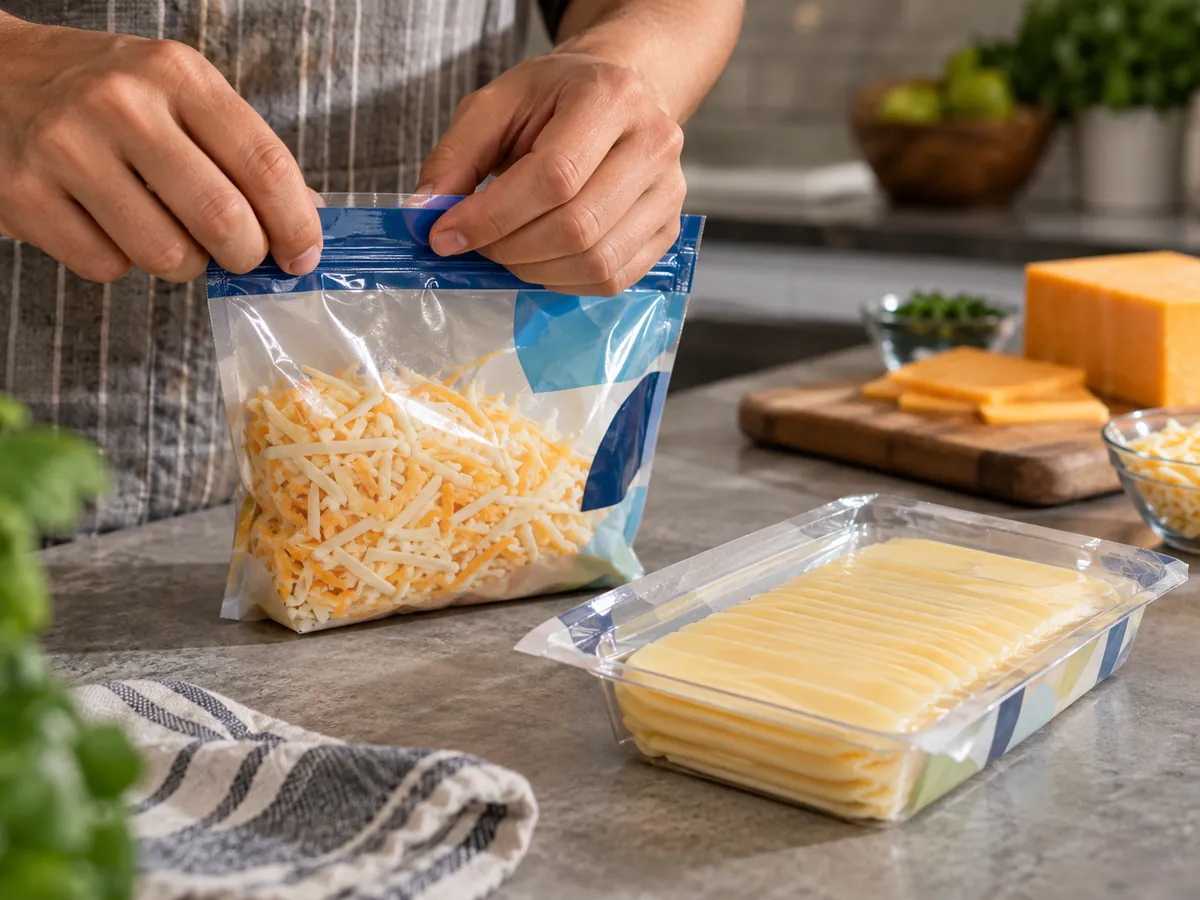
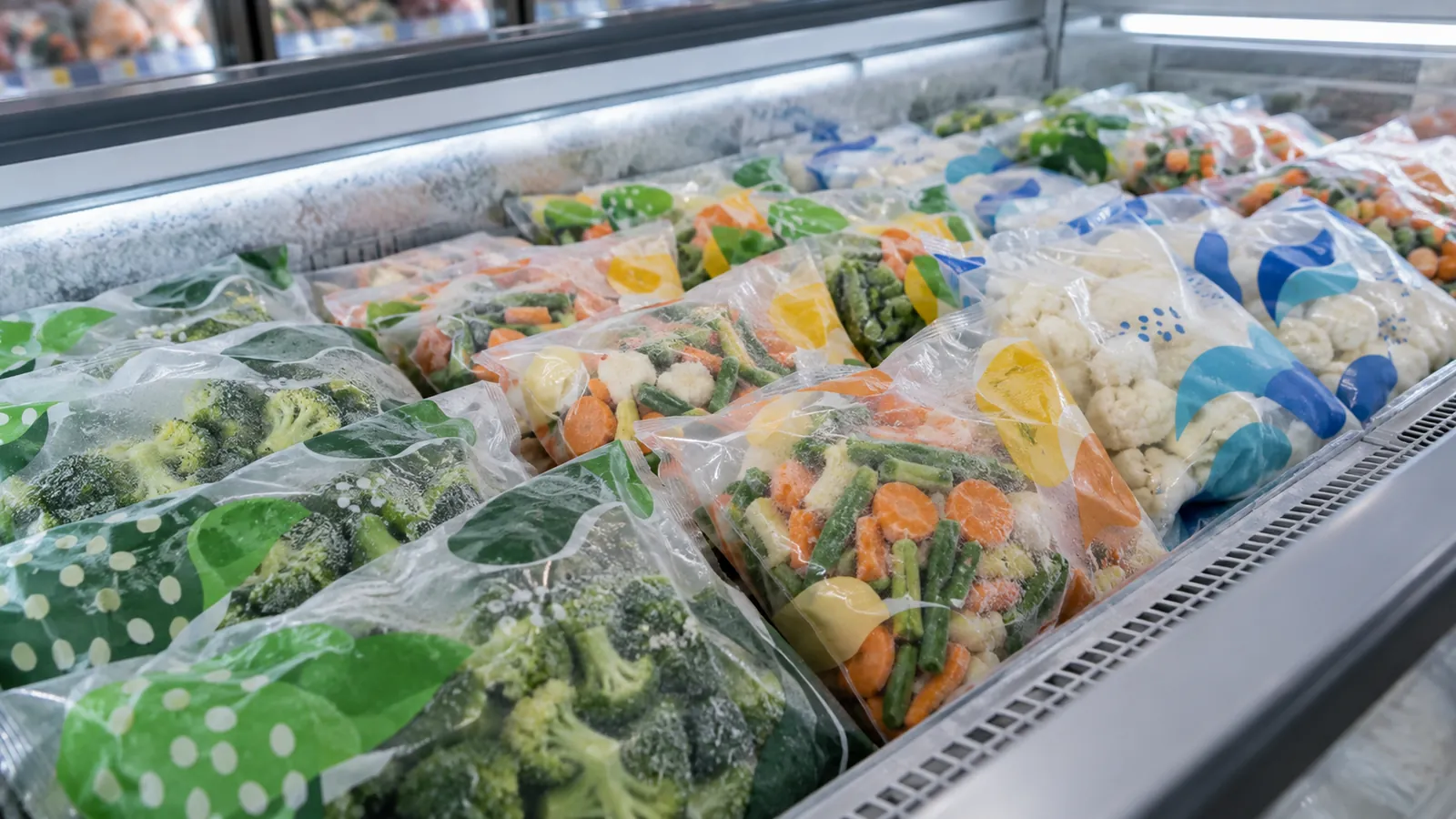
FAQ wording comes from US English DataForSEO snapshots for “barrier packaging” and “laminated packaging film” collected October 6, 2026, and “paper packaging recyclable” collected October 8, 2026. PEF-specific searches returned questions about other polymers; those questions were excluded. The site-owned generated photos are generic illustrations and do not show PEF samples or kp equipment. The FDCA milestone remains a company announcement, distinct from evidence of commercial PEF supply or a qualified food package. The FAQ definitions use the introduction to Mulakkal and colleagues’ multilayer-packaging study, read October 8, 2026. Only its category and barrier terminology is used; its experiments do not establish any PEF candidate’s performance.
Takeaway: Track upstream production announcements separately from packaging qualification.
Related resources
- Oxygen barrier helps identify the property to request without choosing a target.
- Food-contact packaging provides a reading path for a use-specific document review.
- Recyclable flexible packaging helps separate design aims from destination claims.
Takeaway: Choose a guide according to the missing property, use document or recovery evidence.
Continue reading
Related articles
SunDance coffee valve pouches: what the material evidence shows
Read the SunDance coffee valve pouch announcement through film structure, valve, seal and recycling evidence before approving a packaging change.

BASF paper coating dispersions: reading the carbon claim
Separate BASF's mass-balance carbon claim from coating performance, qualification and US supply evidence before reviewing a paper packaging change.

Kelpi and Bower paper sachet: material questions after the trial
Review the Kelpi and Bower coated-paper sachet trial through material, liquid-contact, sealing and US recycling questions before planning a change.