
Flexible vs Rigid Packaging: How to Compare Them
Flexible vs rigid packaging compared on material use, transport, protection, shelf impact, filling lines, cost and recycling, plus when rigid still wins.
Flexible vs rigid packaging is a comparison between packages that change shape when filled, such as pouches and wraps, and packages that hold their shape on their own, such as glass jars, metal cans, bottles and trays. A poorly chosen format can crush the product, add protective shipping material or require a costly line change. Compare the actual packages at equal delivered quantity, shelf life and distribution conditions; recycling acceptance depends on the destination system.
This page compares the two on the points that decide real projects. It uses no percentages, because the numbers depend on the product, the format and the method. For the broader context, see the flexible packaging overview.
First comparison: four project conditions
Scroll horizontally to view all columns if needed. ↔
| Condition | Flexible candidate | Rigid candidate | Evidence needed |
|---|---|---|---|
| Crush protection | Qualify pouch plus secondary protection | Qualify container plus secondary protection | Actual filled-pack damage tests |
| Empty-pack transport | Record reel/pouch shipment cube | Record nested or assembled container cube | Equal quantity, route and freight basis |
| Existing line | Confirm FFS or pouch-filler compatibility | Confirm filling/capping/seaming compatibility | Trial, change parts, downtime and capital |
| Local recycling | Check exact film structure and collection route | Check actual container’s acceptance | Destination program and recycler evidence |
Rigid, semi-rigid and flexible: definitions and examples
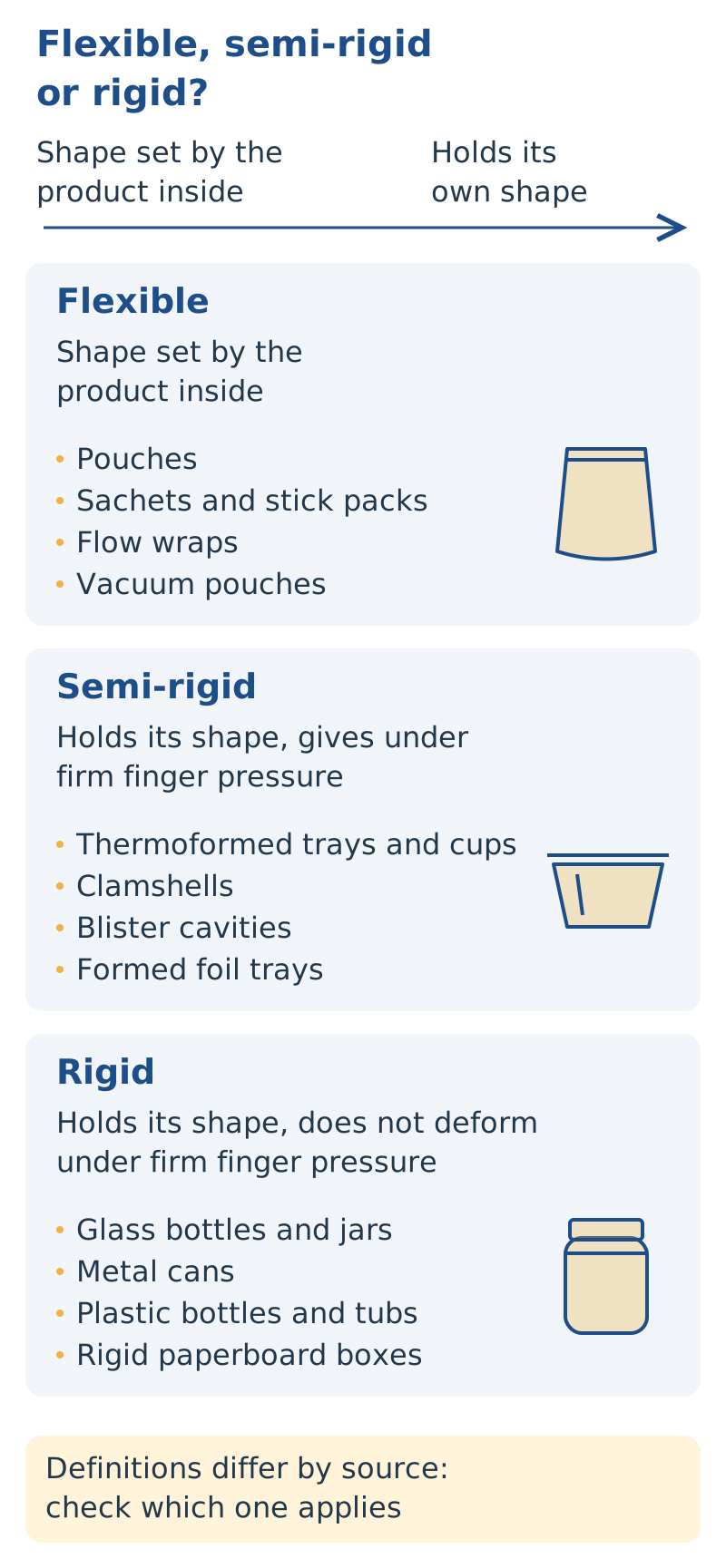
“Rigid packaging” means a container that keeps its shape whether or not the product is inside it, and that does not dent under ordinary handling. There is no single universal classification, but one formal reference is the US Department of Agriculture’s rule for thermally processed canned meat and poultry, 9 CFR 431.1, which sorts containers into three classes by how they behave once filled and sealed:
- Rigid container: its shape is neither affected by the product nor deformed by external pressure of up to 10 pounds per square inch gauge, which the rule describes as normal firm finger pressure.
- Semi-rigid container: its shape is not significantly affected by the product at normal temperature and pressure, but it can be deformed by that same firm finger pressure.
- Flexible container: its shape is significantly affected by the product inside it.
That rule was written for canned foods, so treat it as a clear way to draw the lines, not as a legal category for every market or product. Other sources group packaging by material instead, and the same item can be called rigid in one context and semi-rigid in another. When a supplier, a regulation or a recycling scheme uses these words, check which definition it is applying.
Rigid packaging examples
- Glass bottles and jars
- Metal cans for food and drinks, and aerosol cans
- Blow-molded plastic bottles and jugs, though thin-walled bottles that dent under finger pressure sit closer to semi-rigid by the definition above
- Injection-molded plastic tubs, pails and closures
- Rigid paperboard and set-up boxes, and corrugated shipping cases
Semi-rigid packaging examples
Semi-rigid packs stand on their own but give under finger pressure. Many are thin plastic or aluminum shapes that are sealed with a flexible lid.
- Thermoformed plastic trays and cups, such as meat trays, yogurt cups and ready-meal trays with a sealed film lid
- Clamshells for produce, bakery items and hardware
- Blister cavities formed from plastic or foil and sealed to a card or lidding; see blister packaging for how the cavity and lid are matched
- Formed aluminum foil trays and containers
- Folding cartons, which some sources class as semi-rigid and others as rigid paperboard
Flexible packaging examples
- Stand-up, flat bottom, side gusset and spouted pouches
- Pillow bags and quad seal bags formed on vertical machines
- Sachets and stick packs for single doses
- Flow wraps around bars and biscuits
- Vacuum pouches for meat and cheese
- Shrink wrap and lidding films, which are flexible materials used on or around other packs
The formats overview compares the flexible formats side by side.
“Plastic packaging” covers both sides
Plastic packaging is not a third category. A PET bottle is rigid plastic packaging and a PE pouch is flexible plastic packaging, and the two differ in wall thickness, forming process, filling line and recycling stream more than in polymer name. When someone asks how flexible packaging film differs from plastic packaging, the useful comparison is flexible against rigid, on the factors below. Semi-rigid packs often combine both, with a formed tray or cavity and a flexible lid, so their protection and recycling depend on the two components together.
Material use
A flexible pack gets its structure from the product inside it and a thin wall. A rigid pack has to carry its own shape, so its wall is thicker. Determine the material difference from actual package weights for the same fill and delivered product, including secondary protection. The caveat is that a pouch is often a multilayer laminate with several materials in a thin wall, which makes recycling harder. Compare by weight per unit of product delivered, and ask a supplier for actual pack weights. A life cycle assessment uses a defined functional unit and system boundary to compare impacts. ISO 14040:2006 provides principles/framework; ISO 14044:2006 provides requirements/guidelines. Neither establishes a packaging winner by format name.

Transport and storage
Empty flexible packaging arrives flat on rolls or as stacked premade pouches, so far more of it fits in a truck and a warehouse than empty bottles or jars. That cuts inbound freight and storage space. Filled flexible packs are lighter, though they may ship in cartons for protection and cannot always be stacked high without damage. Rigid containers are bulkier when empty, but they stack and palletize with fewer surprises. Weigh both the inbound and the outbound legs.
Product protection
Protection comes from the structure. Glass and metal are inherently high barrier. Rigid plastics vary. A flexible laminate can match or approach high barrier by using foil, metallized layers or oxide coatings, or it can be much lower barrier with plain PE. Compare structures using oxygen transmission rate and water vapor transmission rate measured under the same conditions of temperature and humidity.
Mechanical protection also differs. A rigid pack resists crushing, which matters for fragile contents. A flexible pack resists dropping better in some cases, but can be punctured or squeezed. Sterilization is possible in both: retort pouches and cans are both used for shelf-stable food, with different heat transfer behavior. See retort pouches and packaging and shelf life.
Shelf impact
Rigid packs have a fixed shape, so brands use bottle and jar design. Flexible packs offer large printable surfaces, and stand-up and flat-bottom formats can stand upright on a shelf, with hanging options for retail pegs. A flexible pack can look less premium to some consumers and more modern to others, so this is mostly a brand decision. Stand-up pouches show how flexible packs create shelf presence.
Consumer convenience
Flexible packs can be lightweight, squeezable, resealable with a zipper, pourable with a spout and easy to carry. They can be hard to empty completely, depending on the product’s viscosity. Rigid packs hold their shape for scooping, pouring and stacking in a cupboard, and tolerate being dropped in a bag. Features such as microwave venting, tear notches and spouts matter more to use than the base format does.
Filling lines and capital cost
Flexible packaging can be filled on form-fill-seal machines from rollstock or on premade pouch fillers. Rigid packs run on filling, capping, seaming or sealing lines. Existing equipment is often the deciding factor.
- Switching from rigid to flexible usually means a new filler, new quality checks and new line layouts. It may lower the cost per pack at volume, but it needs capital and validation.
- Switching from flexible to rigid is rarer, and often driven by a brand’s premium goals or the need for a hard wall.
- Format changes inside flexible packaging are easier, since the same machine can often run different film widths.
Line speed, change-over time, waste and maintenance count as well as the unit price of the pack, which is why a cheaper pack can cost more on the line.
Recyclability and collection
Recycling advantage depends on where the package is discarded. Check whether the destination program accepts the actual container or film, how it is collected and sorted, and whether a reprocessor takes it; a material-family label is insufficient. Multilayer laminates are hard to recycle, and mono-material designs, such as all-PE or all-PP structures, are improving but are not yet accepted everywhere. See mono-material packaging, recyclable flexible packaging and design for recycling.
Regulation also matters. Article 71 of Regulation (EU) 2025/40 sets the general application date at 12 August 2026, with exceptions. Individual obligations have their own phased dates and scope; check the relevant provision for packaging placed on the EU market. Recyclability claims vary by region, so confirm them for each market.
When rigid still wins
Rigid packaging is often the better choice when:
- the product is fragile or needs crush protection, such as delicate pieces or pressurized contents;
- a hermetic, impermeable wall is required for very long shelf life, as with glass and metal;
- the brand depends on a distinctive three-dimensional shape;
- the line is already built around rigid filling, and the cost of change is too high;
- the market’s recycling system handles rigid materials much better than film.
Copyable project comparison record
Fill both candidate columns on the same product, fill quantity, shelf-life and route basis. Leave missing evidence as “to confirm”.
Scroll horizontally to view all columns if needed. ↔
| Record | Flexible candidate | Rigid candidate | Evidence / source |
|---|---|---|---|
| Actual pack mass; secondary packaging | ___ | ___ | Sample weights and specification |
| Inbound cube and filled distribution | ___ | ___ | Shipment/route record |
| Transport damage and product losses | ___ | ___ | Matched distribution trial |
| Barrier, seals and shelf life | ___ | ___ | Test conditions and product report |
| Existing equipment, changeover and capital | ___ | ___ | Machine trial and project estimate |
| Local collection/recycling acceptance | ___ | ___ | Destination program/recycler, checked date |
| Total cost at stated volume | ___ | ___ | Pack, freight, waste and downtime records |
If you go the flexible route, the overview of types is the next page to read.
Method and sources
Official sources reviewed 8 October 2026: 9 CFR 431.1 above supplies definitions for thermally processed canned meat/poultry, not every packaging sector; EUR-Lex Article 71 supplies the PPWR application date and exceptions; ISO 14040/14044 describe LCA methodology. The comparison table is a record framework, not measured savings or a recycling guarantee.

Continue reading
Related articles

Types of Flexible Packaging: Formats, Materials and Constructions
Types of flexible packaging can be sorted by format, material family or construction. Use this guide to match each type to products and narrow your choice.
Flexible Packaging Film: Monolayer, Coextruded and Laminated Films
Flexible packaging film is built as monolayer, coextruded or laminated webs. Learn how layers, printing and rollstock affect performance.

How Flexible Packaging Is Made: From Resin to Finished Pouch
How flexible packaging is made, step by step: extrusion, printing, lamination, coating, slitting, pouch making and the quality checks at each stage.