
Types of Flexible Packaging: Formats, Materials and Constructions
Types of flexible packaging can be sorted by format, material family or construction. Use this guide to match each type to products and narrow your choice.
Using a bag-shape name as a material specification can leave the filler or barrier requirement mismatched. The types of flexible packaging can be sorted in three ways: by format (the finished shape, such as a pouch or sachet), by material family (PE, PET, foil, paper and so on) and by construction (monolayer, coextruded or laminated). Each view answers a different question. Format shows how the product is held, material shows what protects it, and construction shows how the layers were put together.
Most real packages sit in all three groups at once. A stand-up pouch is a format, it may be made from PET and PE, and it is usually a laminate. This page keeps the three views separate so you can narrow the choice in whatever order suits your project. For the broader picture, start with the flexible packaging overview. If you are weighing a pouch against a jar, can or bottle, see flexible vs rigid packaging.
For a sample record, keep all three fields separate. Hypothetical example, not a tested pack: Format: stand-up pouch; material: PET outer / PE sealant; construction: adhesive laminate; grades and thickness: to be confirmed from converter documents. Describe your existing sample with the same fields, then add seal layout, dimensions and document revision. Appearance can establish a likely format, not the polymer grades or process history.
Flexible packaging types by format
Most buyers first describe what they want as a format. The main ones are below.
- Stand-up pouch: a pouch with a bottom gusset that lets it stand on the shelf, often with a zipper or spout. See stand-up pouches and zipper pouches.
- Flat-bottom and gusseted bags: box-like bags that hold more product and print on five panels. See flat bottom pouches and side gusset pouches.
- Pillow bags: a longitudinal fin or lap seal and two end seals, as described on the pillow bag page. Quad-seal bags add four vertical corner seals; a separate longitudinal join may remain, including an offset seal in one equipment maker’s example. Check the drawing on the quad seal page.
- Flow wrap: a fin- or lap-sealed tube around a single item such as a bar or biscuit. See flow wrap packaging.
- Sachets and stick packs: small single-serve packs for powders, liquids and condiments. See sachet packaging and stick pack packaging.
- Retort, vacuum and spouted pouches: designed for heat sterilization, oxygen removal or pourable liquids. See retort pouches, vacuum pouches and spouted pouches.
- Lidding and blister packs: a flexible web sealed to a rigid tray, cup or formed cavity. See blister packaging.
- Shrink wrap and sleeves: film that tightens around the product when heated. See shrink wrap.
Takeaway: The formats hub lists them all with the machines that make them.
Flexible packaging types by material family
Material family describes the dominant layer or the layer that does the main job. Check each family’s page for grades and limits.
- Polyethylene (PE): the usual sealant and the basis of bags, liners and stretch film. See PE film.
- Polypropylene (PP, BOPP, CPP): clear, stiff, printable outer layers and sealants. See BOPP film.
- Polyester (PET/BOPET): a heat-resistant, printable outer layer. See PET film.
- Polyamide (nylon): added for puncture and flex resistance.
- Barrier materials: EVOH, metallized film, oxide-coated film and aluminum foil. See barrier film and aluminum foil.
- Paper-based: paper with a heat-seal coating or a thin film layer.
- Shrink films: PVC, PETG, polyolefin and OPS grades. See shrink film.
Takeaway: The materials hub maps these families against the jobs they do.
Flexible packaging types by construction
Construction describes how the web is built. Flexible packaging films are the webs that every format above is made from: one polymer layer, several coextruded layers, or separate films, foil or paper bonded into a laminate.
Scroll horizontally to view all columns if needed. ↔
| Construction | What it is | Typical strengths | Typical limits |
|---|---|---|---|
| Monolayer | One polymer or blend in a single layer | Simple layer arrangement | Polymer, additives and destination recycling system still matter |
| Coextruded | Melt streams combined as separate layers during extrusion | Combine layer functions without bonding separate webs | Tie layers and barrier polymers need compatibility checks |
| Laminated | Separate webs bonded with adhesive or an extruded layer | Combine print, seal and barrier webs | Adhesive, coatings and mixed polymers affect processing and recycling |
An extrusion-line manufacturer’s public blown-film page describes lines from one to eleven layers, covering monolayer and coextruded builds; a laminator manufacturer’s brochure describes bonding separate webs.
Takeaway: RecyClass’s design guidance considers barrier layers, adhesives, inks and additives, so neither “single layer” nor “mono-material” alone establishes recyclability. Apply the guide for the actual polymer and verify collection, sorting and recycling in the destination market. Flexible packaging film explains each build in detail, and laminated packaging goes deeper on lamination.
Examples and typical uses
The table pairs formats with possible uses and illustrative constructions, not approved material specifications. A manufacturer’s public barrier-film brochure shows PET-based laminates with PE or CPP sealants; the actual structure still requires a product-specific data sheet.
Scroll horizontally to view all columns if needed. ↔
| Type | Typical products | Common construction |
|---|---|---|
| Stand-up pouch | Snacks, pet food, sauces, grains | Laminate, often PET or BOPP over PE |
| Flat-bottom pouch | Coffee, granola, pet treats | Laminate, sometimes with a barrier layer |
| Pillow bag (VFFS) | Chips, frozen vegetables, rice | Laminate or coextrusion, often with metallized film |
| Flow wrap | Bars, biscuits, medical items | Laminate or coextruded film |
| Stick pack | Instant drinks, supplements | Laminate, sometimes with foil |
| Sachet | Condiments, sugar, cosmetics samples | Laminate or coextrusion |
| Retort pouch | Ready meals, tuna, soups | Laminate, often with foil or high-barrier film |
| Vacuum pouch | Cheese, cured meat | Coextrusion or laminate with oxygen barrier |
| Lidding film | Yogurt, trays, cups | Laminate or coextrusion with peelable seal |
| Blister lidding | Tablets, capsules | Aluminum foil laminate; see blister foil |
| Shrink sleeve | Bottles, multipacks | Single-layer or coextruded shrink film |
Takeaway: For product-led views, see snack packaging and coffee packaging.
How to recognize common flexible packaging examples
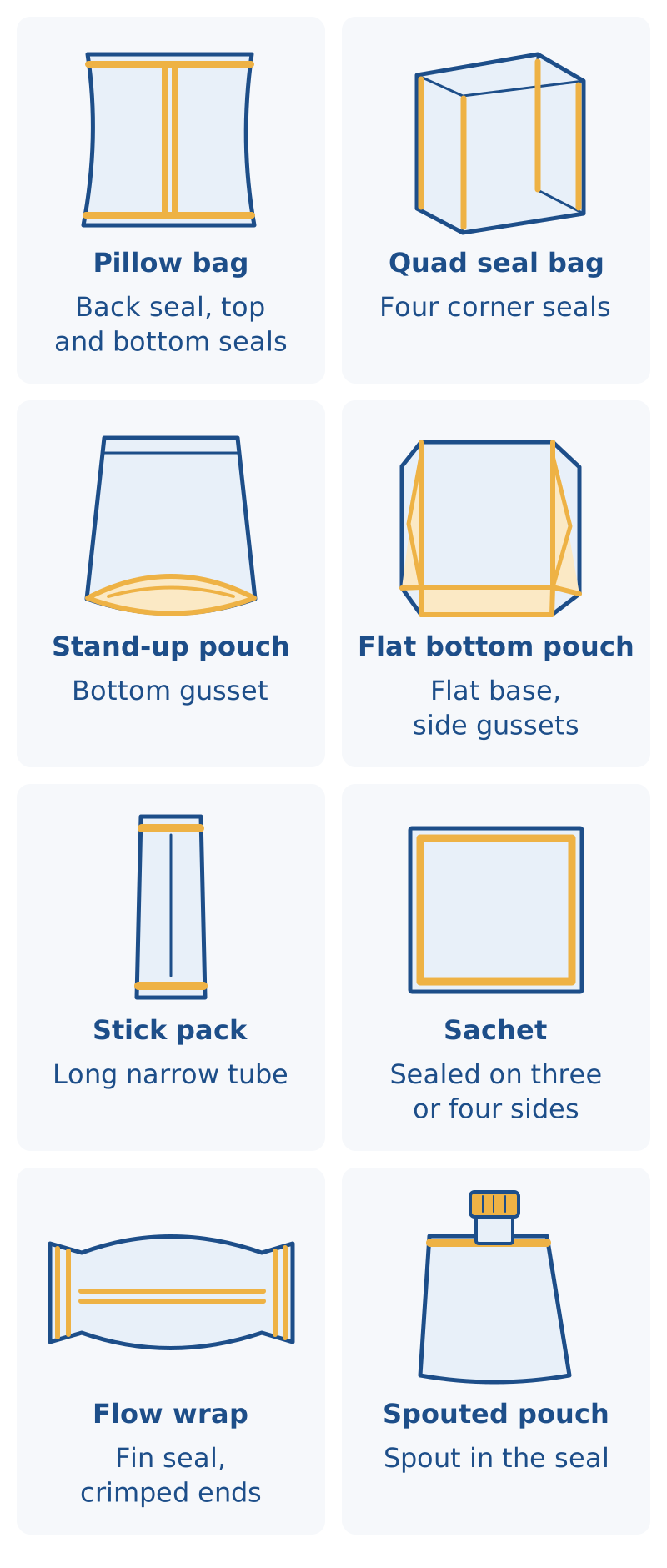
Flexible packaging examples are easiest to sort by looking at the seals and the base of a pack you already have in hand. The cues below describe generic retail packs, not any brand, and each links to the format page that explains it in full.
Scroll horizontally to view all columns if needed. ↔
| What you see on the pack | Format | Everyday examples |
|---|---|---|
| One seal down the back, sealed across top and bottom, no gusset | Pillow bag | Bags of chips, frozen vegetables |
| Four vertical seals, one at each corner, block shape | Quad seal bag | Larger pet food, coffee and snack bags |
| Flat rectangular base plus two folded side panels | Flat bottom pouch | Coffee, pet food, premium snacks |
| Side panels folded inward, back seal, brick shape | Side gusset pouch | Coffee, tea, flour, sugar |
| Gusset folded into the bottom so the pack stands | Stand-up pouch | Snacks, sauces, dry goods |
| Press-to-close track across the top | Zipper pouch | Snacks, cheese, frozen food, wipes |
| Rigid spout or cap fitted into the seal | Spouted pouch | Baby food, drinks, detergent refills |
| Long, narrow single-serve tube torn at one end | Stick pack | Sugar, instant drinks, supplements |
| Small flat pack sealed on three or four sides | Sachet | Sauces, shampoo samples, drink powders |
| Fin seal along the back, crimped seals at both ends | Flow wrap | Bars, biscuits, some medical devices |
| Film pulled tight against the product, air removed | Vacuum pouch | Cheese, cured and fresh meat |
| Flat meal pouch; appearance alone cannot establish processing | Possible retort pouch; check label and validated process | Ready meals; sterilization cannot be confirmed from shape |
| Product in a formed cavity with a peel or push-through backing | Blister pack | Tablets, capsules, small hardware |
| Film shrunk tight around a product or bottle | Shrink wrap | Multipacks, full-body bottle sleeves |
Two packs can look alike and still differ underneath. A pillow bag and a flow wrap are both pillow-shaped, but one is formed vertically around a free-flowing product and the other horizontally around a single item.
Takeaway: When you brief a supplier, name the format, then add the product, fill method and the protection it needs, as in the checklist below.
Delivery form: rollstock or premade
One more split cuts across all of the above: how the packaging reaches the line. Pillow bags and flow wraps are formed on the machine from film on a reel, which is rollstock packaging. Stand-up, flat-bottom and spouted pouches usually arrive as premade pouches.
Takeaway: Some formats can be made either way, and the choice then depends on volume, speed and filler cost.
Narrowing the choice by project requirements
Each of these questions removes options, so work through them in order.
- What does the product need protection from? Oxygen, moisture, light, aroma loss, puncture. This points to a material family and barrier level; see oxygen transmission rate for how barrier is measured.
- How is it filled? If you have a VFFS or flow wrap machine, you need rollstock. If you have a premade pouch filler, you need pouches.
- How should it look and behave in use? Shelf presence, resealing, pouring, microwave venting and portion size all point to formats.
- What construction delivers the barrier and print? If monolayer or coextrusion is enough, it is the simpler route. If not, a laminate is usual.
- What happens after use? If the target market expects a recyclable design, look at mono-material packaging early, since it limits the construction.
- Does a supplier have it on the shelf? Check minimum order, lead time and technical support; see how to evaluate a flexible packaging supplier.
Takeaway: Ask suppliers to write out the full structure with layer order and thickness so quotes use the same notation. The guide to comparing film specifications covers the details.
Sources and method
- Extrusion-line manufacturer, blown-film extrusion page: manufacturer page describing blown-film lines from one to eleven layers.
- Laminator manufacturer, coating and laminating line brochure: manufacturer coating/lamination description.
- Film manufacturer, barrier-film brochure, pages 5–6: manufacturer layer examples, not identification of a sample.
- RecyClass design guidelines: recycling-design body guidance; use polymer-specific requirements and destination infrastructure.
- Equipment manufacturer, quad-seal bag anatomy: manufacturer example of an optional offset join.
All sources accessed 8 October 2026. Format recognition is a visual screening aid; composition, recycling and retort processing require separate documents.
Continue reading
Related articles
Flexible Packaging Film: Monolayer, Coextruded and Laminated Films
Flexible packaging film is built as monolayer, coextruded or laminated webs. Learn how layers, printing and rollstock affect performance.
Flexible vs Rigid Packaging: How to Compare Them
Flexible vs rigid packaging compared on material use, transport, protection, shelf impact, filling lines, cost and recycling, plus when rigid still wins.
How Flexible Packaging Is Made: From Resin to Finished Pouch
How flexible packaging is made, step by step: extrusion, printing, lamination, coating, slitting, pouch making and the quality checks at each stage.