
How Flexible Packaging Is Made: From Resin to Finished Pouch
How flexible packaging is made, step by step: extrusion, printing, lamination, coating, slitting, pouch making and the quality checks at each stage.
Unreleased adhesive cure or a badly wound reel can lead to delamination, scrap or filling-line stoppages. Flexible packaging is made through a variable route: polymer resin is extruded into film, the film is treated and printed, webs are laminated or coated, and the wide roll is slit into reels or converted into pouches. The manufacturing process, often called converting, is split between film makers and converters, and different companies may handle different steps. Not every pack uses every step.
This page goes through each step, what it does and which quality checks apply. For how the finished structures are built, see flexible packaging film. If you want packs sorted by shape, material or construction instead of by process, see types of flexible packaging.
The film packaging process at a glance
Map the actual route from resin to reel or pouch; this is an overview, not a fixed sequence for every construction:
- Extrusion: resin becomes a single-layer or coextruded film.
- Surface treatment: the film surface is prepared so ink and adhesive can wet it.
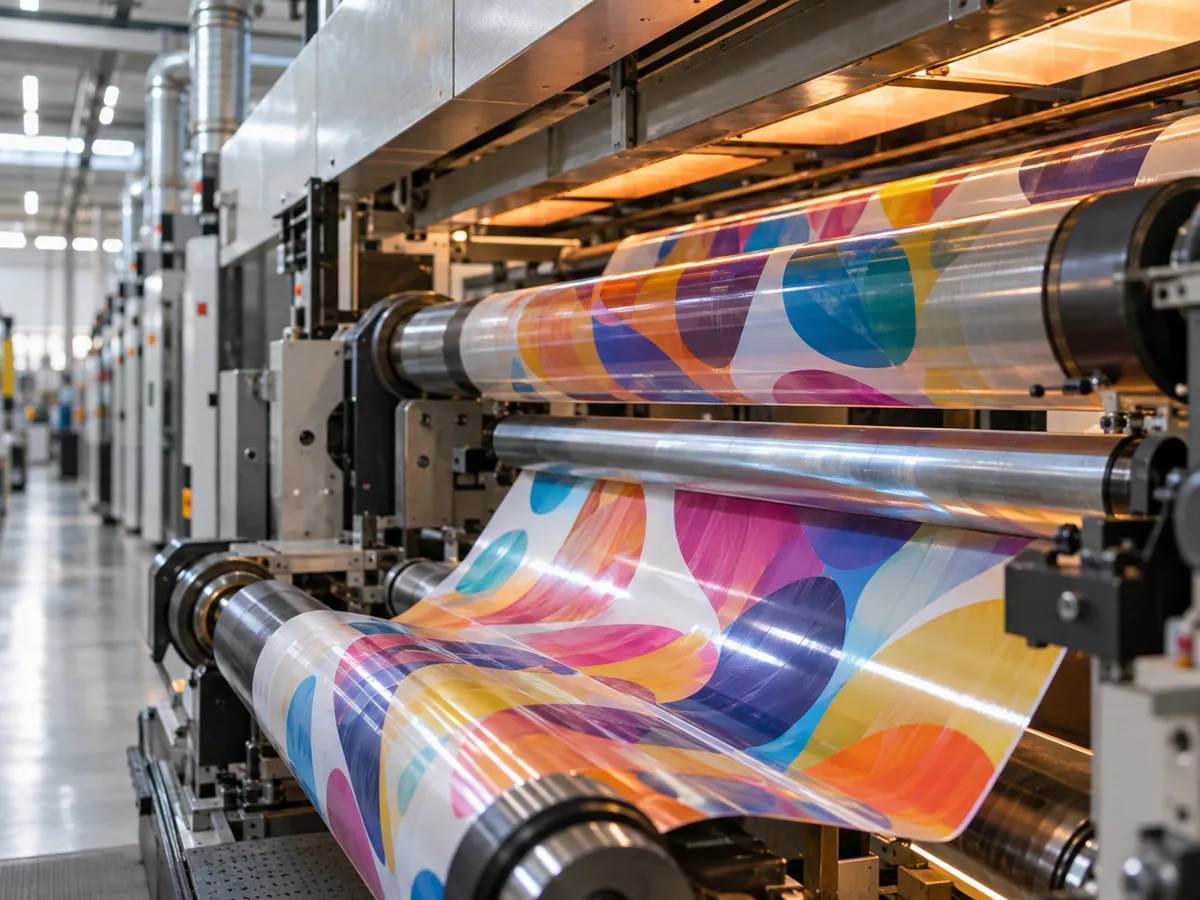
- Printing: artwork is applied, often on the reverse side of a clear outer film.
- Lamination: the printed film is bonded to one or more other webs.
- Curing: reactive-adhesive work is released against supplier guidance and validated batch records.
- Slitting: the wide web is cut into reels of the width the packing machine needs.
- Pouch making: only for premade pouches; rollstock leaves the converter as slit reels.
Some steps move or drop out depending on the pack. A plain unprinted film may go straight from extrusion to slitting. Coating or metallization is often done on a base film before it is laminated. A single-layer or coextruded film needs no lamination or curing at all. When you read a converter’s description of its process, map it onto this sequence and ask which steps it runs itself.
Step 1: Film extrusion
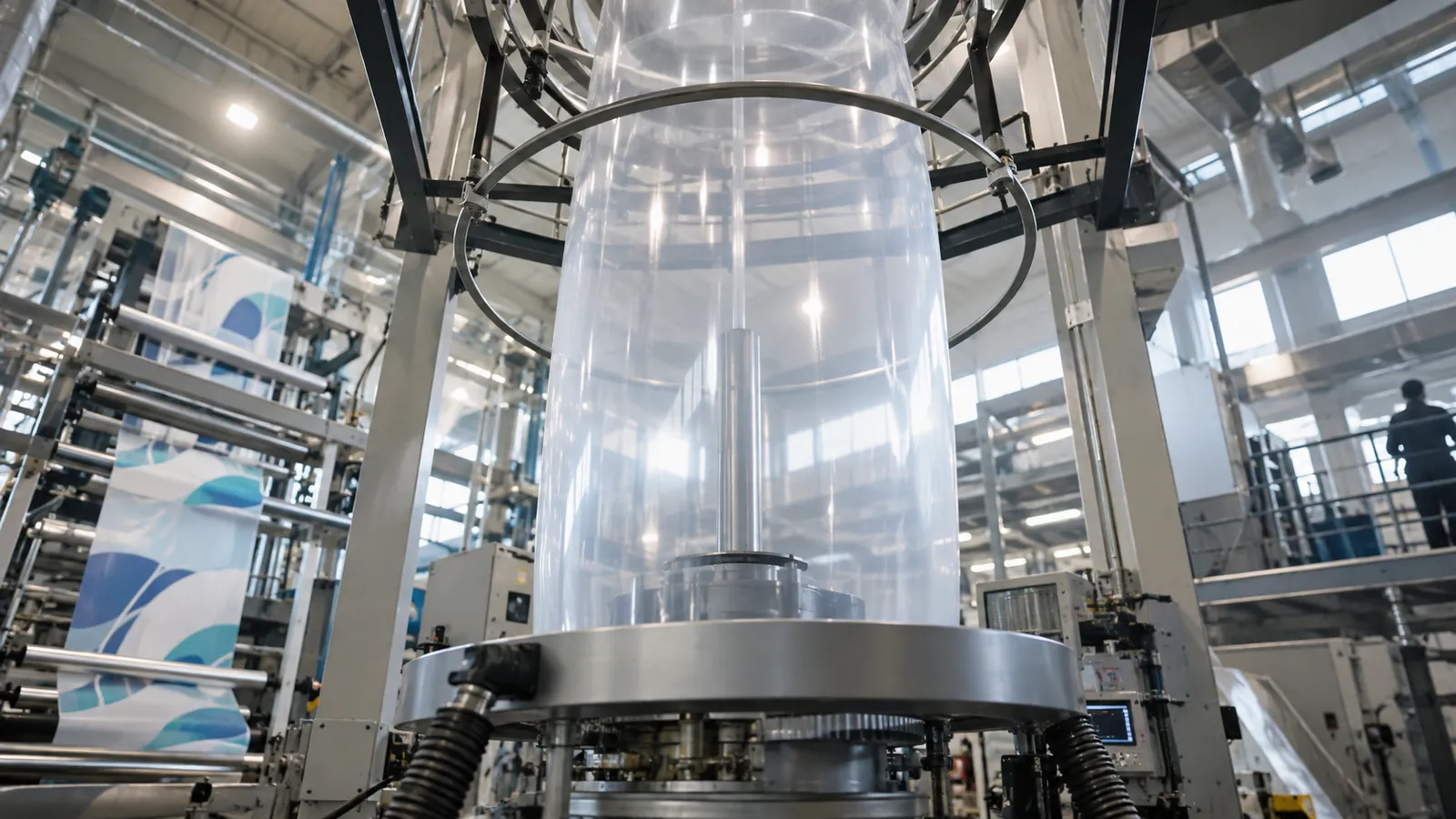
Extrusion melts resin in a heated barrel and forms it into film. Three routes are common.
- Blown film: the melt leaves a ring die as a tube and is inflated with air, then cooled and flattened. It is the main route for polyethylene and gives balanced strength in both directions. See PE film.
- Cast film: the melt leaves a flat die onto chilled rolls. It is typically clearer and more uniform in thickness, and it is the usual route for CPP.
- Biaxial orientation: a film is stretched in the machine direction and the transverse direction to align the polymer chains, which raises stiffness, clarity and strength. BOPP and BOPET are made this way. See BOPP film and PET film.
Coextrusion feeds several resins through one die to make a multilayer film in one pass. Film thickness and gauge consistency are the main quality factors; see packaging film thickness.
Takeaway: Confirm resin/film identity and the gauge profile before releasing the web.
Step 2: Surface treatment
Many polymer films have low surface energy, so inks, coatings and adhesives do not wet them well. Corona or plasma treatment raises the surface energy, which is often checked with dyne level pens or liquids. Treatment fades with time and additives can affect it, so printing and laminating soon after treatment is common practice.
Takeaway: Record the treated face and wetting/adhesion result before printing or bonding.
Step 3: Printing
Three methods dominate:
Scroll horizontally to view all columns if needed. ↔
| Method | How it works | Typical fit |
|---|---|---|
| Rotogravure | Ink in engraved cylinder cells is transferred to the film | Long runs, high print quality, high cylinder cost |
| Flexographic | Raised image on a flexible plate transfers ink | Medium to long runs, broad range of inks and substrates |
| Digital | Image is printed directly from a file without plates | Short runs, versioning, fast changeover |
Packaging is often reverse printed on a transparent web so that the ink is trapped inside a laminate; see laminated packaging. The print repeat length and registration marks are set here, which matters for rollstock packaging.
Takeaway: Release the approved artwork, repeat and registration record together.
Step 4: Lamination and curing
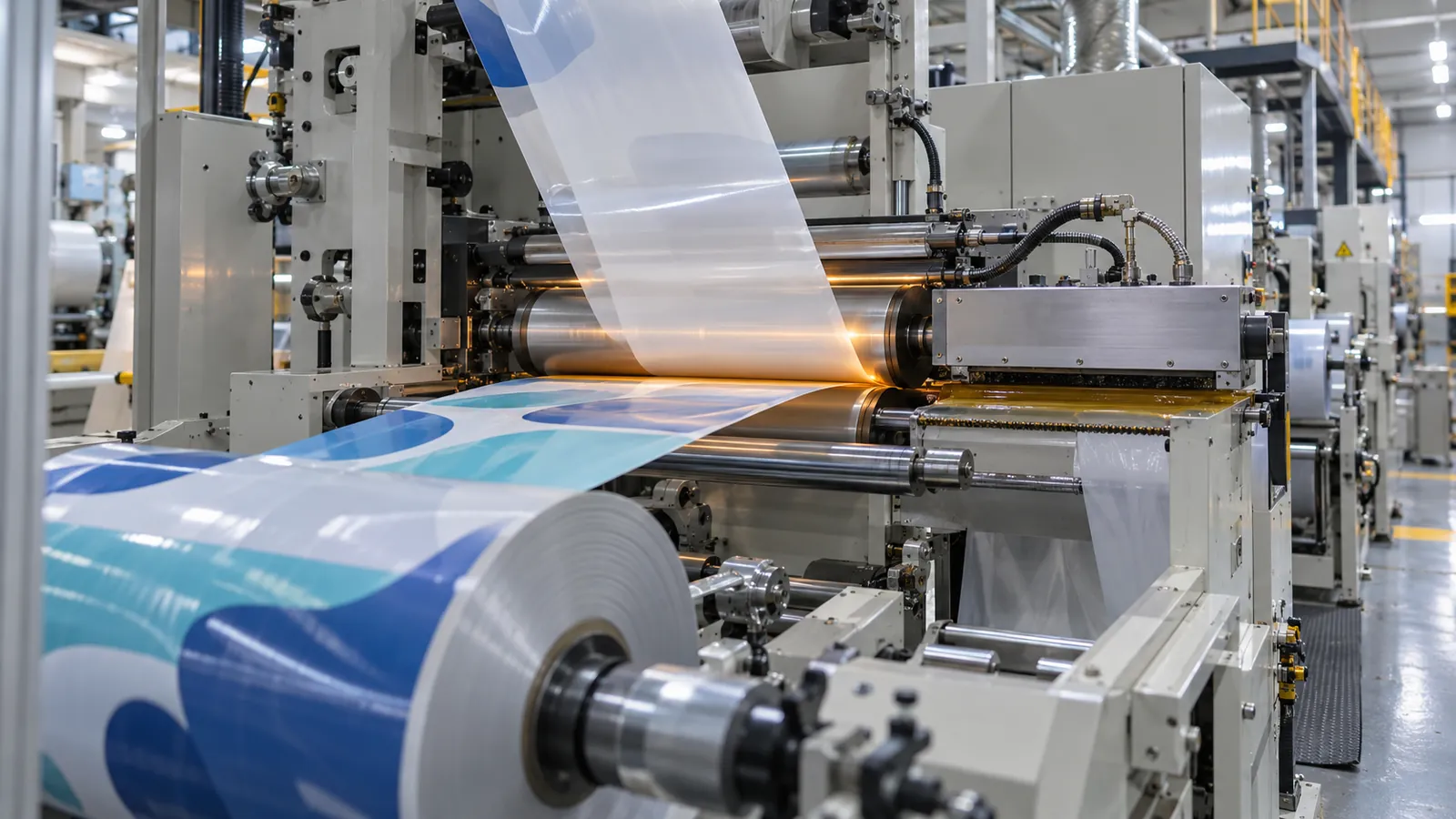
Lamination bonds separate webs into one structure, using adhesive or an extruded polymer layer. For reactive adhesive, determine cure conditions and release timing from the exact adhesive technical document and the converter’s validated records. Record adhesive grade/lot, mix/application conditions, storage temperature, elapsed time and release results; no universal cure duration is assumed. Details of the methods, bond strength and delamination are on the laminated packaging page.
Takeaway: Release the next operation against the actual adhesive cure and bond record.
Step 5: Coating and metallization
Some barrier or functional layers are applied to a film instead of laminated.
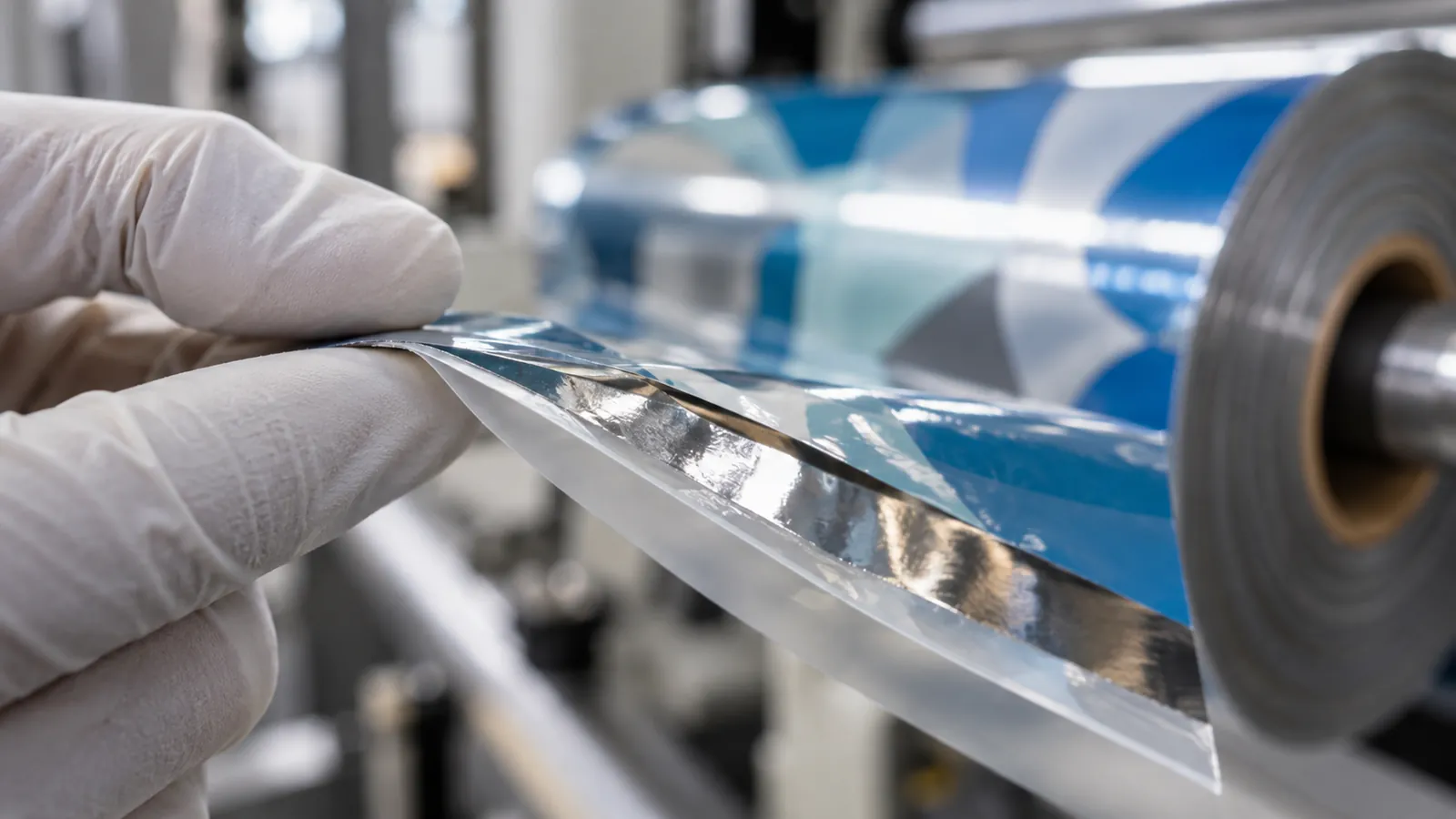
- Metallization: a very thin aluminum layer is vacuum-deposited on a film such as BOPP or BOPET to improve light, moisture and oxygen barrier. See metallized film.
- Barrier coatings: water- or solvent-based coatings, or oxide layers, add oxygen or moisture barrier. See barrier film.
- Heat-seal and cold-seal coatings, lacquers and varnishes control sealing, gloss, slip and ink protection.
Coating weight and uniformity are the main checks, because a few pinholes or thin spots can undermine barrier. Compare barrier values using the same temperature and humidity conditions.
Takeaway: Record layer uniformity and barrier results before accepting the coated web.
Step 6: Slitting and rewinding
The wide web, often wider than a meter, is cut into narrower reels at the width the customer’s machine needs. Slitting also sets the roll’s outer diameter, core, winding direction and splices. Poor slitting leaves burrs, wavy edges or telescoped rolls, which lead to web wander on the filling line. Rollstock specifications are covered in rollstock packaging.
Takeaway: Accept the reel only after width, winding and splice checks.
Step 7: Pouch making
If the customer buys premade pouches rather than rollstock, the converter forms the pouch from the slit web. A pouch-making machine folds, seals and cuts the web into three-side-seal pouches, stand-up pouches with bottom gussets, flat-bottom pouches and others. Fitments such as zippers and spouts may be added. Seal temperature, pressure and dwell time must be set to the structure’s seal window; see seal initiation temperature. Format pages such as stand-up pouch and zipper pouch describe the shapes.
Takeaway: Retain pouch dimensions, seal, integrity and fitment results.
Step 8: Quality control and inspection
Checks run at every stage and again at the end. Common ones include:
- thickness and gauge profile, with the measurement method recorded; ASTM D6988 addresses test-specimen thickness, not commercial QC sampling;
- tensile properties, for example ASTM D882-26;
- coefficient of friction, for example ASTM D1894-24;
- seal-strip strength under ASTM F88/F88M-23; ASTM F2029-16(2021) addresses making laboratory heat seals;
- oxygen and water vapor transmission, with the test temperature and relative humidity recorded;
- print color, registration and defects, often with an inline inspection camera;
- bond strength after cure, and residual solvent where relevant;
- appropriate whole-pouch integrity checks; ASTM D3078-02(2021)e1 addresses gross leaks in flexible packs containing headspace gas; ASTM F2096-11(2019) addresses gross leaks by internal pressurization.
Retained samples and batch traceability let a converter investigate a complaint months later.
Takeaway: Close the batch record against the agreed sampling and release criteria.
Quality checks by step
Scroll horizontally to view all columns if needed. ↔
| Stage (as applicable) | Key check before release | Retain this record |
|---|---|---|
| Extrusion | Check gauge profile, gels and layer identity | Resin/film lots and measured profile |
| Surface treatment | Check wetting/adhesion at intended use time | Treatment face, date and test result |
| Printing | Check artwork, register and ink adhesion | Approved artwork/repeat and inspection result |
| Lamination and curing | Confirm bonding and cure release | Adhesive lot, application/storage conditions and bond result |
| Coating / metallization | Check layer uniformity and barrier | Dry/wet coat-mass basis or metal specification; test conditions/result |
| Slitting / rewinding | Check width, winding, edges and splices | Reel ID, dimensions and defect/splice map |
| Pouch making | Check dimensions, seals, leaks and fitments | Machine settings and finished-pouch results |
| Final release | Review results against the agreed specification | CoA, disposition, retained sample and traceability |
Common terms in flexible packaging manufacturing
What is a converter?
A converter is a company that turns film, foil or paper into a finished packaging material by printing, laminating, coating, slitting or pouch making. Some converters also extrude their own film; many buy base films from film makers. The term describes a role in the chain, not a guarantee that every step is done under one roof.
What does “web” mean?
The web is the continuous sheet of film, foil or paper running through a machine from an unwind roll to a rewind roll. Web width, web tension and web path come up at almost every step after extrusion.
What is the difference between coextrusion and lamination?
Coextrusion forms several polymer layers together in one die, so the layers are made and joined in the same pass. Lamination joins webs that already exist, for example a printed PET film and a PE sealant film, with an adhesive or a molten polymer layer. A laminate can contain a coextruded film as one of its webs. The laminated packaging page explains the lamination routes.
Why does a laminate need curing time?
Reactive adhesives keep reacting after the laminating machine has bonded the webs. Bond and seal behavior may change during reaction. Confirm release for the next operation against the adhesive supplier’s guidance and validated converter records, rather than assuming every operation waits for one fixed duration.
What is repeat length?
Repeat length is the distance along the web from one printed design to the next. It is set at printing and must match the bag length the packing machine cuts, which is why it appears on rollstock specifications.
What is the difference between rollstock and premade pouches?
Rollstock is slit film on a reel that the packer forms, fills and seals on its own machine. Premade pouches are formed and sealed by the converter, then filled and closed by the packer. The process for both is the same up to slitting; only premade pouches go through pouch making.
Does every flexible pack go through all these steps?
No. This page maps possible stages, not a compulsory sequence. Coating/metallization can enter as a branch, and QC follows the selected route. Ask the supplier which steps apply to your structure, because each step adds its own checks and lead time.
Questions to ask a converter
- Which steps does the supplier perform in house, and which are outsourced?
- How is the cure time controlled and recorded?
- What inline inspection is used for print and for pouch seals?
- Which standards and test conditions appear on the certificate of analysis?
- How are batches traced, and how long are retained samples kept?
How to evaluate a flexible packaging supplier goes further, and the first-order risk checklist helps for new programs.
Method and sources
Official catalog scopes reviewed 8 October 2026; links in the QC section identify the cited editions and uses. ASTM D6988-26 covers thickness of test specimens and explicitly excludes commercial QC sampling. Seal strength, laboratory seal preparation and gross-leak tests answer different questions; none alone establishes shelf life. Cure release remains adhesive- and process-specific.
Continue reading
Related articles
Flexible Packaging Film: Monolayer, Coextruded and Laminated Films
Flexible packaging film is built as monolayer, coextruded or laminated webs. Learn how layers, printing and rollstock affect performance.
Laminated Packaging: How Lamination Works and Why It Matters
Laminated packaging bonds films, foil or paper into one web for print, barrier and seal. Learn dry, wet and extrusion lamination, curing and bond strength.
Rollstock Packaging: Specifying Film on the Roll
Rollstock packaging is printed film supplied on reels and formed into packs on your line. Learn which machines use it and what a roll spec must include.