
Lidding Foil: Heat-Seal Lids for Cups, Trays and Containers
Lidding foil is aluminum-based film heat-sealed onto cups, trays and tubs. Learn lacquers, peel vs weld seals, die-cut vs reel-fed lids and specs.
A lacquer that does not match the container’s sealing surface can leave a leaking lid. Lidding foil is an aluminum-based lid with a heat-seal layer; first establish the rim surface, opening requirement and machine format.
Scroll horizontally to view all columns if needed. ↔
| Decision | What to record |
|---|---|
| Container surface | Flange resin/coating and rim geometry, alongside the cup body |
| Opening | Peelable or permanent seal and acceptable failure path |
| Supply format | Die-cut lid or reel-fed web compatible with the installed tooling |
This page covers cup and tray lidding; pharmaceutical blister lids are covered on the blister foil page.
Where foil lids are used
- Dairy and desserts: yogurt, cream and pudding cups, often with a printed lid.
- Portion packs: jams, spreads, sauces and creamers.
- Trays and tubs: ready meals, meat and fish trays, and deli containers that need good barrier or a hot-fill step.
- Capsules and pods: coffee and beverage capsules, where the foil also resists internal pressure and puncture.
- Other containers: pet food cups and household product tubs.
Foil is not the only option: where you need see-through lids or microwave use, plastic lidding films are used instead (see below). The foil itself is explained in aluminum foil packaging.
Die-cut lids vs reel-fed lidding
The two supply formats suit different machines.
Scroll horizontally to view all columns if needed. ↔
| Feature | Die-cut (precut) lids | Reel-fed lidding |
|---|---|---|
| Form | Stacks or sleeves of individual lids | Continuous web on a reel |
| Typical machine | Cup fillers and sealers with a lid dispenser | Form-fill-seal and tray sealers that cut the lid in line |
| Tab or pull feature | Easily built into the cut shape | Added by the machine or not at all |
| Waste | Cut-out waste at the converter | Skeleton waste at the machine |
| Changeover | Change lid stack size per container | Change tooling and reel width |
| Printing | Registered to each lid | Registered print with a mark for cutting |
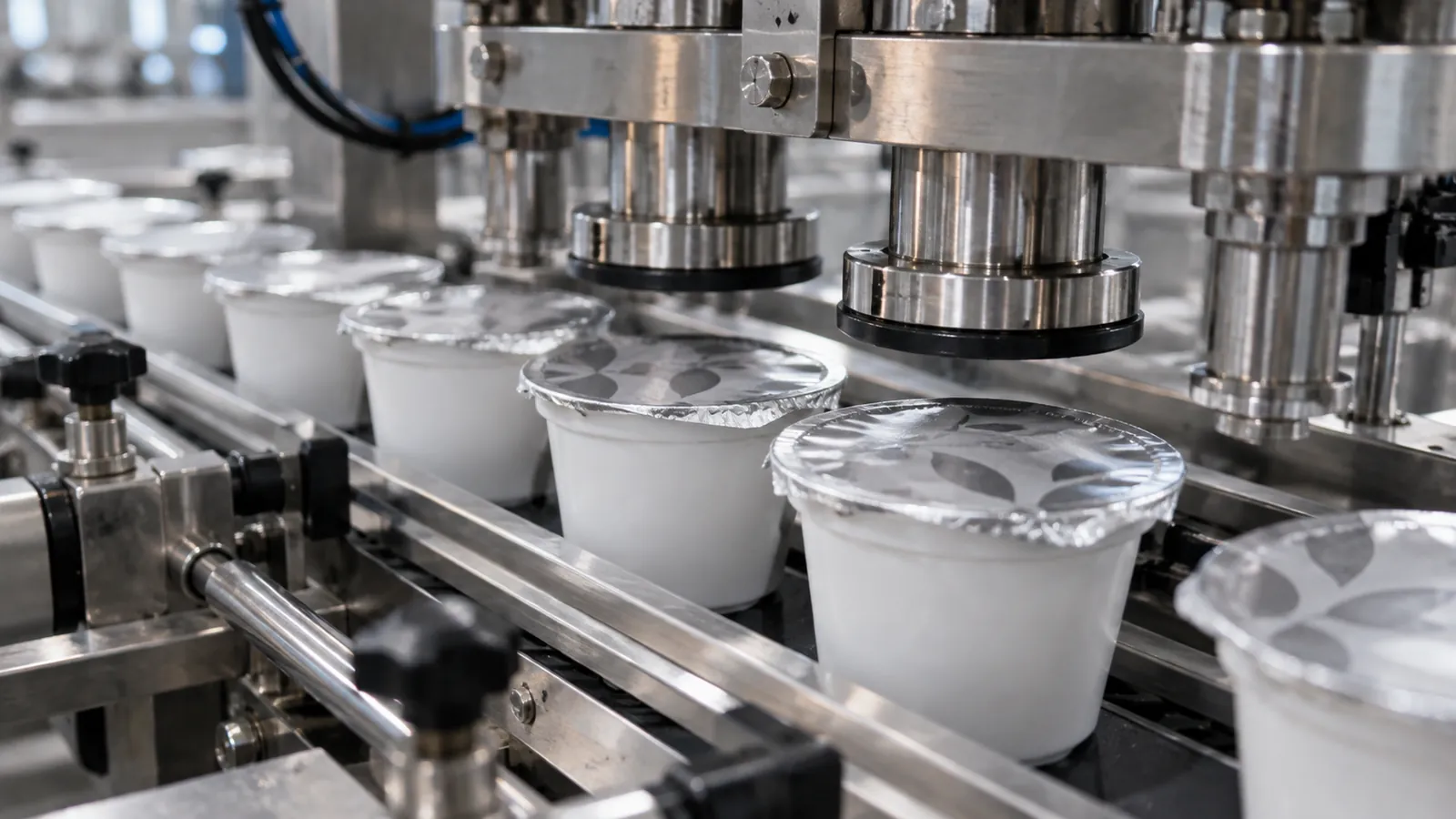
Die-cut lids put the cutting accuracy on the converter and simplify the filling line. Reel-fed lidding is often more economical and flexible at scale, but the machine needs a cutting station and print registration. The choice usually follows the machine you own or are buying, so ask the equipment supplier first.
Heat-seal lacquers matched to the container
The lacquer on the inner side of the foil must bond to the container’s sealing surface. Containers are commonly made from PP, PS, PET and PE, and a lacquer that works on one may not work on another. The usual pairings are:
Scroll horizontally to view all columns if needed. ↔
| Container material | Lidding approach |
|---|---|
| PP | Lacquers formulated for polypropylene rims, often peelable |
| PS | Lacquers for polystyrene; widely used on dairy cups |
| PET | Lacquers for PET or APET trays; some are peelable, some weld |
| PE | Polyethylene-compatible lacquer or a coextruded sealing layer |
Containers that mix layers, such as a PP body with a barrier layer, still need the lacquer matched to the surface layer, not the core. A suitable lacquer is chosen per container material and per seal type, so request validation data for your exact container. Container rim width, flange flatness, and resin grade can all move the sealing window. The seal initiation temperature page explains how sealing onset is described.
Peel seals vs weld seals
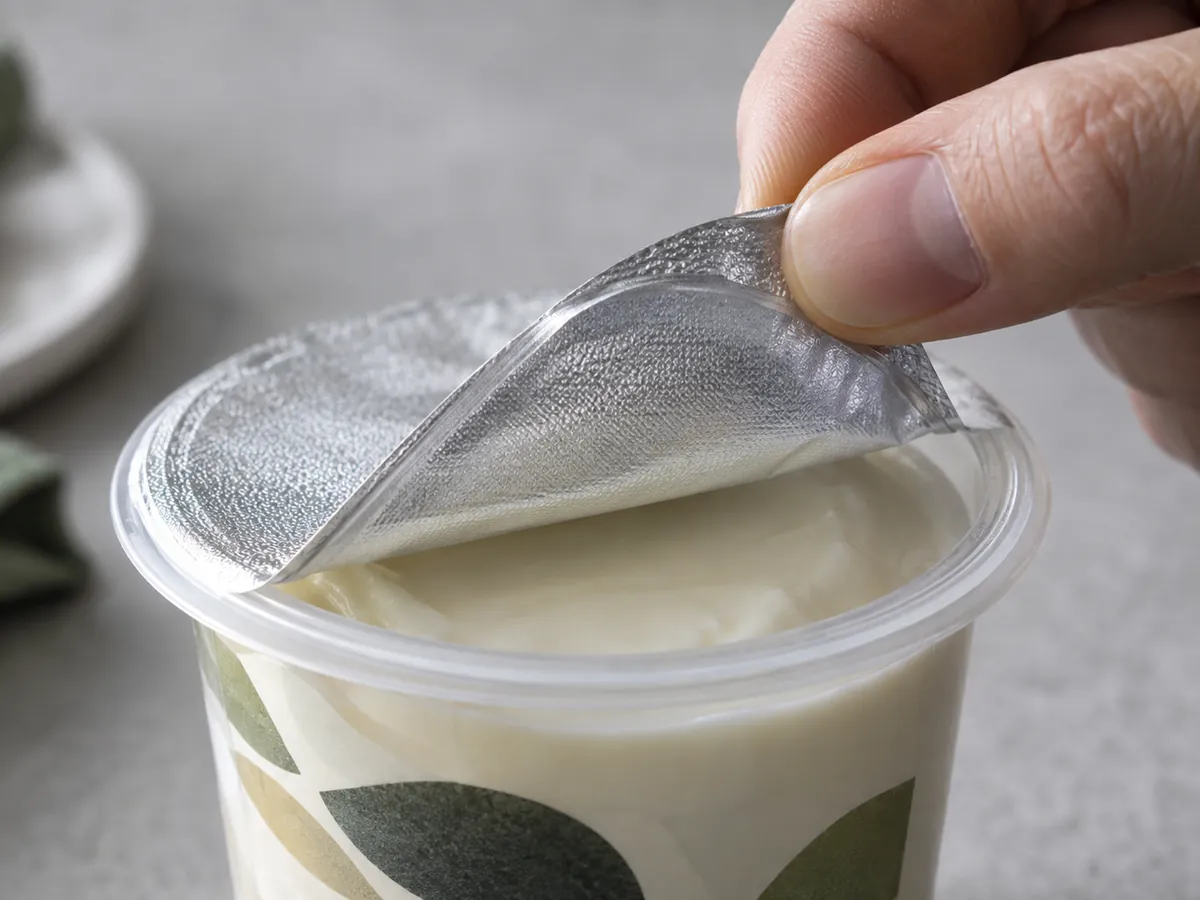
Peelable lidding is designed to open along a controlled path. Permanent or weld sealing is selected where the intended opening mechanism does not rely on peeling that interface. Neither label proves that a pack survives retort; opening behavior and thermal-process integrity are separate requirements.
Peel-path schematic: pull tab → separation at a designed interface or within a peel layer → exposed rim. An unintended path may instead tear foil, delaminate the lid or leave strings. The acceptable residue and failure mode depend on the lid construction; a clean peel does not always leave the same layer on the rim.
ASTM F88/F88M-23 measures seal-strip force and failure mode, including flexible-to-rigid seals. It is distinct from removing an entire lid. F2029-16(2021) prepares laboratory heat seals; its public scope excludes seal continuity and production-equipment validation.
For US low-acid foods in hermetically sealed containers, FDA’s Part 113 guidance is relevant. Confirm the complete container/lid system and product-specific thermal process; choosing a weld seal does not replace this work.
Embossing for denesting
Foil lids stacked in a magazine can cling together because the smooth lacquered surface sticks to its neighbor. A light embossed pattern in the foil reduces contact area, so lids separate and feed reliably on the dispenser. Embossing also stiffens the lid slightly and can improve appearance. Ask the converter about the pattern and depth, since too much embossing can hurt seal contact. Slip additives and surface coatings are alternatives, and the dispenser design matters as much as the lid.
Foil-free alternatives in brief
Some products do not need foil’s barrier or opacity, or must be microwaved or recycled with the container. Plastic lidding films, usually a PET, PP or PE-based laminate with a sealing layer, can be clear, peelable and printable, and they may be designed to match the container resin for recycling. They do not offer the same light barrier, and oxygen and moisture barrier depends on the layers used. For the options, see barrier film and PET film. Recyclability depends on the whole pack and local systems, covered in recyclable flexible packaging.
Seal quality and common problems
Use these as checks to investigate, not diagnoses from appearance alone. Keep the sample, batch and actual settings with the evidence.
Scroll horizontally to view all columns if needed. ↔
| Symptom | Rim, lacquer or process checks | Evidence to record |
|---|---|---|
| Weak or uneven seal | Surface match, product residue, temperature, pressure and dwell | Seal-strip result, failure mode and leak check: ___ |
| Flange leak | Flatness, rim damage and tool alignment | Position of leak, contact pattern and corrected trial: ___ |
| Foil tears on opening | Peel specification, foil strength and separation path | Opening force and whether foil/interface/layer failed: ___ |
| Curl or wrinkles | Incoming lid flatness, web tension and heating | Before/after samples, sealing contact and integrity: ___ |
| Dispensing jams | Lid dimensions, denesting and dispenser setup | Feed observation and trial after adjustment: ___ |
Select a leak method for the pack and defect of concern. ASTM D3078-02(2021)e1 concerns gross leaks in flexible packages with headspace gas; it can miss small leaks and is not automatically suitable for every rigid cup. The seal strength page separates strength from integrity.
What to put in a lidding foil specification
- Container material, rim geometry and the surface the lacquer must seal to
- Peel or weld seal, and the target seal strength with the test method
- Foil alloy, temper, gauge and pinhole limits
- Lacquer type, coat weight, sealing window and validated containers
- Format: die-cut dimensions and tolerances, or reel width, core and unwind
- Embossing pattern for denesting, if required
- Printing, registration and varnish
- Barrier and resistance needs, such as hot fill, retort or freezing
- Food-contact documentation for your destination market
- Change-control terms with the supplier
Run trials on your actual sealing tools, since the lacquer window is only meaningful on the machine and container in use. Supplier checks more generally are covered in how to evaluate a flexible packaging supplier.
Sources and method
Reviewed October 8, 2026. The European Aluminium Foil Association’s sealability page describes peelable foil-container lidding; it does not establish a permanent-seal requirement for retort. Linked ASTM public scopes distinguish strip force, laboratory seal preparation and gross-leak detection. FDA’s December 2021 guidance identifies the US low-acid-food regulatory scope. No universal peel force, retort temperature or lacquer recipe is given; validate the selected lid and rim.
Continue reading
Related articles

Blister Foil: Lidding Foils for Pharmaceutical Blister Packs
Blister foil is aluminum-based lidding for pharmaceutical blister packs. Learn lidding types, lacquers, sealing variables and checks.

Alu-Alu Blister Packaging: When Full-Foil Blisters Make Sense
Alu alu blister packaging uses a cold-formed foil cavity and foil lid for near-total barrier. See when it is chosen and how it compares with PVC blisters.
Aluminum Foil Packaging: Foil Laminates, Gauges and Uses
Aluminum foil packaging explained: why foil gives near-complete barrier, layer thickness and temper, laminate structures, uses and recycling limits.